Budenofalk
Poland
Table of Contents
Package leaflet: Information for the user
Budenofalk, 2 mg/dose, rectal foam
Budesonide
Please read all of this leaflet carefully before using this medicine, because it contains
important information for the patient.
- Keep this leaflet, as you may need to read it again.
- If you have any questions, please consult your doctor or pharmacist.
- This medicine has been prescribed for a specific individual. Do not pass it on to others. It may harm other people, even if their symptoms are the same.
- If the patient experiences any adverse reactions, including any not listed in this leaflet, inform the doctor or pharmacist. See section 4.
Table of contents of the leaflet
- What Budenofalk is and what it is used for
- Important information before using Budenofalk
- How to use Budenofalk
- Possible side effects
- How to store Budenofalk
- Contents of the pack and other information
1. What Budenofalk is and what it is used for
Budenofalk rectal foam contains budesonide as the active substance. This medicine belongs to a group of locally acting steroids used in the treatment of inflammatory bowel diseases. It is indicated for the treatment of active, ulcerative proctitis limited to the rectum and sigmoid colon.
2. Important information before using Budenofalk
When not to use Budenofalk, rectal foam:
- if the patient is allergic to budesonide or any of the other ingredients of this medicine (listed in section 6);
- if the patient has severe liver disease (liver cirrhosis).
Warnings and precautions
Before starting treatment with Budenofalk, rectal foam, please discuss with your doctor
if the patient has:
- tuberculosis;
- high blood pressure;
- diabetes or a family history of diabetes;
- brittle bones (osteoporosis);
- peptic ulcer of the stomach or the first part of the small intestine (peptic ulcer of the stomach or duodenum);
- increased eye pressure (glaucoma) or eye problems such as clouding of the lens (cataract), or a family history of glaucoma;
- severe liver problems.
Typical cortisone-related side effects may occur during treatment with corticosteroid-containing medicines,
which may affect all parts of the body, especially when Budenofalk, rectal foam, is used in high doses
and for prolonged periods (see section 4. Possible side effects).
Further precautions during treatment with Budenofalk, rectal foam
- The patient should inform the doctor if they have an infection. Symptoms of some infections may be atypical or less pronounced.
- If the patient has never had chickenpox or shingles, they should avoid contact with people who have these diseases. These illnesses may have a very severe course. In case of contact with people suffering from chickenpox or shingles, the patient should immediately consult a doctor.
- If the patient has not had measles, they should inform the doctor.
- If the patient knows they need to be vaccinated, they should first talk to the doctor.
- If the patient has planned surgery, they should inform the doctor about using Budenofalk, rectal foam.
- If, before starting treatment with Budenofalk, rectal foam, the patient was receiving a stronger corticosteroid medicine, symptoms may recur after switching treatment. In such a case, contact the doctor.
- If the patient experiences blurred vision or other visual disturbances, they should contact the doctor.
Treatment with Budenofalk, rectal foam, may lead to positive results in doping tests.
Budenofalk, rectal foam and other medicines
Tell your doctor or pharmacist about any medicines the patient is currently taking, has recently taken, or might take in the future. In particular:
- cardiac glycosides, such as digoxin (medicines used in the treatment of heart conditions);
- diuretics (medicines used to remove excess fluid from the body);
- ketoconazole or itraconazole (medicines used to treat fungal infections);
- antibiotics (medicines used to treat infections, such as clarithromycin);
- carbamazepine (a medicine used to treat epilepsy);
- rifampicin (a medicine used to treat tuberculosis);
- estrogens or oral contraceptives.
Some medicines may enhance the effect of Budenofalk, rectal foam, and the doctor may wish to closely monitor the patient taking such medicines (including certain HIV medicines: ritonavir, cobicistat).
Budenofalk, rectal foam, may affect the results of tests performed by a doctor or in hospital. Before undergoing any tests, inform the doctor that the patient is using Budenofalk, rectal foam.
Budenofalk, rectal foam, with food and drink
Do not drink grapefruit juice while taking this medicine, as it may alter its effect.
Pregnancy and breastfeeding
If the patient is pregnant or breastfeeding, suspects she may be pregnant, or is planning to have a child, she should consult her doctor or pharmacist before using this medicine.
The patient should use Budenofalk, rectal foam, during pregnancy only if prescribed by a doctor.
Budesonide passes into breast milk in small amounts. If the patient is breastfeeding, she should use Budenofalk, rectal foam, only if prescribed by a doctor.
Driving and operating machinery
No effects on driving and operating machinery have been observed.
Budenofalk, rectal foam contains propylene glycol, cetyl alcohol and cetostearyl alcohol.
This medicine contains 600.3 mg of propylene glycol in each spray of Budenofalk rectal foam, 2 mg/dose. Propylene glycol may cause skin irritation.
Cetyl alcohol and cetostearyl alcohol (an ingredient of emulsifying wax) may cause local skin reactions (e.g. contact dermatitis).
3. How to use Budenofalk, rectal foam
This medicine should always be used exactly as directed by your doctor. If in doubt, consult your doctor or pharmacist.
Recommended dose:
Adults
Use one administration per day, corresponding to 2 mg of budesonide.
Use in children
Due to insufficient data on safety and efficacy of Budenofalk in children, the medicine should not be used in this age group.
Method of administration:
This medicine is intended exclusively for rectal administration and must therefore be introduced through the anus. It is not intended for oral intake and must not be swallowed.
Budenofalk can be administered in the morning or in the evening.
Best results are achieved when Budenofalk is used after a bowel movement.
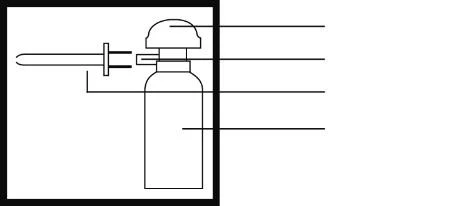
pump dome
nozzle
applicator
aerosol container
The applicators are stored in a special holder. Hold the holder firmly and remove the applicator with a firm motion.
Instructions for use:
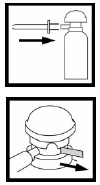
Firmly push the applicator onto the nozzle of the aerosol container.
Shake the aerosol container well for about 15 seconds to mix the contents.
Before first use, remove the protective ring located under the pump dome.

Rotate the pump dome on the container until the semicircular cutout beneath it aligns with the applicator. The aerosol container is now ready for use.
Administration of the foam:
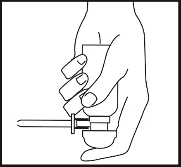
Place your index finger on the pump dome and turn the aerosol container upside down. The container will function properly only when held with the pump dome pointing downward, in a position as close to vertical as possible.
Place one foot on a stool or chair, or lie on your side with the lower leg straight and the upper leg bent to maintain balance.

Insert the applicator into the rectum as far as possible without causing discomfort. Press the pump dome fully down once and release it slowly. Upon releasing, the foam will be dispensed from the aerosol container. Keep the applicator in place for 10–15 seconds before removing it from the rectum. This ensures the full dose is delivered and helps prevent leakage of the foam.
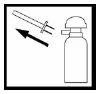
After administering the foam, remove the applicator and dispose of it in household waste using the provided plastic bag. For the next dose, use a new applicator. To prevent accidental leakage of foam from the aerosol container between doses, rotate the pump dome so that the semicircular cutout is positioned opposite the nozzle.
Duration of treatment:
The duration of treatment will be determined by your doctor. Typically, acute inflammation resolves after 6 to 8 weeks, after which your doctor will advise discontinuing Budenofalk.
If you feel that the effect of Budenofalk is too strong or too weak, consult your doctor.
Use of a higher than recommended dose of Budenofalk, rectal foam
If an excessive dose is used once, take the next dose according to your doctor's instructions. Do not reduce the dose. In case of doubt, contact your doctor, who will decide on further management. If possible, bring the cardboard packaging and this leaflet with you.
Missed dose of Budenofalk, rectal foam
If you miss a dose, continue treatment with the next prescribed dose. Do not use a double dose to make up for the missed dose.
Stopping treatment with Budenofalk, rectal foam
Consult your doctor before deciding to stop or discontinue treatment early. Do not abruptly stop using this medicine, as this may worsen your condition. Continue using the medicine even if you feel better, until your doctor informs you that treatment can be stopped.
If you have any further questions about the use of this medicine, consult your doctor or pharmacist.
4. Possible adverse reactions
Like any medicine, this medicine can cause adverse reactions, although not everyone experiences them.
If any of the following symptoms occur in a patient after taking this medicine, contact a doctor immediately:
- infection;
- headache;
- changes in behaviour such as depression, irritability, euphoria, nervousness, anxiety or aggression.
The following adverse reactions have also been reported:
Common: may affect up to 1 in 10 people
- burning or pain in the anal area;
- Cushing's syndrome: e.g. rounded face, trunk obesity, impaired glucose tolerance, high blood sugar levels, high blood pressure, fluid retention in tissues (e.g. leg swelling), increased potassium loss (hypokalaemia), irregular menstruation in women, excessive hair growth in women, impotence, abnormal laboratory test results (reduced adrenal function), red lines on the skin (striae), acne;
- indigestion, stomach upset;
- increased risk of infections;
- muscle and joint pain, muscle weakness, muscle twitching;
- fragile bones (osteoporosis);
- headache;
- mood changes such as depression, irritability and euphoria;
- rash due to hypersensitivity reaction, red spots caused by subcutaneous bleeding, delayed wound healing, local skin reactions such as contact dermatitis.
Uncommon: may affect up to 1 in 100 people
- increased appetite;
- changes in blood test results (elevated ESR - erythrocyte sedimentation rate, increased white blood cell count);
- nausea, abdominal pain, bloating, tingling or numbness in the abdomen, anal fissure, oral ulcers, frequent need to empty the bowels, bleeding from the anus;
- stomach or small intestine ulcers;
- changes in liver function parameters;
- changes in pancreatic function, changes in adrenal hormones;
- urinary tract infections;
- dizziness, disturbances in sense of smell;
- insomnia, nervousness with excessive physical activity, anxiety;
- excessive sweating, weakness;
- weight gain.
Rare: may affect up to 1 in 1,000 people
- glaucoma;
- cataract;
- blurred vision;
- pancreatitis;
- loss of bone tissue due to poor blood circulation (bone necrosis);
- aggression;
- bruising.
Very rare: may affect up to 1 in 10,000 people
- growth retardation in children;
- constipation;
- increased intracranial pressure, including elevated intraocular pressure (papilloedema), in adolescents;
- increased risk of blood clots, inflammation of blood vessels (associated with discontinuation of glucocorticosteroids after long-term treatment);
- fatigue, general malaise.
The above adverse reactions are typical of steroid medicines, and most of them may also be expected when treating with other steroids. The occurrence of the above adverse reactions depends on the doses used, duration of treatment, concomitant or previous treatment with other cortisone-containing medicines, and individual patient sensitivity.
Some of the above adverse reactions have been reported only after long-term oral use of budesonide.
The risk of adverse reactions after using Budenofalk rectal foam is generally lower than with systemic cortisone-containing medicines (affecting the whole body), due to the local action of the medicine.
If, before starting treatment with Budenofalk rectal foam, the patient was receiving treatment with a stronger cortisone-containing medicine, symptoms may recur after switching medicines.
Reporting of adverse reactions
If any adverse reactions occur, including any not listed in this leaflet, tell your doctor or pharmacist. Adverse reactions can be reported directly to the Department for Monitoring Adverse Drug Reactions at the Office for Registration of Medicinal Products, Medical Devices and Biocidal Products
Al. Jerozolimskie 181C, 02-222 Warsaw
Tel.: +48 22 49 21 301
Fax: +48 22 49 21 309
Website: https://smz.ezdrowie.gov.pl
Adverse reactions can also be reported to the marketing authorisation holder.
Reporting adverse reactions helps provide more information on the safety of using the medicine.
5. How to store Budenofalk
Keep this medicine out of sight and reach of children.
Do not use this medicine after the expiry date stated on the outer carton and on the bottom of the container. The expiry date refers to the last day of the month indicated.
Store below 25°C. Do not freeze.
The pressurised container contains 6.5% flammable propellant gas. Keep away from fire or sparks, including cigarettes.
Protect the container from direct sunlight. Do not open forcibly, pierce or burn the container, even after use. Do not spray near fire or glowing materials.
The contents of the container should be used within 4 weeks after first opening.
Medicines should not be disposed of via wastewater or household waste. Ask your pharmacist how to dispose of medicines no longer in use. Such measures help protect the environment.
6. Contents of the pack and other information
What Budenofalk contains
- The active substance in Budenofalk is budesonide. Each rectal administration contains 2 mg of budesonide.
- The other excipients are: Emulsion: propylene glycol, purified water, emulsifying wax, macrogol stearic ether, cetyl alcohol, citric acid monohydrate, disodium edetate.
Propellant gas: propane/n-butane/isobutane, nitrogen.
What Budenofalk looks like and contents of the pack
Budenofalk is a white or almost white, stable foam with a creamy consistency.
Budenofalk is available in packs (cardboard box) containing 1 aerosol container, 14 applicators, and 14 plastic bags used for hygienic disposal of used applicators. One aerosol container should provide at least 14 doses of 1.3 g of rectal foam – corresponding to 14 administrations of the medicine.
Marketing Authorisation Holder and Importer
Dr. Falk Pharma GmbH
Leinenweberstrasse 5
79108 Freiburg
Germany
For further information, please contact the representative of the Marketing Authorisation Holder in Poland:
Ewopharma AG Sp. z o.o., ul. Leszno 14, 01-192 Warsaw, tel. 22 620 11 71