Brinzolamide accord
Poland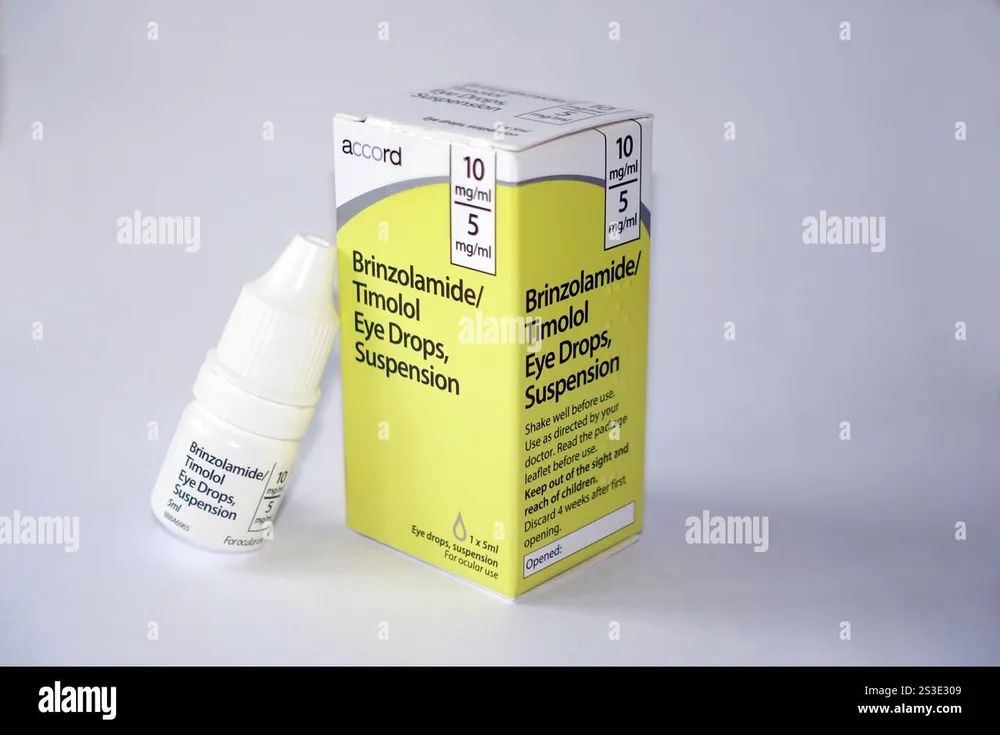
Table of Contents
- Package leaflet: Information for the user
- 1. What Brinzolamide Accord is and what it is used for
- 2. Important information before using Brinzolamide Accord
- 3. How to use Brinzolamide Accord
- 4. Possible adverse effects
- 5. How to store Brinzolamide Accord
- 6. Contents of the package and other information
Package leaflet: Information for the user
Brinzolamide Accord, 10 mg/mL, eye drops, suspension
Brinzolamide
Please read all of this leaflet carefully before using this medicine because it contains
important information for you.
- Keep this leaflet. You may need to read it again.
- If you have any further questions, ask your doctor or pharmacist.
- This medicine has been prescribed for a specific individual. Do not pass it on to others. It may harm other people, even if their symptoms are the same.
- If you experience any side effects, including any not listed in this leaflet, tell your doctor or pharmacist. See section 4.
Contents of the leaflet
- What Brinzolamide Accord is and what it is used for
- Important information before using Brinzolamide Accord
- How to use Brinzolamide Accord
- Possible side effects
- How to store Brinzolamide Accord
- Contents of the pack and other information
1. What Brinzolamide Accord is and what it is used for
Brinzolamide Accord contains the active substance brinzolamide, which belongs to a group of medicines called carbonic anhydrase inhibitors. It reduces the pressure inside the eye.
Brinzolamide Accord is used to treat high pressure in the eye. This pressure may lead to a condition called glaucoma.
If the pressure in your eye is too high, it may cause damage to your vision.
2. Important information before using Brinzolamide Accord
When not to use Brinzolamide Accord
- If the patient has severe kidney disease.
- If the patient is allergic to brinzolamide or any of the other ingredients of this medicine (listed in section 6).
- If the patient is allergic to medicines called sulfonamides. Examples of sulfonamides include medicines used to treat diabetes, infections, and diuretics (water tablets). Brinzolamide Accord may cause similar allergic reactions.
- If the patient has excessive acidity of the blood (a condition called hyperchloremic acidosis).
If in doubt, consult a doctor.
Warnings and precautions
Before starting treatment with Brinzolamide Accord, discuss with a doctor or pharmacist:
-
If the patient has kidney or liver disorders.
-
If the patient has dry eye or corneal disorders.
-
If the patient is taking other sulfonamide medicines. If the patient has a certain type of glaucoma in which intraocular pressure increases due to blockage of fluid drainage by deposits (pigmentary or pseudoexfoliative glaucoma), or a type of glaucoma in which intraocular pressure increases (sometimes suddenly) because the eye bulges forward, thereby blocking fluid drainage (angle-closure glaucoma).
-
If the patient has ever experienced severe skin rash, skin peeling, blistering, and/or mouth ulcers after using brinzolamide or other related medicines.
Exercise special caution when using brinzolamide:
Severe skin reactions, including Stevens-Johnson syndrome and toxic epidermal necrolysis, have been reported with brinzolamide treatment. Brinzolamide must be discontinued and immediate medical help sought if any symptoms associated with these severe skin reactions described in section 4 occur.
Children and adolescents
Brinzolamide Accord should not be used in infants, children, or adolescents under 18 years of age unless specifically directed by a doctor.
Brinzolamide Accord and other medicines
Tell your doctor or pharmacist about all medicines the patient is currently taking or has recently taken, as well as any medicines the patient plans to take, including over-the-counter medicines.
Inform your doctor if the patient is taking other carbonic anhydrase inhibitors (acetazolamide or dorzolamide, see section 1. What Brinzolamide Accord is and what it is used for).
Pregnancy and breastfeeding
If the patient is pregnant or breastfeeding, suspects she may be pregnant, or is planning to become pregnant, she should consult a doctor or pharmacist before using this medicine.
Women of childbearing potential are advised to use an effective method of contraception during treatment with Brinzolamide Accord. Brinzolamide Accord is not recommended for use in pregnant or breastfeeding women. Brinzolamide Accord must not be used unless otherwise decided by a doctor.
Before taking any medicine, consult a doctor or pharmacist.
Driving and operating machinery
Do not drive or operate machinery until vision has returned to normal. Vision may be blurred for a short time after instilling Brinzolamide Accord.
Brinzolamide Accord may impair the ability to perform tasks requiring increased attention and/or motor coordination. If such symptoms occur, caution should be exercised when driving motor vehicles or operating mechanical equipment.
Brinzolamide Accord contains benzalkonium chloride
Brinzolamide Accord contains a preservative (benzalkonium chloride) which may be absorbed by soft contact lenses and may alter their colour. Contact lenses must be removed before instillation and at least 15 minutes should elapse before reinsertion. Benzalkonium chloride may also cause eye irritation, particularly in patients with dry eye syndrome or corneal disorders (the transparent layer at the front of the eye). If any abnormal eye sensations, stinging, or eye pain occur after using the medicine, contact a doctor.
3. How to use Brinzolamide Accord
This medicine should always be used exactly as directed by your doctor or pharmacist.
If in doubt, consult your doctor or pharmacist.
Brinzolamide Accord is for ophthalmic use only. Do not swallow or inject this medicine.
Recommended dose
1 drop into the affected eye or eyes twice daily – in the morning and evening.
Use this dose unless your doctor has advised otherwise. Brinzolamide Accord may be used in both eyes only if specifically instructed by your doctor. Continue using the medicine for as long as your doctor recommends.
Instructions for use
- Prepare the Brinzolamide Accord bottle and a mirror.
- Wash your hands.
- Shake the bottle and unscrew the cap. If the safety collar is loose after removing the cap, remove it before using the medicine.
- Hold the inverted bottle between your thumb and middle finger.
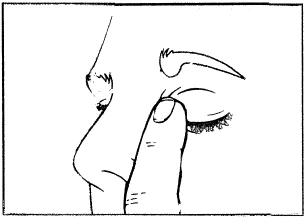
- Tilt your head backward. Gently pull down the lower eyelid with a clean finger to form a "pocket" between the eyeball and eyelid; the drop should be instilled into this pocket (Figure 1).
- Bring the tip of the bottle close to the eye. A mirror may be helpful.
- Do not touch the dropper tip to the eye, eyelid, surrounding areas, or any other surface, as this may contaminate the medicine.
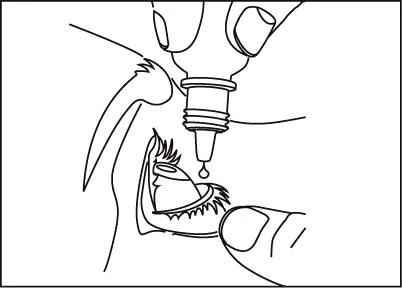
- Squeeze one drop into the pocket (Figure 2).
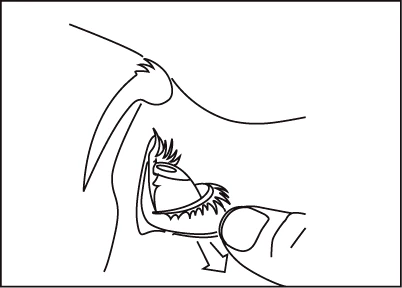
- After instilling Brinzolamide Accord, press with a finger on the inner corner of the eye near the nose (Figure 3) for at least 1 minute. This helps prevent the medicine from draining into the rest of the body.
- If treating both eyes, repeat the above steps for the second eye.
- Immediately after use, tightly close the bottle.
- Open a new bottle only after completely using the contents of the previous one.
If a drop misses the eye, repeat the instillation attempt.
If using other eye drops, wait at least 5 minutes between instilling Brinzolamide Accord and the other drops. Ointments should be applied last.
If you use more Brinzolamide Accord than recommended
If too many drops are instilled, rinse the eyes with lukewarm water. Do not instill more medicine until the next scheduled dose.
If you forget to use Brinzolamide Accord
As soon as you remember, instill one drop into the eye and then continue with your regular dosing schedule. Do not double the dose to make up for a missed dose.
Stopping Brinzolamide Accord
If you stop using Brinzolamide Accord without consulting your doctor, intraocular pressure may no longer be controlled, which could lead to vision loss.
4. Possible adverse effects
Like all medicines, this medicine can cause adverse effects, although not everyone will experience them.
You should stop using brinzolamide and seek immediate medical help if you notice any of the following symptoms:
- Red, flat rash spots with a circular shape or resembling a target (bullseye), occurring on the trunk, often with blisters in the centre, skin peeling, ulcers in the mouth, throat, nose, genital organs and eyes. These severe skin rashes may be preceded by fever and flu-like symptoms (Stevens-Johnson syndrome, toxic epidermal necrolysis).
The following adverse effects have been observed during the use of Brinzolamide Accord.
Common adverse effects (may affect up to 1 in 10 people)
Eye-related symptoms:
blurred vision; eye irritation, eye pain, eye discharge, eye itching, dry eyes, unusual sensations in the eye, eye redness.
General symptoms: unpleasant taste.
Uncommon adverse effects (may affect up to 1 in 100 people)
Eye-related symptoms:
light sensitivity, inflammation or conjunctivitis, eye swelling, eyelid itching, redness or swelling, eye deposits, dazzling light effect, burning sensation, increased eye surface area, increased eye pigmentation, eye fatigue, eyelid crusts, increased tear production.
General symptoms:
slowed or weakened heart function, strong heartbeat which may be fast or irregular, slowed heart rate, breathing difficulties, shortness of breath, cough, decreased number of red blood cells in blood, increased blood chloride concentration, dizziness, memory problems, depression, nervousness, reduced emotional involvement, nightmares, general weakness, fatigue, unusual feeling of well-being, pain, movement difficulties, decreased sexual drive, difficulties with male sexual performance, cold-like symptoms, congestion of lower respiratory tract, sinus infection, sore throat, throat irritation, unusual or reduced sensation in the mouth, oesophageal mucositis, abdominal pain, nausea, vomiting, indigestion, frequent contractions of the large intestine, diarrhoea, gas accumulation in the intestines, digestive disturbances, kidney pain, muscle pain, muscle cramps, back pain, nosebleeds, non-allergic rhinitis, nasal congestion, sneezing, rash, unusual skin sensation, itching, smooth skin rash or red, raised bumps, skin tightness, headache, dry mouth, eye deposits.
Rare adverse effects (may affect up to 1 in 1,000 people)
Eye-related symptoms:
corneal swelling, double or limited vision, abnormal vision, flashes of light in the visual field, reduced sensation in the eye, swelling around the eye, increased intraocular pressure, optic nerve damage.
General symptoms:
memory disorders, drowsiness, chest pain, congestion in upper respiratory tract, sinus congestion, non-allergic rhinitis, dry nose, ringing in the ears, hair loss, generalized itching, feeling of shakiness, irritability, irregular heart rhythm, general malaise, difficulty falling asleep, wheezing, itchy skin rash.
Frequency not known (frequency cannot be determined from available data)
Eye-related symptoms:
eyelid abnormalities, visual disturbances, corneal disease, eye allergy, reduced growth or number of eyelashes, eyelid redness.
General symptoms:
severe allergic reactions, reduced sensation, tremor, loss or reduced sense of taste, low blood pressure, high blood pressure, increased heart rate, joint pain, asthma, limb pain, skin redness, inflammation or itching, abnormal liver function test results from blood tests, limb swelling, frequent urination, decreased appetite, malaise, red, flat circular rash or target-like rash on the trunk, often with blisters in the centre, skin peeling, ulcers in the mouth, throat, nose, genital organs and eyes, which may be preceded by fever and flu-like symptoms. These severe skin rashes may be life-threatening (Stevens-Johnson syndrome, toxic epidermal necrolysis).
Reporting of adverse effects
If any adverse effects occur, including any not listed in this leaflet, inform your doctor or pharmacist. Adverse effects can be reported directly to the Department of Monitoring Adverse Drug Reactions at the Office for Registration of Medicinal Products, Medical Devices and Biocidal Products:
Al. Jerozolimskie 181C
02-222 Warsaw
Phone: 22 49-21-301
Fax: 22 49-21-309
Website: https://smz.ezdrowie.gov.pl
Adverse effects can also be reported to the marketing authorisation holder.
Reporting adverse effects helps provide more information on the safety of the medicine.
5. How to store Brinzolamide Accord
Keep this medicine out of the sight and reach of children.
Do not use this medicine after the expiry date stated on the bottle and carton, after "EXP".
The expiry date refers to the last day of the stated month.
This medicine does not require any special storage conditions.
To prevent infections, the bottle should be discarded four weeks after first opening.
The opening date of each bottle should be recorded in the space provided below and in the designated space on the bottle label and carton. For a pack containing one bottle, enter only one date.
Date of opening (1):
Date of opening (2):
Date of opening (3):
Medicines must not be disposed of via wastewater or household waste. Ask your pharmacist how to dispose of medicines no longer required. This will help protect the environment.
6. Contents of the package and other information
What Brinzolamide Accord contains
- The active substance is brinzolamide. Each millilitre contains 10 mg of brinzolamide.
- The other ingredients are: benzalkonium chloride, mannitol, carbomer 974P, disodium edetate, purified water, sodium chloride. Small amounts of hydrochloric acid or sodium hydroxide may have been added to the product to adjust the pH to the normal range.
What Brinzolamide Accord looks like and contents of the pack
Brinzolamide Accord is a white or almost white, homogeneous suspension.
The immediate packaging is a sterile 10 mL bottle made of low-density polyethylene (LDPE) with a sterile dropper made of LDPE and a sterile screw cap made of high-density polyethylene (HDPE) with a tamper-evident seal, containing 5 mL of suspension.
Pack sizes:
Carton pack containing 1 or 3 bottles.
Not all pack sizes may be marketed.
Marketing Authorisation Holder
Accord Healthcare Polska Sp. z o.o.
Taśmowa Street 7
02-677 Warsaw
Tel: +48 22 577 28 00
Manufacturer
Lusomedicamenta Sociedade Técnica Farmacêutica, S.A.
Rua Norberto de Oliveira, no 1/5
2620-111 Póvoa de Santo Adrião
Portugal
This medicinal product is authorised in the European Economic Area countries under the following names:
| Member State | Medicinal product name |
| Denmark | Brinzolamide Accord |
| Finland | Brinzolamide Accord |
| Poland | Brinzolamide Accord |
| Portugal | Brinzolamida Accord |
| Romania | Brinzolamidă Accord 10 mg/ml eye drops, suspension |
| Sweden | Brinzolamide Accord |