Briglau free
Poland
Table of Contents
Patient Information Leaflet
Briglau Free, 2 mg/ml, eye drops, solution
Brimonidine tartrate
Please read the entire leaflet carefully before using this medicine, as it contains
important information for the patient.
- Keep this leaflet for future reference.
- If you have any questions, consult your doctor or pharmacist.
- This medicine has been prescribed for a specific individual. Do not share it with others. This medicine may harm others, even if their symptoms appear identical.
- If the patient experiences any adverse reactions, including any not listed in this leaflet, inform a doctor or pharmacist immediately. See section 4.
Table of Contents
- What is Briglau Free and what is it used for?
- Important information before using Briglau Free
- How to use Briglau Free
- Possible adverse effects
- How to store Briglau Free
- Contents of the pack and other information
1. What is Briglau Free and what is it used for?
Briglau Free is used to reduce intraocular pressure.
Briglau Free may be used as a single agent in patients for whom treatment with β-adrenergic receptor-blocking eye drops is contraindicated, or as an adjunctive therapy together with other eye drops when intraocular pressure is not sufficiently controlled with single agents in the treatment of open-angle glaucoma or ocular hypertension.
The active substance in Briglau Free is brimonidine tartrate, which reduces intraocular pressure.
2. Important information before using Briglau Free
When not to use Briglau Free
- if the patient is allergic to brimonidine tartrate or any of the other ingredients of this medicine (listed in section 6),
- if the patient is taking monoamine oxidase inhibitors (MAO inhibitors) (examples of such medicines include those used in depression or Parkinson's disease) or certain antidepressant medicines. Tell your doctor if you are taking any antidepressant medicines,
- if the patient is breastfeeding,
- in children under 2 years of age.
Warnings and precautions
Before starting to use Briglau Free, discuss this with your doctor or pharmacist:
- if the patient has or has previously had depression, reduced mental function, cerebral circulation disorders, heart disorders, circulation disorders in the limbs, or hypotension;
- if the patient has or has previously had kidney or liver function disorders;
- if the medicine is to be used in children aged 2 to 12 years, as Briglau Free is not recommended for this age group.
Children and adolescents
Briglau Free is not recommended for use in children under 12 years of age.
Briglau Free must not be used in children under 2 years of age.
Briglau Free and other medicines
Tell your doctor or pharmacist about all medicines the patient is currently taking or has recently taken, as well as any medicines the patient plans to take.
Briglau Free may affect the action of other medicines, and other medicines may affect the action of Briglau Free. This includes other eye drops used in the treatment of glaucoma.
Inform your doctor if you are taking or plan to take any of the following medicines:
- medicines that lower blood pressure,
- medicines for heart conditions, including digoxin,
- painkillers, sedatives, opioid painkillers, barbiturates,
- medicines that may affect metabolism, such as chlorpromazine, methylphenidate, and reserpine,
- anaesthetics,
- medicines acting on the same receptor as Briglau Free, such as isoprenaline and prazosin,
- monoamine oxidase inhibitors (MAO inhibitors) or antidepressants, including amitriptyline, nortriptyline, clomipramine, mianserin, venlafaxine, and duloxetine,
- medicines used for other conditions, even those unrelated to eye disease, or if the dosage of any medicine currently taken has changed.
If the patient is using other eye drops or ointments simultaneously, at least a 5-minute interval should be maintained between the administration of each medicine. Eye ointments should be used last.
Briglau Free and alcohol
If the patient regularly consumes alcohol, consult your doctor before starting to use this medicine. Alcohol may affect the action of Briglau Free.
Pregnancy and breastfeeding
If the patient is pregnant or breastfeeding, suspects she may be pregnant, or is planning to have a child, she should consult her doctor or pharmacist before using this medicine.
Briglau Free should not be used during breastfeeding.
Consult your doctor before using this medicine during pregnancy.
Driving and operating machinery
After instilling Briglau Free, vision may be blurred or disturbed for some time, especially at night or in dim lighting conditions.
In some patients, Briglau Free may also cause dizziness, drowsiness, or fatigue.
Do not drive or operate machinery until these symptoms have subsided.
3. How to use Briglau Free
This medicine should always be used exactly as your doctor has told you. If in doubt, consult your doctor or pharmacist.
Briglau Free is intended for ophthalmic use only. Do not take this medicine orally or by injection.
Adults, adolescents and children over 12 years of age
The recommended dose is one drop into the affected eye(s) twice daily. The medicine should be used every day at the same time.
Children under 12 years of age
Briglau Free must not be used in children under 2 years of age.
Briglau Free is not recommended for use in children aged 2 to 12 years.
Briglau Free is a sterile solution which does not contain preservatives. See section 6. What Briglau Free looks like and what the package contains.
Before instilling eye drops:
- For first-time use, before administering the drop into the eye, the patient should test the dropper bottle by squeezing it slowly until one drop is dispensed. This should be done away from the eye.
- If the patient feels confident about being able to instill a single drop, they should adopt the most comfortable position for instillation (sitting, lying on the back, or standing in front of a mirror).
Instructions for use:
- Wash your hands thoroughly before instilling the medicine.
- Do not use the medicine if the packaging or bottle is damaged.
- Before first use, unscrew the cap after ensuring that the tamper-evident ring on the cap is intact. A slight resistance will be felt when unscrewing until the ring breaks ( Figure 1 ).
- If the tamper-evident ring is loose, remove it before using the medicine, as it may fall into the eye and cause injury.
- Tilt the head backwards and gently pull down the lower eyelid with a finger to create a "pocket" between the eyeball and the eyelid ( Figure 2 ). Avoid touching the dropper tip to the eye, eyelids or fingers.
- Instill one drop by gently squeezing the bottle ( Figure 3 ). Squeeze the bottle gently in the middle to allow the drop to enter the patient's eye. Please note that there may be a delay of several seconds between squeezing the bottle and the release of the drop. Do not squeeze the bottle too hard. If in any doubt about how to use the medicine, consult your doctor, pharmacist or nurse.
- After instilling the medicine, press with a finger on the tear duct (inner corner of the eye near the nose) for at least 1 minute, keeping the eye(s) closed during this time. This helps the medicine to be absorbed into the eye and reduces the amount of medicine passing through the tear duct into the rest of the body.
- If your doctor has advised using drops in the other eye, repeat steps 5, 6 and 7.
- After use, and before recapping, shake the bottle downwards without touching the dropper tip to remove any residual liquid from the tip. This is necessary to ensure that subsequent drops can be dispensed properly. Immediately after use, tightly replace the cap ( Figure 4 ).
If the drop does not enter the eye, repeat the instillation.
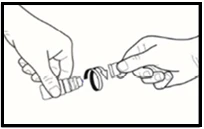
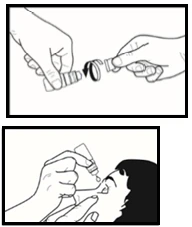
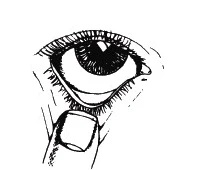
Figure 1. Figure 2. Figure 3. Figure 4.
Use of a higher than recommended dose of Briglau Free
Adults
In adults who have used more drops than recommended, the adverse reactions reported were the same as those observed with the recommended use of Briglau Free.
In adults who accidentally swallowed Briglau Free, a drop in blood pressure occurred, followed in some patients by a rise in blood pressure.
Children
Severe adverse reactions have been reported in children who accidentally swallowed Briglau Free.
The following symptoms were observed: coma or disturbances of consciousness (usually transient), lethargy, slow heart rate, drowsiness, reduced muscle tone, low body temperature, pallor, breathing difficulties, and apnoea. If any of these symptoms occur, contact a doctor immediately.
Adults and children
If Briglau Free is swallowed or if more than the recommended dose is used, contact a doctor immediately.
Missed dose of Briglau Free
Apply the next dose at the scheduled time. Do not use a double dose to make up for a missed dose. Never use more than one drop in the affected eye(s) twice daily.
Stopping Briglau Free treatment
Do not stop using Briglau Free without consulting your doctor. If treatment with Briglau Free is discontinued, intraocular pressure will no longer be controlled, which may lead to loss of vision.
If you have any further questions about the use of this medicine, consult your doctor or pharmacist.
4. Possible adverse reactions
Like all medicines, this medicine can cause adverse reactions, although they do not occur in everyone.
If any of the following adverse reactions occur in a patient, treatment should be discontinued immediately
and medical advice should be sought urgently, as these may be symptoms of an allergic reaction
to the medicine.
- Severe skin reactions, including rash or redness or itching of the skin or eyes
- Breathing difficulties
- Chest pain, irregular heartbeat.
Immediate medical advice should be sought if the patient experiences severe fatigue or dizziness.
The following adverse reactions have been observed during the use of Briglau Free and other
medicines containing brimonidine.
Very common adverse reactions (may affect more than 1 in 10 patients)
- Eye-related effects: eye irritation (red eyes, burning sensation, stinging, itching, sensation of foreign body in the eye, blisters or white spots on the conjunctiva), blurred vision, allergic eye reactions, allergic blepharitis and/or conjunctivitis.
- General effects: headache, dry mouth, and feeling of fatigue and/or drowsiness.
Common adverse reactions (may affect less than 1 in 10 patients)
- Eye-related effects: local irritation (inflammation and/or redness of eyelids, blepharitis, conjunctival swelling, presence of discharge in the conjunctival sac, eye pain and tearing), photophobia, corneal damage and corneal spots, dry eye, conjunctival pallor, visual disturbances, conjunctivitis.
- General effects: dizziness, influenza-like symptoms, gastrointestinal symptoms, taste disturbances and general weakness.
Uncommon adverse reactions (may affect less than 1 in 100 patients)
- General effects: depression, palpitations or irregular heartbeat, nasal mucosal dryness, generalized allergic reactions.
Rare adverse reactions (may affect less than 1 in 1,000 patients)
- General effects: dyspnoea.
Very rare adverse reactions (may affect less than 1 in 10,000 patients)
- Eye-related effects: iritis, miosis.
- General effects: insomnia, fainting, hypertension, hypotension.
Frequency not known (cannot be estimated from available data)
- Eye-related effects: uveitis (inflammation of the anterior vascular layer of the eye), eyelid itching.
- General effects: skin reactions including erythema, facial swelling, itching, rash and vasodilation.
Reporting of adverse reactions
If any adverse reactions occur, including any adverse reactions not listed in this leaflet, the patient should inform their doctor or pharmacist. Adverse reactions can be reported directly to the Department of Monitoring Adverse Reactions of Medicinal Products at the Office for Registration of Medicinal Products, Medical Devices and Biocidal Products
Al. Jerozolimskie 181C
02-222 Warsaw
Phone: +48 22 49 21 301
Fax: +48 22 49 21 309
Website: https://smz.ezdrowie.gov.pl
Adverse reactions can also be reported to the marketing authorization holder.
Reporting adverse reactions helps to provide more information on the safety of the medicine.
5. How to store Briglau Free
Do not store above 30°C.
Keep the medicine in a place invisible and inaccessible to children.
Do not use this medicine after the expiry date stated on the carton and bottle. The expiry date refers to the last day of the stated month.
The marking on the packaging following EXP indicates the expiry date, and following Lot indicates the batch number.
Shelf-life after first opening the bottle: 90 days.
Medicines must not be disposed of via wastewater or household waste. Ask your pharmacist how to dispose of medicines no longer in use. This will help protect the environment.
6. Contents of the pack and other information
What Briglau Free contains
- The active substance is brimonidine tartrate. Each ml of solution contains 2 mg of brimonidine tartrate, equivalent to 1.3 mg of brimonidine. Each drop of solution contains approximately 0.06 mg of brimonidine tartrate, equivalent to approximately 0.04 mg of brimonidine.
- Other ingredients are: polyvinyl alcohol 40-88, sodium citrate, citric acid monohydrate, sodium chloride, hydrochloric acid, diluted (for pH adjustment), sodium hydroxide (for pH adjustment), water for injections.
What Briglau Free looks like and contents of the pack
Briglau Free is a transparent, yellow-green solution.
The medicine is available in a white bottle (LDPE) containing 5 ml of solution (not less than 127 drops),
with a multi-dose dropper (HDPE) preventing bacterial contamination of the solution,
thanks to a system consisting of a silicone membrane and filtration of air drawn into the bottle,
with a cap made of HDPE with a tamper-evident ring, packed in a cardboard box.
Pack sizes:
1 bottle of 5 ml.
3 bottles of 5 ml.
Not all pack sizes may be marketed.
Marketing Authorisation Holder
Zakłady Farmaceutyczne POLPHARMA S.A.
ul. Pelplińska 19, 83-200 Starogard Gdański
tel. +48 22 364 61 01
Manufacturer
Rafarm S.A.
Thesi Pousi Xatzi Agiou Louka
Paiania, 190 02
Greece