Bramitob
Poland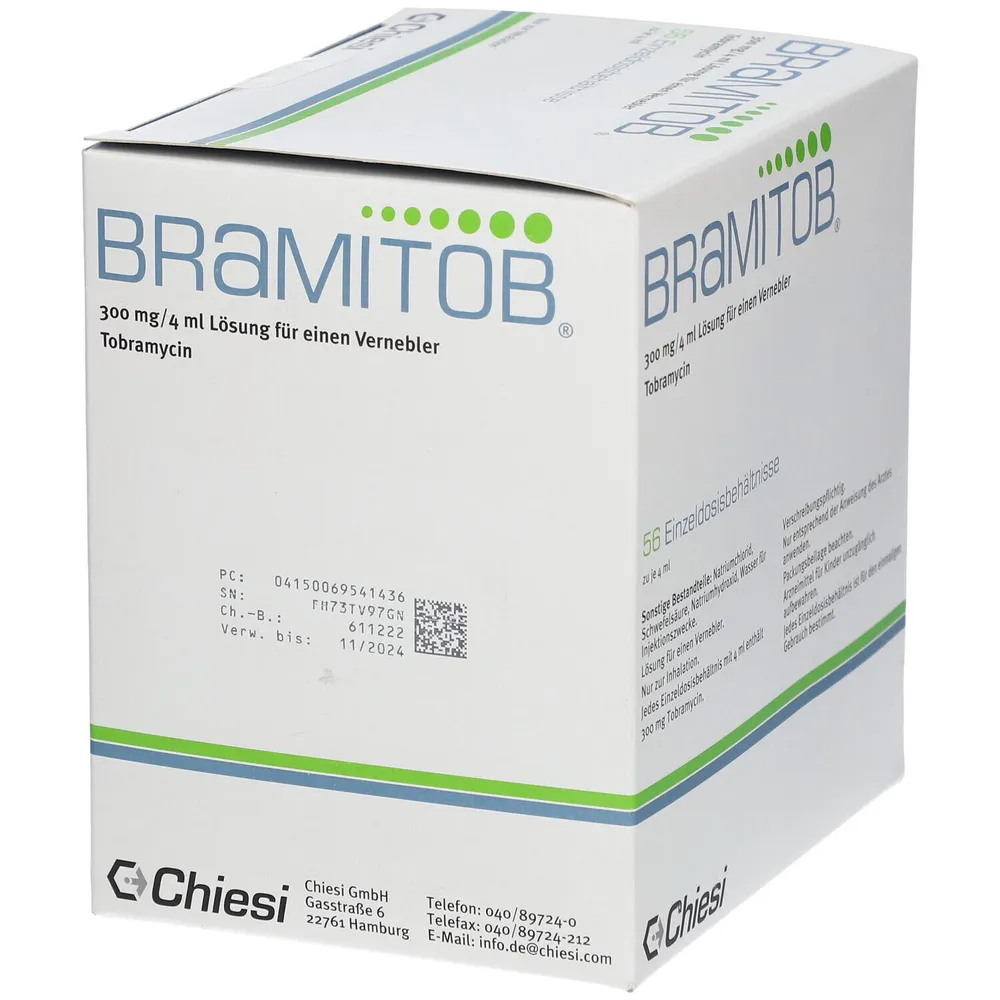
Table of Contents
Package leaflet: Information for the patient
Bramitob, 300 mg/4 ml, solution for nebulization
Tobramycinum
Please read carefully the entire leaflet before using the medicine, as it contains
important information for the patient.
- Keep this leaflet, so that you can read it again if necessary.
- If you have any doubts, please consult your doctor or pharmacist.
- This medicine has been prescribed for a specific individual. Do not give it to others. The medicine may harm another person, even if their symptoms are the same.
- If the patient experiences any adverse reactions, including any adverse reactions not listed in this leaflet, inform your doctor or pharmacist. See section 4.
Table of contents of the leaflet
- What Bramitob is and what it is used for
- Important information before using Bramitob
- How to use Bramitob
- Possible side effects
- How to store Bramitob
- Contents of the pack and other information
1. What Bramitob is and what it is used for
Bramitob contains tobramycin, which is an antibiotic belonging to a group of medicines called aminoglycosides. It fights infections caused by the bacterium Pseudomonas aeruginosa.
Bramitob is used in patients with cystic fibrosis for the treatment of chronic lung infections caused by Pseudomonas bacteria. The medicine acts as a bactericidal agent (kills bacteria), which helps improve breathing. Pseudomonas bacteria are among the most common bacteria causing infections in nearly all patients with cystic fibrosis at some point in their lives. In some patients, the infection occurs later in life, while in others it occurs at a very young age. If the infection is not adequately controlled, it may lead to lung damage and further complications. Because Bramitob is administered by inhalation, the antibiotic – tobramycin – reaches directly into the lungs to fight the bacteria causing the infection.
Bramitob is indicated for use only in patients aged 6 years and older.
To achieve the best treatment outcomes, every effort should be made to use the medicine exactly as instructed.
2. Important information before using Bramitob
When not to use Bramitob:
- if the patient is allergic to tobramycin, any of the other ingredients of this medicine (listed in section 6), or to any other aminoglycoside antibiotic;
- if the patient is using other medicines listed below under "Bramitob and other medicines".
Warnings and precautions
Before starting treatment with Bramitob, discuss this with your doctor or pharmacist.
Tobramycin contained in Bramitob belongs to a group of medicines that may sometimes cause
hearing loss, dizziness, and kidney damage (see also section 4. "Possible side effects").
It is important to inform your doctor if any of the symptoms described below occur.
- If the patient experiences chest tightness after using Bramitob. The first dose of Bramitob will be supervised by a doctor, who will check lung function before and after administration. If the patient is not currently using a bronchodilator (e.g., salbutamol), the doctor may recommend using one before administering Bramitob.
- If the patient has ever had neuromuscular disorders such as parkinsonism or other conditions characterized by muscle weakness, including myasthenia gravis.
- If the patient has ever had kidney disease. Before starting treatment with Bramitob, the doctor may check whether the patient's kidney function is normal by ordering blood or urine tests. The doctor may regularly monitor kidney function during treatment.
- If the patient has ever had:
- ringing in the ears,
- any other hearing problems,
- dizziness. The doctor may check the patient's hearing before starting treatment with Bramitob and at each stage during treatment.
- If the patient is currently coughing up blood in sputum. Inhaled medicines may cause coughing, and the treating doctor may decide to discontinue Bramitob until only small amounts of blood appear in the sputum or until blood no longer appears in the sputum.
- If the patient is concerned that Bramitob is not working as effectively as it should. Sometimes bacteria may become resistant to antibiotics.
Bramitob and other medicines
Tell your doctor or pharmacist about all medicines the patient is currently taking or has recently taken, as well as any medicines the patient plans to take, including those available without a prescription.
- If the patient is taking diuretics containing furosemide or ethacrynic acid, Bramitob should not be used without discussing it with the doctor.
- If the patient is receiving urea or intravenous or oral mannitol (medicines used in hospitals to treat severely ill patients), Bramitob should not be used.
- Some other medicines may sometimes harm the kidneys or hearing, and these effects may be intensified during treatment with Bramitob.
In addition to inhaled Bramitob, the patient may receive tobramycin or other aminoglycosides by injection. Such injections, which may increase the very low blood concentration of aminoglycoside resulting from Bramitob inhalation, should be avoided if the patient is also taking the following medicines:
- amphotericin B, cephalothin, cyclosporine, tacrolimus, polymyxins,
- platinum compounds (e.g. carboplatin or cisplatin),
- cholinesterase inhibitors (e.g. neostigmine or pyridostigmine), botulinum toxin. If this applies to the patient, talk to the doctor.
Pregnancy and breastfeeding
If the patient is pregnant or breastfeeding, suspects she may be pregnant, or is planning to have a child, she should consult her doctor or pharmacist before using this medicine.
It is not known whether inhaling this medicine by a pregnant woman causes adverse effects.
Tobramycin and other aminoglycoside antibiotics administered by injection may harm the unborn child, for example by causing deafness and kidney problems.
If the patient is breastfeeding, she should consult her doctor before using this medicine.
Driving and operating machinery
Bramitob has a minor influence on the ability to drive and operate machinery.
Bramitob may rarely cause dizziness. For this reason, Bramitob may affect the ability to drive and operate machinery.
3. How to use Bramitob
This medicine should always be used exactly as prescribed by the doctor. If in doubt, consult
your doctor or pharmacist. Instructions for using Bramitob are provided below, after the dosing
recommendations.
Do not mix or dilute Bramitob with other medicines in the nebulizer.
If the patient is taking several medicines for cystic fibrosis, they should be used in the following
order:
- bronchodilator medicine (e.g. salbutamol), then
- chest physiotherapy, then
- other inhaled medicines, then
- Bramitob. Confirm the correct order of administration with your doctor.
Bramitob should be administered using a clean, dry PARI LC PLUS or PARI LC SPRINT reusable
nebulizer (for personal use only) and the appropriate compressor.
Ask your doctor or physiotherapist which compressor to use.
The single-dose container of Bramitob should be opened immediately before use.
Any unused solution remaining after use must be discarded immediately.
Dosage
- The dose (one 4 ml container) is the same for all patients aged 6 years and older.
- Two single-dose containers should be used daily for 28 days. The contents of one container should be taken in the morning and the second in the evening. A 12-hour interval should be maintained between doses.
- This is followed by a 28-day treatment-free period, after which the next 28-day treatment cycle begins.
- It is important to use the medicine twice daily on every day of the 28-day treatment period and to maintain the 28 days on, 28 days off cycle. Bramitob should be taken according to this regimen until the doctor decides to discontinue treatment.
Use of more Bramitob than prescribed
If the patient inhales too much Bramitob, severe hoarseness may occur. Inform the doctor as
quickly as possible.
If you forget to use Bramitob
- If more than 6 hours remain before the next dose (container), take Bramitob as soon as possible.
- If less than 6 hours remain before the next dose (container), skip the missed dose. Take the next dose at the usual time.
Stopping Bramitob
If you have any further questions about the use of this medicine, consult your doctor,
pharmacist, or nurse.
Instructions for use
Bramitob is intended for administration via a nebulizer and must not be used in any other way.
- Before opening the single-dose container as described below, wash your hands thoroughly with soap and water.
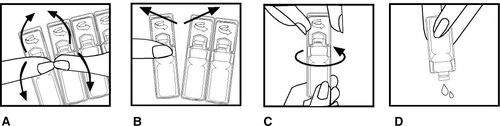
- Bend the single-dose container forward and backward (Fig. A).
- Carefully peel off a new container from the strip, separating the top and middle parts of the container (Fig. B), leaving the remaining containers in the foil pouch.
- Open the single-dose container by unscrewing the cap in the direction of the arrow (Fig. C).
- Gently squeeze the entire contents of the container into the nebulizer chamber (Fig. D).
- Turn on the compressor.
- Check that a uniform mist is emerging from the mouthpiece.
- Sit or stand upright in a position that allows normal breathing.
- Place the mouthpiece between your teeth, at the end of the tongue. Breathe normally, but only through your mouth (a nose clip may be helpful). Avoid blocking the mouthpiece with your tongue.
- Continue until all the Bramitob has been used, which should take approximately 15 minutes.
- If a temporary interruption is needed—for example, to cough, rest, or clear the airway—turn off the compressor to prevent loss of medication. Turn the compressor back on when the patient is ready to continue treatment.
If you have any questions about how to use this medicine, consult your doctor or
pharmacist.
Maintenance of the nebulizer and compressor
Follow the manufacturer's instructions for care and use of the nebulizer and compressor.
4. Possible adverse reactions
Like all medicines, this medicine can cause adverse reactions, although not everyone will experience them.
If you have any doubts regarding the adverse reactions listed below, please consult your doctor for clarification.
Very common adverse reactions of Bramitob, which may affect more than 1 in 100 patients, are:
cough, hoarseness.
Uncommon adverse reactions of Bramitob, which may affect more than 1 in 1,000 patients, are:
oral thrush (yeast infection), vertigo (vestibular disturbance), hearing loss, increased salivation, glossitis (inflammation of the tongue), rash, sore throat, increased liver enzyme activity in blood, noisy breathing, nausea, dryness of the mucous membranes, haemoptysis (coughing up blood), stomatitis and pharyngitis (inflammation of the mouth and throat), chest pain, hearing loss, headache, dyspnoea (shortness of breath), weakness, increased production of sputum (substance coughed up during coughing), stomach pain, and fungal infection.
Rare adverse reactions, which may affect more than 1 in 10,000 patients, are:
loss of appetite, tinnitus (ringing in the ears), chest tightness or breathing difficulties, loss of voice, nosebleeds, rhinitis (nasal inflammation), oral ulceration, vomiting, taste disturbances, asthma, dizziness, asthenia (loss of strength), fever and pain, laryngitis (voice change accompanied by sore throat and difficulty swallowing).
Very rare adverse reactions, which may affect fewer than 1 in 10,000 patients, are:
lymph node swelling, somnolence (drowsiness), ear disorders, ear pain, hyperventilation (increased respiratory rate), sinusitis, diarrhoea, allergic reactions including urticaria (hives) and pruritus (itching), hypoxia (lack of oxygen in the blood and body tissues), back pain, abdominal pain, and malaise (general feeling of being unwell).
Reporting of adverse reactions
If any adverse reactions occur, including any adverse reactions not listed in this leaflet, inform your doctor, pharmacist, or nurse.
Adverse reactions can be reported directly to the Department of Monitoring Adverse Drug Reactions at the Office for Registration of Medicinal Products, Medical Devices and Biocidal Products:
Al. Jerozolimskie 181C, 02-222 Warsaw
Tel.: +48 22 49 21 301
Fax: +48 22 49 21 309
Website: https://smz.ezdrowie.gov.pl
Adverse reactions can also be reported to the marketing authorization holder.
Reporting adverse reactions helps to provide more information on the safety of the medicine.
5. How to store Bramitob
- Keep this medicine out of sight and reach of children.
- For single use only. Do not use this medicine after the expiry date stated on the carton and label after: EXP. The expiry date refers to the last day of the stated month. Bramitob may still be used even if the solution changes colour. Shelf life during use: the Bramitob pouch (intact or opened) can be stored for up to 3 months at a temperature not exceeding 25 °C.
- Store in a refrigerator (2–8 °C). If the patient does not have access to a refrigerator or during transport of the medicine, the single-dose containers may be stored for up to 3 months at a temperature not exceeding 25 °C.
- Keep the containers in the original packaging to protect from light.
- After first opening of the single-dose container: use immediately.
- After first use: the single-dose container must be discarded immediately after use.
- Medicines must not be disposed of via wastewater or household waste. Ask your pharmacist how to dispose of medicines no longer required. These measures help protect the environment.
6. Contents of the pack and other information
What Bramitob contains
- The active substance is tobramycin. Each single-dose container with a volume of 4 ml contains 300 mg of tobramycin.
- The other ingredients are: sodium chloride, sulfuric acid, sodium hydroxide (for pH adjustment), and water for injections.
What Bramitob looks like and contents of the pack
Bramitob solution is yellowish in colour.
Bramitob, solution for nebulization, is available in single-dose containers containing 4 ml of solution. Each sealed foil pouch contains 4 containers. Cartons contain 16, 28 or 56 single-dose containers.
Not all pack sizes may be marketed.
Marketing Authorisation Holder and Manufacturer
Marketing Authorisation Holder:
Chiesi Farmaceutici S.p.A., Via Palermo 26/A, 43122 Parma, Italy
Manufacturer:
Chiesi Farmaceutici S.p.A., 96 Via S. Leonardo, 43122 Parma, Italy
Genetic S.p.A., Contrada Canfora, 84084 Fisciano – Salerno, Italy
For detailed information about this medicinal product, please contact the local representative of the Marketing Authorisation Holder:
Chiesi Poland Sp. z o.o., Al. Jerozolimskie 134, 02-305 Warsaw
Tel.: (22) 620 14 21, Fax: (22) 652 37 79, E-mail: [email protected]
This medicinal product is authorised in the European Economic Area and in the United Kingdom (Northern Ireland) under the following names:
Austria: Bramitob
Czech Republic: Bramitob
Denmark: Bramitob
Finland: Bramitob
Germany: Bramitob
Greece: Bramitob
Hungary: Bramitob
Ireland: Bramitob
Italy: Tobrineb
Netherlands: Bramitob
Poland: Bramitob
Norway: Bramitob
Portugal: Bramitobb
Slovakia: Bramitob
Spain: Bramitob
Sweden: Bramitob
United Kingdom (Northern Ireland): Bramitob
(logo of the Marketing Authorisation Holder)