Bortezomib reddy
Poland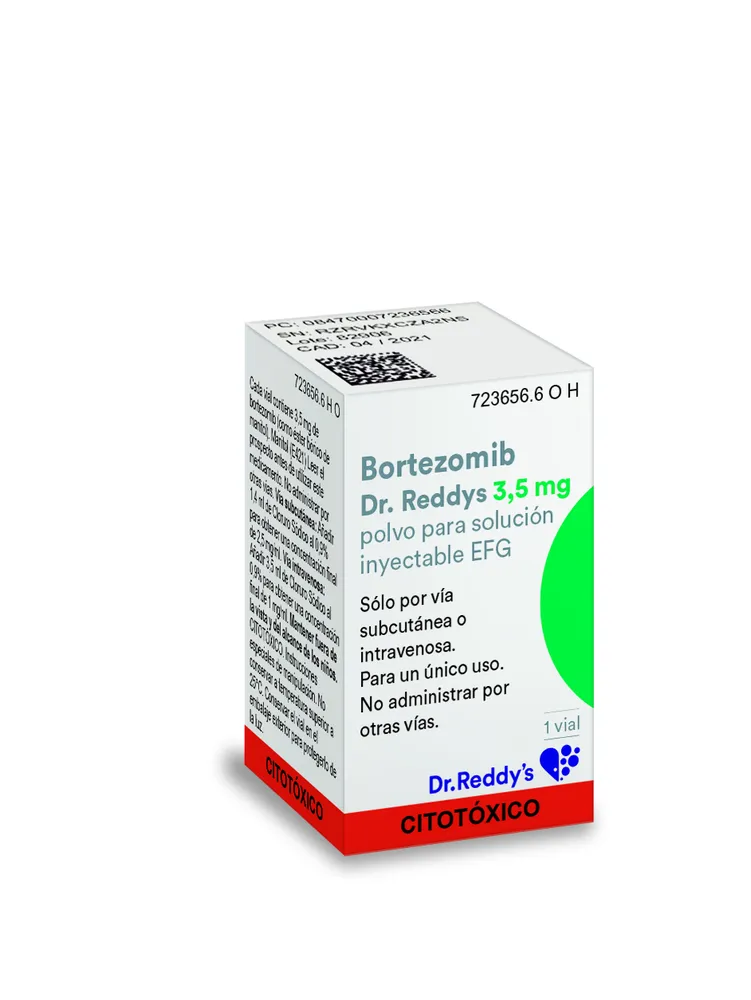
Table of Contents
Package leaflet: Information for the user
Bortezomib Reddy, 3.5 mg, powder for solution for injection
bortezomib
Please read all of this leaflet carefully before this medicine is administered because it contains
important information for you.
- Keep this leaflet as you may need to read it again.
- Please contact your doctor or pharmacist if you have any questions or doubts.
- If you experience any side effects, including any not listed in this leaflet, please inform your doctor or pharmacist. See section 4.
Table of contents
- What Bortezomib Reddy is and what it is used for
- Important information before using Bortezomib Reddy
- How to use Bortezomib Reddy
- Possible side effects
- How to store Bortezomib Reddy
- Contents of the pack and other information
1. What Bortezomib Reddy is and what it is used for
Bortezomib Reddy contains an active substance called bortezomib, which is a so-called
proteasome inhibitor. Proteasomes play an important role in controlling cell functions and their
development process. By interfering with their function, bortezomib may lead to the death of
cancer cells.
Bortezomib Reddy is used in the treatment of multiple myeloma (a cancer of the bone marrow) in
patients aged at least 18 years:
- as monotherapy or in combination with other medicines: pegylated liposomal doxorubicin or dexamethasone in patients whose disease has progressed (worsened) after at least one prior therapy and in whom autologous hematopoietic stem cell transplantation has failed or is not possible;
- in combination with melphalan and prednisone in patients who have not received prior therapy and who are not eligible for high-dose cytotoxic therapy followed by autologous hematopoietic stem cell transplantation;
- in combination with dexamethasone or dexamethasone with thalidomide in patients who have not received prior therapy and who are eligible for high-dose cytotoxic therapy followed by autologous hematopoietic stem cell transplantation (induction therapy).
Bortezomib Reddy is used in the treatment of mantle cell lymphoma (a type of cancer
affecting the lymph nodes) in patients aged at least 18 years, in combination with
rituximab, cyclophosphamide, doxorubicin, and prednisone, in patients who have not
received prior therapy and who are not eligible for autologous hematopoietic stem cell
transplantation.
2. Important information before using Bortezomib Reddy
When not to use Bortezomib Reddy
- if you are allergic to bortezomib, boron, or any of the other ingredients of this medicine (listed in section 6);
- if you have certain severe lung or heart diseases.
Warnings and precautions
Please inform your doctor if you:
- have low numbers of red or white blood cells;
- have bleeding disorders and/or low platelet count;
- have diarrhoea, constipation, nausea, or vomiting;
- have previously experienced fainting, dizziness, or lightheadedness;
- have impaired kidney function;
- have moderate to severe liver function impairment;
- have previously experienced numbness, tingling, or pain in hands and feet (neuropathy symptoms);
- have heart diseases or blood pressure problems;
- experience shortness of breath or cough;
- have seizures;
- have shingles (around the eyes or widespread);
- have symptoms of tumour lysis syndrome, such as muscle cramps, muscle weakness, confusion, vision loss or disturbances, and shortness of breath;
- experience memory loss, thinking difficulties, difficulty walking, or vision loss. These may be symptoms of a serious brain infection, and your doctor may recommend further tests and monitoring.
Regular blood tests must be performed before and during treatment with bortezomib to
monitor blood cell counts regularly.
If you have mantle cell lymphoma and are receiving bortezomib together with a medicine
containing rituximab, please inform your doctor:
- if you suspect or have had a hepatitis virus infection in the past. In several cases, patients with prior hepatitis B virus (HBV) infection have experienced reactivation of hepatitis, which could be fatal. If you have a history of HBV infection, you will be closely monitored by your doctor for signs of active HBV infection.
Before starting treatment with bortezomib, carefully read the leaflets of all medicinal
products used during treatment to obtain information about them. If you are taking
thalidomide, pregnancy must be ruled out, and effective contraception must be used (see
section “Pregnancy and breastfeeding”).
Children and adolescents
Bortezomib should not be used in children and adolescents, as it is not known how the medicine
works in this group of patients.
Bortezomib Reddy and other medicines
Please inform your doctor about all medicines you are currently taking, have recently taken, or
plan to take.
In particular, inform your doctor if you are taking medicines containing any of the following active
substances:
- ketoconazole, used to treat fungal infections;
- ritonavir, used to treat HIV infection;
- rifampicin, an antibiotic used to treat bacterial infections;
- carbamazepine, phenytoin, or phenobarbital, used to treat epilepsy;
- St John’s wort (Hypericum perforatum), used to treat depression and other conditions;
- oral antidiabetic medicines.
Pregnancy and breastfeeding
Bortezomib must not be used during pregnancy unless absolutely necessary.
Both men and women receiving bortezomib must use effective contraception during treatment and
for 3 months after treatment ends. If pregnancy occurs despite these measures, inform your doctor
immediately.
Women must not breast-feed during treatment with bortezomib. The safe time to resume
breastfeeding after treatment ends should be discussed with your doctor.
Thalidomide causes birth defects and fetal death. When bortezomib is used in combination with
thalidomide, patients must comply with the requirements of the “Thalidomide Pregnancy
Prevention Programme” (see the thalidomide package leaflet).
Driving and using machines
Bortezomib may cause fatigue, dizziness, fainting, and blurred vision. If you experience such
symptoms, you must not drive or operate tools or machines. Even if such symptoms do not occur,
you should still exercise caution.
3. How to use Bortezomib Reddy
The prescribing physician will determine the appropriate dose of bortezomib for the patient based on the patient's height and body weight (body surface area). The most commonly used starting dose of bortezomib is 1.3 mg/m² of body surface area administered twice weekly.
The physician may adjust the dose and the total number of treatment cycles depending on the patient's response to treatment, occurrence of adverse reactions, and additional medical conditions (e.g. liver disease).
Multiple myeloma
If bortezomib is given as a single agent, the patient will receive 4 doses of bortezomib intravenously or subcutaneously on days: 1, 4, 8, and 11, followed by a 10-day treatment break.
This 21-day period (3 weeks) is considered one treatment cycle. The patient may receive up to 8 cycles (24 weeks).
The patient may also receive bortezomib in combination with the medicines: pegylated liposomal doxorubicin or dexamethasone.
When bortezomib is administered together with pegylated liposomal doxorubicin, the patient will receive bortezomib intravenously or subcutaneously during each 21-day treatment cycle, and pegylated liposomal doxorubicin will be administered at a dose of 30 mg/m² as an intravenous infusion after bortezomib injection on day 4 of the 21-day bortezomib treatment cycle.
The patient may receive up to 8 cycles (24 weeks).
When bortezomib is administered together with dexamethasone, the patient will receive bortezomib intravenously or subcutaneously during each 21-day treatment cycle, and dexamethasone will be administered orally at a dose of 20 mg on days 1, 2, 4, 5, 8, 9, 11, and 12 of the 21-day bortezomib treatment cycle.
The patient may receive up to 8 cycles (24 weeks).
Previously untreated multiple myeloma
If the patient has not been previously treated for multiple myeloma and the patient does not qualify for hematopoietic stem cell transplantation, the patient will receive bortezomib in combination with other medicines: melphalan and prednisone.
In this case, each treatment cycle lasts 42 days (6 weeks). The patient will receive 9 cycles (54 weeks).
- During cycles 1–4, bortezomib is administered twice weekly on days: 1, 4, 8, 11, 22, 25, 29, and 32.
- During cycles 5–9, bortezomib is administered once weekly on days: 1, 8, 22, and 29.
Both melphalan (9 mg/m²) and prednisone (60 mg/m²) are administered orally on days 1, 2, 3, and 4 of the first week of each cycle.
If the patient has not been previously treated for multiple myeloma and the patient qualifies for hematopoietic stem cell transplantation, the patient will receive bortezomib intravenously or subcutaneously in combination with other medicines: dexamethasone or dexamethasone with thalidomide as induction therapy.
When bortezomib is administered with dexamethasone, the patient will receive bortezomib intravenously or subcutaneously in 21-day cycles, and dexamethasone at a dose of 40 mg will be administered orally on days 1, 2, 3, 4, 8, 9, 10, and 11 of the 21-day bortezomib treatment cycle.
The patient will receive up to 4 cycles (12 weeks).
When bortezomib is administered with dexamethasone and thalidomide, the treatment cycle lasts 28 days (4 weeks).
Dexamethasone at a dose of 40 mg will be administered orally on days 1, 2, 3, 4, 8, 9, 10, and 11 of the 28-day bortezomib treatment cycle, and thalidomide will be administered orally once daily at a dose of 50 mg up to day 14 of the first cycle; if this dose is tolerated, it will be increased to 100 mg on days 15–28, and may subsequently be increased to 200 mg daily starting from the second cycle. The patient may receive up to 6 cycles (24 weeks).
Previously untreated mantle cell lymphoma
If the patient has not been previously treated for mantle cell lymphoma, the patient will receive intravenous bortezomib in combination with the medicines: rituximab, cyclophosphamide, doxorubicin, and prednisone.
Bortezomib is administered intravenously on days 1, 4, 8, and 11, followed by a "rest period" without administration of drugs. One treatment cycle lasts 21 days (3 weeks). The patient may receive up to 8 cycles (24 weeks).
The following medicines are administered as intravenous infusions on day 1 of each 21-day bortezomib cycle: rituximab at a dose of 375 mg/m², cyclophosphamide at a dose of 750 mg/m², and doxorubicin at a dose of 50 mg/m².
Prednisone is administered orally at a dose of 100 mg/m² on days 1, 2, 3, 4, and 5 of the bortezomib treatment cycle.
How Bortezomib Reddy is administered
This medicine is administered intravenously or subcutaneously. Bortezomib will be administered by medical personnel experienced in the use of cytotoxic agents.
The bortezomib powder must be reconstituted before administration. Preparation of the medicine is performed by trained medical personnel. The reconstituted solution is then administered either as a rapid intravenous bolus injection over 3 to 5 seconds or subcutaneously. Subcutaneous injection is administered into the thigh or abdomen.
Use of a higher than recommended dose of Bortezomib Reddy
Since this medicine is administered by a physician or nurse, it is unlikely that the patient will receive too high a dose.
However, if this exceptionally occurs, the physician will monitor the patient for any adverse reactions.
4. Possible adverse reactions
Like all medicines, this medicine can cause adverse reactions, although not everybody will experience them.
Some of these adverse reactions may be serious.
If the patient is receiving bortezomib for the treatment of multiple myeloma or mantle cell lymphoma, the doctor should be informed immediately if the patient experiences any of the following symptoms:
- muscle cramps, muscle weakness;
- disorientation, loss or disturbances of vision, blindness, seizures, headaches;
- shortness of breath, swelling of the feet, or change in heart rhythm, high blood pressure, fatigue, fainting;
- cough and difficulty breathing or chest tightness.
Treatment with bortezomib may very frequently lead to a decrease in the number of red blood cells, white blood cells, and platelets in the patient's blood. Therefore, blood tests must be performed frequently before and during treatment with bortezomib to regularly monitor blood cell counts.
The patient may experience a decrease in:
- platelets, which may result in a tendency to bruise or bleed without injury (e.g., bleeding from the intestines, stomach, mouth, or gums, or hemorrhage in the brain or liver);
- red blood cells, which may lead to anaemia, associated with symptoms such as fatigue and pallor;
- white blood cells, which may lead to increased susceptibility to infections or flu-like symptoms.
If the patient is receiving bortezomib for the treatment of multiple myeloma, they may experience the following adverse reactions:
Very common adverse reactions (may occur in more than 1 in 10 people):
- hypersensitivity, numbness, tingling or burning sensation of the skin, pain in hands or feet due to nerve damage;
- decreased number of red and (or) white blood cells (see above);
- fever;
- nausea or vomiting, loss of appetite;
- constipation, with or without abdominal distension (symptoms may be severe);
- diarrhoea: if it occurs, the patient must drink more fluids than usual; the doctor may recommend taking additional medicines to control diarrhoea;
- fatigue, feeling of weakness;
- muscle pain, bone pain.
Common adverse reactions (may occur in less than 1 in 10 people):
- low blood pressure, sudden drop in blood pressure upon standing, which may lead to fainting;
- high blood pressure;
- reduced kidney function;
- headache;
- general feeling of being unwell, pain, dizziness, lightheadedness, feeling of weakness or loss of consciousness;
- chills;
- infections, including: pneumonia, respiratory tract infections, bronchitis, fungal infections, cough with sputum, flu-like symptoms;
- shingles (localized, for example around the eyes, or disseminated throughout the body);
- chest pain, shortness of breath during physical exercise;
- various types of rashes;
- itchy skin, skin nodules, or dry skin;
- facial flushing or capillary rupture;
- skin redness;
- dehydration;
- heartburn, bloating, belching, flatulence, abdominal pain, bleeding from the intestine or stomach;
- liver function disorders;
- inflammation of the mouth or lips, dry mouth, mouth ulcers or sore throat;
- weight loss, loss of taste;
- muscle cramps, muscle weakness, limb pain;
- blurred vision;
- conjunctivitis;
- nosebleeds;
- difficulty sleeping, sweating, anxiety, mood swings, depressive mood, restlessness or agitation, changes in mental state, disorientation;
- oedema, including around the eyes and in other parts of the body.
Uncommon adverse reactions (may occur in less than 1 in 100 people):
- heart failure, heart attack, chest pain, feeling of discomfort in the chest, rapid or slow heart rate;
- kidney failure;
- phlebitis, blood clots in veins and lungs;
- coagulation disorders;
- circulatory failure;
- pericarditis (inflammation of the outer lining of the heart) or fluid in the pericardium;
- infections, including: urinary tract infections, influenza, herpes, ear infection, connective tissue infection;
- blood in stool, bleeding from mucous membranes, e.g., from the mouth, vagina;
- cerebral vascular disorders;
- paralysis, seizures, falls, movement disorders, abnormal, altered or reduced sensation (touch, hearing, taste, smell), attention disorders, tremor, twitching;
- arthritis, including arthritis of the fingers, toes, and jaw;
- lung disorders causing breathing difficulties. These include: difficulty breathing, dyspnoea, dyspnoea at rest, shallow breathing or respiratory arrest, wheezing;
- hiccups, speech disorders;
- increased or decreased urine output (due to kidney damage), painful urination, or blood/protein in urine, fluid retention;
- altered level of consciousness, disorientation, worsening or loss of memory;
- hypersensitivity;
- hearing loss, deafness, ringing or discomfort in the ears;
- hormonal disorders affecting salt and water absorption;
- hyperthyroidism;
- insufficient insulin production or resistance to normal insulin levels;
- eye irritation or inflammation, excessively watery eyes, eye pain, dry eyes, eye infections, eyelid nodule (sty), redness and swelling of the eyelid, eye discharge, visual disturbances, eye bleeding;
- enlarged lymph nodes;
- joint or muscle stiffness, feeling of heaviness, groin pain;
- hair loss and abnormal hair structure;
- allergic reactions;
- redness or pain at the injection site;
- oral pain;
- infection or inflammation of the mouth, oesophagus, stomach, or intestines, sometimes with accompanying pain and bleeding, weak intestinal peristalsis (including obstruction), abdominal and oesophageal discomfort, difficulty swallowing, vomiting blood;
- skin infection;
- bacterial and viral infections;
- dental infections;
- pancreatitis, biliary duct obstruction;
- genital organ pain, erectile dysfunction;
- weight gain;
- thirst;
- hepatitis;
- injection site reactions or complications related to vascular catheter use;
- skin reactions and disorders (which may be severe and life-threatening), skin ulceration;
- bruising, falls and injuries;
- vascular inflammation or bleeding, manifesting as small red or purple spots (usually on the legs) up to large, bruise-like subcutaneous patches;
- benign cysts;
- severe reversible posterior encephalopathy syndrome, which includes seizures, high blood pressure, headache, fatigue, disorientation, blindness, or other visual disturbances.
Rare adverse reactions (may occur in less than 1 in 1000 people):
- heart diseases, including heart attack, angina pectoris;
- flushing attacks;
- vein discoloration;
- spinal cord inflammation;
- ear diseases, ear bleeding;
- hypothyroidism;
- Budd-Chiari syndrome (clinical symptoms caused by obstruction of hepatic veins);
- altered or abnormal intestinal function;
- brain haemorrhage;
- yellowing of eyes or skin (jaundice);
- severe allergic reaction (anaphylactic shock) with symptoms such as: difficulty breathing, pain or tightness in the chest, and (or) dizziness/fainting, severe skin itching or raised skin rash, swelling of the face, lips, tongue, and (or) throat, which may cause difficulty breathing and swallowing, collapse;
- breast diseases;
- vaginal ulceration;
- genital oedema;
- alcohol intolerance;
- wasting or weight loss;
- increased appetite;
- fistula;
- joint effusion;
- synovial cyst (ganglion cyst);
- bone fractures;
- rhabdomyolysis leading to further complications;
- liver oedema, liver bleeding;
- kidney cancer;
- skin condition resembling psoriasis;
- skin cancer;
- skin pallor;
- increased number of platelets or plasma cells (a type of white blood cell);
- blood clot in small blood vessels (thrombotic microangiopathy);
- abnormal reaction to blood transfusion;
- partial or complete vision loss;
- decreased libido;
- drooling;
- exophthalmos;
- photophobia;
- increased respiratory rate;
- anal pain;
- gallstones;
- hernia;
- cuts;
- brittle or weak nails;
- abnormal protein deposition in organs;
- coma;
- intestinal ulceration;
- multi-organ failure;
- death;
- severe nerve inflammation, which may lead to paralysis and breathing difficulties (Guillain-Barré syndrome).
If the patient is receiving bortezomib in combination with other medicines for the treatment of mantle cell lymphoma, they may experience the following adverse reactions:
Very common adverse reactions (may occur in more than 1 in 10 people):
- pneumonia;
- loss of appetite;
- hypersensitivity, numbness, tingling or burning sensation of the skin, pain in hands or feet due to nerve damage;
- nausea or vomiting;
- diarrhoea;
- mouth ulcers;
- constipation;
- muscle pain, bone pain;
- hair loss and abnormal hair structure;
- fatigue, feeling of weakness;
- fever.
Common adverse reactions (may occur in less than 1 in 10 people):
- shingles (localized, for example around the eyes, or disseminated throughout the body);
- herpes virus infection;
- bacterial and viral infections;
- respiratory tract infections, bronchitis, wet cough, flu-like symptoms;
- fungal infections;
- hypersensitivity (allergic reaction);
- insufficient insulin production or resistance to normal insulin levels;
- fluid retention;
- sleep disorders;
- loss of consciousness;
- altered level of consciousness, confusion;
- dizziness;
- rapid heartbeat, hypertension, sweating;
- visual disturbances, blurred vision;
- heart failure, heart attack, chest pain, feeling of discomfort in the chest, rapid or slow heart rate;
- high or low blood pressure;
- sudden drop in blood pressure upon changing body position, which may lead to fainting;
- shortness of breath during exertion;
- cough;
- hiccups;
- ringing in the ears, ear discomfort;
- bleeding from the intestine or stomach;
- heartburn;
- abdominal pain, belching;
- difficulty swallowing;
- infection or inflammation of the stomach or intestines;
- abdominal pain;
- inflammation of the mouth or lips, sore throat;
- altered liver function;
- skin itching;
- skin redness;
- rash;
- muscle cramps;
- urinary tract infection;
- limb pain;
- oedema affecting the eyes and other body parts;
- chills;
- redness and pain at the injection site;
- general feeling of illness;
- weight loss;
- weight gain.
Uncommon adverse reactions (may occur in less than 1 in 100 people):
- hepatitis;
- severe allergic reaction (anaphylactic reaction), symptoms of which may include: difficulty breathing, chest pain or tightness, dizziness or fainting, severe skin itching or blisters, swelling of the face, lips, tongue, throat, which may cause difficulty swallowing, collapse;
- movement disorders, paralysis, muscle twitching;
- dizziness;
- hearing loss, deafness;
- lung disorders causing breathing difficulties. These include: difficulty breathing, dyspnoea, dyspnoea at rest, shallow breathing or respiratory arrest, wheezing;
- blood clots in the lungs;
- jaundice (yellowing of skin and eyes);
- eyelid nodule (sty), redness and swelling of the eyelid.
Rare adverse reactions (may occur in less than 1 in 1000 people):
- blood clot in small blood vessels (thrombotic microangiopathy);
- severe nerve inflammation, which may lead to paralysis and breathing difficulties (Guillain-Barré syndrome).
Reporting of adverse reactions
If any adverse reactions occur, including any not listed in this leaflet, the patient should inform their doctor or pharmacist. Adverse reactions can be reported directly to the Department of Monitoring of Adverse Drug Reactions of the Office for Registration of Medicinal Products, Medical Devices and Biocidal Products, Al. Jerozolimskie 181C, PL-02-222 Warsaw, Tel.: +48 22 49 21 301, Fax: +48 22 49 21 309, website: https://smz.ezdrowie.gov.pl . Reporting adverse reactions helps to collect more information on the safety of the medicine.
Adverse reactions can also be reported to the responsible entity.
5. How to store Bortezomib Reddy
Keep this medicine out of the sight and reach of children.
Do not use this medicine after the expiry date stated on the vial and outer packaging, following "Expiry date (EXP)". The expiry date refers to the last day of that month.
Do not store above 25°C. Store the vial in the outer carton to protect from light.
After reconstitution
Chemical and physical in-use stability has been demonstrated for 8 hours at 25°C and for 15 days at 2°C–8°C in the original vial and/or in a polypropylene syringe.
From a microbiological point of view, the product should be used immediately.
If not used immediately, the user is responsible for the storage time and conditions prior to use, which should generally not exceed 24 hours at 2°C to 8°C, unless reconstitution was carried out under controlled and validated aseptic conditions.
Bortezomib Reddy is for single use only. Any unused medicinal product or waste material should be disposed of in accordance with local regulations.
6. Contents of the packaging and other information
What Bortezomib Reddy contains
- The active substance is bortezomib. Each vial contains 3.5 mg of bortezomib (as a boronic acid ester with mannitol).
- The other ingredient (excipient) is mannitol.
Intravenous injection solution:
After reconstitution, 1 ml of intravenous injection solution contains 1 mg of bortezomib.
Subcutaneous injection solution:
After reconstitution, 1 ml of subcutaneous injection solution contains 2.5 mg of bortezomib.
What Bortezomib Reddy looks like and contents of the pack
Bortezomib Reddy powder for solution for injection is a white or off-white solidified powder or powder.
Each package of Bortezomib Reddy 3.5 mg - powder for solution for injection contains a glass vial (Type I) with a stopper and flip-off cap.
Marketing Authorisation Holder
Reddy Holding GmbH
Kobelweg 95
86156 Augsburg
Germany
Manufacturer/Importer
betapharm Arzneimittel GmbH
Kobelweg 95
86156 Augsburg
Germany
RUAL LABORATORIES S.R.L.
Splaiul Unirii no. 313, Building H, 1st floor, sector 3,
030138 Bucharest
Romania
This medicinal product is authorised in the member countries of the European Economic Area under the following names:
Germany: Bortezomib beta 3.5 mg Pulver zur Herstellung einer Injektionslösung
Belgium: Bortezomib Reddy 3.5 mg poeder voor oplossing voor injectie
Denmark: Bortezomib Reddy
Finland: Bortezomib Reddy 3.5 mg injektiokuiva-aine, liuosta varten
Hungary: Bortezomib Reddy 3.5 mg por oldatos injekcióhoz
Ireland: Bortezomib 3.5 mg powder for solution for injection
Netherlands: Bortezomib Reddy 3.5 mg poeder voor oplossing voor injectie
Norway: Bortezomib Reddy
Austria: Bortezomib Reddy 3.5 mg Pulver zur Herstellung einer Injektionslösung
Poland: Bortezomib Reddy
Portugal: Bortezomib Reddy 3.5 mg pó para solução injetável
Slovakia: Bortezomib Reddy 3.5 mg prášok na injekčný roztok
Sweden: Bortezomib Reddy 3.5 mg pulver till injektionsvätska, lösning
Czech Republic: Bortezomib Reddy
Information intended exclusively for healthcare professionals:
1. PREPARATION OF INTRAVENOUS INJECTION SOLUTION
Warning: Bortezomib is a cytotoxic agent. Care must be taken when handling and preparing the medicinal product for use. To protect against skin contact, the use of gloves and other protective clothing is recommended.
Pregnant women should not handle this medicinal product.
AS BORTEZOMIB DOES NOT CONTAIN PRESERVATIVES, ASEPTIC TECHNIQUES MUST BE STRICTLY FOLLOWED DURING HANDLING.
1.1. Reconstitution of the 3.5 mg vial: carefully add 3.5 ml of sterile 9 mg/ml (0.9%) sodium chloride injection solution to the vial containing bortezomib powder, using an appropriate syringe without removing the vial stopper. The lyophilized powder dissolves in less than 2 minutes.
The resulting solution will have a concentration of 1 mg/ml. After reconstitution, the solution will be clear and colourless, with a pH between 4 and 7. There is no need to check the pH of the solution.
1.2. Before administration, visually inspect the solution for particulate matter and discoloration. If particulates or discoloration are observed, the solution must be discarded.
Ensure that the correct dose is administered intravenously (1 mg/ml).
1.3. Chemical and physical in-use stability has been demonstrated for 8 hours at 25 °C and for 15 days at 2 °C – 8 °C in the original vial and/or polypropylene syringe. From a microbiological standpoint, the product should be used immediately. If not used immediately, the storage time and conditions prior to use are the responsibility of the user and should generally not exceed 24 hours at 2 °C to 8 °C, unless reconstitution was performed under controlled and validated aseptic conditions.
There is no need to protect the prepared solution from light.
2. ADMINISTRATION
- After reconstitution, withdraw the appropriate volume of solution according to the dose calculated based on the patient's body surface area.
- Before administration, confirm the dose and concentration of the medicinal product in the syringe (check that the syringe is labelled for intravenous administration).
- Administer the medicinal solution as an intravenous bolus injection over 3 to 5 seconds through a centrally or peripherally placed intravenous catheter.
- The intravenous catheter used for administration should be flushed with a small amount of sterile 9 mg/ml (0.9%) sodium chloride injection solution.
Bortezomib Reddy 3.5 mg powder for solution for injection is administered intravenously or subcutaneously. Do not administer by other routes. Intrathecal administration has resulted in death.
3. DISPOSAL OF MEDICINAL PRODUCT
The vial is for single use only and any unused solution must be discarded.
Any unused medicinal product or waste material must be disposed of in accordance with local regulations.
Information intended exclusively for healthcare professionals:
Only the 3.5 mg vial may be used for subcutaneous administration, as described below.
1. PREPARATION OF SUBCUTANEOUS INJECTION SOLUTION
Warning: Bortezomib is a cytotoxic agent. Care must be taken when handling and preparing the medicinal product for use. To protect against skin contact, the use of gloves and other protective clothing is recommended.
Pregnant women should not handle this medicinal product.
AS BORTEZOMIB DOES NOT CONTAIN PRESERVATIVES, ASEPTIC TECHNIQUES MUST BE STRICTLY FOLLOWED DURING HANDLING.
1.1. Reconstitution of the 3.5 mg vial: carefully add 1.4 ml of sterile 9 mg/ml (0.9%) sodium chloride injection solution to the vial containing bortezomib powder, using an appropriate syringe without removing the vial stopper. The lyophilized powder dissolves in less than 2 minutes.
The resulting solution will have a concentration of 2.5 mg/ml. After reconstitution, the solution will be clear and colourless, with a pH between 4 and 7. There is no need to check the pH of the solution.
1.2. Before administration, visually inspect the solution for particulate matter and discoloration. If particulates or discoloration are observed, the solution must be discarded.
Ensure that the correct dose is administered subcutaneously (2.5 mg/ml).
1.3. Chemical and physical in-use stability has been demonstrated for 8 hours at 25 °C and for 15 days at 2 °C – 8 °C in the original vial and/or polypropylene syringe. From a microbiological standpoint, the product should be used immediately. If not used immediately, the storage time and conditions prior to use are the responsibility of the user and should generally not exceed 24 hours at 2 °C to 8 °C, unless reconstitution was performed under controlled and validated aseptic conditions.
There is no need to protect the prepared solution from light.
2. ADMINISTRATION
- After reconstitution, withdraw the appropriate volume of solution according to the dose calculated based on the patient's body surface area.
- Before administration, confirm the dose and concentration of the medicinal product in the syringe (check that the syringe is labelled for subcutaneous administration).
- Inject the medicinal solution subcutaneously at a 45–90° angle.
- The prepared solution is administered subcutaneously in the thigh (right or left) or abdomen (right or left side).
- Injection sites should be rotated with subsequent injections.
- In case of local reactions after subcutaneous bortezomib injection, it is recommended to administer subcutaneous bortezomib at a lower concentration (diluted to 1 mg/ml instead of 2.5 mg/ml) or switch to intravenous administration.
Bortezomib Reddy 3.5 mg powder for solution for injection is administered intravenously or subcutaneously. Do not administer by other routes. Intrathecal administration has resulted in death.
3. DISPOSAL OF MEDICINAL PRODUCT
The vial is for single use only and any unused solution must be discarded.
Any unused medicinal product or waste material must be disposed of in accordance with local regulations.