Bonjesta
Poland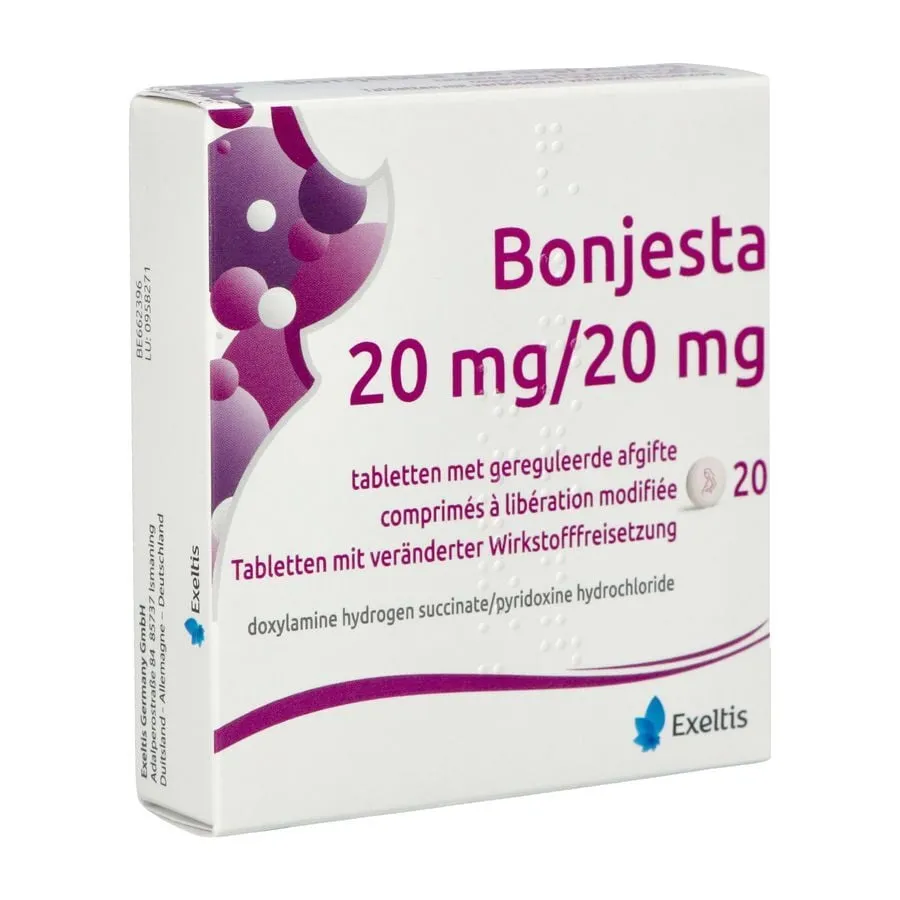
Table of Contents
Package leaflet: Information for the patient
Bonjesta, 20 mg + 20 mg, modified-release tablets
doxylamine succinate + pyridoxine hydrochloride
Please read all of this leaflet carefully before taking this medicine, because it contains
important information for you.
- Keep this leaflet. You may need to read it again.
- If you have any further questions, ask your doctor, pharmacist, or nurse.
- This medicine has been prescribed for a specific individual. Do not pass it on to others. It may harm them, even if their symptoms are the same.
- If you experience any side effects, including any not listed in this leaflet, tell your doctor, pharmacist, or nurse. See section 4.
Contents of the leaflet
- What Bonjesta is and what it is used for
- What you need to know before taking Bonjesta
- How to take Bonjesta
- Possible side effects
- How to store Bonjesta
- Contents of the pack and other information
1. What Bonjesta is and what it is used for
What Bonjesta is
Bonjesta is a medicine in the form of modified-release tablets with a strength of 20 mg + 20 mg, containing two active substances called doxylamine succinate and pyridoxine hydrochloride.
- Doxylamine succinate belongs to a group of medicines known as antihistamines.
- Pyridoxine hydrochloride is another name for vitamin B.
What Bonjesta is used for
Bonjesta is used in pregnant women to relieve nausea and vomiting. It is used when dietary changes or other non-medicinal treatments have not been effective.
Women who experience severe nausea and vomiting during pregnancy, a condition known as hyperemesis gravidarum, should be treated by a specialist.
2. Important information before using Bonjesta
When not to use Bonjesta
- if the patient is allergic to doxylamine succinate or other antihistamines (such as diphenhydramine), pyridoxine hydrochloride, or any of the other ingredients of this medicine (listed in section 6);
- if the patient is taking medicines for depression called "monoamine oxidase inhibitors" (MAOIs) or has taken MAOIs within the last 14 days;
- if the patient has porphyria (a very rare metabolic disorder).
Bonjesta must not be used if any of the above conditions apply to the patient.
If in doubt, discuss this with a doctor or pharmacist before taking Bonjesta.
Warnings and precautions
Before starting treatment with Bonjesta, discuss this with a doctor or pharmacist if the patient has ever had:
- asthma or other breathing problems such as chronic bronchitis and emphysema (a lung disease causing difficulty in breathing);
- increased pressure in the eye;
- a condition of the eye called "narrow-angle glaucoma";
- a stomach ulcer;
- intestinal obstruction between the stomach and the small intestine;
- urinary bladder obstruction;
- liver and/or kidney disease;
- long QT syndrome (a heart condition);
- epilepsy (seizures);
- low blood potassium levels or other electrolyte imbalances.
Also talk to a doctor or pharmacist before taking Bonjesta if:
- the patient is taking cough or cold medicines, sleeping medicines, or certain pain relievers (see also section "Bonjesta with other medicines" below);
- the patient drinks alcohol.
If any of the above conditions apply to the patient (or if the patient is unsure), consult a doctor or pharmacist before using Bonjesta.
Women experiencing severe nausea and vomiting during pregnancy, a condition known as hyperemesis gravidarum, should be managed by a specialist.
Bonjesta may increase sensitivity to light; therefore, sunbathing is not recommended during treatment.
Bonjesta may increase the risk of dehydration and heat stroke due to reduced sweating.
Be alert for any signs of misuse or dependence on this medicine. If the patient has a history of substance abuse (alcohol, drugs, or others), discuss this with a doctor.
When undergoing urine drug screening tests, taking Bonjesta may cause "false-positive" results for methadone, opioids, and phencyclidine (PCP) when certain testing methods are used.
If this occurs, more specific testing can be performed.
This medicine may cause falsely negative results in skin tests using allergen extracts (allergy tests). The medicine should be discontinued several days before such tests are performed.
Side effects to be aware of
- Bonjesta may cause drowsiness – do not drive, ride a bicycle, or operate any tools or machinery while taking this medicine. Do not perform other activities requiring full attention unless a doctor advises otherwise.
- Do not take Bonjesta while using cough or cold medicines, sleeping medicines, certain pain relievers, or after consuming alcohol.
Taking Bonjesta with other medicines that act on the central nervous system may increase drowsiness, which could lead to falls or other accidents.
Children and adolescents
It is not known whether Bonjesta is safe and effective in children and adolescents under 18 years of age.
Vitamin B
Before taking any vitamin B from any additional source—food, dietary supplement, or multivitamin product—consult a doctor, pharmacist, or nurse.
Bonjesta with other medicines
Tell your doctor, pharmacist, or nurse about all medicines the patient is currently taking or has recently taken, as well as any medicines planned for use. This includes medicines available without a prescription and herbal medicines.
Do not take Bonjesta and consult a doctor or pharmacist, especially if the patient is taking any of the following medicines:
- Anticholinergic medicines, such as antidepressants or medicines used to treat Parkinson's disease, monoamine oxidase inhibitors or MAOIs (used to treat depression), antipsychotics (used to treat mental disorders), atropine used to treat spasms or disopyramide (used to treat certain heart conditions), as these medicines may increase toxicity.
- Medicines that depress the central nervous system (e.g., barbiturates, sleeping medicines, sedatives, anxiolytics, opioid pain relievers, antipsychotics, procarbazine, or sodium hydroxymethanesulfonate).
- Antihypertensive medicines (medicines that lower blood pressure) affecting the central nervous system, such as guanabenz, clonidine, or alpha-methyldopa.
- Other medicines that are ototoxic (toxic to the ear), such as carboplatin or cisplatin (used to treat cancer), chloroquine (used to prevent and treat malaria), and certain antibiotics (used to treat infections), such as erythromycin or intravenous aminoglycosides, as this medicine may mask the toxic effects of these drugs. Hearing should be monitored periodically.
- Medicines that reduce the elimination of other medicines, such as certain antifungal medicines (terbinafine), certain antidepressants (fluoxetine and fluvoxamine), medicines used to treat heart rhythm disorders (amiodarone), certain lipid-lowering medicines (gemfibrozil), or certain medicines used to treat stomach ulcers (cimetidine), as they may enhance the effects of this medicine.
- Certain diuretics (medicines that increase urine production).
- Medicines that may affect the heart, such as medicines used to treat heart rhythm disorders (irregular heartbeat), certain antibiotics, certain medicines used to treat malaria, certain antihistamines, certain medicines used to lower blood lipid (fat) levels, or certain neuroleptics (used to treat mental disorders).
- Medicines that cause photosensitivity (increased skin reaction to sunlight), such as certain antiarrhythmics (amiodarone, quinidine), certain antibiotics (including tetracyclines, fluoroquinolones, azithromycin, and erythromycin), certain antidepressants (imipramine, doxepin, amitriptyline), certain antifungals (griseofulvin), antihistamines (including promethazine, chlorpheniramine, and diphenhydramine), certain nonsteroidal anti-inflammatory drugs (including piroxicam and naproxen), certain antivirals (amantadine, ganciclovir), certain diuretics (furosemide, hydrochlorothiazide), as this medicine may further increase photosensitivity.
- Levodopa, because the pyridoxine contained in this medicine may reduce its effect.
- Medicines used to treat epilepsy (phenobarbital, phenytoin), because pyridoxine may reduce their blood levels.
- Medicines such as hydroxyzine, isoniazid, or penicillamine, because their concomitant use with pyridoxine may cause vitamin B deficiency.
Bonjesta and alcohol
Do not consume alcohol while taking Bonjesta. Information on the use of Bonjesta is provided in section 3.
Pregnancy and breastfeeding
Bonjesta is indicated for use in pregnant women.
If the patient is breastfeeding, a decision should be made in consultation with a doctor whether to discontinue breastfeeding or to stop taking the medicine, as Bonjesta may pass into human milk and could harm the infant.
Driving and operating machinery
Do not drive, ride a bicycle, or operate any tools or machinery while taking this medicine. This is because Bonjesta may cause drowsiness. In such cases, do not perform other activities requiring full attention unless a doctor advises otherwise.
Bonjesta contains Allura Red AC aluminium lake (E 129)
Bonjesta contains the azo dye Allura Red AC aluminium lake (E 129), which may cause allergic reactions.
This medicine contains less than 1 mmol (23 mg) of sodium per tablet, meaning the medicine is considered "sodium-free."
3. How to take Bonjesta
This medicine should always be taken exactly as directed by your doctor, pharmacist, or nurse.
If in doubt, consult your doctor, pharmacist, or nurse.
How much medicine to take
Your doctor will start treatment with a low dose and may increase it depending on how the
medicine affects you.
How to start taking Bonjesta and how to increase the dose if needed:
- Day 1
- Take 1 tablet orally at bedtime.
- Day 2
- Take 1 tablet orally at bedtime.
- If nausea and vomiting have improved or are controlled by Day 2, continue taking 1 tablet every evening at bedtime.
- Day 3
- If nausea and vomiting persist on Day 2, on Day 3 take 1 tablet in the morning and 1 tablet at bedtime (total of 2 tablets per day). Do not take more than 2 tablets per day (1 in the morning and 1 at bedtime).
In some women, symptom control may be achieved with an intermediate dose of 30 mg + 30 mg.
This dose cannot be obtained using Bonjesta 20 mg + 20 mg tablets. Other medicinal products
containing doxylamine succinate and pyridoxine hydrochloride are available that offer greater
flexibility in dose adjustment according to symptom severity.
For Bonjesta 20 mg + 20 mg modified-release tablets, the maximum recommended daily dose of
40 mg + 40 mg consists of only two tablets per day.
How to take this medicine
- Bonjesta should be taken on an empty stomach.
- Swallow the tablet whole with a glass of water.
- Do not crush, chew, or split the tablet before swallowing. If a patient cannot swallow the Bonjesta tablet whole, inform the doctor or pharmacist.
Use in children and adolescents
Bonjesta is not recommended for use in children and adolescents under 18 years of age due to
lack of clinical data.
If you take more Bonjesta than you should
If you take more Bonjesta than recommended, stop taking it immediately and contact your doctor
or go to hospital. Bring the medicine packaging with you. The following symptoms may occur:
feelings of restlessness, drowsiness or dizziness, dry mouth, enlargement of the black central part
of the eye (dilated pupils), disorientation, rapid heartbeat.
If the amount of medicine in the body is very high, seizures, muscle pain or weakness, or sudden,
serious kidney problems may also occur. This could even lead to death. If such symptoms occur,
stop taking Bonjesta immediately and contact your doctor or go to hospital without delay.
Stopping Bonjesta
Do not stop taking Bonjesta without consulting your doctor. If this medicine is stopped suddenly,
nausea and vomiting may return. Your doctor will advise you on how to gradually discontinue the
medicine to avoid these symptoms.
If you have any further questions about the use of this medicine, consult your doctor, pharmacist,
or nurse.
4. Possible adverse effects
Like all medicines, this medicine can cause adverse effects, although not everyone will experience them.
Very common: may affect more than 1 in 10 people
- severe drowsiness
Common: may affect up to 1 in 10 people
- dizziness
- feeling of fatigue
- increased bronchial secretion
- dry mouth
Uncommon: may affect up to 1 in 100 people
- disorientation
- eye problems: cataract, double vision
- ringing in the ears (tinnitus)
- dizziness related to change in body position (rapid standing from sitting or lying position)
- nausea, vomiting
- light sensitivity reactions
- swelling of hands and feet
- weakness
Rare: may affect up to 1 in 1,000 people
- tremor, convulsions or agitation
- blood disorders such as haemolytic anaemia
Frequency unknown: frequency cannot be estimated from available data
- hypersensitivity (allergic reaction)
- feeling of anxiety, difficulty sleeping (insomnia), nightmares, feeling of disorientation
- headache or migraine
- tingling, pricking or numbness of the skin
- restlessness and urge to keep moving
- vision problems, blurred vision
- dizziness with sensation of spinning
- difficulty breathing, palpitations or rapid heartbeat
- feeling of fullness or bloating, abdominal pain, constipation or diarrhoea
- excessive sweating, skin reactions such as itching or rash
- difficulty or pain during urination
- discomfort in the chest
- general malaise or feeling of irritability
- difficulty breathing (dyspnoea)
Other adverse effects reported with medicines belonging to the same class as
doxylamine
-
Anticholinergic effects (blocking organ functions that receive nerve impulses via a substance called acetylcholine), which may cause: dry mouth, nose and throat; difficulty or pain during urination; dizziness with sensation of spinning; vision problems or blurred vision; double vision (diplopia); ringing or noise in the ears (tinnitus); inner ear inflammation developing rapidly (acute labyrinthitis); difficulty falling asleep (insomnia); tremor (convulsions) and nervousness; feeling of irritability; involuntary repetitive facial movements (facial dyskinesia). In addition, the following may occur: feeling of tightness in the chest, thick mucus in the bronchi (bronchial secretion); high-pitched, whistling breathing sound, often associated with breathing difficulties (wheezing); nasal congestion; increased sweating and chills; early menstruation; psychiatric disorders such as hallucinations, delusions, disorientation and thought disturbances (toxic psychosis); headache; tingling, pricking or numbness of the skin, and fainting.
-
Rarely reported: low white blood cell count (leucopenia and agranulocytosis), reduced blood volume due to increased destruction of blood cells (haemolytic anaemia), reduced number of platelets responsible for blood clotting (thrombocytopenia), reduced number of red blood cells, white blood cells and platelets in the blood (pancytopenia), and increased appetite, sometimes associated with weight gain.
Reporting of adverse effects
If any adverse effects occur, including any adverse effects not listed in this leaflet, tell your doctor, pharmacist or nurse. Adverse effects can be reported directly to the Department of Monitoring Adverse Drug Reactions at the Office for Registration of Medicinal Products, Medical Devices and Biocidal Products: Al. Jerozolimskie 181C; 02-222 Warsaw; tel.: +48 22 49 21 301; fax: +48 22 49 21 309; website: https://smz.ezdrowie.gov.pl.
Adverse effects can also be reported to the marketing authorisation holder.
Reporting adverse effects helps provide more information on the safety of the medicine.
5. How to store Bonjesta
Keep this medicine out of sight and reach of children.
Do not use this medicine after the expiry date stated on the carton or blister pack following:
"EXP". The expiry date refers to the last day of the stated month.
No special storage conditions are required for this medicine.
Medicines must not be disposed of via wastewater or household waste. Ask your pharmacist how to dispose of medicines no longer required. Such measures help protect the environment.
6. Contents of the pack and other information
What Bonjesta contains
- The active substances are doxylamine succinate (an antihistamine) and pyridoxine hydrochloride (vitamin B). Each tablet contains 20 mg of doxylamine succinate and 20 mg of pyridoxine hydrochloride.
- Other ingredients are: ammonium hydroxide 28%, carnauba wax, sodium croscarmellose, hypromellose type 2910, indigo carmine aluminium lake (E 132), iron oxide red (E 172), iron(II,III) oxide, macrogol 3350, magnesium stearate, magnesium trisilicate, copolymer of methacrylic acid and ethyl acrylate (1:1), microcrystalline cellulose (type 102), Allura red AC aluminium lake (E 129), propylene glycol, polyvinyl alcohol partially hydrolysed, colloidal anhydrous silica, shellac, simethicone, simethicone emulsion 30%, sodium bicarbonate, sodium lauryl sulphate, talc, titanium dioxide (E 171), triethyl citrate.
What Bonjesta looks like and contents of the pack
- Bonjesta is a pink, round, film-coated modified-release tablet with a pink image of a pregnant woman on one side and the letter "D" on the other side.
- Bonjesta is available in blister packs containing 10, 20, 30 or 40 tablets, packed in a cardboard carton. Not all pack sizes may be marketed.
Marketing Authorisation Holder and Manufacturer
Marketing Authorisation Holder
Exeltis Poland Sp. z o.o.
ul. Szamocka 8
01-748 Warsaw
e-mail: [email protected]
Manufacturer/Importer
Laboratorios Liconsa S.A.
Avenida de Miralcampo 7, Poligono Industrial Miralcampo
19200 Azuqueca de Henares, Guadalajara
Spain
This medicinal product is authorised in the Member States of the European Economic Area under the following names:
Austria: Xonvea 20 mg/20 mg Tabletten mit veränderter Wirkstofffreisetzung
Belgium: Bonjesta 20 mg/20 mg tabletten met gereguleerde afgifte
Bonjesta 20 mg/20 mg comprimés à libération modifiée
Bonjesta 20 mg/20 mg Tabletten mit veränderter Wirkstofffreisetzung
Czech Republic: Xonvea
Estonia: Xonvea 20 mg/20 mg toimeainet modifitseeritult vabastavad tabletid
France: Xonvea 20 mg/20 mg, comprimé à libération modifiée
Spain: Bonjesta 20 mg/20 mg comprimidos de liberación modificada
Netherlands: Embagyn 20 mg/20 mg tabletten met gereguleerde afgifte
Ireland: Xonvea MR 20/20 modified-release tablets
Lithuania: Xonvea 20mg /20mg modifikuoto atpalaidavimo tabletės
Luxembourg: Bonjesta 20 mg/20 mg tabletten met gereguleerde afgifte
Bonjesta 20 mg/20 mg comprimés à libération modifiée
Bonjesta 20 mg/20 mg Tabletten mit veränderter Wirkstofffreisetzung
Latvia: Xonvea 20 mg/20 mg modificētās darbības tabletes
Poland: Bonjesta
Portugal: Bonjesta
Slovakia: Xonvea 20 mg/20 mg tablety s riadeným uvoľňovaním
Hungary: Vombee 20 mg/20 mg módosított hatóanyagleadású tabletta
Italy: Bonjesta 20 mg/20 mg compresse a rilascio modificato