Bobodent
Poland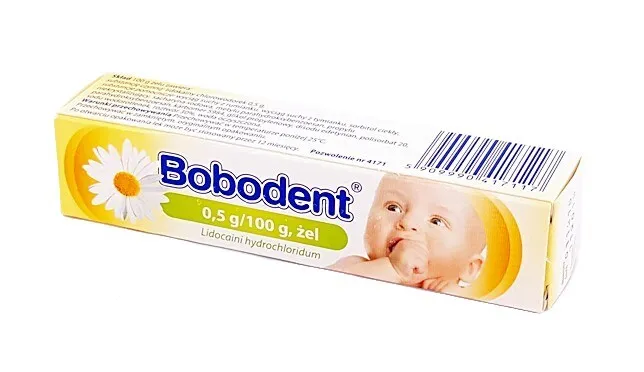
Table of Contents
Package leaflet: information for the patient
BOBODENT
0.5 g/100 g, gel
Lidocaini hydrochloridum monohydricum
Please read the entire leaflet carefully before using the medicine, as it contains
important information for the patient.
This medicine should always be used exactly as described in this patient leaflet or as directed by
the physician or pharmacist.
- Keep this leaflet, as you may need to read it again.
- If you need advice or further information, consult your pharmacist.
- If you experience any adverse reactions, including any possible adverse reactions not listed in this leaflet, inform your doctor or pharmacist.
- If there is no improvement after a few days, or if you feel worse, consult your doctor.
Table of contents of the leaflet
- What is Bobodent and what it is used for
- Important information before using Bobodent
- How to use Bobodent
- Possible side effects
- How to store Bobodent
- Contents of the pack and other information
1. What is Bobodent and what it is used for
Bobodent contains lidocaine, which acts locally to relieve pain:
- during teething and eruption of wisdom teeth,
- in inflammatory conditions of the oral mucosa and gums.
The onset of action occurs within 1–5 minutes, and the anaesthetic effect lasts for 15–30 minutes.
2. Important information before using Bobodent
When not to use Bobodent:
- if the patient is allergic to the active substance, local anaesthetics of the amide group, or any of the other ingredients of this medicinal product (listed in section 6);
- in cases of significant damage to the oral mucosa and gums, manifested by mucosal trophic changes, swelling or ulceration.
Warnings and precautions
Before starting treatment with Bobodent, consult a doctor or pharmacist.
Bobodent should be used with caution in patients with a history of neurological disorders or cardiac muscle insufficiency.
Bobodent and other medicines
Inform your doctor or pharmacist about all medicines currently used or recently used, as well as any medicines planned for future use.
Concomitant use of lidocaine and antiarrhythmic drugs of class IB or other local anaesthetics may result in additive adverse effects. Bobodent should be used cautiously with MAO inhibitors, tricyclic antidepressants, phenothiazine derivatives, and anticoagulant medicines.
Pregnancy and breastfeeding
If the patient is pregnant, suspects she may be pregnant, plans to become pregnant, or is breastfeeding, she should consult a doctor or pharmacist before using this medicinal product.
Lidocaine crosses the placenta and is excreted in breast milk.
Driving and operating machinery
There is no data available regarding the influence of this medicinal product on the ability to drive or operate machinery.
Bobodent contains propylene glycol, which may cause skin irritation.
Bobodent contains methyl parahydroxybenzoate and propyl parahydroxybenzoate, which may cause allergic reactions (including delayed-type reactions).
Bobodent contains sorbitol.
If the patient has been diagnosed with intolerance to certain sugars, the patient should consult a doctor before using this medicinal product.
3. How to use Bobodent
This medicine should always be used exactly as described in the patient leaflet or as directed by a doctor or pharmacist. If in doubt, consult a doctor or pharmacist.
The medicine is intended for topical application to the oral mucosa.
Apply a pea-sized drop of gel to the painful area by gently rubbing it in with a clean finger or a cotton swab. Repeat the procedure 3 times daily (up to a maximum of 6 times), especially after meals and before bedtime.
This medicine is intended for short-term use only.
Use of a higher than recommended dose of Bobodent
If used on significantly damaged mucous membranes or in a manner inconsistent with recommendations, adverse reactions related to overdose may occur. Lidocaine may impair the function of the central nervous system as well as the cardiovascular system.
Symptoms of overdose may include dizziness and numbness around the mouth, difficulty focusing vision, tinnitus, nausea, vomiting, and decreased arterial blood pressure.
If such symptoms occur, discontinue use of the medicine immediately and consult a doctor.
Missed dose of Bobodent
Do not use a double dose to make up for a missed dose.
Discontinuation of Bobodent
If you have any further questions about the use of this medicine, consult your doctor or pharmacist.
4. Possible adverse reactions
Like all medicines, this medicine can cause adverse reactions, although they do not occur in everyone.
2/4
The medicine is intended for topical use and, when used according to recommendations, is generally
well tolerated.
Hypersensitivity reactions may occur, such as urticaria or swelling at the site of application.
Use of lidocaine within the oral cavity may cause anaesthesia of taste buds and consequently disturbances in taste. The anaesthetic effect of lidocaine on the oral part of the pharynx may
lead to suppression of the pharyngeal (gag) reflex.
Reporting of adverse reactions
If any adverse symptoms occur, including any adverse effects not listed in this leaflet, inform your doctor or pharmacist. Adverse reactions can be reported
directly to the Department of Monitoring of Adverse Drug Reactions of the Office for Registration of Medicinal Products, Medical Devices and Biocidal Products:
Aleje Jerozolimskie 181C, 02 - 222 Warsaw,
tel.: + 48 22 49 21 301, fax: + 48 22 49 21 309,
Website: https://smz.ezdrowie.gov.pl
Adverse reactions can also be reported to the marketing authorization holder.
By reporting adverse reactions, additional information on the safety of the medicine can be collected.
5. How to store Bobodent
Store below 25°C.
Keep in the tightly closed original packaging.
After opening, the product can be used for 12 months.
Keep out of sight and reach of children.
Do not use this medicine after the expiry date stated on the packaging. The expiry date refers to the last day of the stated month.
Medicines must not be disposed of via wastewater or household waste. Ask your pharmacist how to dispose of medicines no longer required. This will help protect the environment.
6. Contents of the packaging and other information
What Bobodent contains
- The active substance is lidocaine hydrochloride monohydrate (Lidocaini hydrochloridum monohydricum). 100 grams of gel contains 0.5 g of lidocaine hydrochloride monohydrate.
- The other ingredients (excipients) are: dry extract of chamomile, dry extract of thyme, liquid non-crystallizing sorbitol, sodium saccharin, methyl parahydroxybenzoate, propyl parahydroxybenzoate, carbomer 5984, propylene glycol, disodium edetate, polysorbate 20, sodium hydroxide 30% solution, purified water.
What Bobodent looks like and contents of the pack
Bobodent is a yellowish-brown gel with a characteristic odour.
One pack of the medicine contains 10 g of gel.
Marketing Authorisation Holder and Manufacturer
"PRZEDSIĘBIORSTWO PRODUKCJI FARMACEUTYCZNEJ HASCO-LEK" S.A.
51-131 Wrocław, ul. Żmigrodzka 242 E
3/4
Medicine Information
tel. +48 (22) 742 00 22
e-mail: [email protected]
4/4