Blissel
Poland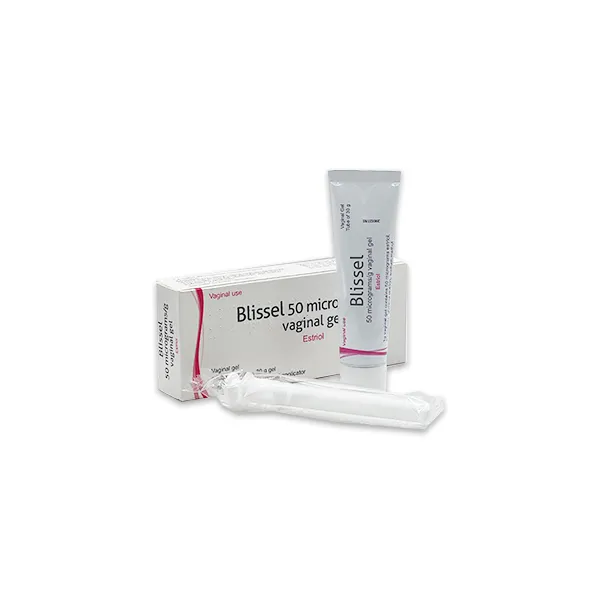
Table of Contents
PACKAGE LEAFLET: INFORMATION FOR THE USER
Blissel 50 micrograms/g vaginal gel
estriol
Please read this leaflet carefully before using the medicine, as it contains important information for the patient.
- Keep this leaflet, as you may need to read it again.
- If you have any questions, please consult your doctor or pharmacist.
- This medicine has been prescribed for a specific individual. Do not pass it on to others. It may harm other people, even if their symptoms are the same.
- If the patient experiences any adverse reactions, including any not listed in this leaflet, inform the doctor or pharmacist. See section 4.
Contents of the leaflet
- What Blissel is and what it is used for
- Important information before using Blissel
- How to use Blissel
- Possible side effects
- How to store Blissel
- Contents of the pack and other information
1. What Blissel is and what it is used for
Blissel belongs to a group of medicines known as local (vaginal) hormone replacement therapy (HRT).
It is used to relieve menopausal symptoms affecting the vagina, such as dryness or irritation. This condition is medically known as "vaginal atrophy". It is caused by a decrease in estrogen levels in the body and occurs naturally after menopause.
Blissel works by replacing the estrogen normally produced by a woman's ovaries. The medicine is administered vaginally, so the hormone is released exactly where it is needed. This may help relieve vaginal discomfort.
2. Important information before using Blissel
Medical history and regular check-ups
Hormone replacement therapy (HRT) carries risks that should be considered when a woman decides whether to start or continue HRT.
Before starting (or restarting) HRT, the doctor should take a full medical and family history. The doctor may decide to perform a physical examination, which may include a breast examination and/or a gynaecological examination, if necessary.
If a woman starts using Blissel, she should have regular check-ups with her doctor (at least once a year). During these visits, she should discuss with the doctor the benefits and risks of continuing Blissel treatment.
Women should undergo regular breast screening as recommended by their doctor.
When not to use Blissel
Do not use Blissel if any of the following conditions apply. If a woman is unsure about any of the points below, she should consult her doctor before starting Blissel.
- If she currently has or has ever had breast cancer, or if breast cancer is suspected;
- If she has an estrogen-dependent tumour, such as endometrial cancer (cancer of the lining of the womb), or if such a tumour is suspected;
- If she has vaginal bleeding of unknown cause;
- If she has untreated excessive thickening of the lining of the womb (endometrial hyperplasia);
- If she currently has or has ever had blood clots in the veins (venous thromboembolism), for example in the legs (deep vein thrombosis) or lungs (pulmonary embolism);
- If she has blood clotting disorders (such as protein C, protein S or antithrombin deficiency);
- If she currently has or recently had a disease caused by blood clots in the arteries, such as heart attack, stroke or angina pectoris;
- If she currently has or has ever had liver disease, and liver function test results have not returned to normal;
- If she has a rare inherited blood disorder called porphyria;
- If she is allergic (hypersensitive) to estriol or any of the other ingredients of this medicine (listed in section 6).
If any of the above conditions occur for the first time while using Blissel, treatment should be stopped immediately and medical advice should be sought without delay.
Warnings and precautions
The medicine is administered by inserting an applicator into the vagina. This may cause discomfort or pain in women with severe vaginal atrophy (thinning or inflammation of the vaginal walls).
Tell the doctor if the woman has or has ever had any of the following conditions (or states), which may rarely recur or worsen during treatment with Blissel. In such cases, the doctor may decide that more frequent monitoring is needed:
- very high levels of fats (triglycerides) in the blood,
- endometriosis (growth of endometrial tissue outside the uterus) or past history of endometrial hyperplasia,
- fibroids in the uterus,
- high blood pressure,
- diabetes,
- gallstones,
- migraine or severe headache,
- a rare autoimmune disease called systemic lupus erythematosus (SLE),
- epilepsy,
- asthma,
- otosclerosis (a disease affecting the eardrum and hearing),
- fluid retention due to heart or kidney problems,
- increased risk of blood clots (see "Blood clots in the veins (venous thromboembolism)"),
- increased risk of estrogen-dependent tumours (e.g. family history of breast cancer in mother, sister or grandmother),
- liver disease, e.g. benign liver tumour,
- hereditary or acquired angioedema.
Contact the doctor immediately if:
- she develops jaundice (yellowing of the eyes and skin) or liver function abnormalities;
- sudden increase in blood pressure;
- first occurrence of migraine or severe headache;
- she becomes pregnant;
- any condition listed under "When not to use Blissel" occurs;
- she experiences symptoms of blood clots such as:
- painful swelling and redness in the legs,
- sudden chest pain,
- difficulty breathing.
For more information, see section "Blood clots in the veins (venous thromboembolism)".
If any of the above situations occur, the doctor may need to stop treatment and recommend another medicine.
Note: Blissel is not a contraceptive. If less than 12 months have passed since the last menstrual period or if the woman is under 50 years of age, additional contraception may be necessary. Consult a doctor.
HRT and tumours
Endometrial hyperplasia and endometrial cancer
Long-term use of oral HRT containing only estrogens increases the risk of developing endometrial cancer.
It is not known whether a similar risk exists with repeated or prolonged use (longer than one year) of Blissel. However, Blissel is absorbed into the bloodstream to a very small extent, and therefore the addition of a progestogen is not necessary.
Bleeding or spotting is usually not a cause for concern, but should be discussed with a doctor, as it may be a sign of endometrial thickening.
The risks described below apply to hormone replacement therapy (HRT) products that circulate in the bloodstream. Blissel, however, is intended for local vaginal use and is absorbed into the blood to a very small extent. Worsening or recurrence of the conditions mentioned below during Blissel treatment is therefore less likely, but if there are any concerns, medical advice should be sought.
Treatment with products containing higher doses of estrogens, which may increase estrogen levels in the blood (such as tablets or patches), increases the risk of endometrial hyperplasia, certain types of cancer (such as breast and endometrial cancer), and venous thromboembolism.
Breast cancer
Data indicate that using Blissel does not increase the risk of breast cancer in women who have never had it before. It is not known whether Blissel can be used safely in women who have had breast cancer.
- Regularly examine your breasts. Contact your doctor if you notice any changes such as:
- skin indentation,
- changes in the nipple,
- presence of lumps that are visible or palpable.
Additionally, screening mammograms are recommended as advised by the doctor.
Ovarian cancer
Ovarian cancer is rare – much rarer than breast cancer. HRT with estrogens alone is associated with a slightly increased risk of ovarian cancer.
The risk of ovarian cancer depends on age. For example, among women aged 50 to 54 who do not use HRT, ovarian cancer will be diagnosed in about 2 out of 2,000 women over 5 years.
Among women who have used HRT for 5 years, it occurs in about 3 out of 2,000 women (i.e. about 1 additional case).
Effects of HRT on the heart and circulation
Blood clots in the veins (venous thromboembolism)
The risk of venous blood clots is 1.3 to 3 times higher in women using HRT compared to non-users, especially during the first year of use.
Blood clots can have serious consequences and, if they travel to the lungs, may cause chest pain, shortness of breath, loss of consciousness, or even death.
The risk of venous blood clots is higher if the woman is older or if any of the following apply. Inform the doctor if any of the following apply:
- if she is unable to walk for long periods due to major surgery, injury or illness;
- if she is significantly overweight (BMI > 30 kg/m²);
- if she has a history of thromboembolic disorders requiring long-term anticoagulant therapy;
- if she or a close family member has had blood clots in the legs, lungs or other organs;
- if she has systemic lupus erythematosus;
- if she has been diagnosed with cancer.
Comparison
In women aged 50 to 59 who do not use HRT, the number of venous blood clot cases over 5 years is estimated at 4 to 7 per 1,000 women.
In women aged 50 to 59 using estrogen-only HRT for more than 5 years, the number is 5 to 8 per 1,000 women (i.e. 1 additional case).
Heart disease (heart attack)
Women using estrogen-only HRT do not have an increased risk of heart disease.
Stroke
The risk of stroke is about 1.5 times higher in women using HRT compared to non-users. The number of additional stroke cases due to HRT use increases with age.
Comparison
In women aged 50 to 59 who do not use HRT, the number of stroke cases over 5 years is estimated at 8 per 1,000 women. In women of the same age using HRT, the number is 11 per 1,000 women over 5 years (i.e. 3 additional cases).
Blissel and other medicines
Tell the doctor or pharmacist about all medicines currently used or recently used, including those obtained without a prescription, herbal remedies or other natural products.
Blissel contains a low dose of estriol and is intended for local use, so it is not expected to affect the action of other medicines or be affected by them. However, interactions with other locally applied vaginal medicines should be considered.
Pregnancy, breastfeeding and fertility
If a woman is pregnant or breastfeeding, suspects she may be pregnant, or is planning to have a baby, she should consult her doctor or pharmacist before using this medicine.
Do not use Blissel during pregnancy.
If a woman becomes pregnant while being treated, she must inform her doctor immediately and stop using Blissel.
Blissel should not be used during breastfeeding.
Driving and using machines
Blissel has no effect on the ability to drive or operate machinery.
Blissel contains methyl parahydroxybenzoate sodium salt (E 219) and propyl parahydroxybenzoate sodium salt (E 217)
This medicine may cause allergic reactions (including delayed-type reactions).
Do not use this medicine if the patient is allergic to any of its ingredients.
3. How to use Blissel
This medicine should always be used as described in this leaflet or as advised by your doctor or pharmacist. If in doubt, consult your doctor or pharmacist.
The recommended dose during the first 3 weeks of treatment is one dose administered using the applicator once daily, preferably before going to bed. After 3 weeks of use, discomfort should decrease and the dose should be reduced. It may then be sufficient to use one dose only twice a week.
To insert the gel into the vagina, use the applicator (use before going to bed is recommended).
Your doctor should prescribe the lowest effective dose needed to treat your symptoms, for the shortest possible duration. If you think the dose of medicine is too high or too low, consult your doctor.
The following instructions explain how to use the gel.
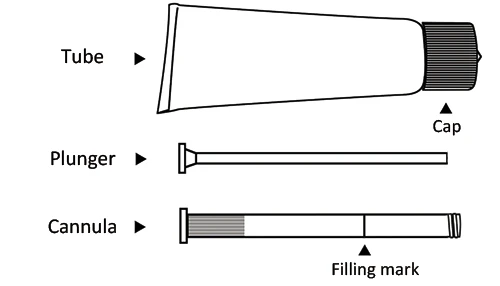
The image below shows the various components of the tube and the applicator (plunger and cannula).
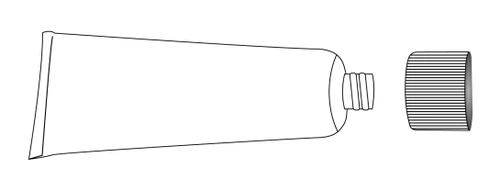
- Unscrew the cap from the tube, turn it over and pierce the protective membrane on the tube with its sharp end. Do not use if the membrane is damaged.
- Remove the cannula and plunger. Insert the white plunger fully into the cannula. Screw the cannula onto the thread of the tube.
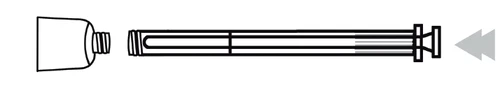
- Squeeze the tube to fill the applicator with gel up to the filling mark. The plunger will stop at the mark.
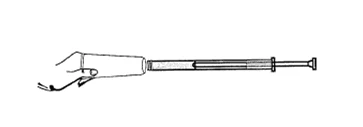
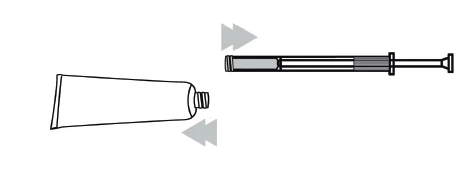
- Unscrew the cannula from the tube and close the tube with the cap.
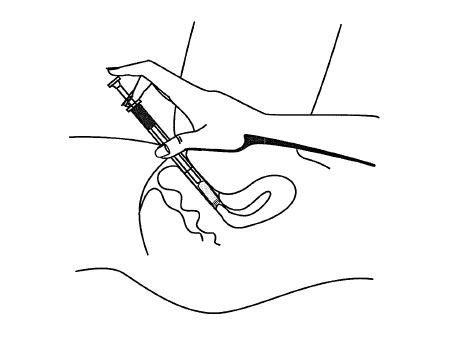
- To administer the gel, lie down, insert the tip of the applicator deeply into the vagina and slowly push the plunger in until it stops.
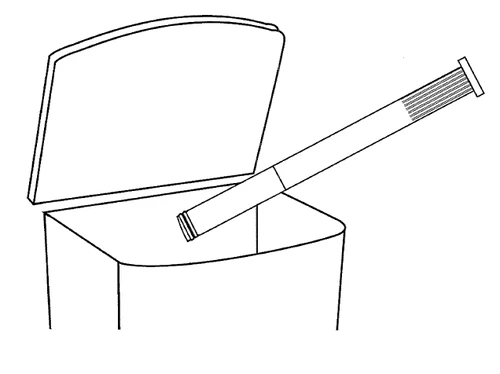
- After use
Pack size 10 g – 1 blister containing 10 single-use cannulas and a reusable plunger.
Pack size 30 g – 3 blisters containing 30 single-use cannulas and a reusable plunger.
Remove the plunger from the cannula, dispose of the cannula, and wash the plunger thoroughly with warm, clean water so it can be reused at the next dose.
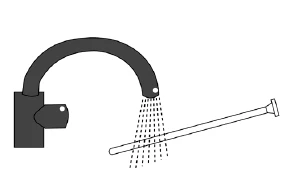
Pack size 10 g – pouch containing 1 reusable cannula and reusable plunger.
Pack size 30 g – pouch containing 1 reusable cannula and reusable plunger.
Remove the plunger from the cannula. Wash both the cannula and the plunger thoroughly with warm, clean water so they can be reused at the next dose.
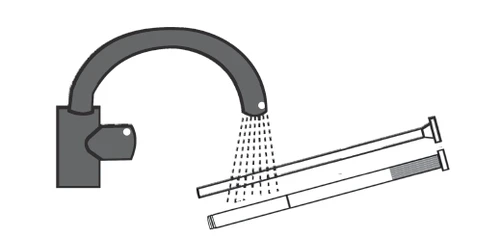
Use of a higher than recommended dose of Blissel
If too large a dose of gel is administered at any time, or if someone accidentally swallows some of the gel, there is generally no cause for concern. Nevertheless, medical advice should be sought.
You may experience nausea or vomiting, and some women may experience vaginal bleeding after a few days.
Missed dose of Blissel
Do not use a double dose to make up for a missed dose.
If you remember within 12 hours, take the missed dose as soon as possible. If more than 12 hours have passed, skip the missed dose.
If you have any further doubts about how to use this medicine, consult your doctor or pharmacist.
4. Possible adverse effects
Like all medicines, this medicine can cause adverse effects, although not everybody will experience them.
You should tell your doctor immediately if any of the conditions listed in section
"Important information before using Blissel" occur, such as vaginal bleeding.
Your doctor may need to stop treatment and prescribe another medicine.
Local irritation or itching may occur at the beginning of treatment. In most women,
these adverse effects resolve with continued use of the medicine. You should inform your doctor if
vaginal bleeding occurs or if any of the following adverse effects become troublesome or persist.
Common adverse effects (may affect up to 1 in 10 people):
Itching, local irritation in or around the vagina
Uncommon adverse effects (may affect up to 1 in 100 people):
Abdominal pain, skin irritation, genital rash, headache, candidiasis (vaginal thrush)
The following conditions are reported more frequently in women using systemic hormone replacement therapy (HRT) that circulates in the blood than in women not using HRT. This risk is lower with locally administered medicines such as Blissel:
- Blood clots in the veins of the legs or lungs (venous thromboembolic disease),
- Ovarian cancer,
- Stroke,
- Possible memory loss if HRT is started after the age of 65.
For more information about these adverse effects, see section 2.
The following adverse effects have been reported during HRT use:
- Gallbladder stones,
- Various skin disorders:
- Skin discolouration, especially on the face or neck, known as chloasma (melasma),
- Painful red lumps on the skin (erythema nodosum),
- Rash with characteristic redness or pain (erythema multiforme).
Reporting of adverse effects
If any adverse effects occur in the patient, including any adverse effects not listed in this leaflet,
you should inform a doctor or pharmacist. Adverse effects can be reported directly to the Department of Monitoring Adverse Drug Reactions of the Office for Registration of Medicinal Products, Medical Devices and Biocidal Products
Al. Jerozolimskie 181C
PL-02 222 Warsaw
Tel.: + 48 22 49 21 301
Fax: + 48 22 49 21 309
Website: https://smz.ezdrowie.gov.pl .
Adverse effects can also be reported to the marketing authorisation holder.
Reporting adverse effects helps to provide more information on the safety of the medicine.
5. How to store the medicine Blissel
Keep the medicine out of the sight and reach of children.
Do not use this medicine after the expiry date stated on the carton and label. The expiry date refers to the last day of the stated month.
Store below 25°C.
Medicines must not be disposed of via wastewater or household waste. Ask your pharmacist how to dispose of medicines no longer in use. This will help protect the environment.
6. Contents of the pack and other information
Active substance in Blissel
The active substance is estriol.
One applicator filled to the mark delivers a dose of 1 g of vaginal gel containing
50 micrograms of estriol.
Other ingredients: glycerol (E 422), sodium methylparahydroxybenzoate (E 219), sodium propylparahydroxybenzoate (E 217), polycarbophil, carbomer, sodium hydroxide, hydrochloric acid concentrated, purified water.
What Blissel looks like and contents of the pack
This medicinal product is supplied as a colourless, transparent to slightly translucent vaginal gel.
Pack sizes: 1 aluminium tube of 10 g or 30 g.
- Pack size 10 g – blister containing 10 single-use cannulas and a multi-use plunger. Carton containing 10 g of Blissel and one blister with 10 single-use cannulas marked with filling level and a multi-use plunger.
- Pack size 10 g – pouch containing 1 multi-use cannula and a multi-use plunger. Carton containing 10 g of Blissel and one pouch with 1 multi-use cannula marked with filling level and a multi-use plunger.
- Pack size 30 g – 3 blisters each containing 10 single-use cannulas and a multi-use plunger. Carton containing 30 g of Blissel and three blisters each with 10 single-use cannulas marked with filling level and a multi-use plunger.
- Pack size 30 g – pouch containing 1 multi-use cannula and a multi-use plunger. Carton containing 30 g of Blissel and one pouch with 1 multi-use cannula marked with filling level and a multi-use plunger.
Not all pack sizes may be marketed.
Marketing Authorisation Holder and Manufacturer
Marketing Authorisation Holder
ITALFARMACO S.A.
San Rafael, 3 - 28108 Alcobendas
(Madrid) - Spain
Tel: +34 916572323
Manufacturer
ITALFARMACO S.A.
San Rafael, 3 - 28108 Alcobendas
(Madrid) - Spain
This medicinal product is authorised in the European Economic Area (EEA) under the following names:
AT: BLISSEL 50 Mikrogramm/g Vaginalgel
BE: Blissel 50 Mikrogramm/g Vaginalgel
CY: Blissel 50 μικρογραμμάρια/g κολπική γέλη
DK: Gelisse 50 mikrogram/g vaginalgel
EL: Blissel 50 μικρογραμμάρια/g κολπική γέλη
ES: Blissel 50 microgramos/g gel vaginal
FI: Blissel 50 mikrog/g emätingeeli
FR: Blissel 50 microgrammes/g gel vaginal
IE: Blissel 50 micrograms/g vaginal gel
NL: Blissel 50 microgram/g gel voor vaginaal gebruik
NO: Gelisse 50 mikrogram/g vaginalgel
PL: BLISSEL
PT: Blissel 50 microgramas/g gel vaginal
SE: Blissel 50 mikrogram/g vaginal gel
UK (NI): Blissel 50 micrograms/g vaginal gel