Biseptol
Poland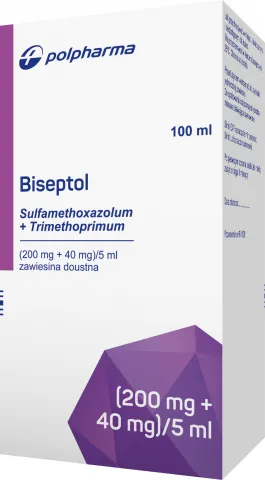
Table of Contents
Patient Information Leaflet
Biseptol, (200 mg + 40 mg)/5 ml, oral suspension
Sulfamethoxazole + Trimethoprim
Please read this leaflet carefully before taking this medicine, as it contains
important information for you.
- Keep this leaflet for future reference.
- If you have any questions, please consult your doctor or pharmacist.
- This medicine has been prescribed for a specific individual. Do not give it to others. This medicine may harm other people, even if their symptoms are the same.
- If you experience any adverse reactions, including any not listed in this leaflet, inform your doctor or pharmacist. See section 4.
Table of Contents
- What Biseptol is and what it is used for
- Important information before taking Biseptol
- How to take Biseptol
- Possible side effects
- How to store Biseptol
- Contents of the pack and other information
1. What Biseptol is and what it is used for
Biseptol is an antibacterial medicine. It contains co-trimoxazole – a combination of trimethoprim and sulfamethoxazole. Like other antibacterial medicines, it acts against certain bacteria and may be used in certain types of infections caused by microorganisms sensitive to co-trimoxazole.
Biseptol is intended for use in adults, adolescents, children and infants over 6 weeks of age.
Biseptol is used in the following conditions:
- respiratory tract infections – in acute exacerbation of chronic bronchitis, if there are reasons to use sulfamethoxazole and trimethoprim instead of a single-component antibiotic;
- sinusitis, acute otitis media – only after bacteriological examination;
- acute and chronic urinary tract and prostatic infections;
- sexually transmitted infections: chancroid;
- gastrointestinal infections: typhoid fever and paratyphoid fever, bacterial dysentery, cholera (as supportive treatment alongside fluid and electrolyte replacement), traveller's diarrhoea (caused by enterotoxigenic strains of Escherichia coli);
- other bacterial infections (treatment preferably combined with other antibiotics), for example, nocardiosis.
2. Important information before using Biseptol
When not to use Biseptol:
- if the patient is allergic to sulfonamides, trimethoprim, sulfamethoxazole, or any of the other ingredients of this medicine (listed in section 6);
- if the patient has severe liver and/or kidney impairment (creatinine clearance below 15 ml/min);
- if the patient has blood count abnormalities;
- if the patient is in the final stage of pregnancy or is breastfeeding;
- for the treatment of streptococcal angina;
- if the patient has a rare inherited disorder called glucose-6-phosphate dehydrogenase deficiency (G-6-PD).
Biseptol should not be used in infants during the first 6 weeks of life.
Warnings and precautions
Before starting treatment with Biseptol, discuss it with your doctor or pharmacist.
- Life-threatening skin reactions (Stevens-Johnson syndrome, toxic epidermal necrolysis) have been observed after cotrimoxazole use. Initial symptoms may include red spots or round lesions on the trunk, often with blisters in the center. Additional symptoms may include ulceration in the mouth, throat, nose, genital organs, and conjunctiva (red, swollen eyes). These skin rashes can be life-threatening and often occur with flu-like symptoms. The rash may progress to widespread blisters or skin peeling. The highest risk of severe skin reactions occurs during the first weeks of treatment. If a patient has previously experienced Stevens-Johnson syndrome or toxic epidermal necrolysis after cotrimoxazole, this medicine must never be used again. If the patient develops a rash or any of the above skin symptoms, the medicine must be discontinued immediately and urgent medical advice must be sought. Inform the doctor that the patient is taking Biseptol.
- Rare, life-threatening complications associated with sulfonamide use have been reported, including acute liver necrosis, agranulocytosis, aplastic anemia, and other blood disorders, as well as respiratory hypersensitivity reactions.
- If diarrhea occurs during treatment, it may be a sign of pseudomembranous colitis. In such a case, the medicine should be discontinued and medical advice sought immediately. Do not use anti-diarrheal medications.
- Biseptol should be used with caution in patients with liver or kidney impairment, folic acid deficiency (e.g., elderly patients, alcohol-dependent individuals, patients on anticonvulsant therapy, or those with malabsorption syndrome), patients with severe allergic conditions, or those with asthma.
- Elderly patients (over 65 years) have an increased risk of severe adverse reactions, including kidney or liver failure, skin reactions, bone marrow suppression, and thrombocytopenia.
- If the medicine is used for longer than 14 days at high doses, the doctor may recommend periodic blood count monitoring. If blood abnormalities are detected, folic acid supplementation may be considered.
- The doctor may recommend blood tests to monitor potassium and sodium levels in patients at risk of hyperkalemia (elevated potassium) or hyponatremia (low sodium). Concurrent use of Biseptol with certain medicines, potassium supplements, or high-potassium diets may lead to severe hyperkalemia (high blood potassium). Symptoms of severe hyperkalemia may include muscle cramps, irregular heartbeat, diarrhea, nausea, dizziness, or headache.
- Biseptol should not be used in patients with diagnosed or suspected porphyria (a rare blood disorder), as it may worsen the condition.
- Crystalluria (crystals in urine) has been rarely reported during sulfonamide therapy. Therefore, in patients undergoing long-term treatment, especially those with kidney impairment, the doctor may recommend regular monitoring of urine output and kidney function. Adequate fluid intake should be maintained during treatment to prevent crystal formation in urine. The risk of crystalluria may be increased in patients with low serum albumin levels (hypoalbuminemia).
- If the patient develops worsening cough or shortness of breath, inform the doctor immediately.
- Hemophagocytic lymphohistiocytosis: Very rare cases of severe immunological reactions due to dysregulated activation of white blood cells, leading to inflammatory conditions (hemophagocytic lymphohistiocytosis), have been reported. These may be life-threatening if not diagnosed early and treated promptly. If multiple symptoms occur simultaneously or with slight delay, such as fever, swollen lymph nodes, weakness, dizziness, shortness of breath, cyanosis, or skin rash, immediate medical attention is required.
Children
Biseptol should not be given to infants under 6 weeks of age. Additionally, administration should be avoided in infants under 8 weeks of age due to the predisposition of young infants to hyperbilirubinemia.
Biseptol and other medicines
Inform your doctor about all medicines currently used, recently used, or planned for use, especially the following:
- diuretics, e.g., hydrochlorothiazide;
- anticoagulants, e.g., warfarin;
- phenytoin – an antiepileptic medicine;
- methotrexate – a medicine used in cancer treatment; if the patient is taking methotrexate and Biseptol simultaneously, folic acid supplements should be taken;
- sulfonylurea antidiabetic drugs, e.g., glibenclamide, tolbutamide;
- pyrimethamine – an antimalarial medicine; cases of megaloblastic anemia have been reported in patients taking cotrimoxazole and pyrimethamine at doses exceeding 25 mg per week;
- cyclosporine – a medicine used after organ transplantation, e.g., kidney;
- indomethacin – a non-steroidal anti-inflammatory drug;
- rifampicin – an antibacterial medicine;
- procainamide – an antiarrhythmic medicine;
- amantadine, zidovudine, lamivudine – antiviral medicines;
- digoxin – a cardiac medicine;
- tricyclic antidepressants;
- spironolactone.
Biseptol may affect the results of certain laboratory tests; therefore, inform medical staff that you are taking this medicine when undergoing such tests.
Biseptol with food and drink
The medicine should be taken during or immediately after a meal, with plenty of fluid.
Pregnancy and breastfeeding
If the patient is pregnant, breastfeeding, suspects she may be pregnant, or plans to become pregnant, she should consult a doctor or pharmacist before using this medicine.
Pregnancy
The active substances of the medicine cross the placenta; therefore, use during pregnancy is justified only if the benefits to the mother outweigh the potential risks to the fetus.
Use during the final stage of pregnancy is contraindicated.
Breastfeeding
The active substances of the medicine pass into human milk.
Use during breastfeeding is contraindicated.
Driving and operating machinery
Biseptol does not affect the ability to drive or operate machinery, unless adverse effects such as dizziness occur.
Biseptol contains macrogol glycerol hydroxystearate, methyl parahydroxybenzoate (E 218), propyl parahydroxybenzoate, maltitol (E 965), propylene glycol (E 1520), and sodium.
The medicine may cause indigestion and diarrhea.
It may cause allergic reactions (including delayed-type reactions).
If the patient has previously been diagnosed with intolerance to certain sugars, he or she should consult a doctor before taking the medicine.
When a dose exceeding 20 ml is used, the medicine may have a mild laxative effect.
Energy value: 2.3 kcal/g of maltitol.
The medicine contains 142.72 mg of propylene glycol in each 5 ml of oral suspension.
In particularly severe infections, when high doses (above 1.75 ml/kg body weight per day) are used, the following warnings regarding propylene glycol should be considered:
- Before administering the medicine to a child under 5 years of age, consult a doctor or pharmacist, especially if the child is taking other medicines containing propylene glycol or alcohol.
- Women who are pregnant or breastfeeding should not take this medicine without medical advice. The doctor may decide to perform additional tests in such patients.
- Patients with impaired liver or kidney function should not take this medicine without medical advice. The doctor may decide to perform additional tests in such patients. The medicine contains 38 mg of sodium (a main component of table salt) in each 5 ml. This corresponds to 1.9% of the maximum recommended daily sodium intake for adults. If more than 10 measuring spoons (50 ml) of Biseptol are taken daily for a prolonged period (daily, longer than one month), patients, especially those monitoring dietary sodium intake, should consult a doctor or pharmacist.
3. How to use Biseptol
This medicine should always be taken as directed by the physician. If in doubt, consult
your doctor or pharmacist.
- The medicine is taken orally, during or immediately after a meal, with a large amount of fluid.
- Shake well before use to obtain a uniform suspension.
- A measuring spoon is provided in the package to facilitate dosing.
- 5 ml of the suspension contains 200 mg of sulfamethoxazole and 40 mg of trimethoprim.
Dosage in children and adolescents
The usual dose is 6 mg of trimethoprim and 30 mg of sulfamethoxazole per kilogram of body weight per day.
In the treatment of particularly severe infections in children, the physician may recommend increasing the dose by half.
The table below provides dosage recommendations for children and adolescents based on age:
| Standard dosage | |
| Age | Volume of suspension and frequency of administration |
| below 6 weeks | use is contraindicated |
| from 6 weeks to 5 months | 2.5 ml of suspension every 12 hours |
| 6 months to 5 years | 5 ml of suspension every 12 hours |
| from 6 to 12 years | 10 ml of suspension every 12 hours |
| above 12 years | 20 ml of suspension every 12 hours |
Adults
The usual dose is 20 ml of suspension every 12 hours.
For adults and adolescents over 12 years of age, the minimum dose and dose for long-term treatment
(over 14 days) is 10 ml of suspension every 12 hours.
The dose for particularly severe infections is 30 ml of suspension every 12 hours.
Dosing in patients with renal impairment
The physician will adjust the dose according to the degree of renal impairment:
- Creatinine clearance above 30 ml/min – usual dose should be used,
- Creatinine clearance from 15 to 30 ml/min – half the usual dose is recommended,
- Creatinine clearance below 15 ml/min – Biseptol should not be used.
Duration of treatment
In the treatment of acute infections, the drug should be administered for an additional 2 days after symptoms have subsided,
but for at least 5 days.
Pneumocystis jirovecii (P. carinii) pneumonia – up to 100 mg/kg body weight per day of sulfamethoxazole and 20 mg/kg body weight per day of trimethoprim, divided into 4 single doses administered every 6 hours for 14 days.
Use of a higher than recommended dose of Biseptol
After acute overdose, symptoms of overdose may include: nausea, vomiting, colic, pain, dizziness, drowsiness, loss of consciousness, fever, visual disturbances, disorientation; in severe cases, hematuria, crystals in urine, and anuria may occur.
Blood count abnormalities and jaundice may appear as late symptoms of overdose.
Administration of the drug in high doses and/or for prolonged periods may lead to bone marrow suppression manifested by abnormalities in blood picture (e.g. thrombocytopenia, leukopenia, megaloblastic anemia).
In case of ingestion of a higher than recommended dose of the drug, seek immediate medical advice from a doctor or pharmacist. Appropriate management will be undertaken by medical personnel.
Missed dose of Biseptol
Do not take a double dose to make up for a missed dose. Continue taking the medicine according to the dosing schedule recommended by the doctor.
4. Possible adverse reactions
Like all medicines, this medicine can cause adverse reactions, although not everyone will experience them.
Serious adverse reactions
Stop taking the medicine and contact a doctor immediately if the patient develops:
Very common (affects more than 1 in 10 people):
- Hyperkalaemia (increased potassium levels in the blood; see "Warnings and precautions" in section 2).
Very rare (affects less than 1 in 10,000 people):
- Serum sickness syndrome, anaphylaxis (a type of severe allergic reaction), allergic myocarditis, angioedema (symptoms include swelling of the face, lips, tongue, or throat causing difficulty in breathing or swallowing, fainting, chest pain, red skin patches), drug fever, allergic vasculitis, Henoch-Schönlein purpura (symptoms: skin spots, purpura), polyarteritis nodosa, systemic lupus erythematosus;
- Cough, shortness of breath, pulmonary infiltrates; these may be early signs of respiratory hypersensitivity, which very rarely may be fatal;
- Exfoliative dermatitis, drug rash, erythema multiforme, severe, potentially life-threatening skin reactions (Stevens-Johnson syndrome, toxic epidermal necrolysis) (see "Warnings and precautions" in section 2);
- Hypoglycaemia (decreased blood sugar levels);
- Photosensitivity;
- Jaundice, hepatic necrosis, increased serum aminotransferase activity, increased bilirubin levels (jaundice and hepatic necrosis may be fatal);
- Pancreatitis;
- Uveitis (inflammation of the eye's vascular membrane);
- Leukopenia (reduced white blood cell count), neutropenia (reduced neutrophil count), thrombocytopenia (reduced platelet count), agranulocytosis (reduced granulocyte count), megaloblastic anaemia, aplastic anaemia, haemolytic anaemia, methemoglobinemia (a blood disorder), eosinophilia (reduced eosinophil count), purpura, haemolysis (destruction of red blood cells) in patients with glucose-6-phosphate dehydrogenase (G-6-PD) deficiency;
- Aseptic meningitis, convulsions, peripheral neuropathy, ataxia (lack of coordination), balance disorders, tinnitus, dizziness; aseptic meningitis resolved rapidly after discontinuation of the drug, but recurred in many cases when the patient resumed cotrimoxazole or trimethoprim alone;
- Pseudomembranous colitis;
- Renal dysfunction (sometimes reported as kidney failure), interstitial nephritis.
Frequency unknown (cannot be estimated from available data):
- Painful, raised, purple skin lesions appearing on limbs, and sometimes on the face and neck, accompanied by fever (Sweet's syndrome).
- If the patient develops several symptoms simultaneously after taking this medicine, such as fever, very low blood pressure, or increased heart rate, immediate medical attention at an emergency department is required, as these may be symptoms of shock.
Other adverse reactions reported in patients treated with Biseptol (listed in order of frequency):
Common (affects less than 1 in 10 people):
- Candidiasis (yeast infection);
- Headache;
- Nausea, diarrhoea;
- Rash.
Uncommon (affects less than 1 in 100 people):
- Vomiting.
Very rare (affects less than 1 in 10,000 people):
- Hyponatraemia (decreased sodium levels in the blood);
- Loss of appetite;
- Depression, hallucinations;
- Inflammation of the mucous membranes of the tongue and mouth;
- Joint pain, muscle pain.
Adverse reactions associated with Pneumocystis jirovecii ( P. carinii ) infection causing
Pneumocystis pneumonia (PJP):
Very rare: severe hypersensitivity reactions, rash, fever, neutropenia, thrombocytopenia,
increased liver enzyme activity, rhabdomyolysis (symptoms: muscle pain, tenderness,
weakness; in rare cases these symptoms may be severe and associated with
muscle breakdown leading to kidney damage); hyperkalaemia, hyponatraemia.
Severe hypersensitivity reactions requiring discontinuation of the drug have been observed
following high-dose cotrimoxazole treatment for PJP. Such reactions occurred in patients with PJP
who were re-administered trimethoprim with sulfamethoxazole, sometimes after a few days' break in treatment.
Rhabdomyolysis has been observed in HIV-positive patients receiving cotrimoxazole either prophylactically or for treatment of PJP.
Reporting of adverse reactions
If any adverse reactions occur, including any not listed in this leaflet, inform a doctor or pharmacist. Adverse reactions can be reported directly to the Department of Monitoring Adverse Drug Reactions, Office for Registration of Medicinal Products, Medical Devices and Biocidal Products:
Al. Jerozolimskie 181C
02-222 Warsaw
Tel: +48 22 49 21 301
Fax: +48 22 49 21 309
Website: https://smz.ezdrowie.gov.pl
Adverse reactions can also be reported to the marketing authorisation holder.
Reporting adverse reactions helps provide more information on the safety of the medicine.
5. How to store Biseptol
Keep the medicine out of sight and reach of children.
Do not store above 25 °C. Protect from light.
Do not use the medicine after the expiry date stated on the carton and bottle. The expiry date refers to the last day of the stated month.
The label on the packaging shows the expiry date after the abbreviation EXP, and the batch number after the abbreviation Lot.
After first opening the bottle, the medicine should be used within 8 months.
Medicines must not be disposed of via wastewater or household waste. Ask your pharmacist how to dispose of medicines no longer in use. This will help protect the environment.
6. Contents of the pack and other information
What Biseptol contains
- The active substances are: sulfamethoxazole and trimethoprim. 5 ml of suspension contains 200 mg of sulfamethoxazole and 40 mg of trimethoprim.
- Other ingredients include: macrogolglycerol hydroxystearate, magnesium aluminium silicate, sodium carboxymethylcellulose, citric acid monohydrate, disodium phosphate dodecahydrate, methylparaben (E 218), propylparaben, maltitol (E 965), sodium saccharin, propylene glycol (E 1520), strawberry flavour, purified water.
What Biseptol looks like and contents of the pack
Biseptol is an oral suspension.
Pack: amber glass bottle containing 100 ml of suspension. An oral dosing spoon is included to facilitate administration.
Marketing Authorisation Holder and Manufacturer
Marketing Authorisation Holder
POLPHARMA Pharmaceutical Works S.A.
Pelplińska 19, 83-200 Starogard Gdański, Poland
tel. + 48 22 364 61 01
Manufacturer
POLPHARMA Pharmaceutical Works S.A.
Medana Plant in Sieradz
Władysława Łokietka 10, 98-200 Sieradz, Poland