Biotinozin
Poland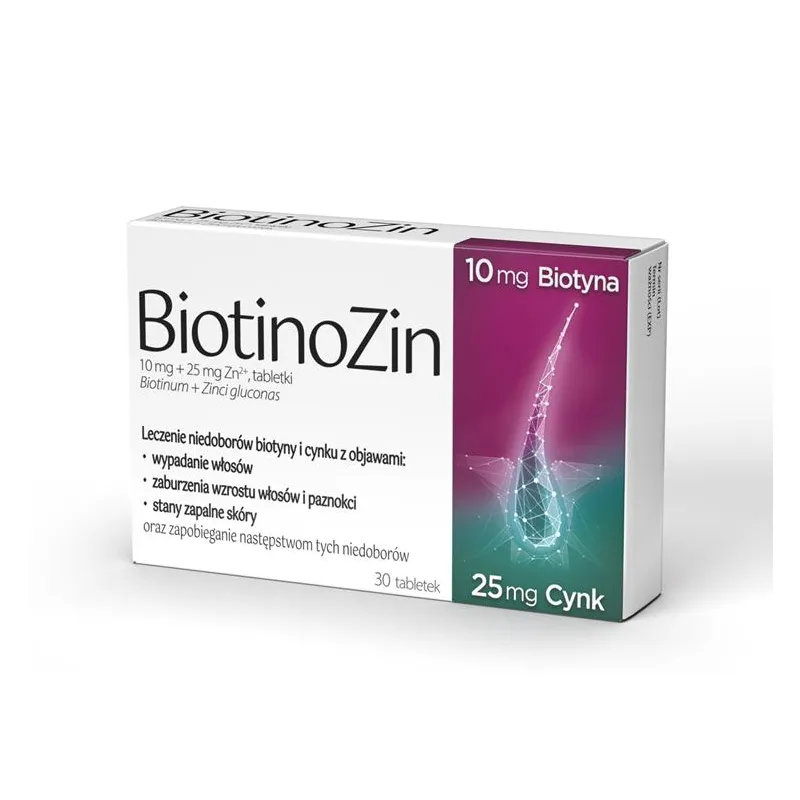
Table of Contents
Package leaflet: Information for the patient
BiotinoZin, 10 mg + 25 mg Zn, tablets
Biotinum + Zinci gluconas
Please read this leaflet carefully before using the medicine, as it contains
important information for the patient.
This medicine should always be used exactly as described in this patient leaflet or as directed by a
physician or pharmacist.
- Keep this leaflet, as you may need to read it again.
- If you need advice or further information, consult a pharmacist.
- If you experience any adverse reactions, including any not listed in this leaflet, inform your doctor or pharmacist. See section 4.
- If there is no improvement after 4 weeks, or if your condition worsens, contact your doctor.
Table of contents
- What BiotinoZin is and what it is used for
- Important information before taking BiotinoZin
- How to take BiotinoZin
- Possible side effects
- How to store BiotinoZin
- Contents of the pack and other information
1. What BiotinoZin is and what it is used for
BiotinoZin contains two active substances: biotin and zinc gluconate.
Biotin (vitamin H) is a water-soluble vitamin belonging to the B vitamin group.
Biotin supports hair and nail growth and improves skin condition by influencing keratinization and cell differentiation processes.
Zinc is an essential trace element involved in cellular metabolism. It ensures proper functioning of the skin and mucous membranes and helps reduce hair loss. Zinc deficiency may cause dryness of the hair, and in severe cases, hair may fall out and become brittle. Zinc exerts beneficial effects on wound healing and tissue regeneration.
BiotinoZin is indicated for the treatment of biotin and zinc deficiencies presenting with symptoms such as hair loss, impaired growth of hair and nails, excessive nail and hair brittleness, inflammatory skin conditions localized around the eyes, nose, mouth, and ears, and for the prevention of consequences of deficiencies, after exclusion of other causes by a physician.
If there is no improvement after 4 weeks, or if your condition worsens, consult your doctor.
2. Important information before using BiotinoZin
When not to use BiotinoZin
- if the patient is allergic to biotin and/or zinc or to any of the other ingredients of this medicine (listed in section 6);
- concurrently with nutritional supplements containing multiple vitamins and minerals, including biotin and zinc, due to the risk of overdose.
Warnings and precautions
Before starting treatment with BiotinoZin, discuss this with your doctor or pharmacist.
In case of prolonged use, diagnostic laboratory tests to monitor blood copper levels should be performed.
Do not use other products containing biotin and/or zinc simultaneously.
Effect on laboratory tests
BiotinoZin contains 10 mg of biotin per tablet. If the patient is to undergo laboratory testing, they must inform the doctor or laboratory personnel that they have recently taken or are currently taking BiotinoZin, as biotin may interfere with test results. Depending on the type of test, results may be falsely elevated or falsely low due to biotin. The doctor may recommend discontinuing BiotinoZin before laboratory testing.
It should also be remembered that other products the patient may be taking, such as multivitamin preparations or dietary supplements used to improve hair, skin, and nails, may also contain biotin and/or zinc and thus may affect laboratory test results. If the patient is using such products, they should inform their doctor or laboratory personnel.
It is recommended to discontinue the use of BiotinoZin for 3 days before a scheduled test, unless the laboratory provides different instructions.
Children and adolescents
BiotinoZin is not intended for use in children and adolescents under 18 years of age.
BiotinoZin and other medicines
Tell your doctor or pharmacist about all medicines you are currently taking or have recently taken, as well as any medicines you plan to take.
- Antiepileptic drugs (phenytoin, carbamazepine, phenobarbital, primidone) may reduce biotin blood levels.
- Steroid hormones may accelerate the breakdown of biotin in tissues.
- Valproic acid reduces the activity of enzymes involved in biotin metabolism.
- Antibiotics may reduce biotin concentration or effectiveness by disrupting intestinal flora.
- Thiazide diuretics (drugs that increase urine production) increase zinc excretion in urine.
- Folic acid (a B-group vitamin) may slightly impair zinc absorption.
- Avidin, a basic glycoprotein found in raw egg white, binds to biotin, inactivating it and preventing its absorption. In cases of biotin deficiency or when taking biotin supplements, raw egg white should not be consumed.
A minimum interval of 2 hours should be maintained between the administration of BiotinoZin and the following medicines:
- tetracycline antibiotics, quinolones (e.g. norfloxacin, ciprofloxacin), and fluoroquinolones (e.g. ofloxacin), because zinc reduces their gastrointestinal absorption;
- oral copper, iron, and calcium preparations, because high doses of zinc may reduce copper and iron absorption, while iron, copper, and calcium salts may reduce zinc absorption;
- chelating agents (used to remove heavy metals from the body), such as D-penicillamine, dimercaptopropanethiol (DMPS), dimercaptosuccinic acid (DMSA), and ethylenediaminetetraacetic acid (EDTA), because they may impair zinc absorption or increase its excretion from the body.
BiotinoZin and smoking
Smoking accelerates the breakdown of biotin in women, which may lead to deficiency and reduced treatment efficacy.
Taking BiotinoZin with food, drink, and alcohol
The medicine is usually taken approximately 2 hours before or 2 hours after a meal, as many food products listed below may interfere with the absorption of biotin and zinc.
High-fiber diets (e.g. bran), high-phosphate diets (e.g. dairy products), and foods high in phytates (e.g. whole-grain bread, cereal products, certain vegetables, nuts) reduce zinc absorption. There is evidence suggesting that coffee may also reduce zinc bioavailability.
Raw egg white inhibits biotin absorption; therefore, raw egg white should not be consumed during treatment with BiotinoZin.
Alcohol reduces blood biotin levels.
Pregnancy, breastfeeding, and fertility
If the patient is pregnant or breastfeeding, suspects she may be pregnant, or is planning to have a baby, she should consult her doctor or pharmacist before using this medicine.
Pregnancy
The amount of biotin in this medicine significantly exceeds the recommended daily intake for pregnant women. BiotinoZin should not be used during pregnancy.
Breastfeeding
The amount of biotin in this medicine significantly exceeds the recommended daily intake for breastfeeding women. Biotin passes into human milk, but no adverse effects on breastfed infants have been observed. However, BiotinoZin should not be used during breastfeeding.
Fertility
There is no data available on the effect of this medicine on fertility.
Driving and operating machinery
BiotinoZin has no effect or has a negligible effect on the ability to drive and operate machinery.
BiotinoZin contains lactose monohydrate and sodium
Lactose monohydrate
The medicine contains 97.99 mg of lactose monohydrate per tablet.
If the patient has previously been diagnosed with intolerance to certain sugars, they should consult their doctor before taking this medicine.
Sodium
The medicine contains 1.52 mg of sodium per tablet.
The medicine contains less than 1 mmol (23 mg) of sodium per tablet; therefore, it is considered "sodium-free".
3. How to use BiotinoZin
This medicine should always be taken exactly as described in this patient information leaflet or as directed by a doctor or pharmacist. If in doubt, consult a doctor or pharmacist.
BiotinoZin should be taken orally with water. The medicine should usually be taken approximately 2 hours before or 2 hours after a meal.
Adults:
The recommended dose is 5 mg of biotin and 12.5 mg of zinc ions per day, corresponding to half a tablet.
The tablet may be divided into equal doses.
In cases of severe symptoms, the recommended dose is 10 mg of biotin and 25 mg of zinc ions per day (1 tablet) for 4 weeks. After this period, the dose should be reduced to 5 mg of biotin and 12.5 mg of zinc ions.
The duration of treatment depends on the patient's condition and the course of the disease. Improvement of symptoms has been observed after approximately 4 weeks of treatment.
BiotinoZin should not be used for longer than 4 weeks without consulting a doctor.
If treatment is initiated by a doctor, they may recommend a different dosing regimen.
Note: the medicine should be taken regularly.
Use in children and adolescents
BiotinoZin is not intended for use in children and adolescents under 18 years of age.
Taking more BiotinoZin than recommended
If more than the recommended dose is taken, contact a doctor or pharmacist immediately.
Symptoms associated with overdose of BiotinoZin:
gastrointestinal disturbances (abdominal pain, nausea, vomiting), metallic taste in the mouth, drowsiness, headache, anaemia (reduced number of red blood cells), and dizziness.
Missing a dose of BiotinoZin
If a dose is missed, take the medicine as soon as possible.
If it is almost time for the next dose, skip the missed dose and continue with the regular dosing schedule.
If there are any further doubts regarding the use of this medicine, consult a doctor or pharmacist.
4. Possible adverse reactions
Like all medicines, this product can cause adverse reactions, although not everyone experiences them.
The following adverse reactions may occur after using BiotinoZin:
Very rare (affects less than 1 in 10,000 people):
- urticaria, allergic reactions;
- gastrointestinal disturbances (abdominal pain, nausea, dyspepsia, diarrhoea). These symptoms may occur at the beginning of treatment, especially if zinc is taken on an empty stomach. Symptoms usually resolve quickly after discontinuation of the medicine.
Frequency not known (cannot be estimated from available data):
- headache;
- rash;
- metallic taste in the mouth.
Long-term use of high-dose zinc may lead to copper deficiency and associated hematological disorders, such as:
- leukopenia (fever, chills, sore throat);
- neutropenia (oral and pharyngeal ulcers);
- sideroblastic anemia (feeling of fatigue, weakness).
Reporting of adverse reactions
If any adverse symptoms occur, including any adverse reactions not listed in this leaflet, inform your doctor or pharmacist.
Adverse reactions can be reported directly to the Department of Monitoring Adverse Drug Reactions of the Office for Registration of Medicinal Products, Medical Devices and Biocidal Products:
Al. Jerozolimskie 181C
02-222 Warsaw
Phone: +48 22 49 21 301
Fax: +48 22 49 21 309
Website: https://smz.ezdrowie.gov.pl.
Adverse reactions can also be reported to the marketing authorization holder.
Reporting adverse reactions enables continued monitoring of the medicine's safety and helps provide more information on its safe use.
5. How to store BiotinoZin
Keep this medicine out of sight and reach of children.
There are no special storage instructions for this medicine. Do not use this medicine after the expiry date stated on the blister pack and the carton.
The expiry date refers to the last day of the stated month.
Medicines must not be disposed of via wastewater or household waste. Ask your pharmacist how to dispose of medicines no longer required. This will help protect the environment.
6. Contents of the pack and other information
What BiotinoZin contains
- The active substances are: biotin and zinc in the form of zinc gluconate. Each tablet contains 10 mg of biotin and 25 mg of zinc ions as zinc gluconate.
- The other ingredients are: crospovidone (type A), microcrystalline cellulose, povidone K30, lactose monohydrate, sodium croscarmellose, sodium lauryl sulfate, magnesium stearate.
What BiotinoZin looks like and contents of the pack
BiotinoZin is a white or almost white, elongated, oval, biconvex tablet measuring 13.7 mm x 6.9 mm, with a single-score line on one side.
The tablet can be divided into equal doses.
BiotinoZin is available in PVC/PVDC/Aluminium blisters.
The packaging is a cardboard box containing 15 or 30 tablets.
Marketing Authorisation Holder
Aflofarm Farmacja Polska Sp. z o.o.
ul. Partyzancka 133/151
95-200 Pabianice
Tel. + 48 42 22-53-100
Manufacturer
Aflofarm Farmacja Polska Sp. z o.o.
ul. Szkolna 31
95-054 Ksawerów