Biofenac
Poland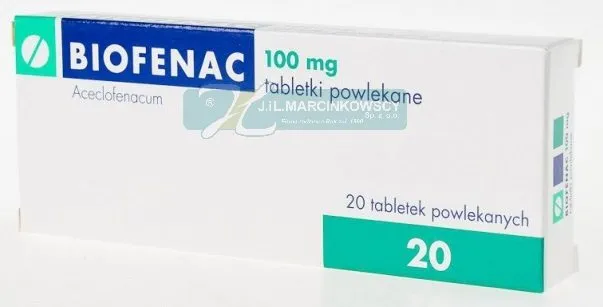
Table of Contents
Package leaflet: Information for the patient
Warning! Keep this leaflet! Information on the immediate packaging is in a foreign language.
Biofenac (Airtal)
100 mg, coated tablets
Aceclofenacum
Biofenac and Airtal are different brand names for the same medicine.
Please read the entire leaflet carefully before using the medicine, as it contains
important information for the patient.
- Keep this leaflet to read again if necessary.
- If you have any questions, consult your doctor, pharmacist, or nurse.
- This medicine has been prescribed for a specific individual. Do not share it with others. The medicine may harm someone else, even if their symptoms are the same.
- If the patient experiences any adverse reactions, including any not listed in this leaflet, inform the doctor, pharmacist, or nurse. See section 4.
Table of contents of the leaflet:
- What Biofenac is and what it is used for
- Important information before taking Biofenac
- How to take Biofenac
- Possible side effects
- How to store Biofenac
- Contents of the pack and other information
1. What Biofenac is and what it is used for
Biofenac is a pain-relieving and anti-inflammatory medicine.
Biofenac is used in the treatment of chronic joint diseases associated with persistent pain and inflammation, such as: osteoarthritis, rheumatoid arthritis, and ankylosing spondylitis.
2. Important information before using Biofenac
When not to use Biofenac
- if the patient is allergic to aceclofenac or any of the other ingredients of this medicine (listed in section 6),
- if the patient is in the last three months of pregnancy,
- if the patient has experienced asthma, acute inflammation of the nasal mucosa, skin rash or other allergic reactions after taking acetylsalicylic acid (e.g. Aspirin) or another non-steroidal anti-inflammatory drug,
- if the patient has or has had stomach or intestinal ulcers or gastrointestinal bleeding,
- if the patient has active bleeding or bleeding disorders,
- if the patient has severe liver or kidney disease,
- if the patient has heart disease and/or cerebrovascular disease, e.g. after myocardial infarction, stroke, transient ischaemic attack (mini-stroke), or arterial embolism in the heart or brain, or after a procedure to unblock or bypass blocked blood vessels,
- if the patient has or has had circulatory disorders (peripheral vascular disease).
Warnings and precautions
Before starting treatment with Biofenac, discuss this with your doctor.
- if the patient has had symptoms of peptic ulcer, gastrointestinal bleeding or perforation, or inflammatory bowel diseases (ulcerative colitis, Crohn's disease), as these may worsen,
- if the patient has a history of cerebral haemorrhage,
- if the patient has moderate liver or kidney disease or has a tendency to fluid retention for any other reason,
- if the patient has coagulation disorders, as these may worsen,
- if the patient has a specific skin and connective tissue disease, so-called SLE (systemic lupus erythematosus),
- if the patient has a specific metabolic disorder, so-called porphyria,
- if the patient has had or still has bronchial asthma,
- if the patient smokes,
- if the patient has diabetes,
- if the patient has angina pectoris, thrombosis, hypertension, elevated cholesterol or elevated triglyceride levels.
Use of medicines such as Biofenac may be associated with an increased risk of heart attack (myocardial infarction).
The occurrence of adverse effects can be minimized by using the lowest effective dose for the shortest duration necessary.
Do not exceed the recommended dose or prolong the duration of treatment.
Hypersensitivity reactions, including angioedema and severe skin reactions such as Stevens-Johnson syndrome and toxic epidermal necrolysis, have been reported with the use of Biofenac. The risk of skin reactions is higher during the first month of treatment. At the first sign of skin rash, mucosal damage or any hypersensitivity symptoms, treatment must be discontinued and the doctor must be informed immediately (see section 4).
Treatment with Biofenac should be discontinued at the first appearance of skin rash or other hypersensitivity symptoms.
Biofenac should not be used in case of chickenpox.
Biofenac may rarely cause gastrointestinal ulcers and bleeding. This may occur at any time during treatment, with or without warning symptoms.
If any abdominal symptoms occur, especially in elderly patients, contact your doctor.
Biofenac and other medicines
Tell your doctor or pharmacist about all medicines you are currently taking or have recently taken, as well as any medicines you plan to take.
Some medicines may affect the action of Biofenac. In such cases, dose adjustment or discontinuation of these medicines may be necessary. This is particularly important if the patient is taking:
- lithium (used in the treatment of psychiatric disorders),
- digoxin (used in the treatment of heart failure or arrhythmias),
- diuretics (water pills),
- certain medicines used to treat high blood pressure (ACE inhibitors and angiotensin II antagonists),
- anticoagulants (blood thinners),
- medicines used to treat depression,
- antidiabetic medicines,
- methotrexate (used in the treatment of tumours and rheumatism),
- tacrolimus and cyclosporine (immunosuppressive medicines used to prevent rejection of transplanted organs),
- corticosteroid anti-inflammatory medicines such as betamethasone and prednisolone,
- acetylsalicylic acid and other painkillers (so-called non-steroidal anti-inflammatory drugs),
- zidovudine (used in the treatment of HIV infection).
Biofenac with food and drink
Biofenac can be taken with or without food.
Pregnancy, breastfeeding and fertility
If the patient is pregnant or breastfeeding, suspects she may be pregnant, or is planning to have a baby, she should consult her doctor or pharmacist before using this medicine.
Inform your doctor if you are planning pregnancy or have difficulty becoming pregnant.
NSAIDs may impair fertility.
Do not use Biofenac if the patient is in the last three months of pregnancy, as the medicine may harm the unborn child or cause problems during delivery. The medicine may cause kidney and heart problems in the unborn child. It may affect the tendency to bleed in both the mother and her child and may cause delayed or prolonged labour. Do not use Biofenac during the first 6 months of pregnancy unless your doctor considers it absolutely necessary. If use during this period or when planning pregnancy is required, use the lowest possible dose for the shortest possible time. Biofenac used for longer than a few days after the 20th week of pregnancy may cause kidney problems in the unborn child, leading to low levels of amniotic fluid surrounding the baby (oligohydramnios) or narrowing of a blood vessel (ductus arteriosus) in the baby's heart. If treatment longer than a few days is required, your doctor may recommend additional monitoring tests.
Use of this medicine during any stage of pregnancy should only be done on a doctor's prescription.
It is not known whether Biofenac passes into breast milk. Use during breastfeeding is not recommended unless otherwise decided by the doctor.
Driving and operating machinery
Do not drive or operate dangerous tools or machinery if dizziness, nausea or other central nervous system disturbances occur while taking Biofenac.
Biofenac contains sodium
This medicine contains less than 1 mmol (23 mg) of sodium per coated tablet, meaning the medicine is considered "sodium-free".
3. How to use Biofenac
This medicine should always be used as directed by a physician or pharmacist. If in doubt,
consult a physician or pharmacist.
Tablets should be swallowed whole with an adequate amount of liquid.
Recommended daily dose: 200 mg, i.e. one coated tablet in the morning and one in the evening (one
coated tablet every 12 hours).
If you feel that the effect of Biofenac is too strong or too weak, consult your physician or pharmacist.
Use in children
The use of Biofenac is not recommended in children due to lack of data on efficacy and safety of use.
Elderly patients
Dosage will be determined by the physician. Regular follow-up visits will be necessary.
Kidney and heart disorders
Dosage will be determined by the physician. Regular follow-up visits will be necessary.
Liver disorders
The recommended initial daily dose should be reduced to one coated tablet per day.
Long-term treatment
In case of long-term use of Biofenac, the physician will perform regular laboratory tests at intervals
(blood count, liver and kidney function tests).
Accidental overdose of Biofenac
Seek immediate medical advice from a physician or pharmacist, or go to the nearest hospital emergency department.
Bring this leaflet with you!
Missed dose of Biofenac
There is no cause for concern! Do not take a double dose to make up for the missed coated tablet.
Take the next dose at the usual time.
Discontinuation of Biofenac
The duration of treatment is determined by the physician. Do not discontinue therapy prematurely, even if
your condition improves.
If you have any further questions about the use of this medicine, consult your physician, pharmacist, or nurse.
4. Possible adverse effects
Like all medicines, this medicine can cause adverse effects, although they do not occur in everyone. Most of them are mild and resolve after discontinuation of Biofenac. Adverse effects may occur with the following frequencies defined below:
- Very common: may affect more than 1 in 10 people
- Common: may affect up to 1 in 10 people
- Uncommon: may affect up to 1 in 100 people
- Rare: may affect up to 1 in 1,000 people
- Very rare: may affect up to 1 in 10,000 people
- Frequency not known: frequency cannot be estimated from the available data
Biofenac must be discontinued immediately and medical help sought if the patient experiences:
Allergic reactions, including anaphylactic shock and angioedema (rare), with symptoms such as:
- swelling of the face, tongue or throat,
- difficulty swallowing,
- urticaria and breathing difficulties,
- drop in blood pressure and fever.
Gastrointestinal ulcers and bleeding (rare), with symptoms such as:
- bloody stools (very rare),
- black, tarry stools (rare),
- vomiting blood or dark particles resembling coffee grounds (very rare).
Potentially life-threatening skin reactions, such as Stevens-Johnson syndrome and toxic epidermal necrolysis (very rare), with symptoms such as:
- itching, rash, redness of the skin, inflammation, pain and formation of blisters.
Common: dizziness, dyspepsia (indigestion), abdominal pain, nausea, diarrhoea, and changes in liver function tests.
Uncommon: flatulence, gastritis (inflammation of the stomach lining), constipation, vomiting, oral ulceration, skin itching and rash, kidney function disorders.
Rare: hypertension, heart failure, dyspnoea (difficulty breathing or shortness of breath, usually associated with certain forms of heart or lung diseases, also referred to as breathlessness), anaemia (low number of red blood cells or low haemoglobin concentration), visual disturbances.
Very rare: abnormally low white blood cell and platelet counts, elevated potassium levels and increased liver enzyme activity in blood, depression, sleep disorders, unusual dreams, paresthesia (tingling sensation), tremors (rhythmic, involuntary movements), headache, taste disturbances, stomatitis (inflammation of the mucous membrane of the mouth), pancreatitis, hepatitis, vertigo (spinning sensation), tinnitus (ringing, buzzing or other sounds in the ears without external cause), purpura (numerous small skin haemorrhages), rash, oedema (swelling of legs, arms or face), leg muscle cramps, kidney function disorders, kidney failure, palpitations (uncomfortable sensation of irregular and/or strong heartbeat), vasculitis (inflammation of blood vessels), fatigue, sudden flushing of the face, hot flushes, breathing difficulties (bronchospasm), weight gain, intestinal perforation, exacerbation of inflammatory bowel diseases (Crohn's disease, ulcerative colitis).
In isolated cases during chickenpox, severe skin infections have been observed.
Reporting of adverse effects
If any adverse effects occur, including any not listed in this leaflet, the patient should inform their doctor, pharmacist or nurse. Adverse effects can be reported directly to the Department of Monitoring of Adverse Drug Reactions at the Office for Registration of Medicinal Products, Medical Devices and Biocidal Products, Al. Jerozolimskie 181C, 02-222 Warsaw,
Tel.: +48 22 49 21 301, Fax: +48 22 49 21 309,
website: https://smz.ezdrowie.gov.pl .
Reporting adverse effects helps to collect more information on the safety of the medicine.
5. How to store the medicine Biofenac
Keep the medicine in a place inaccessible and out of sight of children.
Store below 30°C.
Do not use this medicine after the expiry date stated on the packaging. The expiry date refers to the last day of the stated month.
Medicines must not be disposed of via wastewater or household waste. Ask your pharmacist how to dispose of medicines no longer required. Such measures help protect the environment.
6. Contents of the pack and other information
What Biofenac contains
The active substance is aceclofenac.
Each coated tablet contains 100 mg of aceclofenac.
The other ingredients are:
Glyceryl palmitostearate
Sodium croscarmellose
Povidone
Microcrystalline cellulose
Coating:
Sepifilm:
Polyoxyl 40 stearate
Titanium dioxide (E 171)
Microcrystalline cellulose
Hypromellose
What Biofenac looks like and contents of the pack
Appearance: White, biconvex, round coated tablets with a diameter of approximately 8 mm.
Packaging: 20 or 60 coated tablets in aluminium/aluminium blisters, packed in a cardboard box.
For more detailed information, please contact the Marketing Authorisation Holder or the Parallel Importer.
Marketing Authorisation Holder in Spain, the country of export:
Almirall, S.A.
General Mitre, 151, 08022 – Barcelona, Spain
Manufacturer:
Industrias Farmacéuticas Almirall, S.A.
Ctra. de Martorell, 41-61, 08740 Sant Andreu de la Barca, Barcelona, Spain
Parallel Importer:
InPharm Sp. z o.o., Strumykowa 28/11, 03-138 Warsaw, Poland
Repackaged in:
InPharm Sp. z o.o. Services sp. k., Chełmżyńska 249, 04-458 Warsaw, Poland
Marketing Authorisation Number in Spain, the country of export: 885285.7
723924.6
Parallel Import Licence Number: 266/15