Biodribin
Poland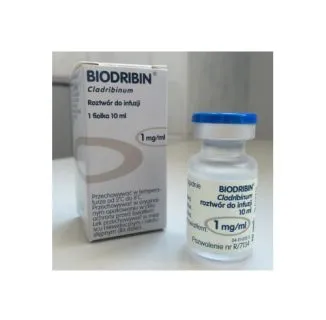
Table of Contents
- Package leaflet: Information for the patient
- 1. What Biodribin is and what it is used for
- 2. Important information before using Biodribin
- 3. How to use Biodribin
- 4. Possible adverse reactions
- 5. How to store Biodribin
- 6. Contents of the pack and other information
- Information intended exclusively for medical professionals:
Package leaflet: Information for the patient
BIODRIBIN, 1 mg/ml, solution for infusion
Cladribinum
Please read the entire leaflet carefully before use, as it contains
important information for the patient.
- Keep this leaflet for future reference.
- If you have any doubts, please consult your doctor, pharmacist, or nurse.
- If you experience any adverse reactions, including any not listed in this leaflet, inform your doctor, pharmacist, or nurse immediately.
Table of contents
- What Biodribin is and what it is used for
- Important information before using Biodribin
- How to use Biodribin
- Possible side effects
- How to store Biodribin
- Contents of the package and other information
1. What Biodribin is and what it is used for
Biodribin is an antineoplastic medicinal product. The active substance is cladribine – a compound belonging to the group of purine analogues (purines are involved in nucleic acid synthesis). The drug is administered in an appropriate dose via prolonged intravenous infusions. Cladribine exerts a toxic effect on malignant white blood cells (lymphocytes). After intravenous administration, the drug rapidly penetrates into tumour cells and destroys them by inhibiting the activity of multiple enzymes responsible for cellular metabolism and by arresting the cell cycle.
Biodribin is indicated for the treatment of haematological malignancies: hairy cell leukaemia at any stage of the disease, chronic lymphatic leukaemia, and low-grade non-Hodgkin's lymphomas in cases primarily or secondarily resistant to treatment with other cytostatic agents.
2. Important information before using Biodribin
When not to use Biodribin
If the patient is allergic to cladribine or any of the other ingredients of this medicine
(listed in section 6).
If the patient is pregnant or breastfeeding.
Warnings and precautions
Before starting treatment, the doctor will assess the patient's general condition, paying particular attention to infections, bleeding tendencies manifested by petechiae and bruising, and peripheral nerve dysfunction causing tingling, pain, and weakness in hands and feet (peripheral neuropathy). A blood test including white blood cell count should be performed, and kidney and liver function should be evaluated.
During treatment, especially during the first treatment cycle, the patient should drink large amounts of fluids to increase urine output. If necessary, fluids and/or diuretics may be administered intravenously.
Due to the strong and prolonged immunosuppression associated with nucleoside analogues (drugs used in cancer treatment) such as Biodribin, there is a risk of developing secondary tumours. Primary haematological malignancies treated with Biodribin (e.g. hairy cell leukaemia) may also be a risk factor for the development of secondary tumours.
During treatment, very serious adverse effects may occur, requiring appropriate management:
- Bone marrow suppression and decreased blood cell counts (cytopenia); neutropenia (granulocyte count less than 1.0 G/l) or thrombocytopenia (platelet count less than 50 G/l). Blood transfusion may be necessary.
- Viral, bacterial, or fungal infections; administration of Biodribin may need to be withheld and appropriate intensive anti-infective treatment initiated. In patients with granulocytopenia and thrombocytopenia, the doctor may prescribe prophylactic anti-infective medication one week before and after completion of cladribine therapy.
- Tumour lysis syndrome; the doctor may recommend administration of appropriate medications to prevent consequences of rapid tumour breakdown before starting treatment and for two days after completion of the cycle (particularly in patients with white blood cell count greater than 100 G/l).
- Severe peripheral neuropathy.
If at any time during or after treatment the patient experiences any of the following symptoms, the doctor or nurse must be informed immediately:
blurred vision, loss of vision, or double vision, difficulty speaking, weakness in arm or leg, change in gait or balance disturbances, persistent numbness, weakness, or loss of sensation, memory loss, or confusion. All of these may be symptoms of a severe and potentially fatal brain disease called progressive multifocal leukoencephalopathy (PML).
If these symptoms were present in the patient prior to cladribine treatment, the doctor must be informed of any changes in these symptoms.
Extreme caution is required in cases of severe bone marrow dysfunction, neurotoxic symptoms, or renal failure. Based on appropriate tests and the patient's condition, the doctor may reduce the dose or discontinue treatment completely.
Children
The safety and efficacy of Biodribin in children have not yet been established.
Biodribin and other medicines
Inform the doctor about all medicines currently or recently taken, as well as any medicines planned for future use.
As with other cytotoxic drugs, particular caution is required when administering cladribine together with other medicines affecting the haematopoietic and immune systems.
Pregnancy, breastfeeding, and effects on fertility
If the patient is pregnant or breastfeeding, suspects she may be pregnant, or is planning to have a child, she should consult her doctor before using this medicine.
Pregnancy
Biodribin must not be used during pregnancy.
The doctor must be informed of any possible pregnancy before treatment is started.
Breastfeeding
Breastfeeding must be discontinued during treatment with Biodribin.
Effects on fertility
Patients, both women and men of reproductive potential, are advised to avoid pregnancy, as the medicine may adversely affect fetal development.
Driving and operating machinery
Consult the doctor.
Adverse effects of the medicine may impair the ability to drive or operate machinery.
Biodribin contains sodium
This medicine contains 39.55 mg of sodium (a main component of table salt) in each 10 ml vial. This corresponds to 2% of the maximum recommended daily dietary intake of sodium for adults.
3. How to use Biodribin
This medicinal product should only be administered under the supervision of a physician experienced in chemotherapy for neoplastic diseases, in hospital conditions allowing appropriate management in case of adverse reactions.
Dosage (adults)
Hairy cell leukemia
The recommended dose is 0.09 mg/kg body weight per day (3.6 mg/m² body surface area per day) administered as a 24-hour infusion for 7 days. Dose modification is not recommended. If neurologic or renal toxic symptoms occur, the administration of the drug should be temporarily interrupted or completely discontinued.
Chronic lymphocytic leukemia and low-grade non-Hodgkin's lymphomas
The recommended dose is 0.12 mg/kg body weight per day (4.8 mg/m² body surface area per day) administered as a 2-hour infusion for 5 consecutive days, repeated every 28 days in subsequent cycles.
Instructions for use
The appropriate amount of the drug should be administered intravenously: either via an infusion pump without dilution, or as an intravenous drip infusion after diluting the appropriate amount of the drug in 500 ml of 0.9% sodium chloride solution. In hairy cell leukemia, the infusion lasts 24 hours; in chronic lymphocytic leukemia and low-grade non-Hodgkin's lymphomas, the infusion lasts 2 hours.
Standard cytotoxic safety procedures must be followed: protective glasses, gloves, and appropriate protective clothing should be worn.
If the drug comes into contact with skin or mucous membranes, the affected area should be immediately and thoroughly washed with large amounts of water.
Overdose of Biodribin
Do not use higher doses than recommended. In case of overdose, a physician should be informed immediately.
Missed dose of Biodribin
Do not use a double dose to make up for a missed dose. If a dose is missed, consult your physician.
If you have any further questions regarding the use of this medicinal product, consult your physician, pharmacist, or nurse.
4. Possible adverse reactions
Like all medicines, this medicine can cause adverse reactions, although they do not occur in everyone.
Adverse reactions occur only in some patients and vary in severity. The benefit of using this medicine is significantly greater than the effects of adverse reactions. Adverse reactions occur more frequently at the beginning of treatment. The frequency of certain adverse reactions varies depending on the patient's underlying disease condition.
List of possible adverse reactions:
Hairy cell leukemia
Very common (may affect more than 1 in 10 patients)
- neutropenia, severe anaemia and thrombocytopenia; CD4 lymphopenia; prolonged pancytopenia
- nausea
- rash
- fever, decreased appetite, feeling of fatigue
Common (may affect up to 1 in 10 patients)
- increased heart rate, heart murmurs
- purpura, petechiae
- headache, dizziness, insomnia, restlessness
- abnormal respiratory sounds, cough, dyspnoea
- vomiting, constipation, diarrhoea, abdominal pain, bloating
- muscle pain, joint pain
- itching, pain, erythema
- bacterial, viral, fungal infections; severe infections (sepsis, pneumonia)
- oedema
- chills, weakness, profuse sweating, malaise, body pain; injection site reactions: redness, swelling, pain, thrombophlebitis and phlebitis – more likely related to infusion and/or catheter exchange than to the medicine itself
Unknown frequency (frequency cannot be determined from available data)
- secondary malignancies (e.g. lung cancer)
Chronic lymphocytic leukemia
Very common (may affect more than 1 in 10 patients)
- neutropenia, severe anaemia and thrombocytopenia (especially in the 2nd treatment cycle); purpura
- headache
- cough
- local skin reactions at injection site, fever, feeling of fatigue, oedema
Common (may affect up to 1 in 10 patients)
- coagulation disorders
- abnormal respiratory sounds
- diarrhoea, nausea
- connective tissue inflammation, skin tenderness
- pneumonia, bacterial infections e.g. of the skin, viral skin infections, upper respiratory tract infections, intestinal infections or inflammation, oral candidiasis, urinary tract infections
- phlebitis
- profuse sweating
Unknown frequency (frequency cannot be determined from available data)
- secondary malignancies (e.g. lung cancer)
Non-Hodgkin's lymphoma
Very common (may affect more than 1 in 10 patients)
- neutropenia, anaemia, thrombocytopenia
- bacterial infections
Common (may affect up to 1 in 10 patients)
- erythema, urticaria
- viral, fungal infections
- fever
Uncommon (may affect up to 1 in 100 patients)
- nausea, vomiting
- severe infections (sepsis, tuberculosis, pneumonia)
If any adverse reactions occur, including any possible adverse reactions not listed in this leaflet, consult a doctor, pharmacist or nurse.
Reporting of adverse reactions
If any adverse reactions occur, including adverse reactions not listed in this leaflet, inform your doctor, pharmacist or nurse. Adverse reactions can be reported directly to the Department of Monitoring Adverse Drug Reactions of the Office for Registration of Medicinal Products, Medical Devices and Biocidal Products:
al. Jerozolimskie 181C
02-222 Warsaw
Tel.: + 48 22 49 21 301
Fax: + 48 22 49 21 309
Website: https://smz.ezdrowie.gov.pl
Adverse reactions can also be reported to the marketing authorization holder.
Reporting adverse reactions helps to provide more information on the safety of the medicine.
5. How to store Biodribin
Keep the medicine out of the sight and reach of children.
Do not use this medicine after the expiry date stated on the label after: Expiry date.
The expiry date refers to the last day of the stated month.
Store between 2°C and 8°C.
Keep in the original packaging to protect from light.
After first opening/dilution
After first opening, the product should be used immediately. Any unused portion of the solution must be
destroyed or stored for no longer than 24 hours at a temperature between 2°C and 8°C.
After dilution with 0.9% NaCl solution, the infusion solution should be used immediately after preparation. Unused infusion solution may be stored for no longer than 24 hours at a temperature below 25°C.
From a microbiological standpoint, the medicine should be used immediately. If not used immediately, the person administering the medicine is responsible for the storage duration during use and the storage conditions prior to use.
Any unused solution and infusion equipment must be disposed of in accordance with proper procedures for handling cytostatic agents.
Medicines must not be disposed of via wastewater or household waste. Ask your pharmacist how to dispose of medicines no longer in use. This will help protect the environment.
6. Contents of the pack and other information
What Biodribin contains
The active substance is cladribine (Cladribinum). One millilitre of infusion solution contains 1 mg of cladribine.
One vial (10 ml) contains 10 mg of cladribine.
The other ingredients are sodium chloride, disodium phosphate dihydrate, phosphoric acid, water for injections.
What Biodribin looks like and contents of the pack
Biodribin is a clear, colourless solution in a colourless glass vial, closed with a bromobutyl stopper and sealed with an aluminium cap. The vial is packed in a cardboard box with a patient leaflet.
Marketing Authorisation Holder
Łukasiewicz Research Network - Industrial Chemistry Institute named after Professor Ignacy Mościcki
Rydygiera Street 8
01-793 Warsaw
Tel. +48 22 568 23 93
Manufacturer
Łukasiewicz Research Network - Industrial Chemistry Institute named after Professor Ignacy Mościcki
Starościńska Street 5
02-516 Warsaw
Information intended exclusively for medical professionals:
Instructions for use of the medicinal product
The appropriate dose should be administered by intravenous infusion: either via an infusion pump without dilution or
by direct intravenous drip after dilution of the appropriate amount of the medicinal product in 500 ml
of 0.9% sodium chloride solution.
Before administration, inspect the solution to ensure there are no particulate contaminants. The medicinal product
should be used only if it is clear, colourless, and free from insoluble particles.
In hairy cell leukaemia, the infusion lasts 24 hours; in chronic lymphocytic leukaemia and low-grade non-Hodgkin’s lymphoma,
the infusion lasts 2 hours.
Standard safety procedures for handling cytotoxic agents must be followed: wear protective goggles, gloves, and
appropriate protective clothing.
If the medicinal product comes into contact with skin or mucous membranes, the affected area should be immediately and thoroughly washed with large amounts of water.