Bimifree combi
Poland
Table of Contents
Package leaflet: Information for the patient
Bimifree Combi, 0.3 mg/ml + 5 mg/ml, eye drops, solution
Bimatoprost + Timolol
Please read the entire leaflet carefully before using this medicine, as it contains
important information for you.
- Keep this leaflet, as you may need to read it again.
- If you have any questions, please consult your doctor or pharmacist.
- This medicine has been prescribed for a specific individual. Do not share it with others. This medicine may harm another person, even if their symptoms are the same.
- If you experience any adverse reactions, including any not listed in this leaflet, inform your doctor or pharmacist. See section 4.
Table of contents
- What Bimifree Combi is and what it is used for
- Important information before using Bimifree Combi
- How to use Bimifree Combi
- Possible side effects
- How to store Bimifree Combi
- Contents of the pack and other information
1. What Bimifree Combi is and what it is used for
Bimifree Combi contains two active substances (bimatoprost and timolol) that reduce intraocular pressure. Bimatoprost belongs to a group of medicines called prostamides, analogues of prostaglandins. Timolol belongs to a group of medicines called beta-blockers.
The eye contains a clear, watery fluid that nourishes the inside of the eye. This fluid is continuously drained from the eye and replaced by newly produced fluid. If the fluid cannot drain sufficiently quickly, the pressure inside the eye increases, which may eventually lead to damage to vision (causing a condition called glaucoma). Bimifree Combi works by reducing the production of fluid and increasing the amount of fluid drained. This reduces the pressure inside the eye.
Bimifree Combi eye drops are used to treat high eye pressure in adults, including elderly people. High pressure may lead to glaucoma. Your doctor will prescribe Bimifree Combi if other eye drops containing beta-blockers or prostaglandin analogues have not been sufficiently effective.
The medicine does not contain preservatives.
2. Important information before using Bimifree Combi
When not to use Bimifree Combi
- if the patient is allergic to bimatoprost, timolol, beta-blocking agents (beta-blockers), or any of the other ingredients of this medicine (listed in section 6);
- if the patient has had or currently has a respiratory disorder, such as asthma, or severe chronic obstructive pulmonary disease (a serious lung condition that may cause wheezing, difficulty breathing, and long-term cough);
- if the patient has heart conditions such as abnormally slow heartbeat, heart block, or heart failure.
Warnings and precautions
Before starting treatment with Bimifree Combi, consult your doctor or pharmacist if any of the following conditions are present or have occurred in the past:
- coronary heart disease (symptoms may include chest pain or tightness, shortness of breath, or breathlessness), heart failure, hypotension;
- heart rhythm disorders, e.g. abnormally slow heartbeat;
- breathing disorders, asthma, or chronic obstructive pulmonary disease;
- circulatory disorders, e.g. Raynaud's disease or Raynaud's phenomenon;
- overactive thyroid gland, as timolol may mask the subjective and objective symptoms of hyperthyroidism;
- diabetes, as timol0l may mask the subjective and objective symptoms of low blood glucose;
- severe allergic reactions;
- liver or kidney disease;
- eye surface disorders;
- detachment of one of the layers of the eyeball following a procedure aimed at reducing intraocular pressure;
- known risk factors for macular edema (swelling of the retina in the back of the eye leading to worsening vision), such as cataract surgery.
Before undergoing surgical procedures under anesthesia, inform your doctor that you are using Bimifree Combi, as timolol may alter the effects of certain drugs used during anesthesia.
During treatment, Bimifree Combi may cause loss of periorbital fat tissue, which may lead to deepening of the eyelid sulcus, sunken eyes, drooping of the upper eyelids (ptosis), skin tension around the eye (dermatochalasis-induced involution), and increased visibility of the lower white part of the eye (exposure of the lower sclera). These changes are usually mild, but if pronounced, they may affect the visual field. These changes may resolve after discontinuation of Bimifree Combi.
Bimifree Combi may also cause darkening and increased growth of eyelashes, as well as darkening of the skin around the eyelid. The colour of the iris may also darken. These changes may be permanent.
Changes may be more noticeable if only one eye is treated. In case of contact with the skin surface, Bimifree Combi may cause hair growth.
Children and adolescents
Bimifree Combi must not be used in children and adolescents under 18 years of age.
Bimifree Combi and other medicines
Inform your doctor or pharmacist about all medicines you are currently using or have recently used, as well as any medicines you plan to take.
Bimifree Combi may affect the action of other medicines, or other medicines you are taking may affect the action of Bimifree Combi, including eye drops used in the treatment of glaucoma.
Inform your doctor if you are taking or plan to take medicines that lower blood pressure, medicines used for heart conditions, diabetes, quinidine (a medicine used for heart conditions or certain forms of malaria), or antidepressants (fluoxetine, paroxetine).
If you are using other eye drops at the same time, wait at least 5 minutes between administering each medicine. Ointments should be used last.
Pregnancy and breastfeeding
If you are pregnant, breastfeeding, think you may be pregnant, or are planning to have a baby, consult your doctor or pharmacist before using this medicine.
Do not use Bimifree Combi during pregnancy unless your doctor specifically advises you to do so.
Do not use Bimifree Combi during breastfeeding. Timolol may pass into breast milk.
Before taking any medicine during breastfeeding, consult your doctor.
Driving and operating machinery
Bimifree Combi may cause blurred vision in some patients. Do not drive or operate machinery until symptoms have resolved.
Bimifree Combi contains phosphates
The medicine contains 1.4 mg of phosphates per millilitre. In patients with severe damage to the cornea (the transparent front part of the eye), phosphates may very rarely cause corneal calcification and clouding during treatment.
3. How to use Bimifree Combi
This medicine should always be used as directed by your doctor or pharmacist. If you have any doubts,
consult your doctor or pharmacist.
The recommended dose is one drop into each affected eye once daily, in the morning or
evening. Bimifree Combi should be used every day at approximately the same time.
Bimifree Combi has not been studied in patients wearing contact lenses. Before administering the
medicine, remove contact lenses and wait at least 15 minutes before reinserting them.
Bimifree Combi is a sterile solution that does not contain preservatives. See section 6. What Bimifree
Combi looks like and what the pack contains .
Before instilling eye drops:
- At first use, before administering the drop into the eye, the patient should practice using the dropper bottle by slowly squeezing it until one drop is dispensed. This should be done away from the eye.
- If the patient is confident in their ability to instill a single drop, they should assume the most comfortable position for instillation (sitting, lying on the back, or standing in front of a mirror).
Instructions for use:
- Wash hands thoroughly before instilling the medicine.
- Do not use the medicine if the packaging or bottle is damaged.
- Before first use, unscrew the cap after ensuring that the tamper-evident ring on the cap is intact. There will be slight resistance when unscrewing until the ring breaks ( Figure 1 ).
- If the tamper-evident ring is loose, remove it before using the medicine, as it may fall into the eye and cause injury.
- Tilt the head backward and gently pull the lower eyelid downward with a finger to create a "pocket" between the eyeball and the eyelid ( Figure 2 ). Avoid touching the dropper tip to the eye, eyelids, or fingers.
- Instill one drop by slowly squeezing the bottle ( Figure 3 ). Gently squeeze the middle of the bottle to release a drop into the patient's eye. Note that there may be a delay of several seconds between squeezing the bottle and the drop being released. Do not squeeze too hard. If in doubt about how to use the medicine, the patient should consult a doctor, pharmacist, or nurse.
- After instillation, press with a finger on the tear duct (inner corner of the eye near the nose) for at least 2 minutes, keeping the eye(s) closed during this time. This helps ensure the medicine penetrates into the eye and reduces systemic absorption via the tear duct.
- If the doctor has prescribed drops for the second eye, repeat steps 5, 6, and 7.
- After use and before recapping, to remove any residual liquid from the dropper tip, shake the bottle downward without touching the dropper tip to remove any remaining liquid. This is necessary to ensure proper function for subsequent doses. Immediately after use, tightly recap the bottle ( Figure 4 ).
If the drop misses the eye, repeat the instillation.
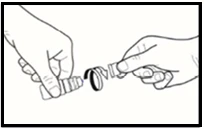
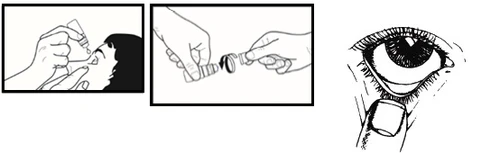
Figure 1. Figure 2. Figure 3. Figure 4.
Use of more than the recommended dose of Bimifree Combi
If more than the recommended dose of Bimifree Combi is used, it is unlikely to cause any serious harm.
The next dose should be taken at the usual time.
If in doubt, inform your doctor or pharmacist.
Missed dose of Bimifree Combi
If a dose of Bimifree Combi is missed, instill one drop as soon as remembered, then continue with the
regular dosing schedule. Do not use a double dose to make up for a missed dose.
Discontinuation of Bimifree Combi
Bimifree Combi should be used daily to be effective.
If you have any further doubts about the use of this medicine, consult your doctor or pharmacist.
4. Possible adverse reactions
Like all medicines, this medicine can cause adverse reactions, although not everybody gets them.
Generally, you can continue using the eye drops if the adverse reactions are not severe.
If in doubt, consult your doctor or pharmacist. Do not stop using Bimifree Combi without first discussing it with your doctor.
The following adverse reactions may occur during treatment with Bimifree Combi:
Very common adverse reactions
May affect at least 1 in 10 people
Eye-related:
redness.
Around the eye:
loss of fatty tissue around the eye, which may lead to deepening of the eyelid sulcus, sunken eyes, drooping eyelids (ptosis), tightness of the skin around the eye (dermatochalasis-induced involution), and increased visibility of the lower white part of the eye (exposure of the lower sclera).
Common adverse reactions
May affect 1 to 9 in 100 people
Eye-related:
burning sensation, itching, stinging pain, conjunctival irritation (irritation of the transparent membrane covering the eye), light sensitivity, eye pain, sticky eyes, dry eyes, sensation of a foreign body in the eye, minor damage to the eye surface (with or without inflammation), blurred vision, redness and itching of the eyelids, eyelash growth around the eye, darkening of the eyelids, darker skin pigmentation around the eye, eyelash elongation, eye irritation, excessive tearing, eyelid swelling, narrowed field of vision.
Other parts of the body:
nasal inflammation (coryza), dizziness, headache.
Uncommon adverse reactions
May affect 1 to 9 in 1000 people
Eye-related:
abnormal sensations in the eye, uveitis (inflammation of the iris), conjunctival edema (swelling of the transparent membrane covering the eye), eyelid pain, eye fatigue, ingrown eyelashes, darkening of the iris, eyelid retraction (separation of the eyelid from the eye surface), darkening of eyelashes.
Other parts of the body:
dyspnea (shortness of breath).
Adverse reactions with unknown frequency
Eye-related:
cystoid macular edema (swelling of the retina in the back of the eye leading to worsening vision), eye swelling, blurred vision.
Other parts of the body:
breathing difficulties/wheezing, symptoms of allergic reaction (swelling, redness of the eye, skin rash), taste disturbances, slowed heart rate, sleep disturbances, nightmares, asthma, hair loss, fatigue.
Additional adverse reactions have been observed in patients using eye drops containing timolol or bimatoprost, so they may also occur during treatment with Bimifree Combi. Like other ophthalmic medicinal products applied locally, timolol may pass into the systemic circulation. This may lead to adverse reactions similar to those observed with oral and/or intravenous administration of beta-adrenergic blocking agents. The frequency of systemic adverse reactions after administration of eye drops is lower than after oral or injected administration. The listed adverse reactions include those observed when using bimatoprost and timolol in the treatment of eye diseases:
- Severe allergic reactions with swelling and breathing difficulties, which may be life-threatening
- Low blood sugar levels
- Depression, memory loss, dizziness, hallucinations
- Fainting, stroke, reduced blood flow to the brain, worsening of myasthenia (increased muscle weakness), tingling sensation
- Reduced corneal sensitivity, double vision, drooping eyelid, detachment of one of the layers of the eyeball after a procedure to lower intraocular pressure, eye surface inflammation, bleeding in the back of the eye (retinal hemorrhage), eye inflammation, increased blinking, sticky eyes, eye discomfort
- Heart failure, irregular heartbeat or cardiac arrest, slowing or speeding up of heart rate, fluid retention (mainly water) in the body, chest pain
- Low blood pressure, high blood pressure, swollen or cold hands, feet and limbs due to narrowing of blood vessels
- Cough, worsening of asthma, exacerbation of a lung disease called chronic obstructive pulmonary disease (COPD)
- Diarrhea, abdominal pain, nausea and vomiting, indigestion, dry mouth
- Red, scaly skin lesions, skin rash, skin discoloration (around the eye)
- Muscle pain
- Decreased libido, sexual dysfunction
- Weakness
- Increased liver function test results in blood tests
Other adverse reactions reported with eye drops containing phosphates
In very rare cases, some patients with significant damage to the outer transparent layer of the eyeball (cornea) developed cloudy corneal spots due to calcium deposits during treatment.
Reporting of adverse reactions
If any adverse reactions occur, including any not listed in this leaflet, inform your doctor or pharmacist. Adverse reactions can be reported directly to the Department of Monitoring Adverse Drug Reactions, Office for Registration of Medicinal Products, Medical Devices and Biocidal Products
Al. Jerozolimskie 181C
02-222 Warsaw
Phone: +48 22 49 21 301
Fax: +48 22 49 21 309
Website: https://smz.ezdrowie.gov.pl
Adverse reactions can also be reported to the marketing authorization holder.
Reporting adverse reactions helps provide more information on the safety of the medicine.
5. How to store Bimifree Combi
No special storage instructions are required for this medicinal product.
The medicine should be stored out of sight and out of reach of children.
Do not use this medicine after the expiry date stated on the carton and bottle. The expiry date refers to the last day of the stated month.
The labelling on the packaging shows, after the abbreviation EXP, the expiry date and, after the abbreviation Lot, the batch number.
After first opening the bottle – store for 90 days at a temperature below 25°C.
The bottle must be discarded 90 days after first opening.
Medicines must not be disposed of via wastewater or household waste. Ask your pharmacist how to dispose of medicines no longer required. This will help protect the environment.
6. Contents of the pack and other information
What Bimifree Combi contains
- The active substances in the medicine are bimatoprost and timolol.
- Each ml of solution contains 0.3 mg of bimatoprost and 5 mg of timolol (as 6.83 mg of timolol maleate). Each bottle contains 3 ml of solution.
- Other ingredients are: disodium phosphate dodecahydrate, citric acid monohydrate, sodium chloride, sodium hydroxide or hydrochloric acid, diluted (to adjust pH), water for injections.
What Bimifree Combi looks like and contents of the pack
Bimifree is a clear, colourless solution.
The medicine is available in white bottles with a capacity of 5 ml (LDPE) containing 3 ml of solution,
with a multidose dropper (HDPE) preventing bacterial contamination of the solution
thanks to a system comprising a silicone membrane and filtration of air drawn into
the bottle, with a closure cap made of HDPE with a tamper-evident ring, packed in a cardboard box.
Pack sizes:
1 bottle with a capacity of 5 ml containing 3 ml of solution.
3 bottles with a capacity of 5 ml each containing 3 ml of solution.
Not all pack sizes may be marketed.
Marketing Authorisation Holder
Zakłady Farmaceutyczne POLPHARMA S.A.
ul. Pelplińska 19, 83-200 Starogard Gdański
tel. +48 22 364 61 01
Manufacturer
Rafarm S.A.
Thesi Pousi Xatzi Agiou Louka
Paiania, 190 02
Greece