Bilastine nasometin
Poland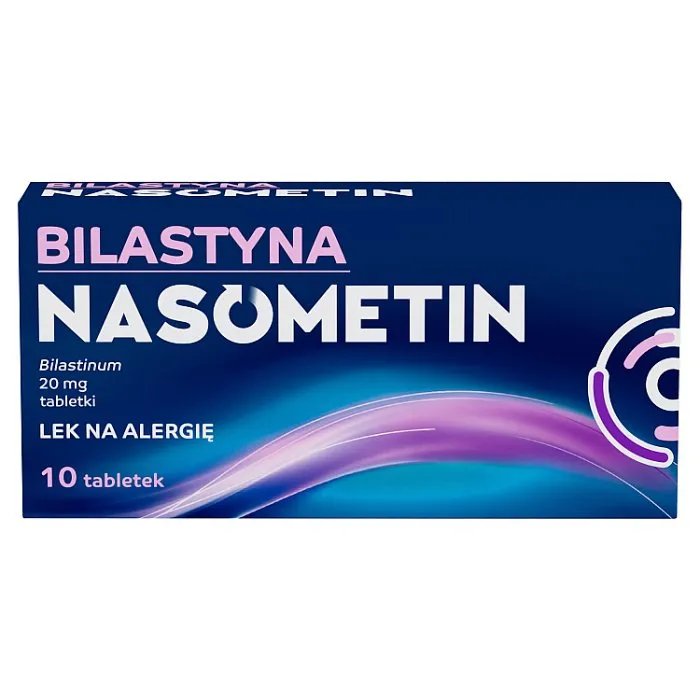
Table of Contents
Patient Information Leaflet
Bilastyna Nasometin, 20 mg, tablets
For use in adults and adolescents aged 12 years and older
Bilastinum
Please read the following information carefully before taking this medicine, as it contains
important information for the patient.
This medicine should always be taken exactly as described in this patient information leaflet or as directed by a doctor or pharmacist.
- Keep this leaflet, as you may need to read it again.
- If you need advice or further information, please consult your pharmacist.
- If you experience any adverse reactions, including any not listed in this leaflet, inform your doctor or pharmacist. See section 4.
- If there is no improvement after 3 days, or if symptoms worsen, consult your doctor.
Table of Contents
- What is Bilastyna Nasometin and what is it used for
- Important information before taking Bilastyna Nasometin
- How to take Bilastyna Nasometin
- Possible side effects
- How to store Bilastyna Nasometin
- Contents of the pack and other information
1. What is Bilastyna Nasometin and what is it used for
Bilastyna Nasometin contains the active substance bilastinum, which has antihistamine properties.
Bilastyna Nasometin is used to relieve symptoms of hay fever (sneezing, itching, runny nose,
nasal congestion, and red, watery eyes) and other forms of allergic rhinitis. It may also be used
to treat itchy skin rashes (hives or urticaria).
2. Important information before using Bilastyna Nasometin
When not to use Bilastyna Nasometin
- if the patient is allergic to bilastine or to any of the other ingredients of this medicine (listed in section 6).
Warnings and precautions
Before starting to use Bilastyna Nasometin, discuss with your doctor or pharmacist if the patient has moderate or severe kidney function disorders, low levels of potassium, magnesium, or calcium in the blood, if the patient has or has had heart rhythm disorders or very slow heart rate, if the patient is taking medicines that may affect heart rhythm, if the patient has or has had an abnormal heart rhythm pattern (known as QTc prolongation on electrocardiogram), which may occur in certain types of heart disease, or if the patient is taking other medicines (see "Bilastyna Nasometin and other medicines").
Do not exceed the recommended dose. If symptoms persist, consult a doctor.
Children
This medicine must not be given to children under 12 years of age.
Bilastyna Nasometin and other medicines
Tell your doctor or pharmacist if the patient is currently taking, has recently taken, or plans to take any other medicines, including those obtained without a prescription.
In particular, always inform your doctor if the patient is taking any of the following medicines:
- ketoconazole tablets (used to treat Cushing's syndrome, when the body produces too much cortisol)
- erythromycin (an antibiotic)
- diltiazem (a medicine used for angina pectoris – chest pain or tightness)
- cyclosporine (a medicine that reduces immune system activity, used to prevent transplant rejection or to reduce severity of autoimmune and allergic diseases such as psoriasis, atopic dermatitis, or rheumatoid arthritis)
- ritonavir (a medicine used in the treatment of AIDS)
- rifampicin (an antibiotic)
Bilastyna Nasometin with food, drink, and alcohol
Do not take this medicine with food or grapefruit juice or other fruit juices, as this may reduce the effect of bilastine. To avoid reduced effectiveness of the medicine, either:
- swallow the tablet and wait one hour before eating a meal or drinking fruit juice, or
- wait two hours after eating or drinking fruit juice before taking the tablet.
Bilastine at the recommended dose (20 mg) does not increase drowsiness caused by alcohol consumption.
Pregnancy, breastfeeding, and fertility
There are no data or limited data available on the use of bilastine in pregnant women, during breastfeeding, or on fertility.
If the patient is pregnant or breastfeeding, suspects she may be pregnant, or is planning to have a child, she should consult a doctor before using this medicine.
Driving and using machines
It has been shown that taking bilastine at a dose of 20 mg does not affect the ability to drive in adults. However, individual patient response to treatment may vary.
Therefore, before driving or operating machinery, the patient should assess how this medicine affects them.
3. How to take Bilastyna Nasometin
This medicine should always be taken exactly as described in this patient information leaflet or as advised by your doctor or pharmacist. If in doubt, consult your doctor or pharmacist.
The recommended dose for adults, including elderly people, and adolescents aged 12 years and older, is 1 tablet (20 mg) once daily.
-
The tablet is intended for oral administration.
-
The tablet should be taken one hour before or two hours after a meal
or drinking fruit juice (see section 2 "Bilastyna Nasometin with food,
drink and alcohol"). -
Swallow the tablet with a glass of water.
The duration of treatment with Bilastyna Nasometin depends on the type of allergy (seasonal or year-round). Consult your doctor or pharmacist for advice.
It is not recommended to use Bilastyna Nasometin for longer than 10 days without consulting a doctor.
Use in children
Other formulations of this medicine – bilastyna 10 mg orodispersible tablets or bilastyna 2.5 mg/mL oral solution – are suitable for children aged 6 to 11 years weighing at least 20 kg – consult your doctor or pharmacist.
These bilastyna formulations should not be given to children under 6 years of age weighing less than 20 kg, as sufficient data are lacking.
Taking more Bilastyna Nasometin than recommended
If a patient or someone else takes more than the recommended dose of Bilastyna Nasometin, immediately contact a doctor or pharmacist or go to the nearest hospital emergency department. Take the medicine packaging or leaflet with you.
If you miss a dose of Bilastyna Nasometin
Do not take a double dose to make up for a missed dose.
If you miss a dose, take it as soon as possible, then continue taking your regular dose at the usual time.
If you have any further doubts about the use of this medicine, consult your doctor or pharmacist.
4. Possible adverse reactions
Like all medicines, this medicine can cause adverse reactions, although not everyone experiences them.
Treatment should be discontinued and immediate medical advice sought if the patient develops
allergic reactions, the symptoms of which may include: difficulty breathing, dizziness, collapse or
loss of consciousness, swelling of the face, lips, tongue or throat, and (or) swelling and redness of the skin.
Adverse reactions that may occur in adults and adolescents:
Common: affecting fewer than 1 in 10 people
- Headache
- Somnolence (drowsiness)
Uncommon: affecting fewer than 1 in 100 people
- Abnormal ECG recording
- Blood test abnormalities indicating liver function disorders
- Dizziness
- Stomach pain
- Fatigue
- Increased appetite
- Heart rhythm disturbances
- Weight gain
- Nausea (feeling of nausea)
- Anxiety
- Dryness or discomfort in the nose
- Abdominal pain
- Diarrhea
- Gastritis (inflammation of the stomach mucosa)
- Dizziness (dizziness or sensation of spinning)
- Feeling of weakness
- Increased thirst
- Dyspnea (difficulty breathing)
- Dry mouth
- Indigestion
- Itching
- Cold sores (oral herpes)
- Fever
- Tinnitus (ringing in the ears)
- Sleep disturbances
- Blood test abnormalities indicating kidney function disorders
- Elevated blood lipid levels
Frequency unknown: cannot be estimated from available data
- Palpitations (awareness of heartbeat)
- Tachycardia (rapid heartbeat)
- Allergic reactions, symptoms of which may include: difficulty breathing, dizziness, collapse or loss of consciousness, swelling of the face, lips, tongue or throat and (or) swelling and redness of the skin. Treatment should be discontinued and immediate medical advice sought if the patient develops these symptoms.
- Vomiting
Adverse reactions that may occur in children:
Common: affecting fewer than 1 in 10 people
- Rhinitis (nasal mucosal inflammation, nasal irritation)
- Allergic conjunctivitis (eye inflammation due to allergic reaction)
- Headache
- Stomach pain (abdominal pain, epigastric pain)
Uncommon: affecting fewer than 1 in 100 people
- Eye irritation
- Dizziness
- Loss of consciousness
- Diarrhea
- Nausea (feeling of nausea)
- Swelling of the lips
- Rash
- Urticaria (hives)
- Fatigue
Reporting of adverse reactions
If any adverse reactions occur, including any adverse reactions not listed in this leaflet, inform your doctor or pharmacist. Adverse reactions can be reported directly to the Department of Monitoring of Adverse Drug Reactions at the Office for Registration of Medicinal Products, Medical Devices and Biocidal Products:
Al. Jerozolimskie 181C, 02-222 Warsaw
Tel.: +48 22 49 21 301, Fax: +48 22 49 21 309
Website: https://smz.ezdrowie.gov.pl
Adverse reactions may also be reported to the marketing authorization holder.
Reporting adverse reactions helps provide more information on the safety of this medicine.
5. How to store Bilastyna Nasometin
Keep the medicine out of the sight and reach of children.
Do not use this medicine after the expiry date stated on the outer carton and blister after "EXP". The expiry date refers to the last day of the stated month.
There are no special storage instructions for this medicine.
Medicines must not be disposed of via wastewater or household waste. Ask your pharmacist how to dispose of medicines no longer required. Such measures help protect the environment.
6. Package contents and other information
What Bilastyna Nasometin contains
- The active substance is bilastine. Each tablet contains 20 mg of bilastine (in the form of bilastine monohydrate).
- The other ingredients are: microcrystalline cellulose, crospovidone (type A), magnesium stearate, colloidal anhydrous silica.
What Bilastyna Nasometin looks like and contents of the pack
Bilastyna Nasometin 20 mg tablets are round, white tablets.
Each pack contains 10 or 20 tablets in an aluminium-aluminium foil blister within a cardboard box.
Marketing Authorisation Holder and Manufacturer
Marketing Authorisation Holder
Sandoz Polska Sp. z o.o.
ul. Domaniewska 50C
02-672 Warszawa
Poland
tel. 22 209 70 00
Manufacturer
Noucor Health, S.A.
Avda. Camí Reial, 51-57 08184 Palau-solità i Plegamans,
Barcelona, Spain
Lek Pharmaceuticals d.d.
Verovskova ulica 57,
1526, Ljubljana, Slovenia
This medicinal product is authorised in the European Economic Area countries under the following names:
Germany: Lorano Bilastin 20 mg Tabletten
Poland: Bilastyna Nasometin
{Logo of the Marketing Authorisation Holder}