Betnovate n
Poland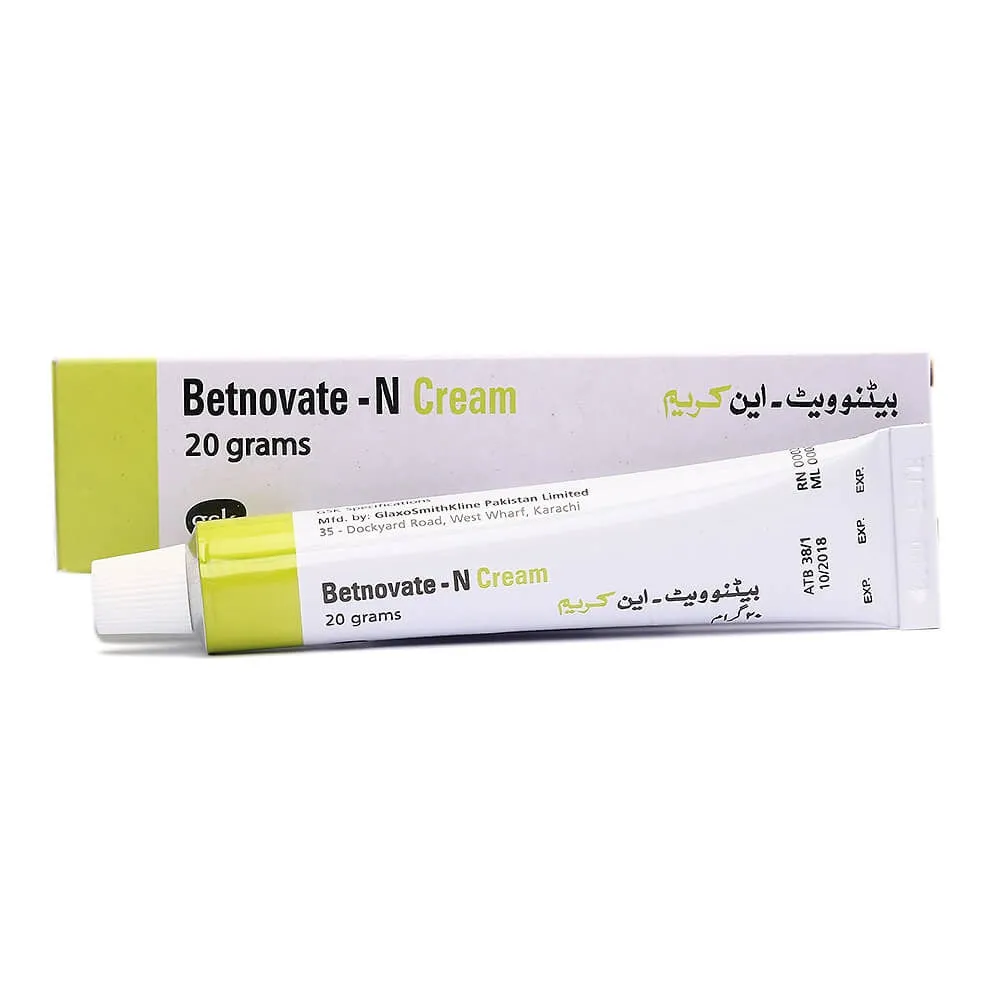
Table of Contents
Patient Information Leaflet
Betnovate N
(1.22 mg + 5 mg)/g, cream
Betamethasone valerate + Neomycin sulfate
Please read all of this leaflet carefully before using this medicine, as it contains
important information for you.
- Keep this leaflet, as you may need to read it again.
- If you have any further questions, please ask your doctor or pharmacist.
- This medicine has been prescribed for a specific individual. Do not pass it on to others. It may harm someone else, even if their symptoms are the same.
- If you experience any adverse effects, including any not listed in this leaflet, please inform your doctor or pharmacist. See section 4.
Table of Contents:
- What Betnovate N cream is and what it is used for
- Important information before using Betnovate N cream
- How to use Betnovate N cream
- Possible side effects
- How to store Betnovate N cream
- Contents of the pack and other information
1. What Betnovate N cream is and what it is used for
The active substances in Betnovate N cream are:
- betamethasone valerate – a potent corticosteroid with strong anti-inflammatory action,
- neomycin sulfate – an antibiotic effective against most bacteria causing skin infections.
Betnovate N cream is indicated for the topical treatment of corticosteroid-responsive skin disorders associated with, or complicated by, bacterial infection, such as:
- atopic dermatitis (atopic eczema),
- nummular eczema,
- prurigo nodularis,
- psoriasis (excluding generalized forms),
- lichen planus,
- seborrheic dermatitis,
- allergic and non-allergic contact dermatitis,
- severe reactions to insect bites,
- perianal and genital pruritus.
2. Important information before using Betnovate N cream
When not to use Betnovate N cream:
- in children under 2 years of age,
- if the patient has rosacea,
- if the patient has acne vulgaris,
- if the patient has perioral dermatitis,
- if the patient has pruritus ani or genital pruritus,
- if the patient has non-inflammatory itching,
- if the patient has a viral skin infection,
- if the patient has skin lesions primarily infected with bacteria or fungi,
- if the patient has primary or secondary fungal skin infections caused by yeasts,
- if the patient has secondary bacterial infections caused by Pseudomonas or Proteus species,
- if the patient has external otitis with perforation of the tympanic membrane (risk of hearing damage when using drugs containing neomycin),
- long-term, in high doses or over large skin areas due to the risk of hearing and kidney damage from neomycin, especially if significant systemic absorption of the drug occurs.
Warnings and precautions
Before starting treatment with Betnovate N cream, discuss this with your doctor or pharmacist.
The medicine should be used with caution in patients with hypersensitivity to topical corticosteroids, neomycin, or any of the excipients of Betnovate N cream (listed in section 6). Local hypersensitivity reactions may resemble symptoms of the disease being treated (see section 4).
If irritation or hypersensitivity reactions occur, discontinue use of Betnovate N cream and contact your doctor immediately.
In rare cases, medicines such as Betnovate N cream may cause colitis (inflammation of the large intestine) – symptoms include diarrhoea, usually bloody and containing mucus, abdominal pain, and elevated temperature (pseudomembranous colitis).
- If any of the above symptoms occur, inform your doctor as quickly as possible.
Avoid prolonged use of the medicine, especially in children, as systemic adverse effects characteristic of corticosteroids, adrenal suppression, and Cushing's syndrome may occur, even without using occlusive dressings (see section 4).
Factors increasing the risk of systemic effects:
- potency and formulation of the topical corticosteroid,
- prolonged duration of treatment,
- application over large body surface areas,
- application to tightly covered skin areas (e.g. in skin folds or under occlusive dressings – in young children, diapers may act as occlusive dressings),
- increased hydration of the stratum corneum,
- application to areas where the skin is thin – e.g. facial skin,
- application to damaged skin or where skin may become damaged.
The medicine should be used cautiously in children, as children may absorb proportionally larger amounts of topical corticosteroids compared to adults, and therefore may be more susceptible to systemic adverse effects.
Topical use of corticosteroid medicines on the face may lead to skin atrophy (more frequently than when applied to other body areas). Therefore, use Betnovate N cream on facial skin with caution, especially in cases of psoriasis, lupus, or severe eczema.
Due to the presence of neomycin, the medicine may cause ototoxicity (including hearing loss) and nephrotoxicity.
The medicine should be used with particular caution in elderly patients and in patients with impaired renal function.
Protect eyes and mucous membranes from contact with the medicine. Avoid applying the medicine to the eyelids, as entry into the conjunctival sac may lead to glaucoma or cataract.
If blurred vision or other visual disturbances occur, contact your doctor.
If signs of infection persist within inflammatory lesions treated with Betnovate N cream, the doctor may decide to immediately discontinue treatment and prescribe systemic antimicrobial therapy.
If it is necessary to use the medicine under an occlusive dressing, the skin should be thoroughly cleaned before application, as heat and moisture promote bacterial infections.
Prolonged or frequent use of Betnovate N cream may lead to hypersensitivity reactions at the application site. In such cases, contact your doctor or pharmacist.
Patients with psoriasis should remain under close medical supervision. Topical use of corticosteroids in psoriasis may be disadvantageous due to:
- risk of developing tolerance to the drug,
- risk of exacerbating skin lesions,
- risk of generalized pustular psoriasis,
- toxic effects resulting from excessive absorption of the drug through damaged skin.
Corticosteroids are sometimes used topically in the treatment of dermatitis associated with chronic leg ulcers. Use of Betnovate N cream in such cases may be associated with a higher frequency of local hypersensitivity reactions and increased risk of local infections.
Betnovate N cream, like other antimicrobial agents, should not be diluted.
Betnovate N cream and other medicines
Inform your doctor or pharmacist about all medicines you are currently taking, have recently taken, or plan to take.
Concomitant use of certain drugs, such as ritonavir or itraconazole, may enhance the effect of Betnovate N cream.
Due to the presence of neomycin sulfate, Betnovate N cream may potentiate and prolong the respiratory depressant effect of depolarizing muscle relaxants.
There is a risk of cumulative toxicity during concomitant use of Betnovate N cream with systemic aminoglycosides.
Pregnancy, breastfeeding, and fertility
If you are pregnant, breastfeeding, think you may be pregnant, or are planning to have a baby, consult your doctor or pharmacist before using this medicine.
Use of Betnovate N cream during pregnancy or breastfeeding is not recommended.
Betnovate N cream should only be used during pregnancy or breastfeeding if specifically advised by a doctor.
There are no data or limited data available on the safety of using this medicine during pregnancy and breastfeeding, or its effects on fertility.
Driving and operating machinery
Betnovate N cream has not been shown to affect the ability to drive or operate machinery.
Betnovate N cream contains cetostearyl alcohol, chlorocresol, and paraffin
Due to the presence of cetostearyl alcohol, the medicine may cause local skin reactions (e.g. contact dermatitis).
Due to the presence of chlorocresol, the medicine may cause allergic reactions.
Betnovate N cream contains paraffin. Smoking or approaching open flames should be avoided during use due to the risk of severe burns. Materials (clothing, bedding, garments, dressings, etc.) that have come into contact with this medicine are more flammable and pose a serious fire hazard. Washing clothes and bedding may reduce the amount of medicine present, but will not completely remove it.
3. How to use Betnovate N cream
This medicine should always be used as directed by a physician. If in doubt, consult a doctor or pharmacist.
Caution should be exercised when using this medicine in elderly patients and in patients with impaired kidney function (see section 2).
Betnovate N cream is intended for topical use on the skin. The medicine is particularly indicated for moist, weeping skin lesions.
A small amount of the cream should be applied to the affected skin areas only, once or twice daily, until improvement occurs – but not for longer than 7 days.
Leave the cream on the skin to be absorbed, then apply an emollient.
In treatment-resistant conditions (e.g. psoriatic lesions on elbows and knees), the physician may recommend the use of an occlusive dressing (sealed, e.g. polyethylene film) only at night.
This usually results in significant improvement, which can be maintained by regular daytime application of the medicine without an occlusive dressing.
If no improvement occurs after 7 days of treatment, consult a physician to determine further management.
When applying the medicine to the facial skin, treatment should be limited to 5 days and occlusive dressings (sealed) must not be used.
In elderly patients or in patients with renal or hepatic impairment, elimination of the medicine from the body may be slower; therefore, the physician will determine the lowest effective dose and the shortest possible duration of treatment necessary to achieve cure.
Use in children
Do not use in children under 2 years of age.
In children aged 2 years and older, Betnovate N cream may be used for up to 5 days.
Occlusive dressings (sealed) must not be used in children. Ensure that the minimum required dose of the medicine is applied.
Use of a higher than recommended dose of Betnovate N cream
In case of prolonged or incorrect use of the medicine, consult a physician, as systemic adverse effects characteristic of corticosteroids (see sections 2 and 4) may occur, including acute adrenal insufficiency.
Missed dose of Betnovate N cream
Do not use a double dose to make up for a missed dose. Apply the medicine as soon as possible, following the recommended dosing schedule.
Discontinuation of Betnovate N cream
If you have any further doubts regarding the use of this medicine, consult a physician or pharmacist.
4. Possible adverse reactions
Like any medicine, this medicine may cause adverse reactions, although not everyone experiences them.
To help prevent adverse reactions from occurring, the doctor should ensure that the patient uses the lowest dose that provides therapeutic effect.
Below are the adverse reactions observed in patients using the medicine.
Common adverse reactions (in 1 to 10 out of 100 patients using the medicine):
- itching, local burning sensation or skin pain.
Very rare adverse reactions (in less than 1 out of 10,000 patients using the medicine):
- opportunistic infections (infections occurring in people with weakened immunity),
- local hypersensitivity,
- suppression of hypothalamic-pituitary-adrenal (HPA) axis function,
- Cushing's syndrome symptoms (e.g. moon face, central obesity),
- delayed bone growth in children,
- osteoporosis,
- glaucoma,
- hyperglycemia and (or) glycosuria (excessively high glucose concentration in blood or urine),
- cataract,
- arterial hypertension,
- increased body weight or obesity,
- decreased concentration of endogenous cortisol,
- skin thinning or atrophy,
- skin wrinkling,
- dry skin,
- striae (stretch marks),
- telangiectasia (dilation of small blood vessels, so-called spider veins),
- skin discoloration,
- excessive hair growth,
- alopecia,
- pilar fissuring,
- exacerbation of symptoms of the treated disease,
- allergic contact dermatitis and (or) dermatitis,
- erythema,
- rash,
- urticaria,
- pustular psoriasis (see section 2),
- pain or irritation at the application site.
Adverse reactions with unknown frequency (frequency cannot be estimated from the available data):
- blurred vision.
Because this medicine contains a potent corticosteroid, prolonged treatment may lead to local skin atrophic changes such as thinning, striae, and dilation of superficial blood vessels, particularly when the medicine is applied in skin folds or under occlusive dressings.
If symptoms of hypersensitivity to the medicine occur, treatment should be discontinued and medical advice should be sought immediately.
In rare cases, when used in the treatment of psoriasis, there is a risk of generalized pustular psoriasis developing.
Reporting of adverse reactions
If any adverse reactions occur, including any adverse reactions not listed in this leaflet, inform your doctor, pharmacist, or nurse. Adverse reactions can be reported directly to the Department of Monitoring Adverse Drug Reactions of the Office for Registration of Medicinal Products, Medical Devices and Biocidal Products:
Al. Jerozolimskie 181C
02-222 Warszawa
Tel.: + 48 22 49 21 301
Fax: + 48 22 49 21 309
Website: https://smz.ezdrowie.gov.pl
Adverse reactions can also be reported to the marketing authorization holder.
Reporting adverse reactions helps to provide more information on the safety of the medicine.
5. How to store Betnovate N cream
Store below 25°C.
Keep the medicine out of the sight and reach of children.
Do not use this medicine after the expiry date stated on the cardboard box after the abbreviation "Exp." and on the tube after: EXP. The expiry date refers to the last day of the stated month.
The abbreviation "Lot" indicates the product batch number.
Medicines must not be disposed of via wastewater or household waste. Ask your pharmacist how to dispose of medicines no longer required. This will help protect the environment.
6. Contents of the pack and other information
The active substances are micronized betamethasone valerate and neomycin sulfate.
1 g of cream contains 1.22 mg of micronized betamethasone valerate and 5 mg of neomycin sulfate.
Other ingredients are: chlorocresol, cetomacrogol 1000, sodium dihydrogen phosphate, liquid paraffin,
white soft paraffin, cetostearyl alcohol, phosphoric acid, sodium hydroxide, purified water.
What Betnovate N looks like and contents of the pack
Betnovate N is a smooth cream, white to off-white in colour.
Aluminium tube containing 15 g or 30 g of cream, packed in a cardboard box.
Marketing Authorisation Holder:
GlaxoSmithKline Trading Services Limited
12 Riverwalk
Citywest Business Campus
Dublin 24
D24 YK11
Ireland
Manufacturer:
Delpharm Poznań Spółka Akcyjna
ul. Grunwaldzka 189
60-322 Poznań
Poland
Importer:
Delpharm Poznań Spółka Akcyjna
ul. Grunwaldzka 189
60-322 Poznań
Poland
For further information, please contact the Marketing Authorisation Holder's representative:
GSK Services Sp. z o.o.
ul. Rzymowskiego 53
02-697 Warszawa
tel. (22) 576-90-00