Betaxolol pmcs
Poland
Table of Contents
Package leaflet: Information for the user
Betaxolol PMCS, 20 mg, tablets
Betaxololi hydrochloridum
Please read the entire leaflet carefully before using this medicine, as it contains
important information for the patient.
- Keep this leaflet for future reference.
- If you have any questions, consult your doctor or pharmacist.
- This medicine has been prescribed for a specific individual. Do not share it with others. This medicine may harm others, even if their symptoms are the same.
- If you experience any adverse reactions, including any not listed in this leaflet, inform your doctor or pharmacist. See section 4.
Table of contents
- What Betaxolol PMCS is and what it is used for
- Important information before taking Betaxolol PMCS
- How to take Betaxolol PMCS
- Possible side effects
- How to store Betaxolol PMCS
- Contents of the pack and other information
1. What Betaxolol PMCS is and what it is used for
The active substance in Betaxolol PMCS is betaxolol. Betaxolol belongs to a group of medicines
called beta-blockers. These medicines reduce blood pressure, slow down heart rate,
and decrease the heart's oxygen demand.
Betaxolol PMCS is used in the treatment of mild to moderate high blood pressure (hypertension).
In severe cases of hypertension, it may be combined with other antihypertensive medicines.
The medicine is also used for long-term treatment and to prevent episodes of stable exertional angina pectoris (chest pain caused by insufficient blood flow to the heart muscle, occurring during physical exertion or stress).
Betaxolol PMCS is indicated for use in adults.
2. Important information before using Betaxolol PMCS
When not to use Betaxolol PMCS
- if the patient is allergic to betaxolol or any of the other ingredients of this medicine (listed in section 6),
- if the patient has severe asthma or chronic obstructive pulmonary disease,
- if the patient has severe heart failure,
- if the patient has cardiogenic shock,
- if the patient has conduction disorders in the heart (second- or third-degree atrioventricular block, except in patients with a pacemaker),
- if the patient has Prinzmetal's angina,
- if the patient has sinoatrial node dysfunction, including sinoatrial block (a disorder of impulse generation and conduction in the heart),
- if the patient has marked bradycardia (slow heart rate),
- if the patient has severe Raynaud's disease or severe peripheral vascular disease (circulatory disorders in the lower limbs),
- if the patient has untreated pheochromocytoma (adrenal gland chromaffin tumor),
- if the patient has low blood pressure,
- if the patient has a history of anaphylactic reactions (severe allergic reactions),
- if the patient has metabolic acidosis (disturbance of the body's internal environment),
- if the patient is taking floctafenic or sultopride.
Warnings and precautions
Before starting treatment with Betaxolol PMCS, consult your doctor
- if the patient has milder forms of asthma or chronic obstructive pulmonary disease. Pulmonary function testing is recommended before starting treatment. However, the risk of adverse effects is low.
- if the patient has compensated heart failure or conduction disorders in the heart (first-degree atrioventricular block).
- if the patient has mild peripheral arterial disease, manifesting as circulatory disturbances in the limbs (Raynaud's syndrome, Raynaud's disease, vasculitis, or chronic lower limb ischemia). Betaxolol PMCS may worsen this condition.
- if the patient has hypertension caused by an adrenal gland disorder (pheochromocytoma).
- if the patient has diabetes with a tendency toward hypoglycemia (low blood sugar). Diabetic patients should monitor their blood glucose levels more frequently, especially at the beginning of treatment.
- if the patient or a family member has a history of psoriasis. Treatment with Betaxolol PMCS may worsen the condition.
- if the patient is scheduled for surgery, inform the anesthesiologist that the patient is taking Betaxolol PMCS; discontinuation of Betaxolol PMCS is not recommended in patients with severe ischemic heart disease and high blood pressure due to the risks associated with abrupt withdrawal of beta-blockers.
- if the patient has glaucoma (increased intraocular pressure). Inform the ophthalmologist before examination that the patient is taking Betaxolol PMCS.
- if the patient is an athlete. Betaxolol PMCS contains an active substance that may cause a positive result in anti-doping tests.
- if the patient has thyroid disease (thyrotoxicosis). Betaxolol PMCS may mask cardiovascular symptoms of this condition.
- if the patient has kidney disease.
Contact a doctor if, during treatment, resting heart rate decreases significantly and symptoms such as chest pain, dizziness, or fatigue occur.
The doctor will reduce the dose of the medicine.
If desensitization therapy is required, Betaxolol PMCS should be replaced with an antihypertensive medicine from a different class than beta-blockers.
In elderly patients, treatment should be initiated with a low dose.
Do not abruptly discontinue Betaxolol PMCS, especially in patients with angina pectoris or ischemic heart disease. If treatment must be stopped, consult a doctor who will recommend gradually reducing the dose.
Children and adolescents
Betaxolol PMCS is not recommended for use in children and adolescents.
Betaxolol PMCS and other medicines
Inform your doctor or pharmacist about all medicines currently used, recently used, or planned for use.
The effects of Betaxolol PMCS and other concurrently used medicines may influence each other. Therefore, inform your doctor about all medicines currently taken or planned for use, including prescription and over-the-counter medicines. Before taking any over-the-counter medicine, consult your doctor.
Do not use Betaxolol PMCS concurrently with floctafenic or sultopride.
Concurrent use of Betaxolol PMCS with amiodarone, digoxin, verapamil (medicines used to treat heart conditions), or fingolimod (a medicine used in multiple sclerosis treatment) is not recommended.
Exercise particular caution when using Betaxolol PMCS concurrently with calcium antagonists (bepridil, diltiazem, mibefradil), medicines used to treat cardiac arrhythmias (propafenone, quinidine, hydroquinidine, disopyramide), baclofen (a muscle relaxant), lidocaine (a local anesthetic), and iodine-containing contrast agents.
Betaxolol PMCS may enhance the effects of concurrently used antidiabetic medicines.
The effect of betaxolol may mask clinical symptoms of hypoglycemia, such as increased heart rate and tremors.
Consider the following combinations with medicines whose efficacy may also be altered during treatment with Betaxolol PMCS: nonsteroidal anti-inflammatory drugs, calcium channel antagonists (nifedipine), antidepressants, corticosteroids and tetracosactide (a form of hormonal therapy), mefloquine (a medicine used for malaria), sympathomimetic medicines (medicines used to increase heart rate), and clonidine (a medicine used to treat glaucoma).
Betaxolol PMCS with food and drink
Tablets are usually taken in the morning, regardless of meals.
Pregnancy and breastfeeding
If the patient is pregnant or breastfeeding, suspects she may be pregnant, or is planning to have a child, she should consult a doctor or pharmacist before using this medicine.
Driving and operating machinery
Due to possible adverse effects (such as fatigue, dizziness), particularly at the beginning of treatment, Betaxolol PMCS may affect the ability to perform tasks requiring concentration, coordination, and quick decision-making (e.g., driving vehicles, operating machinery, working at heights, etc.). In such cases, these activities should only be performed with the doctor's approval.
Betaxolol PMCS contains sodium
The medicine contains less than 1 mmol (23 mg) of sodium per tablet, meaning the medicine is considered "sodium-free".
3. How to use Betaxolol PMCS
This medicine should always be used as directed by a doctor or pharmacist. If in doubt,
consult a doctor or pharmacist.
Adults
The dose should be individually adjusted for each patient depending on drug tolerance
and effectiveness.
The usual dose for treating high blood pressure is one tablet (20 mg) once daily.
For stable exertional angina, the recommended daily dose is 1 tablet. The doctor may
adjust the dose from 10 mg to 40 mg (½ tablet to 2 tablets) depending on the patient's clinical condition.
Renal impairment
Dosage adjustment is not necessary in patients with mild renal impairment. In patients with moderate to severe renal impairment or those undergoing dialysis, the doctor may recommend a reduced dose. In dialyzed patients, the recommended dose is 10 mg (½ tablet) once daily, regardless of the duration and frequency of dialysis.
Hepatic impairment
Dosage adjustment is usually not required in patients with hepatic impairment; however, careful clinical monitoring is recommended at the beginning of treatment.
Elderly patients
Treatment in elderly patients should be initiated with a low dose.
Method of administration
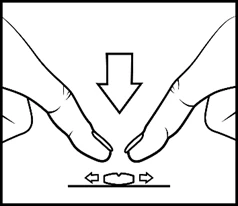
Tablets can be divided into two equal parts as shown in the figure. To do this, place the tablet on a hard surface with the score line facing upwards, then apply firm pressure with the index fingers of both hands on each end to break it into two equal halves (apply a short, strong pressure).
Tablets are usually taken in the morning, with or without food.
Taking more Betaxolol PMCS than recommended
If a higher than recommended dose is taken, or if the medicine is accidentally ingested by a child, seek immediate medical help.
Missing a dose of Betaxolol PMCS
If a morning dose is missed, the medicine may be taken during the day, and treatment should continue the next day according to the recommended dosing schedule. Do not take a double dose to make up for a missed dose.
Stopping Betaxolol PMCS treatment
Never discontinue treatment with Betaxolol PMCS on your own. If discontinuation is necessary, consult your doctor, as the dose should be gradually reduced.
If you have any further questions about the use of this medicine, consult your doctor or pharmacist.
4. Possible adverse reactions
Like all medicines, this medicine can cause adverse reactions, although not everybody gets them.
Common adverse reactions (may occur in less than 1 in 10 people)
- dizziness, headache,
- fatigue, insomnia,
- stomach pain, diarrhoea, nausea and vomiting,
- slowing of heart rate (bradycardia),
- cold extremities,
- impotence.
Uncommon adverse reactions (may occur in less than 1 in 1,000 people)
- skin reactions, including worsening of symptoms of existing psoriasis or development of psoriasis-like rash,
- depression,
- heart failure, low blood pressure, heart rhythm disorder (slowing of atrioventricular conduction or worsening of existing atrioventricular block),
- skin discoloration of fingers due to reduced blood flow (Raynaud's phenomenon), worsening of pain occurring during walking related to impaired blood circulation in the lower limbs,
- breathing difficulties due to narrowing of the airways (paroxysmal bronchospasm).
Very rare adverse reactions (may occur in less than 1 in 10,000 people)
- sensory disturbances (tingling sensation) in the peripheral parts of upper and lower limbs,
- visual disturbances,
- hallucinations, disorientation, nightmares,
- decreased or increased blood sugar levels.
Adverse reactions with unknown frequency (frequency cannot be estimated from the available data)
- lethargy,
- rash, itching, excessive sweating, hair loss.
If any adverse reactions occur, including any not listed in this leaflet, inform your doctor or pharmacist. Adverse reactions can be reported directly to the Department of Monitoring Adverse Drug Reactions of the Office for Registration of Medicinal Products, Medical Devices and Biocidal Products,
Al. Jerozolimskie 181 C, 02-222 Warsaw, Tel.: +48 22 49 21 301, Fax: +48 22 49 21 309,
Website: https://smz.ezdrowie.gov.pl
Adverse reactions can also be reported to the marketing authorisation holder.
Reporting adverse reactions helps to provide more information on the safety of the medicine.
5. How to store Betaxolol PMCS
Keep this medicine out of sight and reach of children.
Do not use this medicine after the expiry date stated on the carton and blister after "EXP" or "Expiry date". The expiry date refers to the last day of the stated month.
Do not store above 30°C.
Medicines must not be disposed of via the sewage system or household waste. Ask your pharmacist how to dispose of medicines no longer required. Such measures help protect the environment.
6. Contents of the pack and other information
What Betaxolol PMCS contains
- The active substance is betaxolol hydrochloride. Each tablet contains 20 mg of betaxolol hydrochloride.
- The other ingredients are: microcrystalline cellulose, sodium croscarmellose, magnesium stearate, colloidal anhydrous silica.
What Betaxolol PMCS looks like and contents of the pack
Betaxolol PMCS tablets are almost white, round, biconvex, with a diameter of 8 mm, with a division line on one side. The tablet can be divided into equal doses.
The tablets are supplied in blister packs of 30 and 100 tablets.
Marketing Authorisation Holder and Manufacturer
PRO.MED.CS Praha a.s., Telčská 377/1, Michle, 140 00 Praha 4, Czech Republic
This medicinal product is authorised in the European Economic Area countries under the following names:
Lithuania Betaxolol PMCS 20 mg tabletės
Latvia Betaxolol PMCS 20 mg tabletes
Poland Betaxolol PMCS
Czech Republic Betaxolol PMCS