Betaxolol medreg
Poland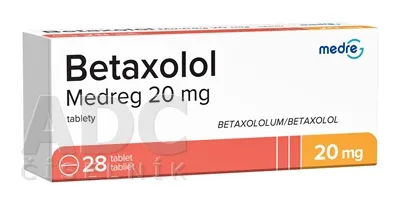
Table of Contents
Patient Information Leaflet
Betaxolol Medreg, 20 mg, tablets
Betaxololi hydrochloridum
Please read all of this leaflet carefully before taking this medicine, because it contains
important information for the patient.
- Keep this leaflet, as you may need to read it again.
- If you have any further questions, please ask your doctor or pharmacist.
- This medicine has been prescribed for a specific individual. Do not pass it on to others. This medicine may harm others, even if their symptoms are the same.
- If you experience any adverse effects, including any not listed in this leaflet, inform your doctor or pharmacist. See section 4.
Table of contents:
- What Betaxolol Medreg is and what it is used for
- Important information before taking Betaxolol Medreg
- How to take Betaxolol Medreg
- Possible side effects
- How to store Betaxolol Medreg
- Contents of the pack and other information
1. What Betaxolol Medreg is and what it is used for
Betaxolol Medreg contains the active substance betaxolol, which belongs to a group of medicines called
beta-blockers. These reduce blood pressure, slow down heart activity, and decrease the heart's
oxygen consumption.
Betaxolol Medreg is used in the treatment of mild to moderate high blood pressure (hypertension). In severe cases of hypertension, it may be used in combination with other antihypertensive medicines.
Betaxolol Medreg is also used in the long-term treatment and prevention of episodes of stable exertional angina (chest pain caused by insufficient blood flow to the heart muscle due to physical exertion or stress).
Betaxolol Medreg is indicated for use in adults.
2. Important information before taking Betaxolol Medreg
When not to take Betaxolol Medreg:
- if the patient is allergic to betaxolol or any of the other ingredients of this medicine (listed in section 6),
- if the patient has severe bronchial asthma or chronic obstructive pulmonary disease,
- if the patient has severe heart failure,
- if the patient has cardiogenic shock,
- if the patient has conduction disorders in the heart (second- or third-degree atrioventricular block, except in patients with an implanted pacemaker),
- if the patient has Prinzmetal's angina,
- if the patient has sinoatrial node dysfunction, including sinoatrial block (a disorder of impulse generation and conduction in the heart),
- if the patient has a slow heart rate (heart rate below 45–50 beats per minute),
- if the patient has severe Raynaud's disease or peripheral vascular disease (circulatory disorders in the lower limbs),
- if the patient has untreated pheochromocytoma (a chromaffin cell tumor of the adrenal gland),
- if the patient has low blood pressure,
- if the patient has a history of anaphylactic reactions (a condition caused by hypersensitivity to certain foreign substances),
- if the patient has metabolic acidosis.
Warnings and precautions
Before starting treatment with Betaxolol Medreg, discuss this with your doctor or
pharmacist:
- if the patient has milder forms of chronic obstructive pulmonary disease. Pulmonary function testing is recommended before starting treatment. The risk of adverse effects is low.
- if the patient has high blood pressure caused by an adrenal gland disorder called pheochromocytoma.
- if the patient has diabetes with a tendency to hypoglycemia (low blood sugar level). Diabetic patients should monitor their blood glucose levels more frequently, especially at the beginning of treatment.
- if the patient is to undergo general anesthesia during surgery. Inform the anesthesiologist that the patient is taking Betaxolol Medreg. Discontinuation of Betaxolol Medreg is not recommended in patients with severe ischemic heart disease and high blood pressure due to the risk associated with abrupt withdrawal of beta-blockers.
- if the patient has glaucoma (increased intraocular pressure). Inform the ophthalmologist before examination that the patient is taking Betaxolol Medreg.
- if the patient practices sports. Betaxolol Medreg contains an active substance that may cause a positive result in anti-doping tests.
- if the patient has compensated heart failure, bradycardia, or conduction disorders in the heart (first-degree atrioventricular block).
- if the patient has kidney disease (renal failure).
- if the patient has a skin condition (psoriasis).
- if the patient has a thyroid disorder (thyrotoxicosis).
If allergen-specific immunotherapy (desensitization therapy) is required in patients with allergies, Betaxolol Medreg should be replaced with an antihypertensive drug from a different class than beta-blockers.
Do not discontinue Betaxolol Medreg on your own. If discontinuation is necessary, consult your doctor, who will gradually reduce the dose.
In elderly patients, it is advisable to start therapy with a lower dose.
Children and adolescents
Betaxolol Medreg is not recommended for use in children and adolescents under 18 years of age, as safety and efficacy have not been established in this age group. In children, the hypoglycemic effect of beta-blockers may occur more rapidly, increasing the risk of seizures in this age group.
Betaxolol Medreg and other medicines
Tell your doctor or pharmacist about all medicines you are currently taking, have recently taken, or plan to take.
The effect of Betaxolol Medreg and other medicines taken simultaneously may influence each other. Therefore, your doctor should be aware of all medicines you are taking, including those available without a prescription. Before taking any over-the-counter medicine, consult your doctor.
Do not take Betaxolol Medreg together with floctafene or sultopride.
Concomitant use of Betaxolol Medreg with amiodarone, digoxin, verapamil (medicines used to treat heart conditions), and fingolimod is not recommended.
Exercise particular caution when using Betaxolol Medreg together with:
- calcium channel blockers (bepridil, diltiazem, verapamil),
- medicines used to treat cardiac arrhythmias (propafenone, quinidine, hydroquinidine, disopyramide),
- baclofen (a muscle relaxant reducing muscle tone),
- lidocaine (a local anesthetic),
- iodine-containing contrast agents.
Concomitant use of Betaxolol Medreg and antidiabetic medicines may enhance their effect. In cases of hypoglycemia (low blood sugar), clinical symptoms such as increased heart rate and tremor may be masked by the effect of betaxolol.
Consider the following combinations with medicines whose efficacy may also be altered during treatment with Betaxolol Medreg:
- nonsteroidal anti-inflammatory drugs,
- calcium channel blockers (nifedipine),
- medicines used to treat depression,
- corticosteroids and tetracosactide (a form of hormone therapy),
- mefloquine (a medicine used to treat malaria),
- sympathomimetics (medicines that increase heart activity),
- clonidine (a medicine used to treat glaucoma).
Sinus bradycardia may occur when beta-blockers, including Betaxolol Medreg, are used in combination with other medicines known to cause sinus bradycardia.
Pregnancy and breastfeeding
If the patient is pregnant, suspects she may be pregnant, is breastfeeding, or is planning to become pregnant, she should consult her doctor or pharmacist before using this medicine.
Betaxolol Medreg is not recommended during pregnancy unless the potential benefits of treatment outweigh the risks.
Betaxolol Medreg passes into human milk; therefore, its use during breastfeeding is not recommended.
Driving and operating machinery
Due to possible adverse effects (such as fatigue, dizziness), particularly at the beginning of treatment, Betaxolol Medreg may affect the ability to perform tasks requiring alertness, coordination, and quick decision-making (e.g., driving vehicles, operating machinery, working at heights, etc.). In such cases, these activities should only be performed if approved by a doctor.
Betaxolol Medreg contains sodium
This medicine contains less than 1 mmol (23 mg) of sodium per tablet, meaning the medicine is considered "sodium-free."
3. How to take Betaxolol Medreg
This medicine should always be taken exactly as prescribed by your doctor. If in doubt, consult your
doctor or pharmacist.
The dosage should be individually adjusted for each patient depending on tolerance and therapeutic
response.
The recommended daily dose for hypertension (high blood pressure) is 1 tablet (20 mg) once daily.
The recommended daily dose for stable exertional angina is 1 tablet (20 mg). Your doctor may adjust
the dose according to the patient's clinical condition from ½ to 2 tablets (10 to 40 mg) per day. The
tablet may be divided into equal doses.
Special patient groups
Patients with renal impairment
Dosage adjustment is not required in patients with mild renal impairment. In patients with more
severe renal impairment or those undergoing dialysis, the doctor may recommend a reduced dose.
Patients with hepatic impairment
Dosage adjustment is usually not necessary in patients with hepatic impairment, but careful
clinical monitoring is recommended at the beginning of treatment.
Use in children and adolescents
Betaxolol is not recommended for use in children and adolescents.
Elderly patients
Treatment in elderly patients should be initiated with low doses.
Taking more Betaxolol Medreg than recommended
In case of overdose or accidental ingestion by a child, seek immediate medical help.
If you miss a dose of Betaxolol Medreg
If a morning dose is missed, the medicine may be taken during the day, and treatment should
continue the next day according to the prescribed dosing schedule. Do not take a double dose to
compensate for the missed dose.
Stopping Betaxolol Medreg
Never stop treatment with Betaxolol Medreg on your own. If discontinuation of treatment is
necessary, contact your doctor, as the dose should be gradually reduced.
If you have further questions about the use of this medicine, consult your doctor or pharmacist.
4. Possible adverse reactions
Like all medicines, this medicine can cause adverse reactions, although not everyone will experience them.
Common (may affect up to 1 in 10 patients):
- dizziness, headache
- fatigue
- insomnia
- stomach pain, diarrhoea, nausea and vomiting
- slow heart rate (bradycardia)
- cold sensation in the limbs
- impotence
Rare (may affect up to 1 in 1,000 patients):
- psoriasis, worsening of symptoms of existing psoriasis or psoriasis-like skin eruptions
- depression
- heart failure, low blood pressure, atrioventricular conduction delay or worsening of existing atrioventricular block
- discolouration of fingers (Raynaud's syndrome), worsening of intermittent claudication pain due to impaired blood circulation in the lower limbs
- breathing difficulties due to episodic narrowing of the bronchi (bronchospasm), appearance of antinuclear antibodies: only rarely associated with clinical symptoms such as systemic lupus erythematosus, which resolved after discontinuation of treatment
Very rare (may affect up to 1 in 10,000 patients):
- disturbances in peripheral limb sensation (tingling)
- visual disturbances
- hallucinations, disorientation, nightmares
- decreased or increased blood sugar levels
Frequency not known (frequency cannot be estimated from available data):
- urticaria, itching
- increased sweating
- lethargy
- alopecia
- sinus arrest in predisposed patients.
Reporting of adverse reactions
If any adverse reactions occur, including any adverse reactions not listed in this leaflet, inform your doctor or pharmacist. Adverse reactions can also be reported directly to the Department of Monitoring Adverse Drug Reactions, Office for Registration of Medicinal Products, Medical Devices and Biocidal Products, Al. Jerozolimskie 181C, 02-222 Warsaw, Tel: +48 22 49 21 301, Fax: +48 22 49 21 309, website: https://smz.ezdrowie.gov.pl
Adverse reactions can also be reported directly to the marketing authorization holder.
Reporting adverse reactions helps to provide more information on the safety of the medicine.
5. How to store Betaxolol Medreg
Keep this medicine out of sight and reach of children.
Do not use this medicine after the expiry date stated on the carton and blister marked EXP.
The expiry date refers to the last day of the stated month.
Store below 25°C. Keep in the original packaging to protect from moisture.
Medicines must not be disposed of via the sewage system or household waste. Ask your pharmacist how to dispose of medicines no longer required. Such measures will help protect the environment.
6. Contents of the package and other information
What Betaxolol Medreg contains
- The active substance is betaxolol hydrochloride. Each Betaxolol Medreg tablet contains 20 mg of betaxolol hydrochloride.
- The other ingredients are microcrystalline cellulose, sodium croscarmellose, magnesium stearate, colloidal silicon dioxide, anhydrous.
What Betaxolol Medreg looks like and contents of the pack
Betaxolol Medreg is an almost white, round, biconvex tablet with a diameter of 8 mm, with a score line on one side.
The tablet can be divided into equal doses.
Pack sizes: 10, 20, 28, 30, 50, 60, 84, 90, 98, 100 tablets.
Not all pack sizes may be marketed.
Marketing Authorisation Holder and Manufacturer
Marketing Authorisation Holder:
Medreg s.r.o.
Na Florenci 2116/15
Nové Město
110 00 Prague 1
Czech Republic
tel.: (+420) 516 770 199
Manufacturer:
Saneca Pharmaceuticals a.s.
Nitrianska 100
920 27 Hlohovec
Slovakia
Pharmazet Group s.r.o.
Třtinová 260/1
Čakovice
196 00 Prague 9
Czech Republic
This medicinal product is authorised in the European Economic Area countries under the following names:
Czech Republic: Betaxolol Medreg
Slovakia: Betaxolol Medreg 20 mg
Poland: Betaxolol Medreg
Romania: Betaxolol Gemax Pharma 20 mg tablets