Berodual n
Poland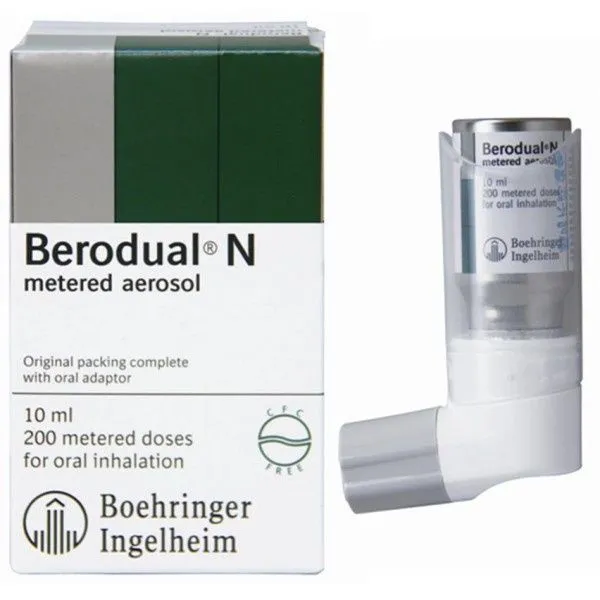
Table of Contents
- Package leaflet: Information for the user
- 1. What Berodual N is and what it is used for
- 2. Important information before using Berodual N
- 3. How to use Berodual N
- 4. Possible adverse reactions
- 5. How to store Berodual N
- 6. Package contents and other information
- Information intended exclusively for healthcare professionals:
Package leaflet: Information for the user
Berodual N, (50 micrograms + 21 micrograms)/inhalation dose,
inhalation aerosol, solution
Fenoteroli hydrobromidum + Ipratropii bromidum
Please read this leaflet carefully before using this medicine because it contains important information for you.
- Keep this leaflet. You may need to read it again.
- If you have any further questions, ask your doctor or pharmacist.
- This medicine has been prescribed for a specific individual. Do not pass it on to others. It may harm them, even if their symptoms are the same.
- If you experience any side effects, including any not listed in this leaflet, tell your doctor or pharmacist. See section 4.
Table of contents
- What Berodual N is and what it is used for
- Important information before using Berodual N
- How to use Berodual N
- Possible side effects
- How to store Berodual N
- Contents of the pack and other information
1. What Berodual N is and what it is used for
Berodual N contains two active substances: fenoterol, which belongs to a group of substances called "selective beta-2 adrenergic receptor agonists", and ipratropium bromide, which belongs to a group of substances called "anticholinergic drugs". These two substances act via different mechanisms to dilate the airways and are therefore used in the treatment of asthma and other inflammatory conditions associated with reversible airway obstruction. Berodual N acts rapidly after administration and is therefore used for the treatment of acute asthma attacks.
Berodual N is indicated as a bronchodilator for the prophylaxis (prevention) and treatment of symptoms of chronic obstructive respiratory diseases with reversible bronchospasm: bronchial asthma, and particularly chronic bronchitis. If you have bronchial asthma or chronic obstructive pulmonary disease (COPD), your doctor may prescribe an additional anti-inflammatory medicine according to current treatment standards for these conditions.
2. Important information before using Berodual N
When not to use Berodual N
- if the patient is allergic to fenoterol hydrobromide, ipratropium bromide, substances similar to atropine, or any of the other ingredients of this medicine (listed in section 6).
- if the patient has tachyarrhythmia (abnormal heart rhythm with rapid heartbeat).
- in patients with a heart condition known as obstructive hypertrophic cardiomyopathy.
Warnings and precautions
Before starting treatment with Berodual N, discuss with your doctor or pharmacist:
-
in case of sudden narrowing of the airways after inhalation: treatment with Berodual N must be stopped immediately and medical advice sought, so that an alternative treatment can be considered.
-
if the patient experiences acute, rapidly worsening breathlessness, they should contact their doctor without delay.
-
if the patient has narrow-angle glaucoma (increased pressure within the eye).
-
if the patient notices visual disturbances such as eye pain or discomfort, blurred vision, seeing halos (coloured rings) or coloured images, together with redness of the eyes, they should consult an ophthalmologist immediately, as these symptoms may be related to complications (dilated pupils, increased intraocular pressure, narrow-angle glaucoma).
-
if the patient has recently had a myocardial infarction (heart attack).
-
if the patient has diabetes.
-
if the patient has heart or blood vessel disorders.
-
if the patient has severe heart disease: immediate medical advice should be sought in case of chest pain or other symptoms indicating worsening of heart disease.
-
if the patient develops symptoms such as difficulty breathing or chest pain: immediate medical advice should be sought for evaluation, as these symptoms may indicate diseases of either the respiratory or cardiovascular system.
-
if the patient has a phaeochromocytoma (a type of adrenal gland tumour).
-
if the patient has hyperthyroidism (overactive thyroid gland).
-
if the patient has previously experienced urinary retention or if this is suspected.
-
if the patient experiences loss of appetite, constipation, fluid retention or leg swelling, irregular pulse, or muscle weakness: these may be signs of low potassium levels. Special precautions may be necessary (e.g. blood tests).
-
if the patient has cystic fibrosis: gastrointestinal motility disorders may occur.
-
if breathing problems persist or worsen: medical advice should be sought, as the current treatment may need to be reviewed. Additional medications may be required. Never increase the prescribed dose, as this may lead to serious adverse effects.
-
if the patient is using other medicines belonging to the group of "selective beta-2 adrenergic receptor agonists"; these should be used only under strict medical supervision (see section "Berodual N and other medicines").
Immediate hypersensitivity reactions may occur after administration of Berodual N, such as:
rare cases of urticaria, angioedema (sudden swelling of the throat, skin, and mucous membranes of the mouth and throat, possibly causing breathing difficulties), rash, bronchospasm, swelling of the lips and throat, and rapidly progressing, life-threatening allergic reactions. In case any of these symptoms occur, immediate medical attention at a doctor's office or hospital is required.
Extreme care should be taken when nebulizing Berodual N to prevent the medicine from entering the eye.
If long-term treatment of asthma with Berodual N is necessary, the doctor will recommend using Berodual N only for acute symptoms, not on a regular basis. If long-term treatment with Berodual N is required for mild forms of other conditions with reversible airway obstruction, the doctor may recommend using Berodual N only for acute symptoms and on an irregular basis. The doctor may also decide to prescribe an additional medicine or higher doses of anti-inflammatory medication.
Use of Berodual N may lead to positive test results for fenoterol in non-clinical substance use testing, e.g. in the context of performance enhancement (doping).
Berodual N and other medicines
Inform your doctor about all medicines the patient is currently taking or has recently taken, as well as any medicines the patient plans to take.
Other bronchodilator medicines may enhance the effect of Berodual N. Concurrent use of other beta-2 adrenergic receptor agonists, oral anticholinergic drugs, and xanthine derivatives (theophylline) may also increase the risk of adverse effects. Since long-term concurrent use of other anticholinergic drugs with Berodual N has not been studied, medical advice should be sought.
Some medicines used to treat high blood pressure (called "beta-blockers") may reduce the effect of Berodual N.
Use of beta-2 adrenergic agonists such as those contained in Berodual N, together with theophylline, corticosteroids, or diuretics (medicines that increase urine output), may lead to decreased potassium levels, especially in severe asthma. Low potassium levels make the patient more susceptible to irregular heartbeat, particularly if digoxin is being used or if the patient's blood carries insufficient oxygen. In such cases, the doctor may decide to take special precautions (e.g. blood tests).
It is important that the doctor knows if the patient is taking antidepressants (monoamine oxidase inhibitors or tricyclic antidepressants). In such cases, caution is advised when using beta-2 adrenergic receptor agonists, as their effects may be enhanced.
Inhalation of halogenated anaesthetic agents such as halothane, trichloroethylene, and enflurane may enhance the cardiovascular effects of beta-2 adrenergic agonists (e.g. may cause irregular heartbeat).
Pregnancy and breastfeeding
If the patient is pregnant or breastfeeding, suspects she may be pregnant, or is planning to have a child, she should consult her doctor or pharmacist before using this medicine.
Although non-clinical studies and human data have not shown risk to the unborn child from fenoterol hydrobromide or ipratropium bromide, Berodual N should only be used if clearly recommended by a doctor. This is particularly important during the first trimester and immediately before delivery (Berodual N has an inhibitory effect on uterine contractions).
Non-clinical studies have shown that fenoterol hydrobromide passes into breast milk. It is not known whether ipratropium bromide passes into breast milk. Therefore, Berodual N should be used during pregnancy and breastfeeding only if clearly recommended by a doctor.
Driving and using machines
No studies on the effects of the medicine on the ability to drive and use machines have been conducted.
During treatment with Berodual N, adverse effects such as dizziness, tremor, accommodation disorders (blurred vision), dilated pupils, and blurred vision may occur. If any of these adverse effects occur, potentially hazardous activities such as driving or operating machinery should be avoided.
Berodual N contains ethanol
This medicine contains 13.313 mg of alcohol (ethanol) per nebulisation. The amount of alcohol in each nebulisation of this medicine is equivalent to less than 1 ml of beer or 1 ml of wine.
The small amount of alcohol in this medicine will not cause noticeable effects.
3. How to use Berodual N
This medicine should always be used exactly as directed by your doctor. If in doubt, consult your doctor or pharmacist.
The dosage should be adjusted according to individual patient needs. The following dosages are recommended for adults and children over 6 years of age.
Acute asthma attacks
2 inhalations are sufficient in many cases to provide immediate relief of symptoms.
In more severe cases, if no significant improvement in breathing occurs within 5 minutes, an additional 2 inhalations may be administered.
If the asthma attack does not subside after 4 inhalations, a greater number of inhalations may be required. In such a case, the patient should immediately contact a doctor or the nearest hospital.
Maintenance and long-term treatment
The dose is 1 or 2 inhalations, up to a maximum of 8 inhalations per day (typically 1 or 2 inhalations 3 times daily). Berodual N should be used only on an as-needed basis in the treatment of asthma.
Berodual N may be used in children only on a doctor's prescription and under the supervision of an adult.
Method of administration
Before first use, follow these instructions:
Remove the protective cap and press the metering valve twice.
Each time the medicine is used, follow these steps:
- Remove the protective cap. If the inhaler has not been used for more than three days, activate the metering valve by pressing it once before the next use.
- Breathe out deeply.
- Hold the inhaler upright as shown in Fig. 1, placing your lips tightly around the mouthpiece. The arrow and base of the container should be pointing upwards.
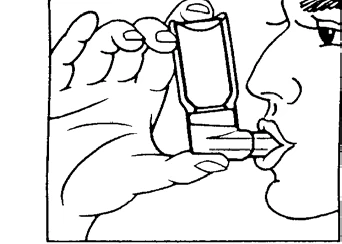
(Fig. 1)
- Inhale as deeply as possible while pressing down on the canister to release one dose. Hold your breath for several seconds, then remove the mouthpiece from your mouth and breathe out. Repeat the same steps for a second inhalation if needed.
- After use, replace the protective cap.
The container is not transparent, so it is not possible to see whether it is empty. A new container contains 200 metered inhalations (doses). After all doses have been used, a small amount of solution may still remain. However, the inhaler should be replaced with a new one, as continued use may not deliver the correct dose of medicine.
The amount of aerosol remaining in the container can be estimated by shaking the container to determine whether liquid remains.
The inhaler mouthpiece should be cleaned at least once a week. It is important to keep the mouthpiece clean to ensure that the medicine does not deposit on the mouthpiece walls and block the inhaler. Before cleaning, remove the protective cap and take the medicine container out of the inhaler. Rinse the mouthpiece thoroughly with warm water until all visible contamination is removed.
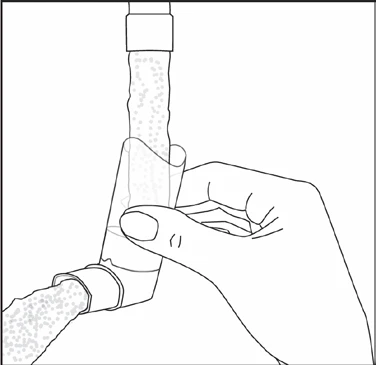
(Fig. 2)
After cleaning, shake off excess water and leave the mouthpiece to dry in the air. Do not use any drying devices. When the inhaler mouthpiece is dry, reinsert the medicine container into the inhaler and replace the protective cap.
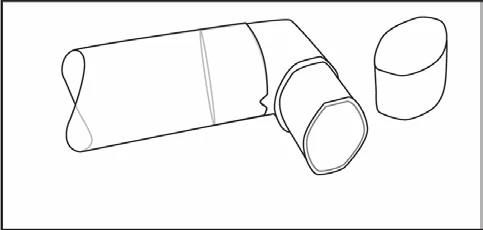
(Fig. 3)
WARNING:
The plastic mouthpiece has been designed specifically for use with Berodual N inhalation aerosol solution to ensure that the patient receives the correct dose of medicine. It must not be used with any other inhalation aerosol. Likewise, Berodual N inhalation aerosol solution must not be used with any mouthpiece other than the one supplied with this medicine.
The container holding the medicine is pressurized and must never be opened or exposed to temperatures above 50°C.
Overdose of Berodual N
In case of accidental overdose of Berodual N, seek immediate medical advice from a doctor or pharmacist.
Symptoms of overdose are mainly related to the effects of fenoterol bromide and include: tachycardia (rapid heartbeat), palpitations, tremor, increased or decreased blood pressure, widening of the difference between systolic and diastolic blood pressure, angina (chest pain), cardiac arrhythmias, and facial flushing.
Metabolic acidosis (disturbance of acid-base balance in the body) and hypokalaemia (reduced potassium levels in the blood) have also been observed during fenoterol administration at doses higher than those recommended for approved indications of Berodual N.
Potential symptoms of overdose with ipratropium bromide (such as dryness of the oral mucosa, accommodation disturbances (blurred vision)) are mild.
Missed dose of Berodual N
If Berodual N has been prescribed for regular use and a dose is missed, take it as soon as possible. However, do not take a double dose to make up for the missed dose. Take the next dose at the usual time.
Stopping Berodual N treatment
If a patient stops using Berodual N, breathing problems may recur or even worsen. Therefore, continue using Berodual N for as long as your doctor recommends. Always consult your doctor before stopping treatment with Berodual N.
If you have any further questions about the use of this medicine, consult your doctor or pharmacist.
4. Possible adverse reactions
Like all medicines, this medicine can cause adverse reactions, although not everybody will experience them.
After administration of Berodual N, immediate hypersensitivity reactions may occur, such as:
rare cases of urticaria, angioedema (sudden swelling of the throat, skin and mucous membranes
of the oral cavity and pharynx, which may impair breathing), rash, bronchoconstriction, swelling
of the lips and throat, and rapidly progressing, life-threatening allergic reactions. If any of these
symptoms occur, seek immediate medical attention from a doctor or hospital.
As with other inhaled medicines, Berodual N may cause local irritation. The most commonly reported
adverse reactions during clinical trials were:
cough, dry mouth, headache, tremor, pharyngitis (inflammation of the throat), nausea, dizziness, dysphonia
(voice disturbances), tachycardia (increased heart rate), palpitations, vomiting, increased systolic
blood pressure, and nervousness.
Common (may occur in fewer than 1 in 10 people)
- cough
Uncommon (may occur in fewer than 1 in 100 people)
- rapid heartbeat
- increased pulse rate
- palpitations
- increase in systolic blood pressure
- muscle tremor
- nervousness
- headache
- dizziness
- local irritation, such as pharyngitis (inflammation of the upper throat)
- voice disturbances
- dry mouth
- nausea
- vomiting
Rare (may occur in fewer than 1 in 1000 people)
- life-threatening allergic (anaphylactic) reactions
- hypersensitivity (allergy-type reactions)
- decreased potassium levels
- irregular heartbeat
- atrial fibrillation (very fast, irregular heart rhythm)
- supraventricular tachycardia (abnormal fast heart rhythm)
- inadequate blood supply to the heart muscle
- decrease in diastolic blood pressure
- excitation
- psychiatric disorders
- increased intraocular pressure (glaucoma)
- elevated intraocular pressure
- accommodation disorder
- dilated pupils
- blurred vision
- eye pain
- redness of the white part of the eye
- swelling of the outer protective layer of the eye
- halos around lights (visual halos)
- throat irritation
- bronchoconstriction
- swelling of the throat (edema of the upper throat)
- sudden laryngospasm (may affect breathing and speech)
- inhalation-induced (paradoxical) bronchospasm
- dry throat
- stomatitis (inflammation of the mucous membrane of the mouth)
- glossitis (inflammation of the tongue)
- diarrhea associated with gastrointestinal motility disorder
- constipation
- swelling of the oral cavity
- skin rash
- urticaria
- itching
- angioedema (rapidly progressive swelling of the skin or mucous membranes, which may cause breathing difficulties)
- excessive sweating
- muscle pain
- muscle cramps
- muscle weakness
- urinary retention
Reporting of adverse reactions
If any adverse reactions occur, including any not listed in this leaflet, inform your doctor, pharmacist, or nurse. Adverse reactions can be reported directly to the Department of Monitoring Adverse Drug Reactions of the Office for Registration of Medicinal Products, Medical Devices and Biocidal Products: Al. Jerozolimskie 181C, 02-222 Warsaw, tel.: 22 49-21-301, fax: 22 49-21-309, website: https://smz.ezdrowie.gov.pl.
Adverse reactions can also be reported to the marketing authorization holder. Reporting adverse reactions helps to provide more information on the safety of the medicine.
5. How to store Berodual N
Keep the medicine out of the sight and reach of children.
Store below 25°C.
Protect from direct sunlight, heat, and freezing.
Do not use the medicine after the expiry date stated on the packaging following: EXP.
The expiry date refers to the last day of the stated month.
Medicines must not be disposed of via wastewater or household waste. Ask your pharmacist how to dispose of medicines no longer required. This will help protect the environment.
6. Package contents and other information
What Berodual N contains
- The active substances in this medicinal product are: fenoterol hydrobromide and ipratropium bromide. One inhalation dose contains 50 micrograms of fenoterol hydrobromide (Fenoteroli hydrobromidum) and 21 micrograms of monohydrate ipratropium bromide (Ipratropii bromidum), equivalent to 20 micrograms of anhydrous ipratropium bromide.
- Other components (excipients) are: anhydrous citric acid, purified water, anhydrous ethanol, 1,1,1,2-tetrafluoroethane.
This medicinal product contains fluorinated greenhouse gases.
Each inhaler contains 10.16 g of HFA 134a (1,1,1,2-tetrafluoroethane), equivalent to 0.01453 tonnes
of CO₂-equivalent (global warming potential GWP = 1430).
What Berodual N looks like and contents of the pack
Pack: a steel container made of stainless steel, a metering valve, and a mouthpiece in a cardboard box.
Pack size: one inhalation aerosol.
The container contains 200 inhalation doses.
Marketing Authorisation Holder and Manufacturer
Marketing Authorisation Holder
Boehringer Ingelheim International GmbH
Binger Strasse 173
D-55216 Ingelheim/Rhein
Germany
Manufacturer
Boehringer Ingelheim Pharma GmbH & Co. KG
Binger Strasse 173
55216 Ingelheim am Rhein
Germany
For further information, please contact the representative of the Marketing Authorisation Holder:
Boehringer Ingelheim Sp. z o.o.
Tel: +48 22 699 0 699
Information intended exclusively for healthcare professionals:
Overdose
Symptoms
Symptoms of overdose are primarily related to the effects of fenoterol bromide. Potential symptoms due to excessive beta-adrenergic stimulation include in particular: tachycardia, palpitations, tremor, increased or decreased blood pressure, widened pulse pressure (increased difference between systolic and diastolic pressure), angina pain, cardiac arrhythmias, facial flushing. Metabolic acidosis and hypokalaemia have also been observed during fenoterol administration at doses higher than recommended for the approved indications of Berodual N.
Potential symptoms of overdose with ipratropium bromide (such as dryness of the oral mucosa, accommodation disturbances) are mild, because the systemic bioavailability of inhaled ipratropium is very low.
Treatment
Treatment with Berodual N should be discontinued. Monitoring of acid-base and electrolyte balance should be considered.
Administration of sedatives may be necessary; in severe cases, intensive therapy is required.
Beta-adrenergic receptor blocking agents (beta-blockers) may be used as specific antidotes, preferably beta-1 selective agents, but with caution due to the possible reduction in bronchial patency. Particular care must be taken when adjusting the dose in patients with bronchial asthma or chronic obstructive pulmonary disease due to the risk of sudden severe bronchospasm, which may be fatal.