Beriplex p/n 250
Poland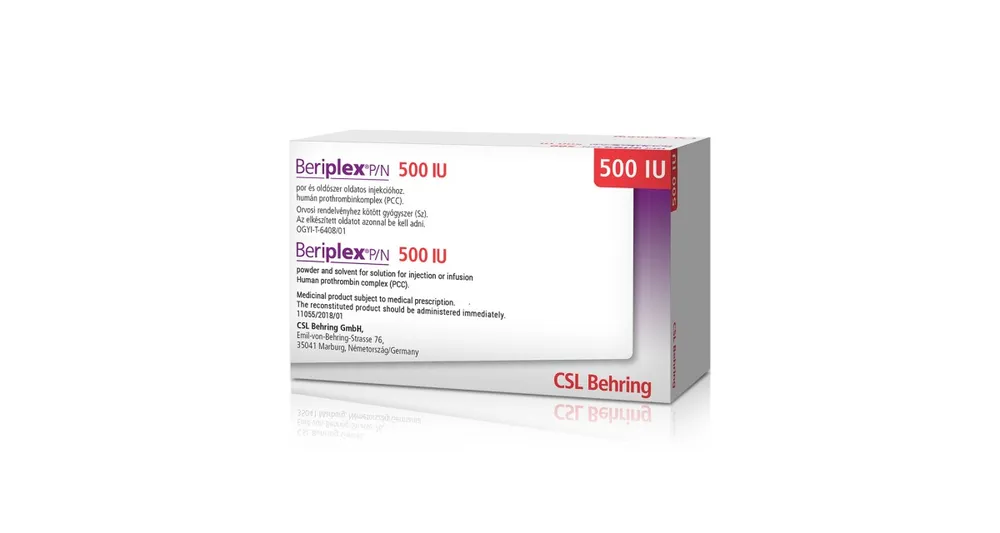
Table of Contents
- 1. What Beriplex P/N 250 is and what it is used for
- 2. Important information before using Beriplex P/N 250
- 3. How to use Beriplex P/N 250
- 4. Possible adverse reactions
- 5. How to store Beriplex P/N 250
- 6. Contents of the pack and other information
- Information intended exclusively for medical professionals
Beriplex P/N 250
Powder and solvent for solution for injection
Human prothrombin complex concentrate
Please read the entire leaflet before using the medicine, as it contains
important information for the patient.
- Keep this leaflet for future reference
- Consult your doctor or pharmacist if you have any further questions
- This medicine has been prescribed for a specific individual. Do not pass it on to others.
- The medicine may harm another person, even if their symptoms are identical.
- If any adverse reactions occur, including any possible adverse reactions not listed in this leaflet, inform your doctor or pharmacist. See section 4.
Leaflet contents:
- What Beriplex P/N 250 is and what it is used for
- Important information before using Beriplex P/N 250
- How to use Beriplex P/N 250
- Possible side effects
- How to store Beriplex P/N 250
- Contents of the pack and other information
1. What Beriplex P/N 250 is and what it is used for
What Beriplex P/N 250 is
Beriplex P/N 250 is available as a powder with a solvent supplied for reconstitution. It is a white or slightly coloured powder or a friable solid mass. The reconstituted solution is intended for intravenous injection.
Beriplex P/N 250 is manufactured from human plasma (the liquid component of blood) and contains human coagulation factors II, VII, IX, and X. Concentrates containing the above-mentioned coagulation factors are known as prothrombin complex products. Vitamin K-dependent coagulation factors II, VII, IX, and X play an important role in the blood coagulation (clotting) process. Deficiency of any of these coagulation factors results in blood clotting more slowly than normal, increasing the risk of bleeding. Replacement of coagulation factors II, VII, IX, and X by administration of Beriplex P/N 250 helps restore normal clotting function.
What Beriplex P/N 250 is used for
Beriplex P/N 250 is used to prevent (during surgical procedures) and treat bleeding caused by acquired or congenital deficiency of vitamin K-dependent coagulation factors II, VII, IX, and X, when a medicine containing purified, specific coagulation factor is not available.
2. Important information before using Beriplex P/N 250
The following section contains information that both the patient and physician should review before
using Beriplex P/N 250.
When NOT to use Beriplex P/N 250:
if the patient is allergic to the active substances or to any of the other ingredients
of this medicine (listed in section 6).
The patient should inform the physician about any allergies to medicines or food.
- if there is an increased risk of blood clot formation (patients at risk of disseminated intravascular coagulation)
- in case of a history of allergic reaction to heparin causing low platelet count (heparin-induced thrombocytopenia type II, HIT type II). The patient should inform the physician or pharmacist if such a condition exists.
Warnings and precautions
Before starting treatment with Beriplex, discuss this with your physician or pharmacist.
- In cases of acquired deficiency of vitamin K-dependent coagulation factors, which may result from taking vitamin K antagonist drugs. Beriplex P/N 250 may be used only when rapid correction of prothrombin complex factor levels is required, e.g. in cases of major bleeding or emergency surgery.
- In cases of congenital deficiency of any vitamin K-dependent coagulation factor, a product containing the specific coagulation factor should be used whenever possible.
- If an allergic or anaphylactic reaction (a serious allergic reaction causing severe breathing difficulties or dizziness) occurs: Administration of Beriplex P/N 250 must be stopped immediately (e.g. stop the injection).
- If there is a risk of increased blood clot formation (thrombosis), particularly in the following cases:
- in patients after heart attack (with diagnosed coronary artery disease or myocardial infarction)
- in patients with liver disease
- in patients immediately before and after surgical procedures
- in newborns
- in patients with increased risk of thrombosis (patients at risk of thromboembolic disorders or disseminated intravascular coagulation, or with spontaneous deficiency of coagulation inhibitors)
- If there is an increased risk of coagulation disorders caused by increased consumption of platelets or coagulation factors. Treatment with Beriplex P/N 250 may be initiated only after completion of treatment for the underlying disease.
- Heparin-induced reduction in platelet production (heparin-induced thrombocytopenia, HIT type II). Heparin, a protein whose action results in blood clot dissolution, is a component of Beriplex. A significant decrease in platelet count may be associated with:
- formation of blood clots in the veins of the lower limbs,
- increased tendency to form clots,
- in some cases, skin rash at the injection site,
- petechiae, and
- passage of tarry stools. In such cases, heparin activity may be impaired (heparin tolerance). If these symptoms occur, administration of the medicine must be stopped immediately and the physician contacted. In the future, medicines containing heparin should not be used.
- A specific form of kidney inflammation has been reported after treatment of patients with hemophilia B who have inhibitors to factor IX. These patients had a history of allergic reactions.
The physician should weigh the benefits of Beriplex P/N 250 therapy against the risk of the
complications listed above.
Viral safety
When medicines are derived from human blood or human plasma, various methods are used to prevent transmission of infectious agents to the patient. These include:
- careful selection of blood and plasma donors to exclude the possibility of transmission of infectious agents,
- testing of individual donors and plasma pools for the presence of viruses and other infections,
- inclusion of manufacturing steps specifically designed to inactivate or remove viruses.
Despite these safeguards, when using medicines derived from human blood or plasma, the risk of transmitting infectious diseases cannot be completely ruled out due to the possible presence of unknown infectious agents. This also applies to pathogens not yet identified and other types of infections.
The methods used are considered effective against enveloped viruses such as human immunodeficiency virus (HIV, the virus causing AIDS), hepatitis B virus, hepatitis C virus (viral hepatitis), and against non-enveloped viruses such as hepatitis A virus (viral hepatitis) and parvovirus B19.
The physician may recommend appropriate vaccination against hepatitis A and B if medicines derived from human plasma are used regularly or repeatedly.
It is strongly recommended that each time Beriplex P/N 250 is administered, the name and batch number of the medicine be recorded in the patient's medical records to document the batches used.
Beriplex P/N 250 and other medicines
- Inform the physician or pharmacist about all medicines currently or recently taken, as well as any medicines the patient plans to take.
- Beriplex P/N 250 may inhibit the action of vitamin K antagonists. Interactions with other medicines are not known.
- Beriplex P/N 250 should not be mixed with other medicines, except those mentioned in section 6.
Pregnancy, breastfeeding and fertility
- During pregnancy or breastfeeding, or if pregnancy is suspected or planned, consult a physician or pharmacist before using this medicine.
- Beriplex P/N 250 should be used in pregnant or breastfeeding women only when clearly indicated.
- There are no available data on the effect on fertility.
Driving and operating machinery
There are no adequate studies documenting the effect of this medicine on the ability to drive vehicles
or operate machinery.
Beriplex P/N 250 contains sodium
Beriplex P/N 250 contains up to 343 mg of sodium (approximately 15 mmol) per 100 ml. This amount should be taken into account in patients on a sodium-restricted diet.
3. How to use Beriplex P/N 250
Treatment should be initiated under the supervision of a physician experienced in the therapy of this type of disorder.
Dosage
The recommended dose of factors II, VII, IX and X, and the duration of treatment, depend on several factors, such as body weight, severity and course of the disease, location and intensity of bleeding, and the need to prevent bleeding during surgery or invasive diagnostic procedures (see section “Information intended exclusively for healthcare professionals”).
If you have any doubts regarding the use of this medicine, please consult your doctor or pharmacist.
Overdose
During treatment, the physician should regularly monitor coagulation parameters.
Administration of high doses of prothrombin complex concentrate has been associated with myocardial infarction, development of disseminated intravascular coagulation, and formation of blood clots in blood vessels in patients at increased risk of these disorders.
4. Possible adverse reactions
Like all medicines, this medicinal product can cause adverse reactions, although not everyone experiences them.
The following adverse reactions have been observed frequently (in less than 1 in 10 patients):
- Risk of increased thrombosis (see section 2)
- Headache
- Increased body temperature
The following adverse reactions have been observed uncommonly (in less than 1 in 100 patients):
- Hypersensitivity or allergic reactions (see section 2)
The frequency of the following adverse reactions is unknown (cannot be estimated based on available data):
- Severe bleeding due to excessive coagulation
- Anaphylactic reactions including shock (see section 2)
- Formation of circulating antibodies inhibiting one or more coagulation factors
Children and adolescents
There are no data on the use of Beriplex in children and adolescents.
Reporting of adverse reactions
If any adverse reactions occur, including any adverse reactions not listed in this leaflet, inform your doctor or pharmacist. Adverse reactions can be reported directly to the Department of Monitoring of Adverse Drug Reactions of the Office for Registration of Medicinal Products, Medical Devices and Biocidal Products
Al. Jerozolimskie 181C
02-222 Warsaw
Phone: +48 22 49 21 301
Fax: +48 22 49 21 309
Website: https://smz.ezdrowie.gov.pl
Adverse reactions can also be reported to the marketing authorization holder.
Reporting adverse reactions helps provide more information on the safety of this medicine.
5. How to store Beriplex P/N 250
- Keep the medicine out of the sight and reach of children.
- Do not use Beriplex P/N 250 after the expiry date stated on the label and carton.
- Do not store above 25°C.
- Do not freeze.
- Store the vial in the outer packaging to protect from light.
- Beriplex P/N 250 does not contain preservatives; the reconstituted product should be used immediately.
6. Contents of the pack and other information
What Beriplex P/N 250 contains
Beriplex P/N 250 contains 200 - 310 IU of human blood coagulation factor IX per vial.
Active substance:
Concentrate of human coagulation factors II, VII, IX and X, protein C and S.
Other components:
Human antithrombin III, heparin, human albumin, sodium chloride, sodium citrate, HCl or NaOH
(in small amounts for pH adjustment).
Solvent: Water for injections.
What Beriplex P/N 250 looks like and contents of the pack
Beriplex P/N 250 is a white or slightly coloured powder supplied with water for injections as solvent.
The powder should be dissolved in 10 ml of water for injections.
The resulting solution should be clear or slightly opalescent (may shimmer when viewed in light), and must not contain any particulate matter.
Available pack sizes
The 250 IU pack contains:
- 1 vial of powder
- 1 vial of 10 ml water for injections
- 1 transfer system 20/20 with filter
Name and address of the marketing authorisation holder and manufacturer:
CSL Behring GmbH
Emil-von-Behring-Str. 76
35041 Marburg
Germany
This medicinal product is authorised for sale in the European Economic Area under the following names:
Austria Beriplex P/N 250 I.E. Pulver und Lösungsmittel zur Herstellung einer Injektionslösung
Denmark Confidex
Finland Confidex 250 IU injektiokuiva-aine ja liuotin, liuosta varten
France Confidex 250 UI, poudre et solvant pour solution injectable
Germany Beriplex P/N 250
Ireland Beriplex P/N 250, powder and solvent for solution for injection
Netherlands Beriplex P/N 250 IE, poeder en oplosmiddel voor oplossing voor injectie
Norway Confidex 250 IU pulver og væske til injeksjonsvæske, oppløsning
Poland Beriplex P/N 250
Sweden Confidex 250 IE, pulver och vätska till injektionsvätska, lösning
United Kingdom Beriplex P/N 250 IU, powder and solvent for solution for injection
Information intended exclusively for medical professionals
Qualitative and quantitative composition
Beriplex P/N 250 nominally contains the following international units (IU) of human coagulation factors, as stated in the table below:
| Active ingredient | Content after reconstitution (IU/ml) | Content per vial Beriplex P/N 250 (IU) |
| Active substances | ||
| Human blood coagulation factor II | 20 - 48 | 200 – 480 |
| Human blood coagulation factor VII | 10 – 25 | 100 – 250 |
| Human blood coagulation factor IX | 20 - 31 | 200 – 310 |
| Human blood coagulation factor X | 22 – 60 | 220 – 600 |
| Other active substances | ||
| Protein C | 15 – 45 | 150 - 450 |
| Protein S | 12 – 38 | 120 – 380 |
The total protein content after reconstitution is 6–14 mg/ml in solution.
The specific activity of factor IX is 2.5 IU per mg of total protein.
The activity of all coagulation factors as well as proteins C and S (antigens) has been tested
according to current WHO international standards.
Dosage and method of administration
Dosage
The following are general dosage guidelines only.
The dose and frequency of administration should be individually calculated for each patient.
The intervals between doses should be adjusted according to the half-life of the individual coagulation factors belonging to the prothrombin complex. The individual dose is determined based on regular measurements of the plasma activity of individual coagulation factors or on the basis of laboratory tests generally assessing the function of the prothrombin complex (INR, Quick's index), as well as through continuous monitoring of the patient's clinical condition.
In the case of major surgical procedures, careful monitoring of substitution therapy is required (tests for individual coagulation factors as well as general tests for prothrombin complex factors).
- Bleeding and perioperative bleeding prophylaxis during treatment with vitamin K antagonists:
The dose of the medicinal product depends on the INR value measured before initiation of treatment and the target INR value to be achieved in the patient. The pre-treatment INR should be measured as close as possible to the time of administration to allow accurate calculation of the required dose of Beriplex. The table below provides approximate doses (ml/kg body weight of reconstituted product and IU of factor IX/kg body weight) required to achieve normalization of the INR (i.e., INR ≤ 1.3) from various initial INR values.
| INR value before treatment | 2.0 – 3.9 | 4.0 – 6.0 | >6.0 |
| Approximate dose in ml/kg body weight | 1 | 1.4 | 2 |
| Approximate dose in IU (factor IX) per kilogram body weight | 25 | 35 | 50 |
Dosing is based on body weight when it does not exceed 100 kg. In patients with body weight above 100 kg, the maximum single dose (factor IX IU) should not exceed 2500 IU for INR values of 2.0–3.9; 3500 IU for INR values of 4.0–6.0; and 5000 IU for INR values >6.0.
Normalization of hemostatic disorders caused by vitamin K antagonists is usually achieved approximately 30 minutes after injection. Concomitant administration of vitamin K should be considered in patients receiving Beriplex for urgent reversal of vitamin K antagonists, as the effect of vitamin K is typically observed after 4–6 hours. Repeated dosing of Beriplex in patients requiring urgent reversal of vitamin K antagonists is not supported by clinical studies and therefore is not recommended.
These recommendations are based on clinical trials conducted in a limited number of subjects. Monitoring of INR values during treatment is necessary, as efficacy and duration of action may vary among individual patients.
- Bleeding and perioperative prophylaxis in patients with congenital deficiencies of any vitamin K-dependent clotting factor when a specific clotting factor concentrate is not available
Dose calculation of the required prothrombin complex concentrate based on clinical studies:
- 1 IU of factor IX per kg of body weight results in an expected increase in plasma factor IX activity of 1.3% (0.013 IU/mL) relative to normal,
- 1 IU of factor VII per kg of body weight increases plasma factor VII activity by 1.7% relative to normal (0.017 IU/mL),
- 1 IU of factor II per kg of body weight increases plasma factor II activity by 1.9% relative to normal (0.019 IU/mL),
- 1 IU of factor X per kg of body weight increases plasma factor X activity by 1.9% relative to normal (0.019 IU/mL).
The dose of each clotting factor is expressed in international units (IU), consistent with the official standard for each clotting factor approved by the World Health Organization (WHO). Clotting factor activity in plasma is expressed as a percentage (relative to normal human plasma) or in international units (according to the international standard for the specific clotting factor in plasma).
One international unit (IU) of clotting factor activity equals the activity of that factor present in 1 mL of normal human plasma.
For example, the calculation of the required dose of factor X is based on the empirical observation that 1 IU of factor X per kg of body weight increases plasma factor X activity by 0.019 IU/mL.
The required dose is calculated using the following formula:
Required number of units = body weight [kg] × desired increase in factor X activity [IU/mL] × 53,
where 53 (mL/kg) is the reciprocal of the estimated recovery value.
It should be noted that these calculations are based on data from patients receiving vitamin K antagonists. Calculations based on data from healthy individuals would yield lower dose requirements.
If an individual recovery value is known, it should be used for dose calculations.
Product data are available from clinical trials conducted in healthy volunteers (N=15), in the reversal of vitamin K antagonist effects, in the treatment of acute major bleeding, or in perioperative bleeding prophylaxis (N=98, N=43).
Children and adolescents
The safety and efficacy of the medicinal product Beriplex P/N 250 in children and adolescents have not yet been established in controlled clinical trials.
Elderly patients
Dosing and administration in elderly patients (>65 years of age) are in accordance with general recommendations.
Administration method
General instructions
- The solution should be clear or slightly opalescent. After filtration and withdrawal of the reconstituted solution (see below), before administration, visually inspect the solution for particulate matter or discoloration. Do not use solutions that are cloudy or contain precipitate or particles.
- Reconstitution and withdrawal from the vial must be performed under aseptic conditions.
Reconstitution
Allow the diluent to reach room temperature.
Ensure that the caps of the vials containing the powder and the diluent have been removed, wipe the rubber stoppers with an aseptic solution, and allow the stoppers to dry before opening the Mix2Vial system.
1 |
|
2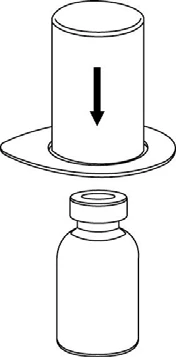 |
|
3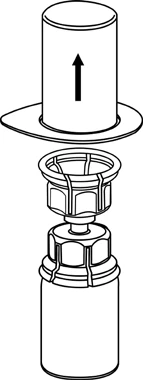 |
|
4 |
|
5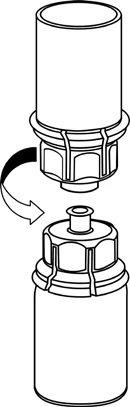 |
|
6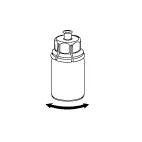 |
|
7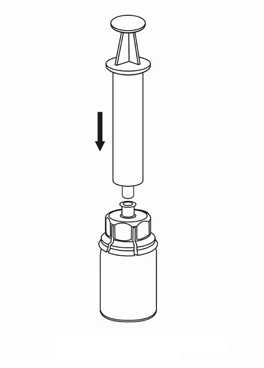 |
|
Administration and administration
8 |
|
9 |
|
Care should be taken to ensure that blood does not enter the syringe filled with the product. This could cause activation of clotting factors present in the product and formation of fibrin clots, which may be administered to the patient.
If administration of more than one vial of Beriplex product is required, it is possible to combine several vials for administration as a single infusion using a commercially available administration set.
The Beriplex medicinal product solution must not be diluted.
The reconstituted solution should be administered intravenously (at a rate no faster than 8 ml/min*).
Any unused medicinal product or waste material must be disposed of in accordance with local regulations.
Special warnings and precautions for use
There are no clinical data available on the use of Beriplex P/N 250 in the treatment of perinatal bleeding due to vitamin K deficiency in newborns.
_________________________________________________
*In clinical studies with Beriplex, patients weighing less than 70 kg were given a recommended dosage with a maximum infusion rate of 0.12 ml/kg/min (below 8 ml/min).
Notes on platelet count monitoring:
Platelet count should be closely monitored.
Interactions with other medicines and other types of interactions
When performing coagulation tests sensitive to the presence of heparin, the dose of heparin contained in the product should be taken into account in the interpretation of test results obtained from patients receiving high doses of prothrombin complex factors.