Berinert 500
Poland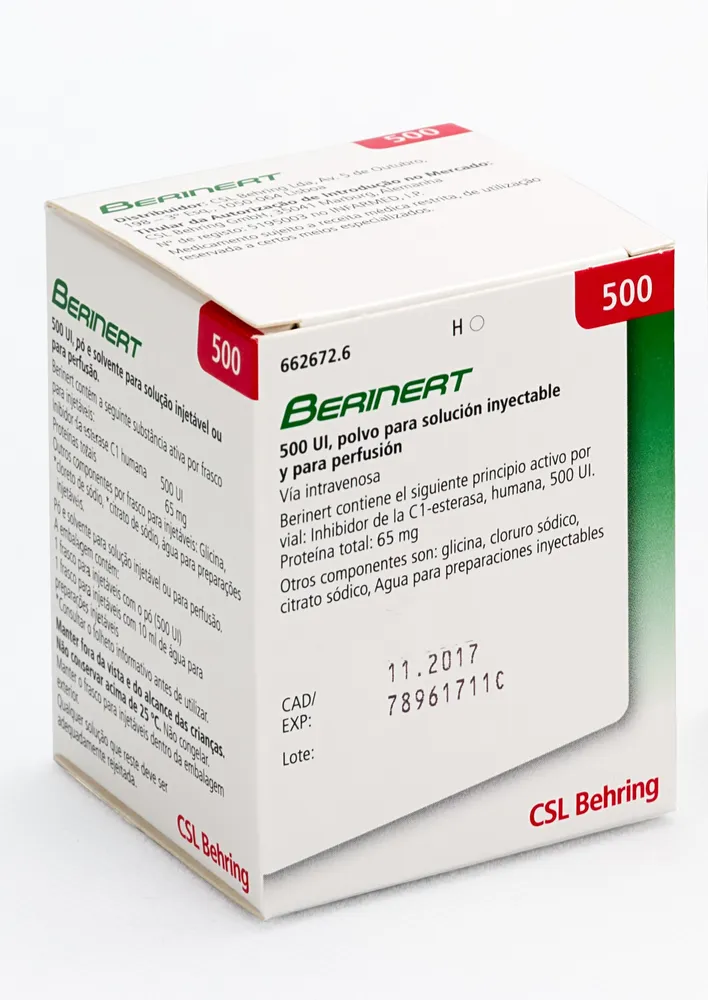
Table of Contents
Berinert 500
500 IU
powder and solvent for solution for injection / for infusion
Human C1-esterase inhibitor
Read the entire leaflet before using this medicine.
- Keep this leaflet for future reference.
- If you have any questions, consult your doctor or pharmacist.
- This medicine has been prescribed for a specific individual. Do not share it with others. This medicine may harm other people, even if their symptoms are the same.
- If the patient experiences any adverse reactions, including any possible adverse reactions not listed in this leaflet, inform the doctor or pharmacist immediately.
Leaflet contents:
- What Berinert is and what it is used for
- What you need to know before using Berinert
- How to use Berinert
- Possible side effects
- How to store Berinert
- Contents of the package and other information
1. WHAT BERINERT IS AND WHAT IT IS USED FOR
What Berinert is
Berinert is a medicine available as a powder and solvent. After reconstitution, it is administered either as an intravenous injection or infusion.
Berinert is manufactured from human plasma (the liquid component of blood). Its active ingredient is a protein—human C1-esterase inhibitor.
What Berinert is used for
Berinert is used for the treatment and prevention of attacks during medical procedures in hereditary angioedema type I and II (HAE, angioedema = swelling). Angioedema is a hereditary disorder of blood vessels. It is not an allergic disease. It is caused by a deficiency, absence, or impaired synthesis of an important protein called C1-esterase inhibitor.
The disease is characterized by the following symptoms:
- sudden swelling of hands and feet,
- sudden facial swelling with a feeling of tightness,
- swelling of the eyelids and lips, swelling of the larynx accompanied by breathing difficulties,
- swelling of the tongue,
- colicky abdominal pain.
In principle, swelling may affect any part of the body.
2. IMPORTANT INFORMATION BEFORE USING BERINERT
This section of the leaflet contains information that should be considered before starting treatment
with Berinert.
When not to use Berinert:
- if the patient has hypersensitivity to C1-esterase inhibitor or to any of the other components of this medicine (listed in section 6). The doctor or pharmacist should be informed if there is hypersensitivity to any medication or food.
Warnings and precautions:
- if allergic reactions occurred after previous administration of Berinert. Antihistamines and corticosteroids should be administered prophylactically.
- if allergic symptoms or an anaphylactic reaction occur (severe allergic symptoms may cause significant breathing difficulties or dizziness). Administration of Berinert must be immediately stopped (i.e. discontinuation of injection or infusion).
- if laryngeal edema has occurred. The patient should be carefully monitored in a setting where immediate medical intervention is possible (hospital).
- if the medicine is used off-label or at non-recommended doses (e.g. Capillary Leak Syndrome - CLS). See section 4. "Possible adverse effects".
The benefit-risk ratio should always be considered before using Berinert.
Viral safety
When medicines are produced from human blood or plasma, various measures are taken to
minimize the risk of transmission of infectious agents. These include:
- careful selection of blood and plasma donors to exclude the risk of transmission of infectious agents
- testing of each donation and plasma pools for markers of infection.
Manufacturers of such medicines apply virus inactivation or removal methods during production.
Despite the application of the above-mentioned measures, it cannot be completely excluded that
administration of a medicinal product derived from human blood or plasma may transmit infectious
agents. This risk also applies to unknown or newly discovered viruses and other infectious agents.
The protective measures taken are effective against enveloped viruses such as human immunodeficiency
virus (HIV, causing AIDS), hepatitis B virus (HBV, causing hepatitis B), hepatitis C virus (HCV, causing
hepatitis C), as well as non-enveloped viruses such as hepatitis A virus (HAV, causing hepatitis A) and
parvovirus B19.
In patients repeatedly receiving products derived from human plasma, vaccination against hepatitis A
and B should be considered.
Each time Berinert is administered, the date of administration, batch number, and volume infused
should be recorded in the patient's medical records.
Berinert and other medicines
- Inform the doctor or pharmacist about any other medicines being taken, including those available without a prescription.
- Berinert must not be mixed in a syringe/infusion set with other medicinal products or with other solvents.
Pregnancy and breastfeeding
- If the patient is pregnant or breastfeeding, suspects she may be pregnant, or is planning to have a child, she should consult her doctor or pharmacist before using this medicine.
- During pregnancy and breastfeeding, Berinert should be used only when clearly indicated.
Driving and operating machinery
Studies on the influence on the ability to drive vehicles and operate machinery have not been conducted.
Important information about certain components of Berinert
Berinert 500 contains 49 mg of sodium (the main component of table salt) per vial.
This corresponds to 2.5% of the maximum recommended daily intake of sodium in the adult diet.
3. HOW TO USE BERINERT
Treatment should be initiated and supervised by a physician experienced
in the use of C1 esterase inhibitor in patients with deficiency of this protein.
Dosage
Adults
Treatment of acute attacks of hereditary angioedema:
20 IU per kilogram of body weight (20 IU/kg b.w.)
Pre-procedural prevention of hereditary angioedema:
1000 IU less than 6 hours before a medical, dental, or surgical procedure.
Children and adolescents
Treatment of acute attacks of hereditary angioedema:
20 IU per kilogram of body weight (20 IU/kg b.w.)
Pre-procedural prevention of hereditary angioedema:
15 to 30 IU per kilogram of body weight (15–30 IU/kg b.w.) less than 6 hours before a medical, dental, or surgical procedure. The dose should be adjusted according to clinical circumstances (e.g., type of procedure and severity of the condition).
Overdose
No cases of overdose have been reported.
Reconstitution and method of administration
Berinert is usually administered intravenously by a nurse or physician. A patient or caregiver may also administer the injection, but only after receiving appropriate training. If the physician decides that home therapy is appropriate, detailed instructions will be provided. The patient will be required to maintain a treatment diary to document each injection administered at home. This diary must be brought by the patient to every medical visit. Regular assessment of the injection technique by the patient or caregiver will be conducted to ensure continued proper administration.
General instructions
- The powder must be reconstituted and withdrawn from the vial under aseptic conditions. Use the syringe provided with the product.
- The prepared solution should be colorless and clear. After filtration or withdrawal from the vial (see below) and before administration, carefully inspect the solution for particulate matter, cloudiness, or discoloration.
- If the solution is cloudy or contains flakes or other particles, do not administer the reconstituted medicine.
- Any unused medicinal product and any unused parts of the kit must be destroyed in accordance with applicable regulations. Disposal instructions should be provided by the treating physician.
Instructions for preparing the solution
Without opening the vials, warm the Berinert powder and solvent to room temperature.
This can be achieved by leaving the vials at room temperature for 1 hour or by holding them in the hands for several minutes.
DO NOT apply direct heat to the vials. Vials must not be heated above body temperature (37°C).
Carefully remove the caps from the vials containing the powder and solvent.
Clean the rubber stopper of each vial with an alcohol swab (use a separate swab for each vial) and allow to dry.
The solvent may be mixed with the powder using the provided transfer device (Mix2Vial). Follow the instructions below.
1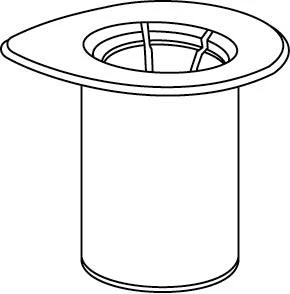 |
|
2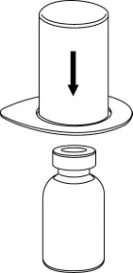 |
|
3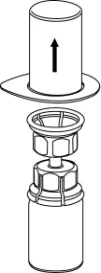 |
|
4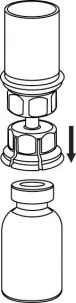 |
|
5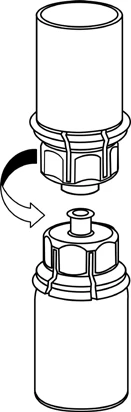 |
|
6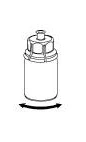 |
|
7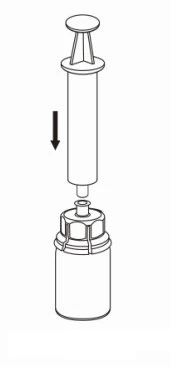 |
|
Download and method of administration
8 |
|
9 |
|
Administration method
The prepared solution should be administered slowly intravenously, either as an injection or infusion (4 ml/min).
4. POSSIBLE ADVERSE REACTIONS
Like all medicines, this medicine can cause adverse reactions, although not everyone will experience them.
You should contact your doctor immediately if:
- you experience any adverse reaction or
- you experience any symptom not listed in this leaflet.
In most patients, adverse reactions after administration of Berinert are rare.
The following adverse reactions have been observed rarely (frequency of occurrence 1 or more than
1 in 10,000 and less than 1 in 1,000 patients):
- During prophylaxis or treatment of patients with capillary leak syndrome (fluid leakage from small blood vessels into tissues), there is a risk of increased incidence of blood clot formation, e.g. during or after cardiac surgery performed with extracorporeal circulation. See section 2. Warnings and precautions.
- Increased body temperature, as well as burning and tingling sensations at the site of intravenous injection.
- Hypersensitivity or allergic symptoms, such as: irregular heartbeat, rapid heartbeat, drop in blood pressure, skin redness, feeling of warmth and facial flushing, breathing difficulties, pain and dizziness, nausea.
Very rarely (less than 1 in 10,000 patients or isolated cases), hypersensitivity reactions may lead to shock.
Reporting of adverse reactions
If any adverse symptoms occur, including any adverse symptoms not listed in this leaflet, inform your doctor or pharmacist. Adverse reactions can be reported directly to the Department of Monitoring Adverse Drug Reactions of the Office for Registration of Medicinal Products, Medical Devices
and Biocidal Products
Al. Jerozolimskie 181C
02-222 Warsaw
tel.: +48 22 49 21 301
fax.: +48 22 49 21 309
Website: https://smz.ezdrowie.gov.pl
Adverse reactions can also be reported to the marketing authorization holder.
Reporting adverse reactions enables continued monitoring of the medicine's safety and allows collection of additional information on its safe use.
5. HOW TO STORE BERINERT
- Keep the medicine out of the sight and reach of children.
- Do not use Berinert after the expiry date stated on the label and outer packaging following the abbreviation EXP.
- Do not store above 30°C.
- Do not freeze.
- Store the vial in its original outer packaging to protect from light.
- Berinert does not contain preservatives; therefore, it should be used immediately after reconstitution.
- If the solution is not used immediately after preparation, it should be administered within 8 hours of preparation and stored exclusively in a syringe.
The product batch number on the administration kit packaging, outer packaging,
and immediate containers is indicated following the abbreviation: Lot.
6. OTHER INFORMATION
What Berinert contains
Active substance:
Human C1-esterase inhibitor (500 IU/vial; after reconstitution 50 IU/ml).
See section "Information intended exclusively for medical or healthcare personnel" for more detailed information.
Excipients:
Glycine, sodium chloride, sodium citrate.
See the last paragraph of section 2. "Important information about certain components of Berinert".
Solvent: Water for injections
What Berinert looks like and contents of the pack
Berinert is presented as a white powder and solvent (water for injections).
The reconstituted solution should be colourless and clear.
Pack sizes
Pack containing 500 IU includes:
1 vial of powder (500 IU)
1 vial with 10 ml of water for injections
1 transfer system 20/20 with filter
Administration set (inner packaging)
1 single-use 10 ml syringe
1 venipuncture set
2 alcohol-impregnated swabs
1 non-sterile adhesive plaster
Marketing Authorisation Holder and Manufacturer
CSL Behring GmbH
Emil-von-Behring-Strasse 76
35041 Marburg
Germany
This medicinal product is authorised for sale in the European Economic Area under the following names:
Berinert 500 IU Powder and
Solvent for solution for injection/infusion ____________ Austria
Berinert 500 ____________________________ Belgium, Cyprus, Germany, Greece, Luxembourg, Poland
Berinert 500 IU Powder and solvent
for solution for injection/infusion ___________ Bulgaria
Berinert 500 IU _________________________ Czech Republic, Slovakia
Berinert _______________________________ Denmark, Italy, Portugal
Berinert 500 IU, injektio/infuusiokuiva-aine
ja liuotin, liuosta varten ___________________ Finland
Berinert 500 UI, poudre et solvant pour
solution injectable/perfusion _______________ France
Berinert 500 UI Polvo para solución
inyectable y para perfusión ________________ Spain
Berinert 500 IU pulver og væske til
injeksjons-/infusjonsvæske, oppløsning ______ Norway
Berinert 500 NE por és oldószer
oldatos injekcióhoz vagy infúzióhoz _________ Hungary
Berinert 500 UI, pulbere şi solvent
pentru soluţie injectabilă/perfuzabilă ________ Romania
Berinert 500 i.e. prašek in vehikel za
raztopino za injiciranje/infundiranje _________ Slovenia
Berinert 500 IE, pulver och vätska till
injektions-/infusionsvätska, lösning ________ Sweden
Berinert 500 IU powder and solvent
for solution for injection/infusion ___________ United Kingdom
Information intended exclusively for medical or healthcare personnel.
QUALITATIVE AND QUANTITATIVE COMPOSITION
The activity of human C1-esterase inhibitor is expressed in international units (IU), which refer to the current WHO standards for C1-esterase inhibitor products.