Benlek
Poland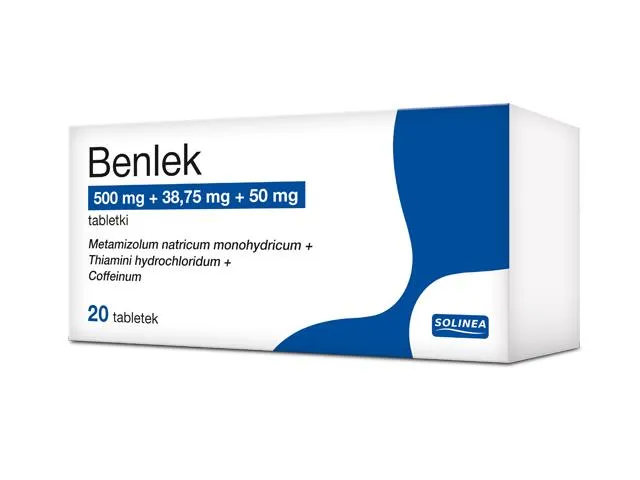
Table of Contents
Package leaflet: information for the patient
Benlek
500 mg + 38.75 mg + 50 mg, tablets
Metamizolum natricum monohydricum + Thiamini hydrochloridum + Coffeinum
Benlek may cause abnormally low levels of white blood cells (agranulocytosis), which may lead to severe and life-threatening infections (see section 4).
Treatment must be discontinued and medical advice must be sought immediately if any of the following symptoms occur: fever, chills, sore throat, painful ulcers in the nose, mouth and throat, or in the genital or anal area.
If the patient has ever experienced agranulocytosis while taking metamizole or similar medicines, this medicine must never be taken again in the future (see section 2).
Please read this leaflet carefully before taking the medicine, as it contains important information for the patient.
- Keep this leaflet, as you may need to read it again.
- If you have any questions, please consult your doctor, pharmacist, or nurse.
- This medicine has been prescribed for a specific individual. Do not pass it on to others. It may harm someone else, even if their symptoms are the same.
- If the patient experiences any adverse reactions, including any not listed in this leaflet, inform your doctor, pharmacist, or nurse. See section 4.
Table of contents
- What Benlek is and what it is used for
- Important information before taking Benlek
- How to take Benlek
- Possible side effects
- How to store Benlek
- Contents of the pack and other information
1. What Benlek is and what it is used for
Benlek is a combination medicine containing three active substances: metamizole, vitamin B, and caffeine.
Metamizole belongs to non-opioid analgesic drugs of the pyrazolone derivatives group, with analgesic and antipyretic properties. It also exerts a spasmolytic effect on smooth muscles.
Caffeine stimulates the central nervous system; it constricts blood vessels and reduces intracranial pressure; it enhances the effect of metamizole by penetrating into the central nervous system.
Vitamin B has beneficial effects on inflammatory processes in the central nervous system. It facilitates nerve conduction and improves metabolism.
Benlek is used in severe pain of various origins and in fever, when the use of other medicines is contraindicated or ineffective.
Consult your doctor if pain does not subside or worsens.
2. Important information before using Benlek
When not to use Benlek:
- If the patient has previously experienced a significant decrease in the number of white blood cells called granulocytes, caused by metamizole or other similar drugs known as pyrazolones or pyrazolidines
- if the patient has bone marrow dysfunction or a condition affecting the production or function of blood cells;
- if the patient is allergic to metamizole, other pyrazolone and pyrazolidine derivatives (e.g. propyphenazone, phenazone or phenylbutazone), thiamine, caffeine, or any of the other ingredients of this medicine (listed in section 6);
- if the patient suffers from analgesic-induced asthma syndrome or known intolerance to painkillers manifested by urticaria, angioedema (swelling of the tongue, face, lips and/or throat), i.e. patients who react with bronchospasm or other anaphylactoid reactions to salicylates, paracetamol or other non-opioid analgesics, including non-steroidal anti-inflammatory drugs (NSAIDs), such as: diclofenac, ibuprofen, indomethacin or naproxen;
- if the patient has bone marrow dysfunction (e.g. after using immunosuppressive drugs) or changes in blood morphology, such as reduced total number of white blood cells (leukopenia) or a specific type of white blood cells, granulocytes (agranulocytosis), or anemia;
- if the patient is currently using a medicine from the group of pyrazolone and pyrazolidine derivatives (e.g. phenylbutazone, propyphenazone);
- if the patient has acute renal or hepatic failure, or acute hepatic porphyria;
- if the patient has congenital glucose-6-phosphate dehydrogenase deficiency.
Benlek must not be used during pregnancy or breastfeeding.
The use of Benlek in children and adolescents is contraindicated.
Warnings and precautions
Before starting treatment with Benlek, discuss this with your doctor:
Low white blood cell count (agranulocytosis)
Benlek may cause agranulocytosis, i.e. a very low number of a specific type of white blood cells called granulocytes, which play an important role in fighting infections (see section 4). You must stop taking metamizole and contact your doctor immediately if any of the following symptoms occur, as they may indicate possible agranulocytosis:
chills, fever, sore throat, and painful mucosal ulcers, especially in the mouth, nose, throat or in the genital or anal area. Your doctor will order laboratory tests to check your blood cell count.
If metamizole is used for fever, some symptoms of developing agranulocytosis may remain unnoticed. Similarly, symptoms may also be masked if the patient is receiving antibiotics.
Agranulocytosis may develop at any time during treatment with Benlek, and even shortly after discontinuation of metamizole.
Agranulocytosis may occur even if metamizole was previously administered without complications.
- if the patient has food, drug, or other types of allergies;
- if the patient has impaired kidney and/or liver function;
- if the patient has glaucoma;
- if the patient reports heart rhythm disturbances;
- if the patient suffers from insomnia;
- if the patient has systolic blood pressure below 100 mm Hg or cardiovascular disorders (e.g. myocardial infarction, coronary artery disease or multi-organ trauma), cerebral vasoconstriction, reduced circulating blood volume, or if the patient is dehydrated, as the medicine may cause a drop in blood pressure;
- if the patient has high fever;
- if the patient has peptic ulcer disease of the stomach and/or duodenum;
- if the patient has bronchial asthma, particularly if associated with nasal polyposis and sinusitis;
- if the patient has allergic diseases, including atopy, chronic urticaria;
- if the patient has intolerance to certain dyes (e.g. tartrazine) or preservatives (e.g. benzoates);
- in patients with alcohol intolerance presenting with sneezing, lacrimation, and intense facial flushing even after small amounts of alcohol; this may indicate previously unrecognized analgesic-induced asthma.
Due to life-threatening risk, Benlek must be discontinued immediately and medical help sought
if symptoms of an allergic (anaphylactic) reaction occur, such as:
- swelling of the face, lips, tongue and/or throat, which may cause difficulty swallowing or breathing;
- severe bronchospasm;
- skin and mucosal changes such as itching, burning, redness, urticaria;
- shock (decreased blood pressure, weakness, fainting). Patients who have experienced an allergic or other immunological reaction to metamizole are also at risk of similar reactions to other pyrazolones and pyrazolidines, as well as other non-opioid analgesics.
Anaphylactic shock may occur in patients with allergies. Therefore, particular caution is advised when using this medicine in patients with asthma or atopy (e.g. atopic dermatitis or mucosal inflammation, hay fever, allergic asthma).
Patients at increased risk of severe allergic-type reactions should only receive metamizole after careful benefit-risk assessment.
If necessary, it should be administered under strict medical supervision, with emergency treatment available.
The medicine must be discontinued immediately and a doctor consulted if any of the following symptoms occur:
- agranulocytosis, e.g. elevated body temperature (fever) accompanied by chills, sore throat, difficulty swallowing, and ulcers in the oral cavity, nose, throat, genital organs or rectum. Do not use the medicine for longer than 3 days.
If prolonged treatment with Benlek is necessary, the doctor will strictly recommend regular blood morphology tests, as metamizole may cause bone marrow damage.
Patients who have experienced agranulocytosis during treatment with metamizole are particularly at risk of similar reactions when using other pyrazolones and pyrazolidines (see When not to use Benlek).
- thrombocytopenia, e.g.: petechiae on the skin and mucous membranes, bruises, recurrent bleeding from gums, nose, gastrointestinal tract;
- pancytopenia (marked reduction in all blood cells: red and white blood cells and platelets), e.g. general malaise, fever, signs of infection, bruising, bleeding, pallor.
Severe skin reactions
Severe skin reactions have been reported with metamizole treatment, including Stevens-Johnson syndrome, toxic epidermal necrolysis, and drug reaction with eosinophilia and systemic symptoms (DRESS syndrome). If any of these symptoms associated with severe skin reactions listed in section 4 occur, metamizole treatment must be stopped immediately and medical help sought.
If the patient has ever experienced severe skin reactions, Benlek must never be used again in the future (see section 4).
Liver-related disorders
Cases of hepatitis have been reported in patients taking metamizole, with symptoms appearing from several days to several months after starting treatment.
Treatment with Benlek must be discontinued and a doctor consulted if the patient experiences any liver-related symptoms such as: malaise (nausea or vomiting), fever, fatigue, loss of appetite, dark urine, pale stools, yellowing of the skin or whites of the eyes (jaundice), itching, rash, or upper abdominal pain. The doctor will assess liver function in the patient.
The patient should not take Benlek if they have previously used any medicines containing metamizole and experienced liver-related adverse effects.
Due to the presence of caffeine in the combination medicine Benlek, a 12-hour interval should be observed before administering adenosine or dipyridamole, as caffeine may interfere with test results.
Benlek should not be used concurrently with other non-steroidal anti-inflammatory drugs or with metamizole.
Children and adolescents
Benlek is contraindicated in children and adolescents.
Benlek and other medicines
Inform your doctor or pharmacist about all medicines currently or recently taken, as well as any medicines the patient plans to take.
The use of Benlek is contraindicated:
- with medicines from the group of pyrazolone and pyrazolidine derivatives (phenylbutazone, propyphenazone).
Inform your doctor if you are taking:
- anticoagulant drugs of the coumarin group;
- oral antidiabetic drugs;
- phenytoin (an antiepileptic drug);
- sulfonamides (antibacterial agents);
- cyclosporine, tacrolimus (immunosuppressive drugs used, among others, to prevent transplant rejection);
- barbiturates (e.g. phenobarbital – used, among others, in epilepsy);
- monoamine oxidase inhibitors (e.g. selegiline, moclobemide – used, among others, in depression);
- chlorpromazine (used, among others, in schizophrenia treatment);
- lithium, sertraline (antidepressants);
- bupropion (used in depression treatment or as an aid in smoking cessation);
- antihypertensive drugs (e.g. captopril);
- diuretics (e.g. triamterene);
- methotrexate (used in cancer treatment);
- efavirenz (used in HIV infection (AIDS) treatment);
- methadone (used in opioid addiction treatment);
- valproate (used in epilepsy or bipolar affective disorder treatment).
Metamizole may reduce the effect of acetylsalicylic acid on platelets.
Caution is advised when administering acetylsalicylic acid for cardiovascular prevention simultaneously.
Food, drink and alcohol with Benlek
Alcohol may affect the efficacy of the medicine (see section 3).
Pregnancy, breastfeeding and fertility
If the patient is pregnant or breastfeeding, suspects she may be pregnant, or is planning to have a child, she should consult a doctor or pharmacist before using this medicine.
The use of Benlek during pregnancy and breastfeeding is contraindicated.
Driving and operating machinery
At the recommended dosage, no impairment of concentration or reaction ability has been observed. However, when higher doses are used, caution is advised, and patients should refrain from operating machinery, driving or performing tasks involving risk.
Warnings regarding excipients
Wheat starch
One tablet contains no more than 15 mg of wheat starch.
This medicinal product contains very small amounts of gluten (from wheat starch) and is classified as "gluten-free".
Therefore, it is highly unlikely to cause any problems in patients with celiac disease.
Patients with wheat allergy (other than celiac disease) should not use this medicinal product.
3. How to use Benlek
This medicine should always be used according to the instructions given by your doctor or pharmacist. If in doubt, consult your doctor or pharmacist.
Recommended dose
Adults
The dosage depends on the intensity of pain or fever and on individual patient sensitivity to the medicine. The lowest effective dose should always be used.
This medicine should always be used according to your doctor's instructions. The usual dose is 1 to 2 tablets, not more frequently than three times a day, administered no more often than every 6–8 hours.
The maximum single oral dose of metamizole is 1000 mg (i.e. 2 tablets); the maximum daily dose of metamizole is 000 mg (i.e. 6 tablets). If you feel the effect of the medicine is too strong or too weak, consult your doctor or pharmacist.
The tablets should be taken orally with sufficient fluid (e.g. a glass of water).
The medicine should be taken during or immediately after a meal.
Do not use the medicine for longer than 3 days.
Elderly patients, patients in poor general condition and patients with reduced creatinine clearance (indicating impaired kidney function)
In elderly patients, patients in poor general condition and patients with reduced creatinine clearance, the dose should be reduced due to slowed metabolism of the medicine.
Patients with liver and kidney disorders
Patients with liver disorders should avoid high repeated doses, as elimination of the medicine and its metabolites is slowed in these conditions. Short-term use of the medicine does not require dose reduction. There is lack of data on long-term use of metamizole in patients with severe liver and kidney disorders.
Children and adolescents
Benlek is not intended for use in children and adolescents.
Taking more Benlek than recommended:
If you take more Benlek than recommended, contact your doctor or pharmacist immediately.
Overdose may cause dizziness, tinnitus, hearing disturbances, psychomotor agitation, disturbances of consciousness, coma, oliguria or anuria, tonic-clonic seizures or decreased arterial blood pressure, cardiac arrhythmias (tachycardia).
Metamizole overdose may also cause abdominal pain, vomiting, gastric and duodenal mucosal erosions, bleeding, perforations, hepatocellular damage, interstitial nephritis and allergic bronchospasm. Cases of rash, urticaria, oedema, exfoliative dermatitis and toxic epidermal necrolysis have been reported.
Blood morphology disorders have also been described, such as bone marrow damage leading to reduced white blood cell count (leukopenia or agranulocytosis), reduced platelet count (thrombocytopenia) or aplastic anaemia.
There is no antidote for metamizole.
In case of overdose, seek immediate medical advice from a doctor.
If you miss a dose of Benlek
Do not double the dose to make up for a missed dose.
Take the next dose at the appropriate time without increasing the dose.
4. Possible adverse reactions
Like all medicines, Benlek may cause adverse reactions, although not everyone experiences them.
The frequency of the possible adverse reactions listed below is defined using the following classification:
common (affects 1 to 10 patients in 100); uncommon (affects 1 to 10 patients in 1,000); rare (affects 1 to 10 patients in 10,000); frequency not known (cannot be estimated from the available data).
Due to the risk of life-threatening reactions, the medicine must be discontinued immediately and medical help must be sought if severe allergic (anaphylactic) reactions occur:
- rare swelling of the face, lips, tongue, and/or throat, which may cause difficulty in swallowing or breathing;
- very rare severe bronchospasm;
- frequency not known: skin and mucous membrane changes such as itching, burning sensation, redness, urticaria; anaphylactic shock (life-threatening drop in blood pressure, weakness, fainting).
The medicine must be discontinued immediately and medical advice sought if any of the following very rare severe adverse reactions occur:
- Stevens-Johnson syndrome (blisters progressing to erosions in the oral, conjunctival, and genital mucous membranes);
- Lyell's syndrome (toxic epidermal necrolysis, erythematous-bullous lesions affecting the skin and mucous membranes leading to detachment of large areas of the epidermis and exposure of extensive skin surfaces);
- pancytopenia (marked decrease in all blood cells: red and white blood cells and platelets, manifesting as general malaise, fever, signs of infection, bruising, bleeding, pallor of the skin);
- agranulocytosis (complete or near-complete absence of granulocytes in the blood), manifesting as: fever, chills, sore throat, difficulty swallowing, inflammatory conditions of the mucous membranes of the mouth, nose, throat, genital organs, and rectum, elevated ESR, including cases resulting in death.
Frequency not known
Severe skin reactions
Metamizole should be discontinued and immediate medical assistance sought if the patient experiences any of the following severe adverse reactions:
- red, flat lesions on the trunk in the shape of a target or circular, often with blisters in the center, skin peeling, oral, throat, nose, genital, and ocular mucosal ulcers. Such serious skin eruptions may be preceded by fever and influenza-like symptoms (Stevens-Johnson syndrome, toxic epidermal necrolysis);
- widespread rash, high fever, and enlarged lymph nodes (DRESS syndrome or drug hypersensitivity syndrome).
Discontinue Benlek and seek immediate medical help if any of the following symptoms occur:
- malaise (nausea or vomiting), fever, fatigue, loss of appetite, dark urine, pale stools, yellowing of the skin or whites of the eyes, itching, rash, or pain in the upper abdomen. These may be symptoms of liver damage. See also section 2 "Warnings and precautions".
Other adverse reactions:
Consult a doctor if any of the following adverse reactions occur:
Uncommon (affects fewer than 1 in 100 patients):
- drug eruption (transient rash of various types: nodular, macular, papular, erythematous);
- excessive decrease in blood pressure.
Rare (affects fewer than 1 in 1,000 patients):
- maculopapular skin changes;
- leukopenia (reduced number of white blood cells in the blood).
Very rare (affects fewer than 1 in 10,000 patients):
- analgesic-induced asthma (see section 2 "When not to use Benlek"), asthma attacks;
- thrombocytopenia (bruising, bleeding);
- sudden worsening of kidney function with proteinuria, oliguria, or anuria;
- acute kidney failure;
- interstitial nephritis.
Frequency not known (frequency cannot be estimated from the available data):
- nausea, vomiting, abdominal pain, gastric irritation, diarrhea, dry mouth;
- liver damage;
- hepatitis, jaundice (yellowing of the skin and whites of the eyes), increased liver enzyme activity in blood;
- headache, dizziness;
- hemolytic anemia, aplastic anemia, bone marrow damage, sometimes resulting in death. In patients with glucose-6-phosphate dehydrogenase deficiency, the drug causes hemolysis of red blood cells;
- red discoloration of urine (after administration of very high doses of metamizole).
Reporting of adverse reactions
If any adverse reactions occur, including any not listed in this leaflet, inform your doctor or pharmacist. Adverse reactions can be reported directly to the Department of Monitoring Adverse Drug Reactions, Office for Registration of Medicinal Products, Medical Devices and Biocidal Products, Al. Jerozolimskie 181C, 02-222 Warsaw, tel.: +48 22 49 21 301, fax: +48 22 49 21 309, website: https://smz.ezdrowie.gov.pl
Adverse reactions can also be reported to the marketing authorization holder.
Reporting adverse reactions helps to provide more information on the safety of the medicine.
5. How to store Benlek
Keep out of the reach and sight of children.
Store below 25°C. Keep in the original packaging to protect from light.
Do not use Benlek after the expiry date stated on the cardboard box and blister pack: Expiry date (EXP) and EXP. The expiry date refers to the last day of the stated month.
No special precautions for storage of the medicinal product.
Medicines should not be disposed of via wastewater or household waste. Ask your pharmacist how to dispose of medicines no longer required. Such measures will help protect the environment.
6. Contents of the pack and other information
What Benlek contains
Each tablet contains the following active substances:
- 500 mg of metamizole sodium monohydrate
- 38.75 mg of thiamine hydrochloride
- 50 mg of caffeine
Other ingredients: microcrystalline cellulose, wheat starch, povidone K 25, gelatin,
colloidal silicon dioxide, anhydrous, magnesium stearate, talc.
What Benlek looks like and contents of the pack
White or almost white, round, flat tablets with a score line on one side.
The tablets can be divided into two equal parts.
The pack contains PVC/Aluminium blisters with a leaflet in a cardboard box, 20 tablets (2
blisters with 10 tablets each).
Marketing Authorisation Holder and Manufacturer
Marketing Authorisation Holder
Solinea Sp. z o.o.
Elizówka, Szafranowa 6
21-003 Ciecierzyn
Tel: +48 81 463 48 82
Manufacturer
Adipharm EAD
130, Simeonovsko shosse Blvd.
Sofia 1700
Bulgaria