Bendamustine zentiva
Poland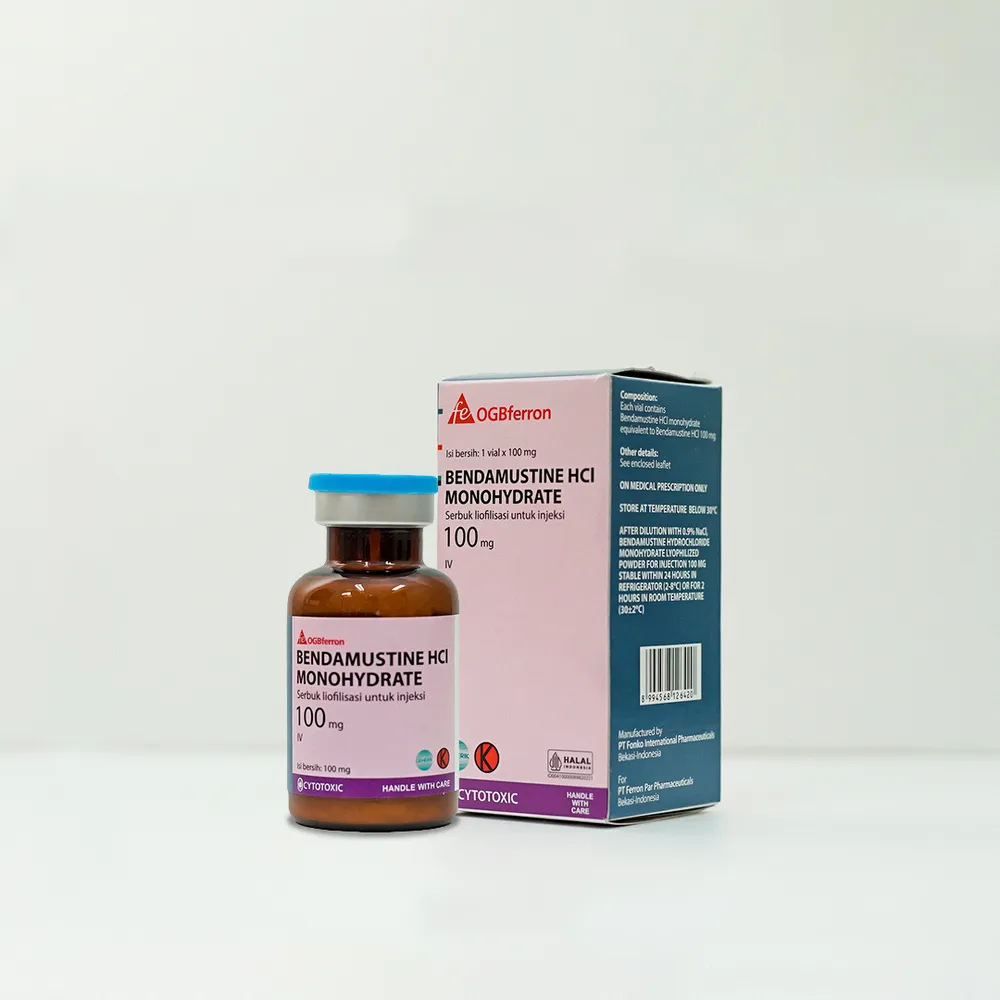
Table of Contents
- Package leaflet: Information for the user
- 1. What Bendamustine Zentiva is and what it is used for
- 2. Important information before using Bendamustine Zentiva
- 3. How to use Bendamustine Zentiva
- 4. Possible adverse reactions
- 5. How to store Bendamustine Zentiva
- 6. Contents of the pack and other information
- Information intended exclusively for physicians or medical professionals:
Package leaflet: Information for the user
Bendamustine Zentiva, 2.5 mg/ml, powder for solution for concentrate for infusion
Bendamustini hydrochloridum
Please read all of this leaflet carefully before using this medicine, because it contains
important information for the patient.
- Keep this leaflet, so that you can read it again if necessary.
- If you have any further questions, please consult your doctor or pharmacist.
- This medicine has been prescribed for a specific individual. Do not pass it on to others. This medicine may harm others, even if their symptoms are the same.
- If the patient experiences any adverse reactions, including any not listed in this leaflet, inform the doctor or pharmacist immediately. See section 4.
Table of contents of the leaflet
- What Bendamustine Zentiva is and what it is used for
- Important information before using Bendamustine Zentiva
- How to use Bendamustine Zentiva
- Possible side effects
- How to store Bendamustine Zentiva
- Contents of the pack and other information
1. What Bendamustine Zentiva is and what it is used for
Bendamustine Zentiva is a medicine containing the active substance bendamustine hydrochloride
(hereinafter referred to as bendamustine).
Bendamustine is a medicine used in the treatment of certain malignant diseases (a cytostatic agent).
Bendamustine is used either as a single agent (monotherapy) or in combination with other medicines in the treatment of the following malignant diseases:
- chronic lymphocytic leukaemia when treatment regimens containing fludarabine are not indicated,
- non-Hodgkin's lymphomas that did not respond or responded only briefly to prior treatment with rituximab,
- multiple myeloma when treatment regimens containing thalidomide or bortezomib are not indicated.
2. Important information before using Bendamustine Zentiva
When not to use Bendamustine Zentiva:
- if the patient is allergic to bendamustine hydrochloride or any of the other ingredients of this medicine (listed in section 6);
- during breastfeeding; if treatment with Bendamustine Zentiva is necessary during this period, breastfeeding must be discontinued (see section Warnings and precautions and Breastfeeding);
- if the patient has severe liver function disorders (liver parenchymal damage);
- if the patient has jaundice (yellowing of the skin or whites of the eyes) caused by liver dysfunction or blood disorders (jaundice);
- if the patient has severe bone marrow dysfunction (bone marrow depression) with significant changes in white blood cell and platelet counts;
- if the patient has undergone extensive surgery within 30 days before starting treatment;
- if the patient has an infection, especially accompanied by reduced white blood cell count (leukopenia);
- if the patient has been vaccinated against yellow fever.
Bendamustine should not be used if any of the above conditions apply to the patient.
If in doubt, consult a doctor or pharmacist before starting to use this medicine.
Warnings and precautions
Before starting treatment with Bendamustine Zentiva, consult a doctor or pharmacist:
- in case of reduced ability of the bone marrow to produce blood cells. The doctor will check white blood cell and platelet counts before starting treatment with Bendamustine Zentiva, before each subsequent dose, and during treatment breaks;
- in case of infection. Contact a doctor immediately if signs of infection occur, including fever and respiratory symptoms;
- if skin changes occur during treatment with Bendamustine Zentiva; skin reactions may worsen;
- if a painful, red or purple, spreading rash with blisters and (or) other mucosal changes (e.g., in the mouth and on the lips) develops; especially if the patient previously had photosensitivity, a respiratory tract infection (e.g., bronchitis), and (or) fever;
- in case of concomitant heart disease (e.g., myocardial infarction, chest pain, severe cardiac arrhythmias);
- if experiencing pain, presence of blood in urine, or reduced urine output. In advanced stages of disease, waste products from dying tumor tissue may be eliminated slowly from the body. This condition is known as tumor lysis syndrome and may lead to kidney failure and heart complications within 48 hours after the first dose of Bendamustine Zentiva. The doctor should ensure adequate hydration and may prescribe additional medications to prevent this;
- if severe allergic reactions or hypersensitivity reactions occur. The infusion site should be monitored after the first treatment cycle.
Immediately inform the doctor if at any time during or after treatment the patient experiences any of the following symptoms: memory loss, thinking problems, difficulty walking, or loss of vision — these may be caused by a very rare but serious brain infection (progressive multifocal leukoencephalopathy, PML), which can be fatal.
If any suspicious skin changes are observed, contact a doctor due to an increased risk of certain types of skin cancer (non-melanoma skin cancer) associated with the use of this medicine.
Bendamustine Zentiva and other medicines
Tell your doctor or pharmacist about all medicines currently or recently taken, as well as any medicines planned for future use.
When Bendamustine Zentiva is used in combination with other medicines that suppress bone marrow function, the effect on bone marrow may be intensified.
When Bendamustine Zentiva is used together with medicines affecting the immune response, this effect may be enhanced.
Cytostatic drugs may reduce the effectiveness of vaccines containing live viruses.
Additionally, cytostatic drugs increase the risk of infection after vaccination with live vaccines (e.g., viral vaccines).
Pregnancy, breastfeeding and fertility
If pregnant, suspecting pregnancy, planning pregnancy, or breastfeeding, consult a doctor or pharmacist before using this medicine.
Pregnancy
Bendamustine Zentiva may cause damage to genetic material and cause developmental abnormalities in animals. Bendamustine Zentiva should not be used during pregnancy unless the doctor considers it absolutely necessary. If treatment must be initiated, discuss possible adverse effects on the unborn child with the doctor and undergo genetic testing if recommended.
Breastfeeding
Bendamustine Zentiva must not be used during breastfeeding. If treatment with Bendamustine Zentiva is necessary, the patient must stop breastfeeding.
Fertility
Women of childbearing potential should use effective contraception both before and during treatment with Bendamustine Zentiva. If a woman becomes pregnant during treatment with Bendamustine Zentiva, she should immediately inform her doctor and undergo genetic testing if indicated.
Men should not plan fathering a child during treatment with Bendamustine Zentiva and for 6 months after treatment ends. There is a risk that treatment with Bendamustine Zentiva may cause infertility; therefore, men should consult about sperm preservation before starting treatment.
Men receiving Bendamustine Zentiva are advised not to plan fathering a child during treatment and for 6 months after its completion. Before starting treatment, advice should be sought regarding the possibility of sperm preservation due to the risk of permanent infertility.
Driving and operating machinery
No studies have been conducted on the effect on the ability to drive vehicles or operate machinery.
Do not drive a car or operate machinery if the patient experiences adverse effects such as dizziness or coordination problems.
3. How to use Bendamustine Zentiva
This medicine should always be used exactly as directed by the doctor or pharmacist.
If in doubt, consult the doctor or pharmacist.
Bendamustine Zentiva is administered intravenously over 30–60 minutes, at various doses, either as a single agent (monotherapy) or in combination with other medicines.
Treatment should not be initiated if the white blood cell (leukocyte) count falls below the level determined by the doctor.
The doctor will monitor these blood parameters at regular intervals.
Chronic lymphocytic leukemia
| Bendamustine Zentiva 100 mg/m² body surface area (calculated based on height and body weight) | on days 1 + 2 |
| Repeat cycle every 4 weeks, up to 6 times | |
Non-Hodgkin's lymphomas
| Bendamustine Zentiva 120 mg/m² body surface area (calculated based on height and body weight) | on days 1 + 2 |
| Repeat cycle every 3 weeks, at least 6 times | |
Multiple myeloma
| Bendamustine Zentiva 120 - 150 mg/m² body surface area (calculated based on height and body weight) | on days 1 + 2 |
| Prednisone 60 mg/m² body surface area (calculated based on height and body weight) administered intravenously or orally | on days 1 - 4 |
| Repeat the cycle after 4 weeks, at least 3 times | |
Treatment should be discontinued if the number of white blood cells (leukocytes) and (or) platelets decreases below the level determined by the physician. Treatment may be continued once the number of white blood cells and platelets has increased.
Liver or kidney function disorders
Depending on the degree of liver function impairment, dose adjustment may be necessary (a 30% dose reduction in case of moderate liver dysfunction). Dose adjustment is not required in patients with kidney function impairment. The treating physician will decide whether dose adjustment is necessary.
Suspension and administration
Treatment with Bendamustine Zentiva should only be initiated by physicians experienced in the treatment of malignancies. The physician will administer the appropriate dose of Bendamustine Zentiva and apply the necessary precautions.
The treating physician will administer the infusion solution after preparing it according to the instructions. The solution is administered intravenously as a short-term infusion over 30–60 minutes.
Treatment duration
There is no generally applicable time limit for treatment with Bendamustine Zentiva. The duration of treatment depends on the disease and how the patient responds to therapy.
If you have any doubts or questions regarding treatment with Bendamustine Zentiva, consult your doctor or nurse.
Missed dose of Bendamustine Zentiva
If a dose of Bendamustine Zentiva is missed, the physician will usually continue treatment according to the established dosing schedule.
Discontinuation of treatment
The treating physician will decide whether to discontinue treatment or switch to another medication.
If you have any further doubts regarding the use of this medicine, consult your doctor or pharmacist.
4. Possible adverse reactions
Like all medicines, this medicine can cause adverse reactions, although not everyone will experience them.
Some of the adverse reactions described below may only be identified after evaluation by a physician.
Very rarely, tissue leakage (extravasation) of Bendamustine Zentiva outside the blood vessel (extravascular administration) has led to tissue necrosis (tissue death). A sign of leakage may be a burning sensation at the injection site.
Consequences of leakage may include pain and poor healing of the skin.
The dose-limiting adverse effect of bendamustine is bone marrow suppression, which usually resolves after treatment. Suppression of bone marrow function may lead to a reduction in blood cell counts, increasing the risk of infection, bleeding, or anemia.
Very common adverse reactions (may occur in more than 1 in 10 patients):
- Infections
- Decreased number of white blood cells (immune cells)
- Reduced concentration of red pigment (hemoglobin: protein in red blood cells responsible for oxygen transport to cells)
- Reduced number of platelets (blood cells responsible for blood clotting)
- Headache
- Nausea; vomiting
- Mucositis (inflammation of mucous membranes); fatigue; fever
- Increased serum creatinine levels (a metabolic product from muscle metabolism); increased serum urea levels (a metabolic product in the body).
Common adverse reactions (may occur in up to 1 in 10 patients):
- Metabolic disturbances related to the release of tumor cell contents into the bloodstream
- Bleeding (hemorrhage)
- Reduced number of red blood cells, which may cause paleness, weakness, or shortness of breath (anemia)
- Reduced number of neutrophils (a type of white blood cell responsible for fighting infections)
- Hypersensitivity reactions, such as allergic dermatitis
- Insomnia, dizziness
- Cardiac dysfunction, cardiac rhythm disorders (arrhythmia)
- Low or high blood pressure (hypotension or hypertension)
- Pulmonary dysfunction
- Diarrhea, constipation, oral pain (oral mucositis)
- Hair loss, skin changes, itchy rash (urticaria)
- Absence of menstruation (amenorrhea)
- Pain, chills, dehydration, loss of appetite
- Increased activity of liver enzymes AspAT/AlAT (which may indicate inflammation or damage to liver cells)
- Increased activity of alkaline phosphatase (an enzyme produced mainly in the liver and bones)
- Increased blood bilirubin levels (a bile pigment formed during the breakdown of red blood cells)
- Decreased blood potassium levels (potassium is necessary for normal function of nerve and muscle cells, including the heart muscle).
Uncommon adverse reactions (may occur in up to 1 in 100 patients):
- Acute leukemia
- Ineffective production of all types of blood cells (in the spongy tissue inside bones)
- Accumulation of fluid in the pericardial sac (fluid leakage into the pericardial space)
- Myocardial infarction, chest pain (angina), heart failure.
Rare adverse reactions (may occur in up to 1 in 1,000 patients):
- Blood infection (sepsis)
- Bone marrow suppression, possibly leading to worsening general condition or evident in blood test results
- Severe hypersensitivity reactions (anaphylactic reactions)
- Anaphylactoid-like symptoms (pseudoanaphylactic reactions)
- Drowsiness
- Loss of voice (aphonia)
- Acute circulatory collapse (cessation of blood flow, primarily of cardiac origin, leading to cellular hypoxia, malnutrition, and inability to eliminate toxins)
- Skin redness (erythema)
- Dermatitis (skin inflammation)
- Itching (pruritus)
- Skin rash (maculopapular exanthema)
- Excessive sweating (hyperhidrosis).
Very rare adverse reactions (may occur in up to 1 in 10,000 patients):
- Primary atypical pneumonia
- Hemolysis (destruction of red blood cells)
- Sudden drop in blood pressure, sometimes with skin reactions or rash (anaphylactic shock)
- Taste disturbance
- Altered sensation (paresthesia)
- General malaise and limb pain (peripheral neuropathy)
- Severe condition due to blockade of certain receptors in the nervous system, neurological disorders
- Loss of coordination (ataxia)
- Encephalitis (inflammation of the brain)
- Rapid heartbeat (tachycardia)
- Phlebitis (inflammation of veins)
- Tissue formation in the lungs (pulmonary fibrosis)
- Hemorrhagic esophagitis (bleeding inflammation of the esophageal mucosa)
- Bleeding from the stomach or intestines
- Infertility
- Multiorgan failure.
Adverse reactions occurring with unknown frequency (frequency cannot be estimated from available data):
- Irregular or rapid heartbeat (atrial fibrillation)
- Pneumonia (inflammation of lung alveoli), pulmonary hemorrhage
- Liver failure
- Kidney failure.
There have been reports of tumor development (myelodysplastic syndrome, acute myeloid leukemia, bronchioloalveolar carcinoma) in patients treated with Bendamustine Zentiva. However, a definitive causal relationship between these tumors and the use of Bendamustine Zentiva has not been established.
You should contact your doctor immediately if any of the following adverse reactions (frequency unknown) occur:
- Severe skin rashes, including Stevens-Johnson syndrome and toxic epidermal necrolysis. These may present as red or round skin lesions, often with central blisters on the trunk, skin peeling, ulceration of the mouth, throat, nose, genital organs, and eyes, and may be preceded by fever and flu-like symptoms.
- Widespread rash, high fever, swollen lymph nodes, and multi-organ involvement (drug reaction with eosinophilia and systemic symptoms, also known as DRESS syndrome or drug hypersensitivity syndrome).
Reporting suspected adverse reactions
After a medicinal product has been authorized, reporting suspected adverse reactions is essential. This enables continuous monitoring of the benefit-risk balance of the medicinal product. Healthcare professionals should report any suspected adverse reactions via the Department of Monitoring Adverse Drug Reactions at the Office for Registration of Medicinal Products, Medical Devices and Biocidal Products
Al. Jerozolimskie 181C, 02-222 Warsaw
Tel.: +48 22 49 21 301, fax: +48 22 49 21 309, website: https://smz.ezdrowie.gov.pl
Adverse reactions may also be reported to the marketing authorization holder or its representative in Poland.
Reporting adverse reactions helps gather more information on the safety of the medicine.
5. How to store Bendamustine Zentiva
Keep this medicine out of the sight and reach of children.
Do not use this medicine after the expiry date stated on the carton after "Expiry date (EXP)". The first two digits indicate the month, and the last four digits indicate the year. The expiry date refers to the last day of the stated month.
Store the vial in its outer cardboard packaging to protect it from light.
Note regarding the shelf life of the medicine after opening the packaging or preparing the solution
The infusion solution, properly prepared (according to the instructions provided at the end of this leaflet), is stable in a polyethylene bag at room temperature (and 60% humidity) for 3.5 hours, and when stored in a refrigerator – for 2 days. Bendamustine Zentiva does not contain any preservatives. Therefore, the solution should not be used after the mentioned time periods have elapsed.
The user is responsible for maintaining aseptic conditions.
Medicines must not be disposed of via wastewater or household waste. Ask your pharmacist how to dispose of medicines no longer required. This practice will help protect the environment.
6. Contents of the pack and other information
What Bendamustine Zentiva contains
- The active substance is bendamustine hydrochloride. One vial contains 25 mg of bendamustine hydrochloride. One vial contains 100 mg of bendamustine hydrochloride. After reconstitution (preparation), 1 ml of concentrate contains 2.5 mg of bendamustine hydrochloride.
- The other ingredient is mannitol.
What Bendamustine Zentiva looks like and contents of the pack
A white or almost white lyophilised powder in a vial made of amber glass, closed with a stopper and an aluminium flip-top cap.
25 ml vial made of type I glass.
50 ml vial made of type I glass.
Pack sizes containing:
25 mg: 1, 5, 10, 20 vials.
100 mg: 1, 5 vials.
Not all pack sizes may be marketed.
Marketing Authorisation Holder and Manufacturer
Marketing Authorisation Holder
Zentiva, k.s., U kabelovny 130, Dolní Měcholupy, 102 37 Prague 10, Czech Republic
Manufacturer
Synthon Hispania SL
C/ Castelló no 1, Pol. Las Salinas, Sant Boi de Llobregat,
08830 Barcelona, Spain
Synthon, s.r.o.
Brněnská 32/čp. 597
678 01 Blansko
Czech Republic
This medicinal product is authorised in the European Economic Area countries under the following names:
Poland: Bendamustine Zentiva
Romania: Bendamustină Zentiva
United Kingdom: Bendamustine hydrochloride Zentiva
For further information about this medicinal product, please contact the local representative of the Marketing Authorisation Holder in Poland:
Zentiva Polska Sp. z o.o.
ul. Bonifraterska 17
00-203 Warsaw, Poland
Tel.: +48 22 375 92 00
Information intended exclusively for physicians or medical professionals:
As with all similar cytotoxic substances, due to the potential of the drug to cause genomic damage and neoplastic diseases, nursing and medical personnel must observe more stringent precautions than usual. When handling bendamustine, inhalation (breathing in) of the drug and contact with skin and mucous membranes must be avoided (gloves, protective clothing, and, if possible, a face mask should be worn!). In case of contamination of any body parts with the product, they should be thoroughly washed with soap and water, and eyes should be rinsed with 0.9% (isotonic) sodium chloride solution. Whenever possible, work should be carried out in specially protected work areas (under laminar airflow hoods), with the work surface covered with a disposable, fluid-impermeable absorbent sheet. Contaminated materials constitute cytostatic waste. Please follow national guidelines for the disposal of materials with cytostatic properties! Pregnant women must not be allowed to work with cytostatic products.
The ready-to-use solution should be prepared by dissolving the contents of the vial containing bendamustine exclusively in water for injections, as follows:
-
Preparation of the concentrate
- One vial containing 25 mg of bendamustine hydrochloride should first be dissolved in 10 ml of water for injections by shaking.
- One vial containing 100 mg of bendamustine hydrochloride should first be dissolved in 40 ml of water for injections by shaking.
-
Preparation of the infusion solution
Once a clear solution has been obtained (usually after 5–10 minutes), the entire dose of bendamustine should be immediately further diluted with 0.9% (isotonic) sodium chloride solution to achieve a final volume of approximately 500 ml. Bendamustine must not be dissolved in other infusion or injection solutions. The infusion solution containing bendamustine must not be mixed with other substances.