Belosalic
Poland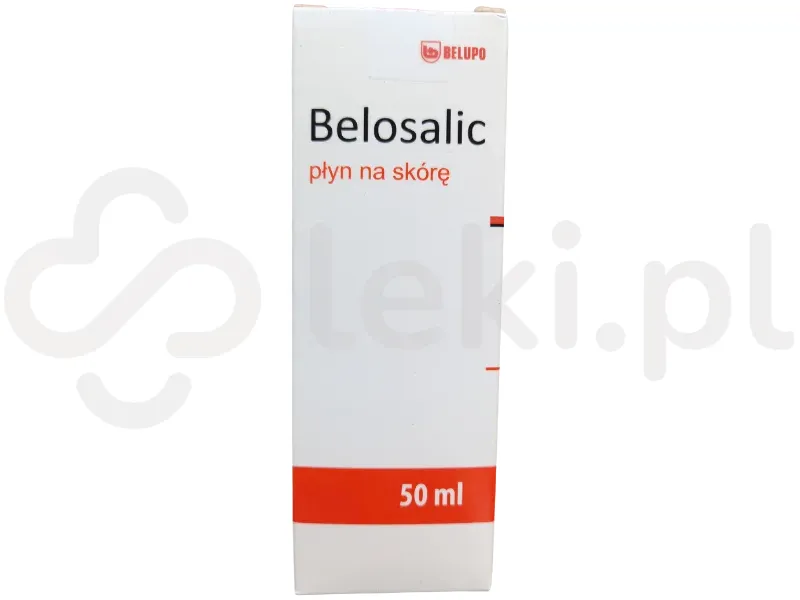
Table of Contents
Package leaflet: Information for the user
Warning! Keep this leaflet! Information on the immediate packaging in a foreign language.
Belosalic
(0.5 mg + 20 mg)/g, solution for the skin
Betamethasone + Salicylic acid
Please read the entire leaflet carefully before using the medicine, as it contains
important information for the patient.
- Keep this leaflet, so you can read it again if necessary.
- If you have any doubts, consult your doctor or pharmacist.
- This medicine has been prescribed for a specific individual. Do not give it to others. The medicine may harm another person, even if their symptoms are the same.
- If the patient experiences any adverse reactions, including any not listed in this leaflet, inform the doctor or pharmacist. See section 4.
Table of contents of the leaflet
- What Belosalic is and what it is used for
- Important information before using Belosalic
- How to use Belosalic
- Possible side effects
- How to store Belosalic
- Contents of the pack and other information
1. What Belosalic is and what it is used for
Belosalic solution for the skin contains the active substances: betamethasone (in the form of
betamethasone dipropionate) and salicylic acid.
Betamethasone dipropionate is a synthetic fluorinated corticosteroid for topical use in
dermatology, which exerts potent anti-inflammatory, antipruritic, and vasoconstrictive effects.
Salicylic acid exerts a keratolytic effect, promoting desquamation and facilitating penetration of
the corticosteroid into the skin.
Indications
Belosalic solution for the skin is indicated for topical treatment of skin diseases characterized by excessive keratosis, dryness, and inflammation, which respond to topical corticosteroid therapy.
2. Important information before using Belosalic
When not to use Belosalic:
- if the patient is allergic to the active substances or to any of the other ingredients of this medicine (listed in section 6),
- in cutaneous tuberculosis,
- in viral skin infections (e.g. herpes simplex, cowpox, varicella),
- in acne, perioral dermatitis, rosacea,
- in the anal and genital areas,
- in diaper dermatitis,
- in fungal or bacterial skin infections, unless appropriate causative treatment has been initiated simultaneously.
Warnings and precautions
Before starting treatment with Belosalic, discuss it with your doctor or pharmacist.
If a skin allergic reaction (itching, burning, or redness of the skin) occurs after applying Belosalic solution, inform your doctor. The doctor will decide whether the medicine should be discontinued immediately.
Do not use occlusive dressings or bandages, as they may enhance absorption of the medicine through the skin.
Avoid contact of the medicine with eyes and mucous membranes. Do not apply the medicine to the eyes or around the eyes.
If the patient experiences blurred vision or other visual disturbances, contact a doctor.
The use of this medicine on the facial skin is not recommended due to the risk of dermatitis (similar to acneiform eruptions), perioral dermatitis, skin atrophy, and acne.
In case of skin infection, the doctor will initiate appropriate antibacterial or antifungal treatment.
Since corticosteroids and salicylic acid are absorbed through the skin, during treatment with Belosalic solution there is a risk of systemic adverse effects of corticosteroids (including suppression of adrenal cortex function) and of salicylic acid. Therefore, avoid using the medicine on large areas of the body, damaged skin, in high doses, during prolonged treatment, and in patients with impaired liver function or in children.
Apply Belosalic solution to the axillary and groin areas only when absolutely necessary, due to increased absorption.
Particular caution is required when using Belosalic solution in patients with psoriasis, as topical use of corticosteroids in psoriasis may be dangerous, including due to disease rebound caused by development of tolerance, risk of generalized pustular psoriasis, and systemic toxic effects resulting from impaired skin barrier function.
Children
The use of this medicine is not recommended in children under 12 years of age due to the risk of suppression of the hypothalamic–pituitary–adrenal axis, Cushing's syndrome, and increased intracranial pressure following topical application of potent corticosteroids.
Belosalic and other medicines
Tell your doctor or pharmacist about all medicines the patient is currently taking or has recently taken, as well as any medicines the patient plans to take.
No interactions with other topically applied medicines are known.
Concomitant topical use of cosmetic or dermatological products used in acne treatment, products containing exfoliating agents or ethanol, and drying soaps may increase skin irritation.
Pregnancy, breastfeeding and fertility
If the patient is pregnant or breastfeeding, suspects she may be pregnant, or is planning to have a child, she should consult her doctor or pharmacist before using this medicine.
Pregnancy
The use of Belosalic solution in pregnant women is permitted only when the doctor considers that the benefit to the pregnant woman outweighs the risk to the fetus. However, such use should be short-term and limited to small areas of the body.
There are no data or only limited data available on the use of betamethasone dipropionate and salicylic acid in pregnant women. However, it is known that these substances may be absorbed through the skin.
Breastfeeding
The doctor will consider whether to discontinue breastfeeding or to discontinue treatment with Belosalic solution, taking into account the benefits of breastfeeding for the child and the benefits of treatment for the mother.
Do not apply the medicine to the breast skin before breastfeeding.
It is not known whether topically applied corticosteroids, including betamethasone dipropionate, are absorbed through the skin to such an extent that they can pass into breast milk. Systemically acting corticosteroids are known to pass into breast milk.
Salicylic acid may be absorbed into the body after application to the skin.
Driving and operating machinery
Belosalic solution has no influence on the ability to drive or operate machinery.
3. How to use Belosalic
This medicine should always be used exactly as directed by the physician. If in doubt, consult
your doctor or pharmacist.
Belosalic solution is intended for topical use only.
Adults and children over 12 years of age
A thin layer of the medicine should be gently rubbed into the affected areas of the skin usually
twice daily. In milder cases, less frequent application may be sufficient.
Do not use for longer than 14 days.
Use in children
Use of this medicine is not recommended in children under 12 years of age.
Use of a higher than recommended dose of Belosalic
When used for prolonged periods (more than 2 weeks), over large areas of skin or on damaged skin,
when occlusive dressings are used, or when used in children, increased absorption of the active
substances into the systemic circulation may lead to overdose and cause systemic adverse effects
associated with corticosteroids and salicylic acid.
Symptoms of corticosteroid overdose include, among others: suppression of the hypothalamic–
pituitary–adrenal axis, Cushing's syndrome, benign intracranial hypertension, growth and
development suppression in children, increased blood glucose levels (hyperglycemia), and
glucosuria.
Symptoms of salicylic acid overdose include, among others: pallor, fatigue, drowsiness,
hyperventilation with rapid breathing, nausea, vomiting, hearing disturbances, and disorientation.
If a higher than recommended dose has been used, seek medical advice immediately.
The doctor will decide whether treatment with the medicine should be discontinued.
If symptoms such as fever, muscle pain, joint pain, and general weakness occur, the doctor may
consider administering a systemic corticosteroid.
Missed dose of Belosalic
Do not use a double dose to make up for a missed dose.
Discontinuation of Belosalic treatment
If you have any further doubts regarding the use of this medicine, consult your doctor or pharmacist.
4. Possible adverse reactions
Like all medicines, this medicine can cause adverse reactions, although not everybody will experience them.
Local application of betamethasone dipropionate may cause skin atrophy, irreversible striae, dry skin, dilation of small blood vessels, folliculitis, hypertrichosis, acneiform eruptions, allergic contact dermatitis (burning, swelling, and inflammatory blisters on the skin), perioral dermatitis, pruritus, skin discoloration, suppression of sweat gland function (miliaria), and secondary infections.
Local application of salicylic acid may cause dermatitis.
Systemic adverse reactions of betamethasone and salicylic acid may also occur due to absorption of the active substances into the bloodstream (see above – Use of a higher than recommended dose of Belosalic).
Systemic adverse effects are rare (in 1 to 10 patients per 10,000), occurring primarily during prolonged use, application over large skin surface areas, use under occlusive dressings, and use in children; these effects usually resolve after discontinuation of the medicine.
Frequency unknown (cannot be estimated from available data): blurred vision.
Reporting of adverse reactions
If any adverse reactions occur, including any adverse reactions not listed in this leaflet, inform your doctor or pharmacist. Adverse reactions can be reported directly to the Department of Monitoring of Adverse Drug Reactions, Office for Registration of Medicinal Products, Medical Devices and Biocidal Products, Al. Jerozolimskie 181C, 02-222 Warsaw, phone: +48 22 49 21 301, fax: +48 22 49 21 309, website: https://smz.ezdrowie.gov.pl .
Reporting adverse reactions helps to provide more information on the safety of the medicine.
5. How to store Belosalic medicine
Keep this medicine out of the sight and reach of children.
Store below 25°C.
Do not use this medicine after the expiry date stated on the container. The expiry date refers to the last day of the stated month.
Medicines must not be disposed of via wastewater or household waste. Ask your pharmacist how to dispose of medicines no longer in use. This will help protect the environment.
6. Contents of the packaging and other information
What Belosalic contains
- The active substances in this medicine (in 1 g of topical solution) are: 0.5 mg betamethasone (as betamethasone dipropionate) and 20 mg salicylic acid.
- Other components are: disodium edetate, hypromellose, sodium hydroxide, isopropyl alcohol, purified water.
What Belosalic looks like and contents of the pack
Belosalic is a topical solution.
The medicine is supplied in a white, opaque plastic bottle with a dropper and a yellow plastic cap with a tamper-evident ring, containing 50 ml of topical solution, packed in a cardboard box.
For further information, please contact the Marketing Authorisation Holder or the Parallel Importer.
Marketing Authorisation Holder in the Czech Republic, country of export:
Belupo s.r.o.
Cukrová 14
811 08 Bratislava
Slovak Republic
Manufacturer:
BELUPO lijekovi i kozmetika, d.d.
Ulica Danica 5
48 000 Koprivnica
Croatia
Parallel Importer:
InPharm Sp. z o.o.
ul. Strumykowa 28/11
03-138 Warsaw
Repackaged in:
InPharm Sp. z o.o. Services sp. k.
ul. Chełmżyńska 249
04-458 Warsaw
Marketing Authorisation Number in the Czech Republic, country of export: 46/383/95-C
Parallel Import Marketing Authorisation Number: 92/24