Belogent
Poland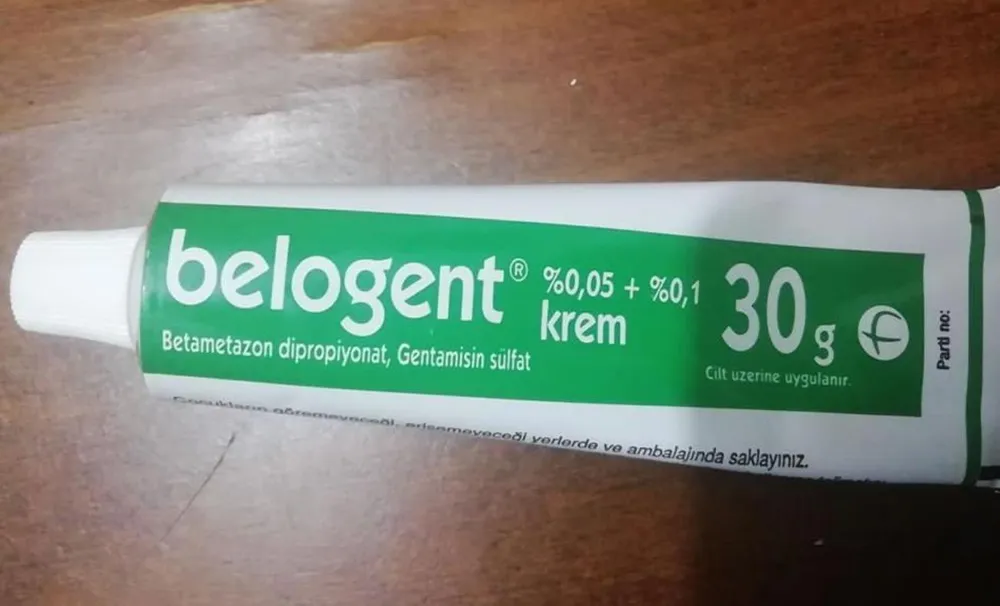
Table of Contents
Patient leaflet: information for the user
Warning! Please keep this leaflet. The information on the immediate packaging is in a foreign language.
Belogent, (0.5 mg + 1 mg)/g, cream
Betamethasone + Gentamicin
Please read the entire leaflet carefully before using this medicine, as it contains
important information for the patient.
- Keep this leaflet, as you may need to read it again.
- If you have any questions, please consult your doctor or pharmacist.
- This medicine has been prescribed for a specific individual. Do not pass it on to others. This medicine may harm other people, even if their symptoms are the same.
- If you experience any adverse reactions, including any not listed in this leaflet, inform your doctor, pharmacist, or nurse. See section 4.
Table of contents
- What Belogent is and what it is used for
- Important information before using Belogent
- How to use Belogent
- Possible side effects
- How to store Belogent
- Contents of the pack and other information
1. What Belogent is and what it is used for
Belogent cream for topical use contains the active substances: betamethasone in the form of
betamethasone dipropionate and gentamicin in the form of gentamicin sulfate.
Betamethasone dipropionate is a synthetic fluorinated corticosteroid for topical use in dermatology, which exerts a potent anti-inflammatory, antipruritic, and vasoconstrictive effect.
Gentamicin sulfate is an aminoglycoside antibiotic with antibacterial activity.
Indications
Belogent cream is indicated for the local treatment of corticosteroid-responsive skin disorders complicated by bacterial infection in patients over 13 years of age.
Belogent cream is used when there is suspicion or bacteriological confirmation of skin infection caused by bacteria sensitive to gentamicin, such as sensitive strains of streptococci (Group A streptococci: alpha- and beta-haemolytic), Staphylococcus aureus (coagulase-positive and coagulase-negative strains, including some penicillinase-producing strains), and Gram-negative bacteria: Pseudomonas aeruginosa, Aerobacter aerogenes, Escherichia coli, Proteus vulgaris, and Klebsiella pneumoniae.
2. Important information before using Belogent
When not to use Belogent
- if the patient is allergic to the active substances or any of the other ingredients of this medicine (listed in section 6),
- in cutaneous tuberculosis,
- in viral skin infections,
Page 1 of 6
- in acne, perioral dermatitis, rosacea,
- in the anal and genital areas,
- in diaper dermatitis,
- in fungal skin infections,
- in bacterial skin infections caused by bacteria resistant to gentamicin.
Warnings and precautions
Before starting treatment with Belogent, discuss it with your doctor or pharmacist.
Do not apply Belogent cream to hairy areas of the scalp.
If a skin allergic reaction (itching, burning, or redness of the skin) occurs after applying Belogent cream, inform your doctor. The doctor will decide whether the medicine should be discontinued immediately.
Do not use dressings or occlusive (sealed) bandages, as they may enhance absorption of the medicine through the skin.
Avoid contact of the medicine with the eyes and mucous membranes. Do not apply the medicine to the eyes or around the eyes.
If blurred vision or other visual disturbances occur, contact your doctor.
Use of the medicine on the facial skin is not recommended due to the risk of dermatitis (resembling acneiform lesions), perioral dermatitis, skin atrophy, and acne.
If a skin infection occurs, the doctor will initiate appropriate treatment with antibacterial or antifungal medicines.
Since corticosteroids and gentamicin may be absorbed through the skin, there is a risk of systemic adverse effects from corticosteroids (including suppression of adrenal cortex function) and from gentamicin (hearing and kidney damage, especially in patients with impaired kidney function) during treatment with Belogent cream. Therefore, avoid applying the medicine over large areas of the body, on damaged skin, using high doses, prolonged treatment, and use in patients with impaired liver function or in children.
Apply the cream to the armpits and groin areas only when absolutely necessary due to increased absorption.
Particular caution is required when using Belogent cream in patients with psoriasis, as topical use of corticosteroids in psoriasis may be dangerous, including the risk of disease rebound due to development of tolerance, generalized pustular psoriasis, and systemic toxic effects caused by impaired skin function.
Prolonged topical use of gentamicin sulfate may lead to overgrowth of resistant microorganisms and may result in the emergence of bacteria resistant to aminoglycoside antibiotics.
Children and adolescents
Belogent cream is indicated for use in adults and children over 13 years of age.
Use in children under 12 years of age is not recommended due to frequent reports of adverse effects such as suppression of the hypothalamic-pituitary-adrenal axis, Cushing's syndrome, and increased intracranial pressure following topical application of potent corticosteroids.
Page 2 of 6
Belogent and other medicines
Tell your doctor or pharmacist about all medicines the patient is currently taking or has recently taken, as well as any medicines the patient plans to take.
No interactions with other topically applied medicines are known.
Pregnancy, breastfeeding, and fertility
If the patient is pregnant or breastfeeding, suspects she may be pregnant, or is planning to have a baby, she should consult her doctor or pharmacist before using this medicine.
Pregnancy
Use of Belogent cream in pregnant women is allowed only if the doctor considers that the benefit to the pregnant woman outweighs the risk to the fetus. However, treatment should be short-term and limited to a small area of the body.
There are no data on the safety of topical corticosteroids and gentamicin in pregnant women. However, it is known that these substances may be absorbed through the skin.
Breastfeeding
During breastfeeding, the doctor will consider whether to discontinue breastfeeding or discontinue treatment with Belogent cream, taking into account the benefits of breastfeeding for the child and the benefits of treatment for the mother.
Do not apply the medicine to the skin of the breasts before breastfeeding.
It is not known whether topically applied corticosteroids, including betamethasone dipropionate, are absorbed through the skin to such an extent that they can pass into breast milk. Systemic corticosteroids generally pass into breast milk.
Gentamicin may be absorbed into the body after topical application.
Driving and operating machinery
Belogent cream has no influence on the ability to drive or operate machinery.
Belogent contains cetostearyl alcohol and chlorocresol
Due to the presence of cetostearyl alcohol, this medicine may cause local skin reactions (e.g. contact dermatitis).
Due to the presence of chlorocresol, allergic reactions may occur.
3. How to use Belogent
This medicine should always be used as directed by a physician or pharmacist. If in doubt,
consult a physician or pharmacist.
Belogent cream is intended for topical use only.
Adults and children over 13 years of age
Apply a thin layer of the medicine to the affected skin areas once or twice daily. Do not use
occlusive dressings (sealed coverings). In some cases, the physician may recommend less frequent
application.
Use in children
The use of this medicine is not recommended in children under 12 years of age.
If the effect of the medicine appears too strong or too weak, consult a physician.
Overdose of Belogent
Prolonged use (exceeding 2 weeks), application over large skin areas or on damaged skin, use under
occlusive dressings, and use in children may lead to excessive absorption of the active substances
into the systemic circulation, resulting in overdose and systemic adverse effects of corticosteroids
and gentamicin.
Symptoms of corticosteroid overdose include, among others: suppression of the hypothalamic–
pituitary–adrenal axis, Cushing's syndrome, benign intracranial hypertension, growth and
development retardation in children, increased blood glucose levels (hyperglycemia), and
glucosuria.
Symptoms of gentamicin overdose include, among others: risk of hearing impairment, tinnitus, and
kidney damage, particularly when used concomitantly with nephrotoxic drugs or in patients with
impaired renal function.
In case of overdose, seek immediate medical advice. The physician will decide whether to
discontinue the medicine.
If symptoms such as fever, muscle pain, joint pain, or general weakness occur, the physician may
consider administering a systemic corticosteroid.
Missed dose of Belogent
Do not use a double dose to make up for a missed dose.
Discontinuation of Belogent
If you have any further questions about the use of this medicine, consult your physician or
pharmacist.
Page 3 of 6
4. Possible adverse reactions
Like all medicines, this medicine can cause adverse reactions, although not everybody will experience them.
Local application of betamethasone dipropionate may cause:
skin atrophy, irreversible striae, dry skin, telangiectasia,
folliculitis, hypertrichosis, acne-like changes, allergic
contact dermatitis (burning sensation, swelling, and inflammatory blisters on the skin), perioral dermatitis,
itching, skin discoloration, suppression of sweat gland function (anhidrosis), and secondary infections.
Local application of gentamicin may cause hypersensitivity reactions, such as
rash, itching, redness, and swelling.
In addition, allergic reactions may occur.
Due to systemic absorption of the active substances into the bloodstream, general adverse reactions of betamethasone and gentamicin may also occur (see above - Use of a higher than recommended dose of Belogent).
General adverse effects are rare (occurring in no more than 1 in 1,000 people), primarily occurring after prolonged use, application over large skin areas, use under occlusive dressings, and use in children; these effects usually resolve after discontinuation of the medicine.
If any adverse reactions occur, including any possible adverse reactions not listed in this leaflet, consult a doctor or pharmacist.
Frequency unknown (cannot be estimated from available data): blurred vision.
Reporting of adverse reactions
If any adverse reactions occur, including any not listed in this leaflet, inform your doctor, pharmacist, or nurse. Adverse reactions can be reported directly to the Department of Monitoring Adverse Reactions of Medicinal Products at the Office for Registration of Medicinal Products, Medical Devices and Biocidal Products
Al. Jerozolimskie 181C
02-222 Warsaw
Phone: +48 22 4921301
Fax: +48 22 4921309
Website: https://smz.ezdrowie.gov.pl
Reporting adverse reactions helps to provide more information on the safety of the medicine.
5. How to store Belogent
Keep this medicine out of sight and reach of children.
Store below 25°C.
Do not freeze.
After first opening the tube: use within 3 months when stored below 25°C.
Do not use this medicine after the expiry date stated on the packaging.
The expiry date refers to the last day of the stated month.
Medicines must not be disposed of via wastewater or household waste. Ask your pharmacist how to dispose of medicines no longer required. These measures help protect the environment.
6. Contents of the packaging and other information
What Belogent cream contains
- The active substances are betamethasone and gentamicin. 1 g of cream contains 0.5 mg betamethasone in the form of betamethasone dipropionate and 1 mg gentamicin in the form of gentamicin sulfate.
- Other ingredients are: chlorocresol, monosodium dihydrogen phosphate monohydrate, diluted phosphoric acid, white soft paraffin, liquid paraffin, cetostearyl alcohol and macrogol ether, cetostearyl alcohol, sodium hydroxide solution, purified water.
What Belogent looks like and contents of the pack
Belogent is a cream.
The available pack contains 30 g of cream in a cardboard box.
For more detailed information, please contact the marketing authorisation holder or the parallel importer.
Marketing authorisation holder in the Czech Republic, country of export:
Belupo s.r.o., Cukrová 14, 811 08 Bratislava, Slovakia
Manufacturer:
BELUPO lijekovi i kozmetika d.d., Ulica Danica 5, 48 000 Koprivnica, Croatia
Parallel importer:
Delfarma Sp. z o.o., ul. Św. Teresy od Dzieciątka Jezus 111, 91-222 Łódź
Repackaged in:
Page 5 of 6
Delfarma Sp. z o.o., ul. Św. Teresy od Dzieciątka Jezus 111, 91-222 Łódź
Marketing authorisation number in the Czech Republic, country of export: 46/284/00-C
Parallel import licence number: 298/25
Page 6 of 6