Befoair
Poland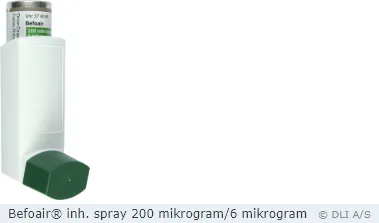
Table of Contents
Package leaflet: Information for the user
Befoair, (100 micrograms + 6 micrograms)/metered dose, inhalation aerosol, solution
Beclometasone dipropionate + Formoterol fumarate dihydrate
Please read this leaflet carefully before using this medicine because it contains important information for you.
- Keep this leaflet. You may need to read it again.
- If you have any further questions, ask your doctor, pharmacist, or nurse.
- This medicine has been prescribed for you personally. Do not give it to others. It may harm them, even if their symptoms are the same as yours.
- If you experience any side effects, including any not listed in this leaflet, tell your doctor, pharmacist, or nurse. See section 4.
Contents of the leaflet
- What Befoair is and what it is used for
- What you need to know before using Befoair
- How to use Befoair
- Possible side effects
- How to store Befoair
- Contents of the pack and other information
1. What Befoair is and what it is used for
Befoair is an inhalation aerosol solution containing two active substances which, when inhaled through the inhaler mouthpiece, are delivered directly to the lungs.
The medicine contains two active substances:
Beclometasone dipropionate, belonging to a group of medicines called corticosteroids, which act as anti-inflammatory agents by reducing swelling and irritation in the lungs.
Formoterol fumarate dihydrate, belonging to a group of long-acting bronchodilator medicines, which relax the muscles in the airways and make breathing easier.
Together, these two active substances help you breathe more easily. They relieve symptoms such as:
shortness of breath, wheezing, and cough in patients with asthma or chronic obstructive pulmonary disease (COPD), and also help prevent asthma symptoms.
Asthma
Befoair is intended for regular treatment of asthma in adults whose:
- asthma symptoms are not adequately controlled with inhaled corticosteroids and a short-acting reliever medicine taken as needed, or
- have achieved adequate asthma symptom control with both inhaled corticosteroids and long-acting bronchodilators.
COPD
Befoair may also be used to treat symptoms of severe chronic obstructive pulmonary disease (COPD) in adult patients. COPD is a chronic lung disease primarily caused by cigarette smoking.
2. Important information before using Befoair
When not to use Befoair:
- if the patient is allergic to beclometasone dipropionate or formoterol fumarate dihydrate or any of the other ingredients of this medicine (listed in section 6).
Warnings and precautions
Before starting treatment with Befoair, discuss with your doctor, pharmacist, or nurse if the patient has any of the following conditions:
- heart diseases such as angina pectoris (chest pain), recent heart attack (myocardial infarction), heart failure, coronary artery disease (coronary heart disease), heart valve disorders, or any other heart disease, or a condition known as hypertrophic obstructive cardiomyopathy (HOCM), characterized by abnormal structure of the heart muscle
- arterial narrowing (also known as arteriosclerosis), if the patient has high blood pressure or diagnosed aneurysm (abnormal enlargement of the blood vessel wall)
- heart rhythm disorders (rapid or irregular heartbeat), fast heart rate, palpitations, or any history of abnormal heart rhythm
- hyperthyroidism
- low blood potassium levels
- any liver or kidney disease
- diabetes (inhaled high doses of formoterol may increase blood glucose levels; therefore, additional blood tests to monitor blood sugar levels may be necessary before starting treatment and periodically during therapy)
- pheochromocytoma (adrenal gland chromaffin tumor)
- if the patient is scheduled for general anesthesia. Depending on the type of anesthesia, it may be necessary to discontinue Befoair at least 12 hours before anesthesia
- if the patient is currently or has previously been treated for pulmonary tuberculosis or has a viral or fungal infection within the chest
- if the patient must avoid alcohol consumption for any reason.
Always inform your doctor if any of the above warnings apply to the patient before using Befoair.
Before using this medicine, consult your doctor, nurse, or pharmacist if you currently have or have ever had any health problems or allergies, or if you have any doubts about whether Befoair can be used.
Your doctor may periodically order blood tests to check potassium levels, especially in patients with severe asthma. Like other bronchodilator medicines, Befoair may cause a sudden decrease in serum potassium levels (hypokalemia). This is associated with low oxygen levels in the blood caused by taking other medicines concomitantly with Befoair, which may worsen the reduction in blood potassium levels.
If high doses of inhaled corticosteroids have been used for a prolonged period, additional corticosteroid treatment may be required during periods of stress. Stress situations may include hospitalization after an accident, serious injury, or prior to surgery. In such cases, your doctor will decide whether to increase the corticosteroid dose or recommend other steroids in tablet form or by injection.
If hospitalization is required, the patient should remember to bring all medications and inhalers, including Befoair, as well as over-the-counter medicines, preferably in their original packaging.
If the patient experiences blurred vision or other visual disturbances, contact a doctor.
Children and adolescents
Befoair must not be used in children and adolescents under 18 years of age.
Befoair and other medicines
Tell your doctor, pharmacist, or nurse about all medicines currently or recently taken, including those obtained without a prescription. This is necessary because Befoair may affect the action of certain other medicines. Similarly, some medicines may affect the action of Befoair.
Concomitant use of Befoair with:
- HIV medicines ritonavir and cobicistat, and certain other medicines may enhance the effect of Befoair, and the doctor may wish to closely monitor the patient taking these medicines
- beta-adrenergic receptor blockers, including eye drops, may reduce the effect of formoterol or formoterol may not work at all. Beta-blockers are medicines used to treat various conditions, including heart diseases, high blood pressure, and glaucoma (increased intraocular pressure)
- beta-adrenergic receptor agonists (medicines acting similarly to formoterol) – may enhance the effect of formoterol
- medicines used to treat abnormal heart rhythm (quinidine, disopyramide, procainamide), antihistamines (used to treat allergies), or medicines used to treat symptoms of depression or psychiatric disorders such as monoamine oxidase inhibitors (e.g. phenelzine and isocarboxazid), tricyclic antidepressants (e.g. amitriptyline and imipramine), phenothiazines may cause certain changes in the electrocardiogram (ECG, heart activity recording). They may also increase the risk of cardiac arrhythmias (ventricular arrhythmias)
- medicines used to treat Parkinson's disease (L-dopa), medicines used to treat hypothyroidism (L-thyroxine), medicines containing oxytocin (which cause uterine contractions), or alcohol may reduce cardiac tolerance to beta-agonists such as formoterol
- medicines used to treat psychiatric disorders such as monoamine oxidase inhibitors (MAOIs) or medicines with similar properties such as furazolidone and procarbazine may cause increased blood pressure
- medicines used to treat heart diseases (digoxin) may cause decreased blood potassium levels. This may increase susceptibility to cardiac arrhythmias
- other medicines used to treat asthma (theophylline, aminophylline, or steroids) and diuretics (water tablets) may cause decreased blood potassium levels
- certain agents used for general anesthesia containing halogenated hydrocarbons (used during surgery and dental procedures) may increase the risk of cardiac arrhythmias
Pregnancy, breastfeeding, and fertility
There are no clinical data on the use of Befoair during pregnancy. Befoair must not be used if the patient is pregnant, suspects she may be pregnant, plans to become pregnant, or is breastfeeding, unless otherwise decided by the doctor.
Driving and using machines
It is unlikely that Befoair will affect the ability to drive or operate machinery.
Befoair contains alcohol
Befoair contains 7 mg of alcohol (ethanol) per spray, equivalent to 0.2 mg/kg body weight per dose when two sprays are administered. The amount of alcohol in two sprays of this medicine is equivalent to less than 1 mL of beer or wine. The small amount of alcohol in this medicine will not cause noticeable effects.
3. How to use Befoair
This medicine should always be used as directed by a doctor or pharmacist. If in doubt,
consult a doctor or pharmacist.
Asthma
Your doctor will regularly check whether you are taking the optimal dose of Befoair.
The doctor will determine the lowest dose that provides the best control of asthma symptoms.
Your doctor may prescribe Befoair in one of two different ways:
a) Befoair should be used daily to treat asthma, together with another inhaled reliever medicine for sudden worsening of asthma symptoms, such as breathlessness, wheezing and coughing,
b) Befoair should be used daily to treat asthma, and also as a reliever in case of sudden worsening of asthma symptoms, such as breathlessness, wheezing and coughing.
a) Using Befoair with another inhaled reliever medicine
Adults and elderly:
The recommended dose is one or two actuations twice daily.
The maximum daily dose is 4 actuations.
Important: Always carry a fast-acting inhaled reliever medicine to treat worsening asthma symptoms or sudden asthma attacks.
b) Using Befoair as the only inhaled medicine in asthma
Adults and elderly:
The usual recommended dose is one actuation in the morning and one actuation in the evening.
Befoair should also be used as an inhaled reliever medicine in case of sudden asthma symptoms.
If asthma symptoms occur, take one actuation and wait a few minutes.
If there is no improvement, take another actuation.
Do not use more than 6 reliever actuations in a day.
The maximum daily dose of Befoair is 8 actuations.
If you need to use more actuations than prescribed to control asthma symptoms,
you should consult your doctor. A change in treatment may be necessary.
Chronic obstructive pulmonary disease (COPD)
Adults and elderly:
The recommended dose is two actuations in the morning and two actuations in the evening.
Special patient groups:
There is no need to adjust the dose in elderly patients. There is insufficient information
on the use of Befoair in patients with hepatic or renal impairment.
Use in children and adolescents under 18 years of age:
Befoair must NOT be used in children and adolescents under 18 years of age.
The dose of beclometasone dipropionate contained in Befoair that is effective in treating asthma may be lower than the dose contained in other inhaled medicines containing beclometasone dipropionate. If you previously used another inhaled medicine containing beclometasone dipropionate, your doctor will advise you on the appropriate dose of Befoair.
Do not increase the dose
If you feel the medicine is not effective enough, always consult your doctor before increasing the dose.
In case of worsening breathing difficulties:
If you experience worsening breathlessness or wheezing (audible whistling during breathing)
immediately after inhalation, stop using Befoair immediately and use a fast-acting inhaled reliever medicine without delay. Contact your doctor as soon as possible. The doctor will assess your symptoms and, if necessary, recommend alternative treatment. See also section 4. "Possible side effects".
In case of worsening asthma symptoms:
If your symptoms worsen or become difficult to control (e.g. if you need to use your reliever medicine more frequently or use Befoair as a reliever more often), or if your reliever medicine fails to relieve symptoms, contact your doctor immediately. This may indicate worsening asthma, and your doctor may decide to change the dose of Befoair or initiate alternative treatment.
Method of administration:
Befoair is for inhalation use only
This medicine is contained in a pressurised canister housed in a plastic casing with a mouthpiece.
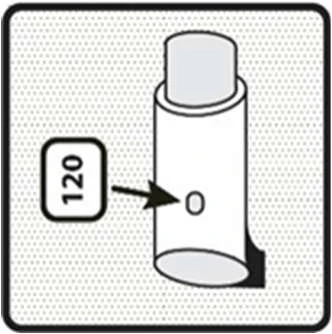
At the back of the inhaler is a dose counter indicating how many doses remain. Each time the inhaler is pressed, a dose is released and the counter decreases by one. Be careful not to drop the inhaler, as this may cause a dose to be lost.
Inhaler test
Before first use, or if the inhaler has not been used for 14 days or longer, perform an inhaler test to ensure it is working properly.
- Remove the protective cap from the mouthpiece.
- Hold the canister upright with the mouthpiece pointing downwards.
- Point the mouthpiece away from yourself and firmly press the top of the canister to release one actuation.
- Check the dose counter. If this is the first time testing the inhaler, the counter should display 120.
How to use the inhaler
If possible, stand or sit upright during inhalation.
Before inhaling, check the dose counter: any number between "1" and "120" indicates that medicine remains in the canister. If the dose counter shows "0", no doses remain and the inhaler should be discarded and replaced with a new one.

- Remove the protective cap and check that the mouthpiece is clean and free from dust or other debris.
- Breathe out as deeply and slowly as possible.
- Hold the canister upright with the stem pointing upwards, then place the mouthpiece between your lips. Do not bite down on it.
- Breathe in deeply and slowly through your mouth. Just after starting to inhale, firmly press the top of the inhaler to release one actuation of medicine.
- Hold your breath as long as possible, then remove the inhaler from your mouth and breathe out slowly. Do not breathe out into the inhaler. To take a second dose, keep the inhaler upright for about half a minute, then repeat steps 2 to 5. Important: Do not perform steps 2 to 5 too quickly.
After use, replace the protective cap and check the dose counter. To reduce the risk of developing oral or throat fungal infection, rinse your mouth or throat with water or brush your teeth immediately after each inhalation.
When the dose counter shows 20, you should have a new inhaler ready.
Stop using the inhaler when the counter shows 0, as the remaining medicine in the canister may not deliver a full dose.
If you see a "mist" above the top of the mouthpiece or escaping from the side of your mouth, this means Befoair is not reaching your lungs as it should. Take another dose according to the instructions, restarting from step 2.
People with weak grip may find it easier to hold the inhaler with both hands: place both index fingers on top of the inhaler and both thumbs on the base.
If you feel the effect of Befoair is too strong or too weak, consult your doctor or pharmacist.
If you have difficulty using the inhaler during inhalation, you may use a spacer device (Aerochamber Plus). Ask your doctor or pharmacist about this device.
It is important to carefully read the leaflet provided with the Aerochamber Plus spacer and follow the instructions for use and cleaning recommendations.
Cleaning the inhaler:
Clean the inhaler once a week.
Do not remove the canister from the plastic casing during cleaning. Do not use water or other liquids to clean the inhaler.
Cleaning the inhaler:
- Remove the protective cap by pulling it off the inhaler.
- Wipe the mouthpiece and actuator inside and outside with a dry cloth or tissue.
- Replace the protective cap.
Overdose of Befoair
-
Overdosing on formoterol may cause the following symptoms: nausea, vomiting, faster heartbeat, palpitations, heart rhythm disturbances, changes in electrocardiogram (ECG), headache, tremor, drowsiness, excess acid metabolites in the blood, decreased blood potassium levels, increased blood glucose levels. Your doctor may recommend a blood test to check potassium and glucose levels.
-
Overdosing on beclometasone dipropionate may cause temporary impairment of adrenal function, which resolves spontaneously within a few days. Your doctor may recommend a blood test to check serum cortisol levels.
If any of these symptoms occur, inform your doctor immediately.
Missed dose of Befoair
Take the missed dose as soon as possible. If it is almost time for your next dose, do not take the missed dose; instead, take the next dose at the usual scheduled time. Do not take a double dose to make up for a missed dose.
Stopping Befoair
Even if you feel better, do not stop using Befoair or reduce the dose without consulting your doctor. It is very important to use Befoair regularly, even when symptoms have subsided.
If you have any further questions about the use of this medicine, consult your doctor or pharmacist.
4. Possible adverse reactions
Like any medicine, this medicine can cause adverse reactions, although not everybody experiences them.
As with other inhaled medicines, there is a risk of worsening breathlessness and wheezing immediately after inhaling Befoair, known as paradoxical bronchospasm. In such a case, Befoair must be STOPPED IMMEDIATELY, and a fast-acting inhaled bronchodilator should be used to relieve symptoms of breathlessness and wheezing. You should contact your doctor immediately.
You must inform your doctor immediately if any hypersensitivity reactions occur, such as skin allergies, skin itching, skin rash, skin redness, or swelling of the skin or mucous membranes, particularly eyes, face, lips, and throat.
Other possible adverse reactions are listed below, categorized by frequency of occurrence.
Common (may occur in up to 1 in 10 people):
- fungal infections (of the mouth and throat)
- headache
- hoarseness
- sore throat
Uncommon (may occur in up to 1 in 100 people):
- palpitations, unusual rapid heartbeat, and heart rhythm disturbances
- changes in electrocardiogram (ECG)
- increased blood pressure
- influenza-like symptoms
- sinusitis
- rhinitis
- otitis
- throat irritation
- cough and productive cough
- asthma attack
- vaginal fungal infections
- nausea
- taste disturbances
- burning of lips
- dryness of the oral mucosa
- difficulty swallowing
- dyspepsia
- stomach discomfort
- diarrhoea
- muscle pain and muscle cramps
- facial and throat redness
- increased blood flow to certain tissues
- increased sweating
- tremor
- restlessness, particularly motor restlessness
- dizziness
- urticaria
- changes in certain blood parameters:
- decreased white blood cell count
- increased platelet count
- decreased blood potassium levels
- increased blood glucose levels
- increased blood insulin, free fatty acids, and ketone bodies levels
Rare (may occur in up to 1 in 1,000 people):
- feeling of chest tightness
- heart rhythm disturbances (caused by premature ventricular contractions)
- decreased blood pressure
- kidney inflammation
- skin and mucous membrane swelling lasting several days
Very rare (may occur in up to 1 in 10,000 people):
- breathlessness
- worsening of asthma
- decreased platelet count
- swelling of hands and feet
Unknown frequency (frequency cannot be estimated from available data):
- blurred vision
The following adverse reactions are more likely in children:
- sleep disorders
- depression or feeling depressed
- nervousness
- excessive excitability or irritability
The following adverse reactions have also been reported in patients with chronic obstructive pulmonary disease (COPD):
- pneumonia (common): inform your doctor if any of the following symptoms occur: increased sputum production, change in sputum colour, fever, worsening cough, increased breathing difficulties
- decreased blood cortisol levels (uncommon), caused by the effect of corticosteroids on the adrenal glands
- irregular heartbeat (uncommon)
Prolonged use of inhaled corticosteroids at high doses may, in very rare cases, lead to systemic effects, including:
- adrenal function disorders (suppression of adrenal function)
- decreased bone mineral density (osteoporosis)
- growth retardation in children and adolescents
- increased intraocular pressure (glaucoma)
- cataract
Reporting of adverse reactions
If any adverse reactions occur, including any not listed in this leaflet, inform your doctor, pharmacist, or nurse.
Adverse reactions can be reported directly to the Department of Monitoring Adverse Drug Reactions of the Office for Registration of Medicinal Products, Medical Devices and Biocidal Products:
Al. Jerozolimskie 181C, 02-222 Warsaw,
tel.: (22) 49 21 301, fax: (22) 49 21 309,
Website: https://smz.ezdrowie.gov.pl
Adverse reactions can also be reported to the marketing authorization holder.
Reporting adverse reactions helps provide more information on the safety of this medicine.
5. How to store Befoair
Keep the medicine out of the sight and reach of children.
Information for the pharmacist:
Store in a refrigerator (2°C to 8°C) for up to 18 months.
Information for the patient:
Do not use this medicine after 3 months from the date of dispensing from the pharmacy, and never use this medicine after the expiry date stated on the carton and label after: "Expiry date (EXP)".
The expiry date refers to the last day of the stated month.
Store below 25°C for up to 3 months.
If the inhaler has been exposed to very low temperatures, warm it in the hands for several minutes before use. Never use any other methods to heat the container.
Warning: The container contains pressurised liquid. Do not expose to temperatures above 50°C. Do not pierce the container.
Medicines must not be disposed of via wastewater or household waste. Ask your pharmacist how to dispose of medicines no longer required. These measures will help protect the environment.
6. Contents of the pack and other information
What Befoair contains
- The active substances in this medicine are: beclometasone dipropionate and formoterol fumarate dihydrate. One metered dose from the inhaler contains 100 micrograms of beclometasone dipropionate and 6 micrograms of formoterol fumarate dihydrate. This corresponds to the delivered dose via the mouthpiece, containing 84.6 micrograms of beclometasone dipropionate and 5 micrograms of formoterol fumarate dihydrate.
- This medicine contains fluorinated greenhouse gases. Each inhaler contains 8.15 g of HFA-134a, equivalent to 0.012 tonnes of CO2 (global warming potential GWP = 1430).
- Other ingredients are: norflurane (HFA 134a), anhydrous ethanol, and concentrated hydrochloric acid (for pH adjustment).
What Befoair looks like and contents of the pack
Befoair is available as a solution for inhalation contained in an aluminium pressurised canister fitted with a metering valve, enclosed in a plastic housing equipped with a dose counter and a plastic protective cap.
Each carton contains:
1 canister (delivering 120 doses).
Marketing Authorisation Holder
Orion Corporation
Orionintie 1
02200 Espoo
Finland
Importer
Orion Corporation Orion Pharma
Orionintie 1
02200 Espoo
Finland
For further information about this medicine, please contact the local representative of the Marketing Authorisation Holder:
Orion Pharma Poland Sp. z o.o.
[email protected]