Baclofen sintetica
Poland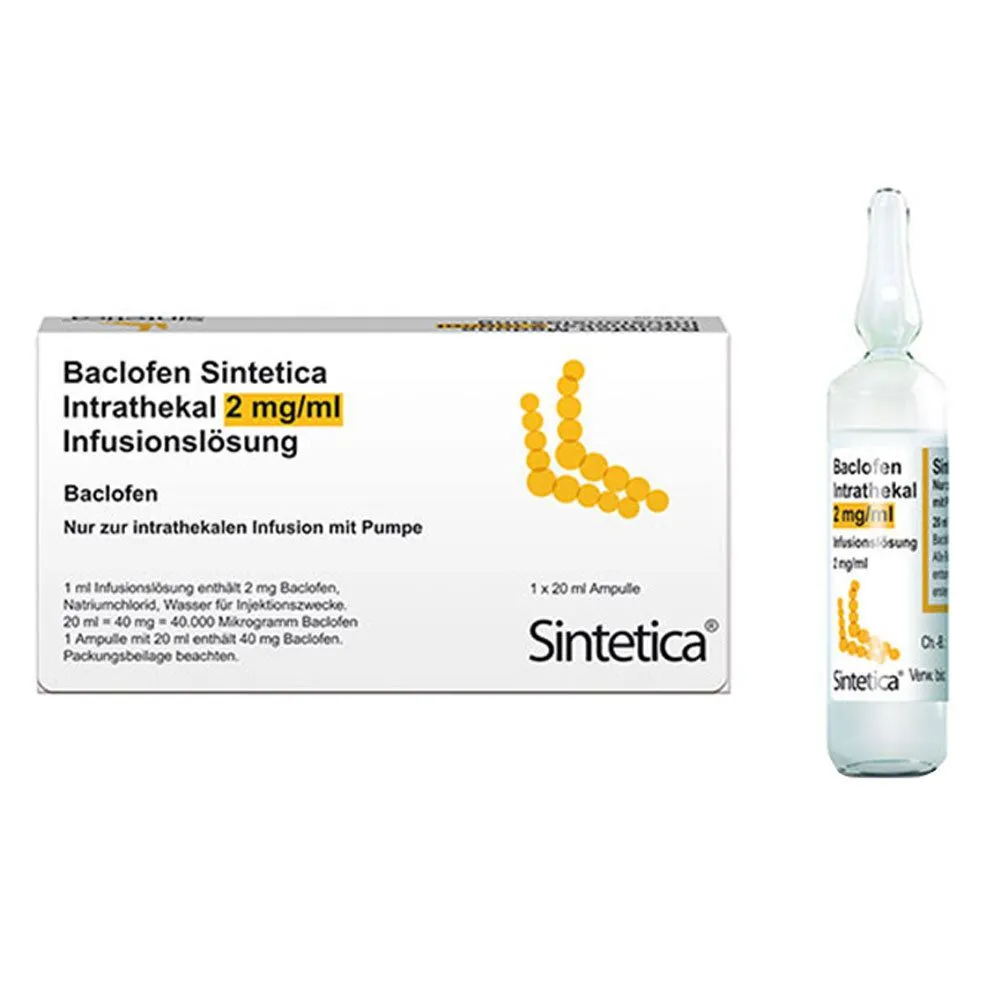
Table of Contents
Package leaflet: Information for the patient
Baclofen Sintetica, 0.05 mg/1 ml, solution for injection
( Baclofen )
Please read the entire leaflet carefully before using the medicine, as it contains
important information for the patient.
- Keep this leaflet, so that you can read it again if necessary.
- If you have any further questions, please consult your doctor or nurse.
- This medicine has been prescribed for a specific individual. Do not pass it on to others. This medicine may harm other people, even if their symptoms are the same.
- If you experience any adverse reactions, including any not listed in this leaflet, inform your doctor or pharmacist. See section 4.
Leaflet contents:
- What Baclofen Sintetica is and what it is used for
- Important information before using Baclofen Sintetica
- How to use Baclofen Sintetica
- Possible side effects
- How to store Baclofen Sintetica
- Contents of the pack and other information
1. What Baclofen Sintetica is and what it is used for
Baclofen Sintetica belongs to a group of medicines called muscle relaxants. Baclofen Sintetica is administered by injection into the spinal canal directly into the cerebrospinal fluid (intrathecal injection) and relieves severe muscle stiffness (spasticity).
Baclofen Sintetica is used to treat severe, chronic muscle spasticity occurring in various diseases, such as:
- injuries or diseases of the brain or spinal cord
- multiple sclerosis, which is a progressive disease of the brain and spinal cord nerves causing physical and mental symptoms
Baclofen Sintetica is used in adults and children aged 4 years and older. The medicine is used when other orally administered medicines, including baclofen, have proven ineffective or caused unacceptable side effects.
2. Important information before using Baclofen Sintetica
When not to use Baclofen Sintetica
- if the patient is allergic to baclofen or any of the other ingredients of this medicine (listed in section 6);
- if the patient has treatment-resistant epilepsy;
- if administered by any route other than intrathecal (into the spinal canal).
Warnings and precautions
Before starting treatment with Baclofen Sintetica, discuss with the doctor
- if the patient is receiving other spinal injections,
- if the patient has any infection,
- if the patient suffered a head injury within the past year,
- if the patient has ever experienced a crisis due to a condition called autonomic dysreflexia, a nervous system reaction to excessive stimulation causing a sudden severe increase in blood pressure (the doctor will provide further explanation),
- if the patient has had a stroke,
- if the patient has epilepsy,
- if the patient has gastric ulcers or other digestive problems,
- if the patient has any psychiatric disorder,
- if the patient is being treated for high blood pressure,
- if the patient has Parkinson's disease,
- if the patient has liver, kidney, lung, or heart disease, or breathing difficulties,
- if the patient has diabetes,
- if the patient has problems with urination.
The doctor should be informed if the answer to any of the above questions is
yes, as Baclofen Sintetica may not be suitable for the patient.
- If any surgical procedure is planned, ensure the doctor is informed about the use of Baclofen Sintetica.
- The presence of a percutaneous endoscopic gastrostomy (PEG) tube increases the frequency of infections in children.
- If the patient has reduced circulation of fluid in the brain and spinal cord due to obstructed flow, for example caused by inflammation or trauma.
- If the patient has slowed cerebrospinal fluid flow, the effect of Baclofen Sintetica may be reduced.
- Contact the treating doctor immediately if Baclofen Sintetica does not work as usual. It is important to ensure there are no pump-related problems.
- Do not abruptly discontinue treatment with Baclofen Sintetica due to the risk of withdrawal effects. Remember to attend scheduled hospital visits for refilling the pump reservoir.
- Periodic monitoring by the treating physician may be required during treatment with Baclofen Sintetica.
Immediately inform the doctor if any of the following symptoms occur
during treatment with Baclofen Sintetica:
- If the patient experiences pain in the back, arms, neck, and buttocks during the procedure (a type of spinal deformity called scoliosis).
- Some patients treated with Baclofen Sintetica have had thoughts of self-harm, suicidal thoughts, or attempted suicide. Most of these patients had depression, alcohol dependence, and/or a history of previous suicide attempts. Seek immediate medical help from a doctor or hospital if the patient has thoughts of self-harm or suicidal ideation. The patient should ask a relative or close person to read this leaflet and to observe for any worrying changes in the patient’s behavior.
Children and adolescents
Baclofen Sintetica is not recommended for children under 4 years of age. In children, certain body weight requirements must be met to allow implantation of an infusion pump.
There is very limited clinical data on the safety and efficacy of Baclofen Sintetica in children under four years of age.
Baclofen Sintetica with other medicines
Tell your doctor or pharmacist about all medicines currently used, recently used, or planned for use.
Some other medicines may affect treatment with baclofen. Remind your doctor or nurse if the patient is taking any of the following medicines:
- other medicines used for spasticity,
- antidepressants,
- medicines used to treat high blood pressure,
- medicines used in Parkinson’s disease,
- strong painkillers such as morphine,
- medicines with central nervous system depressant effects, such as sedatives.
Baclofen Sintetica and alcohol
Alcohol should be avoided during treatment with Baclofen Sintetica, as it may lead to undesirable or unpredictable changes in the drug’s effects.
Pregnancy and breastfeeding
If the patient is pregnant or breastfeeding, suspects she may be pregnant, or is planning to have a child, she should consult a doctor or pharmacist before using this medicine.
Pregnancy
Experience with the use of baclofen administered intrathecally during pregnancy is limited. Baclofen Sintetica should not be used during pregnancy unless the doctor considers it necessary and the expected benefit to the mother outweighs the potential risk to the fetus.
Breastfeeding
Baclofen Sintetica passes into breast milk, but in such small amounts that the infant is unlikely to experience any adverse effects. Consult a doctor before using Baclofen Sintetica during breastfeeding.
Driving and operating machinery
Some patients may experience drowsiness and/or dizziness or vision problems while taking Baclofen Sintetica. In such cases, patients should not drive or perform any activities requiring mental and physical alertness (e.g., operating devices or machinery) until these symptoms resolve.
Baclofen Sintetica contains sodium
This medicine contains less than 1 mmol of sodium (23 mg) per dose unit, i.e. it is essentially "sodium-free".
3. How to use Baclofen Sintetica
Baclofen Sintetica is administered via intrathecal injection. This means that Baclofen Sintetica is injected directly into the cerebrospinal fluid. The required dose varies for each patient depending on their condition. The dose is determined by the physician based on the patient's response to the medication.
At the beginning of treatment, the physician will determine whether single injections of Baclofen Sintetica alleviate muscle spasms. Usually, a test dose is administered via lumbar puncture or through an intrathecal catheter (into the spine) to elicit a response to the drug. During this period, cardiac and pulmonary function are monitored. If muscle spasms are reduced, further treatment will proceed using a special pump that enables continuous administration of the drug. The pump is implanted in the chest or abdominal wall. All necessary information regarding the use of the pump and determination of the correct dose should be provided to the patient by the physician. The patient should ensure they fully understand all instructions.
The final dose of Baclofen Sintetica depends on the individual patient's response to the drug. Treatment begins with a small dose, which is gradually increased over several days under medical supervision until the patient receives the appropriate dose for their needs. If the initial dose is too high or increased too quickly, the risk of adverse effects increases.
It is extremely important that the patient contacts their physician to have the pump refilled.
To avoid unpleasant adverse effects, which may be severe and even life-threatening, it is essential that the pump functions continuously. The pump must always be refilled by a physician or nurse, and the patient must ensure regularity of medical appointments.
The efficacy of intrathecally administered baclofen has been demonstrated in clinical trials using pump systems to deliver baclofen directly into the cerebrospinal fluid (infusion systems). A pump system with CE marking is implanted under the skin, primarily in the abdominal wall. The pump stores and releases the appropriate amount of medication through a catheter directly into the cerebrospinal fluid.
During long-term treatment, some patients may experience reduced effectiveness of Baclofen Sintetica. In such cases, treatment interruptions may be necessary. The physician should inform the patient about the appropriate course of action in such situations.
To open the Baclofen Sintetica packaging, hold the package in both hands and twist the edges in opposite directions until it opens.
If treatment with Baclofen Sintetica is interrupted
It is very important that both the patient and caregiver are able to recognize symptoms of baclofen withdrawal. These symptoms may appear suddenly or gradually, for example due to malfunction of the pump or delivery system.
Withdrawal symptoms:
- increased spasticity, excessive muscle tone
- difficulty with muscle movement
- increased heart rate or pulse
- itching, tingling, burning, or numbness (paresthesia) in hands or feet
- palpitations
- restlessness
- high body temperature
- low blood pressure
- altered mental status, such as agitation, confusion, hallucinations, abnormal thinking and behavior, seizures
If the patient experiences any of the above symptoms, they must inform the physician immediately. These symptoms may lead to more serious adverse effects unless the patient receives immediate treatment.
Use of a higher than recommended dose of Baclofen Sintetica
It is important that the patient or caregiver is able to recognize symptoms of overdose, which may occur due to pump malfunction. The physician must be informed of this immediately.
Overdose symptoms:
- muscle weakness (reduced muscle tone)
- drowsiness
- dizziness or feeling of emptiness in the head
- excessive salivation
- nausea or vomiting
- difficulty breathing
- seizures
- reduced level of consciousness
- abnormally low body temperature
If there are any doubts regarding the use of this medication, consult a physician or pharmacist.
4. Possible adverse effects
Like all medicines, Baclofen Sintetica may cause adverse effects, although not everyone experiences them.
The following adverse effects have been reported:
Very common: occurs in more than 1 in 10 treated patients
Feeling of fatigue, drowsiness or weakness
Reduced muscle tone (muscle hypotonia)
Common: occurs in less than 1 in 10 patients
Feeling of sluggishness (lack of energy)
Headache, dizziness or feeling of emptiness in the head
Pain, fever or chills
Seizures
Tingling in hands or feet
Vision problems
Slurred speech
Insomnia
Breathing difficulties, pneumonia
Feeling disoriented, anxious, agitated or depressed
Low blood pressure (fainting)
Nausea or vomiting, constipation and diarrhoea
Loss of appetite, dry mouth or excessive salivation
Rash and itching, facial swelling, swelling of hands and feet
Urinary incontinence or difficulty passing urine
Cramps
Sexual problems in men, e.g. impotence
Sedation
Uncommon: occurs in less than 1 in 100 patients
Feeling excessively cold
Memory loss
Euphoric mood and hallucinations, suicidal thoughts
Difficulty swallowing, loss of taste, dehydration
Lack of muscle control or lack of coordination of voluntary movements (ataxia)
High blood pressure
Slowed heart rate
Deep vein thrombosis
Redness or pallor of the skin, excessive sweating
Hair loss
Suicide attempts
Paranoia
Involuntary rapid eye movements (nystagmus)
Intestinal obstruction
Rare: occurs in less than 1 in 1000 patients
Potentially life-threatening withdrawal symptoms
Frequency not known: cannot be estimated from available data
Anxiety or general dissatisfaction (dysphoria)
Slowed breathing
Increased lateral curvature of the spine (scoliosis)
Problems related to the pump and the method of drug delivery have been reported, such as infections, inflammation of the membranes surrounding the brain and spinal cord (meningitis), or inflammation at the site where the catheter tip is located.
Reporting of adverse effects
If any adverse effects occur, including any adverse effects not listed in this leaflet, tell your doctor, pharmacist, or nurse. Adverse effects can be reported directly to the Department of Monitoring of Adverse Drug Reactions of the Office for Registration of Medicinal Products, Medical Devices and Biocidal Products:
Al. Jerozolimskie 181C, 02-222 Warsaw,
tel.: 22 4921301
fax: 22 4921309
https://smz.ezdrowie.gov.pl
Adverse effects can also be reported to the marketing authorization holder.
By reporting adverse effects, more information on the safety of this medicine can be collected.
5. How to store Baclofen Sintetica
Keep out of the sight and reach of children.
Do not use this medicine after the expiry date stated on the carton and on the ampoule. The expiry date refers to the last day of the stated month.
Do not store in a refrigerator or freeze.
Store in the original packaging to protect from light.
From a microbiological point of view, the product should be used immediately, unless the method of opening and dilution excludes the risk of microbiological contamination. If the medicine is not used immediately, the user is responsible for the storage duration and conditions.
Do not use Baclofen Sintetica if cloudiness or discoloration is observed.
Since this medicine is used in hospital settings, any unused or waste material is disposed of directly by the hospital. This helps protect the environment.
6. Contents of the pack and other information
What Baclofen Sintetica contains
The active substance is baclofen.
Baclofen Sintetica 0.05 mg/1 ml solution for injection
One ampoule containing 1 ml of solution contains 0.05 mg of baclofen.
1 ml of injection solution contains 0.05 mg of baclofen.
The other ingredients are: sodium chloride (3.5 mg/ml of sodium), water for injections.
What Baclofen Sintetica looks like and contents of the pack
Solution for injection
A clear, colourless solution in ampoules.
Baclofen Sintetica 0.05 mg/1 ml
Colourless ampoules made of type I glass, with a capacity of 2 ml, graduated scale and a blue ring mark.
Pack containing 5 or 10 ampoules, each containing 1 ml of solution.
Not all pack sizes may be marketed.
Marketing Authorisation Holder and Manufacturer:
Marketing Authorisation Holder:
Sintetica GmbH
Albersloher Weg 11
48155 Münster
Germany
Manufacturer/Importer:
Sirton Pharmaceuticals S.p.A
Piazza XX Settembre, 2
22079 Villa Guardia (CO)
Italy
Laboratoire AGUETTANT
1 rue Alexander Fleming
69007 Lyon
France
Sintetica GmbH
Albersloher Weg 11
48155 Münster
Germany
For further information, please contact the Marketing Authorisation Holder or its representative:
Poland
IMED Poland Sp. z o.o.
ul. Puławska 314
02-819 Warszawa