Azitrox 500
Poland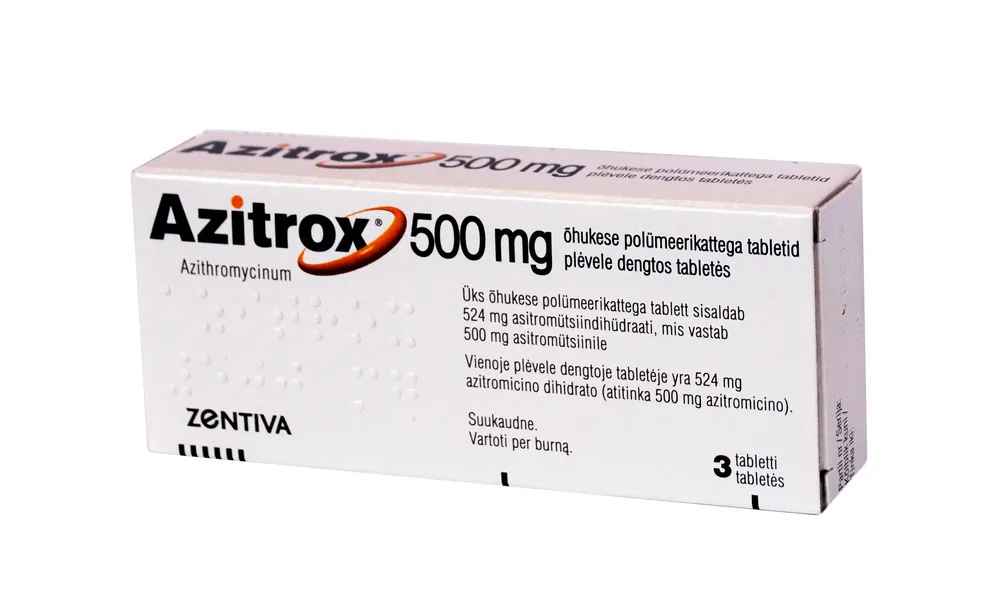
Table of Contents
Package leaflet: Information for the patient
Azitrox 500
500 mg, film-coated tablets
Azithromycinum
Please read this leaflet carefully before using the medicine, as it contains
important information for the patient.
- Keep this leaflet, as you may need to read it again.
- If you have any questions, please consult your doctor or pharmacist.
- This medicine has been prescribed for a specific individual. Do not pass it on to others. This medicine may harm someone else, even if their symptoms are the same.
- If you experience any adverse reactions, including any not listed in this leaflet, inform your doctor or pharmacist. See section 4.
Table of contents
- What Azitrox 500 is and what it is used for
- Important information before taking Azitrox 500
- How to take Azitrox 500
- Possible side effects
- How to store Azitrox 500
- Contents of the pack and other information
1. What Azitrox 500 is and what it is used for
Azitrox 500 contains azithromycin as the active substance, which is a broad-spectrum antibiotic (exerts a bactericidal effect against susceptible microorganisms). It works by inhibiting protein synthesis in bacterial cells, thereby preventing bacterial growth and reproduction.
Azitrox 500 is indicated for the treatment of the following infections caused by microorganisms susceptible to azithromycin:
- upper respiratory tract infections: bacterial pharyngitis, tonsillitis, sinusitis,
- acute otitis media,
- lower respiratory tract infections: bacterial bronchitis, exacerbation of chronic bronchitis, mild to moderate interstitial and alveolar pneumonia,
- skin and soft tissue infections: erythema migrans (the first sign of Lyme disease); erysipelas, impetigo, secondary infected purulent skin conditions; moderate acne vulgaris, in adults only,
- sexually transmitted infections, such as uncomplicated urethral and cervical inflammation caused by Chlamydia trachomatis.
When deciding to prescribe Azitrox 500, the doctor will take into account official recommendations regarding the use of antibacterial agents.
2. Important information before using Azitrox 500
When not to use Azitrox 500
- If the patient is allergic to azithromycin or any other macrolide antibiotic, such as erythromycin or clarithromycin, or to any of the other ingredients of this medicine (listed in section 6).
Warnings and precautions
Inform your doctor about all existing health conditions, especially if:
- The patient has conditions predisposing to cardiac arrhythmias (particularly relevant in women and elderly patients):
- Congenital or previously occurring heart rhythm disorders (visible on ECG – a test measuring the heart's electrical activity),
- Severe heart failure,
- Very slow heart rate (called bradycardia),
- Electrolyte imbalances in the blood, especially low levels of potassium and magnesium,
- Use of other medicines that may cause QT interval prolongation on ECG (see section "Azitrox 500 and other medicines");
- The patient has severe kidney dysfunction;
- The patient has severe liver dysfunction: the doctor may monitor liver function or discontinue treatment;
- The patient has a new infection (this may indicate overgrowth of resistant microorganisms or a fungal infection);
- The patient has neurological or psychiatric disorders;
- The patient has a sexually transmitted disease: the doctor should ensure that syphilis is not also present;
- The patient is using ergotamine derivatives (ergot preparations);
- The patient has infected burn wounds.
Streptococcal infections
For treatment of streptococcal pharyngitis and tonsillitis, penicillin is usually the drug of choice.
Pseudomembranous colitis
If diarrhoea occurs, it should be reported to the doctor immediately, as it may be a sign of pseudomembranous colitis—a complication that may occasionally occur during treatment with macrolide antibiotics. This diagnosis should be considered in patients who develop diarrhoea after starting azithromycin therapy. In cases of pseudomembranous colitis due to azithromycin use, discontinuation of Azitrox 500 and initiation of appropriate treatment may be necessary. Antiperistaltic agents are contraindicated.
Long-term use
There are no data on the safety and efficacy of long-term use of azithromycin for the indications listed above. In cases of rapidly recurring infections, the doctor may consider treatment with another antibacterial agent.
Myasthenia
Worsening of myasthenia symptoms or development of a myasthenic syndrome has been observed during azithromycin treatment (see section "Possible side effects").
Children and adolescents
Azitrox 500 in the form of 500 mg coated tablets is recommended for use in children only if their body weight is at least 45 kg. For other children, azithromycin in another pharmaceutical form, such as an oral suspension, is recommended.
Azitrox 500 and other medicines
Inform your doctor or pharmacist about all medicines currently used or recently taken, as well as any medicines the patient plans to use.
This medicine should not be used simultaneously with ergot alkaloids: ergotamine, dihydroergotamine (used to treat migraine), as ergot poisoning may occur (symptoms include itching in the limbs, muscle spasms, and tissue necrosis in hands and feet due to poor blood circulation).
If the patient is taking any of the following medicines, inform the doctor, as special precautions may be necessary:
- Medicines affecting the QT interval, such as:
- Quinidine, procainamide, dofetilide, amiodarone, and sotalol (used to treat heart rhythm disorders),
- Cisapride (used for gastrointestinal disorders),
- Terfenadine (used to treat hay fever),
- Antipsychotics (used for psychiatric disorders), e.g. pimozide,
- Antidepressants (used to treat depression), e.g. citalopram,
- Fluoroquinolones (antibacterial agents used to treat infections), e.g. moxifloxacin and levofloxacin,
- Hydroxychloroquine (used to treat rheumatoid arthritis, lupus, malaria), which increases the risk of cardiac arrhythmias.
- Antacids (used to treat acidity or indigestion) – Azitrox 500 should be taken 1 hour before or 2 hours after taking antacids,
- Warfarin (used to prevent blood clots),
- Ergot alkaloids (used for migraine or to reduce blood flow), e.g. ergotamine, which when used with azithromycin may cause ergot poisoning (symptoms: peripheral vasoconstriction and ischemia),
- Digoxin (used to treat heart function disorders),
- Colchicine (used to treat gout and familial Mediterranean fever),
- Cyclosporine (used to suppress immune system function to prevent and treat organ or bone marrow transplant rejection),
- Statins (used to lower high blood cholesterol levels), e.g. atorvastatin,
- Rifabutin (used to treat tuberculosis),
- Nelfinavir, zidovudine (used to treat HIV infections),
- Other antibiotics (such as erythromycin, lincomycin, and clindamycin).
Taking Azitrox 500 with food and drink
The medicine should be taken orally once daily on an empty stomach, at least 1 hour before a meal or 2 hours after a meal. The tablet should be swallowed whole with water.
Pregnancy, breastfeeding, and fertility
If the patient is pregnant or breastfeeding, suspects she may be pregnant, or plans to have a child, she should consult a doctor or pharmacist before using this medicine.
Pregnancy
Azithromycin may be used in pregnant women only if, in the doctor’s opinion, the benefit to the mother outweighs the risk to the fetus.
Breastfeeding
Azithromycin passes into breast milk and therefore should not be used in breastfeeding women unless otherwise directed by a doctor.
Fertility
Fertility studies in rodents showed a reduced pregnancy rate after administration of azithromycin. The significance of these findings for humans is unknown.
Driving and operating machinery
There are no data on the effect of azithromycin on the ability to drive or operate machinery. When performing such activities, consider the possibility of side effects such as dizziness and convulsions.
3. How to use Azitrox 500
This medicine should always be used as directed by the physician. If in doubt, consult your
doctor or pharmacist.
Adults, adolescents and children weighing over 45 kg
Respiratory tract infections, otitis media, skin and soft tissue infections (excluding erythema migrans and
acne vulgaris): total dose is 1.5 g over 3 days (500 mg once daily).
Erythema migrans: total dose is 3 g, administered according to the following regimen: on the first day of
treatment 1 g (2 tablets of 500 mg), followed by 500 mg (1 tablet) from the second to the fifth day of
treatment.
Moderate acne vulgaris: in adults only: total dose is 6 g, recommended to be administered according to the
following regimen: one 500 mg tablet once daily for 3 days, followed by one 500 mg tablet once weekly for
the next 9 weeks. In the second week of treatment, the dose should be taken 7 days after the first dose, and
the next eight doses should be taken at 7-day intervals.
Before starting and during the above treatment regimen in patients with moderate acne vulgaris, monitoring
of liver enzyme activity is required due to the high dose of azithromycin administered.
Due to the lack of data from controlled clinical trials on repeating this treatment regimen for moderate
acne vulgaris, this regimen (3 days + 9 weeks) may be applied only once per patient.
Uncomplicated infections caused by Chlamydia trachomatis: 1 g (2 film-coated tablets of 500 mg) as a
single dose.
Use of Azitrox 500 in elderly patients
Dosage of Azitrox 500 in elderly patients is the same as in other adult patients. Caution is advised in these
patients due to the risk of cardiac diseases.
Children weighing below 45 kg
Azitrox 500 is indicated only in children weighing over 45 kg – with dosing as in adults.
In children weighing below 45 kg, azithromycin should be administered in another pharmaceutical form,
e.g. oral suspension.
Use of Azitrox 500 in patients with renal and/or hepatic impairment
If the patient has impaired kidney or liver function, this should be reported to the physician, as the usual
recommended dose may need to be adjusted.
Since azithromycin is metabolized in the liver and excreted via bile, the medicine should not be used in
patients with severe hepatic impairment. Studies on the use of azithromycin in these patients have not
been conducted.
Method of administration
Oral administration.
Azithromycin should be taken once daily. Film-coated tablets of Azitrox 500 should be swallowed whole,
at least 1 hour before or 2 hours after a meal.
Taking more Azitrox 500 than prescribed
Adverse effects observed after administration of higher than recommended doses were similar to those
occurring after correct doses. Typical symptoms of macrolide antibiotic overdose include transient hearing
loss, severe nausea, vomiting and diarrhea.
If an overdose is taken, contact a doctor immediately, who will initiate appropriate treatment.
Missing a dose of Azitrox 500
If a dose is missed, take it as soon as possible. However, if it is almost time for the next dose, skip the
missed dose and continue with the prescribed dosing schedule. Do not take a double dose to make up for
the missed dose. No more than one dose should be taken in a single day.
Stopping treatment with Azitrox 500
The medicine should be taken for as long as prescribed by the doctor. It is important not to stop
treatment prematurely, even if symptoms improve after a few days of treatment. Premature discontinuation
of treatment may lead to recurrence of infection.
If there are any further questions regarding the use of this medicine, consult your doctor or pharmacist.
4. Possible adverse reactions
Like all medicines, this medicine can cause adverse reactions, although not everyone will experience them.
You must stop taking Azitrox 500 and immediately contact a doctor or go to the nearest hospital emergency department
if any of the following adverse reactions occur:
- Swelling of the hands, feet, ankles, face, lips or throat, which may cause difficulty in swallowing or breathing, low blood pressure, skin itching and hives. These may be symptoms of a severe allergic reaction (angioedema or anaphylactic reaction).
- Severe skin reactions, such as blistering of the skin, peeling of the mucous membranes in the mouth, eyes or genital area, rash, redness of the skin, swelling of the skin and mucous membranes, acute generalized exanthematous pustulosis (skin eruption characterized by rapid appearance of red skin areas covered with small pustules [blisters filled with white or yellow fluid]), "erythema multiforme", "bullous erythema multiforme (Stevens-Johnson syndrome)" or "toxic epidermal necrolysis".
- Severe or prolonged diarrhoea (with blood or mucus) occurring during or after treatment with Azitrox 500. These may be symptoms of severe intestinal inflammation (pseudomembranous colitis).
- Rapid or irregular heartbeat – frequency unknown (may be more common in women and elderly patients).
The following adverse reactions may occur during treatment with Azitrox 500,
listed according to frequency of occurrence.
Very common adverse reactions (occurring in at least 1 in 10 patients):
- diarrhoea
Common adverse reactions (occurring in 1 to 10 in 100 patients):
- headache
- abdominal pain, nausea, vomiting
- changes in blood counts of different types of white blood cells (decreased lymphocyte count, increased eosinophil, basophil, monocyte, neutrophil count)
- decreased concentration of bicarbonates in blood
Uncommon adverse reactions (occurring in 1 to 10 in 1,000 patients):
- fungal infections, including those occurring in the mouth or vagina, pneumonia, fungal infection, bacterial infection, sore throat (pharyngitis), gastritis and enteritis, cold, respiratory disorders
- changes in blood counts of different types of white blood cells (decreased leukocyte and neutrophil counts, increased eosinophil count)
- allergic reactions of varying severity, including angioedema
- anorexia (loss of appetite)
- nervousness, insomnia
- central dizziness, drowsiness, taste disturbances, paraesthesia (sensory disturbances – tingling, pricking or numbness of the skin)
- visual disturbances
- ear disorders, labyrinthine dizziness
- palpitations
- hot flushes
- dyspnoea, nosebleeds
- gastric mucosal inflammation, constipation, bloating, dyspepsia, swallowing disorders, abdominal distension, dryness of oral mucous membranes, belching with regurgitation of gastric contents or gas, oral ulceration, excessive salivation
- rash, itching, urticaria, dermatitis, dry skin, excessive sweating
- degenerative joint disease, muscle pain, back pain, neck pain
- painful urination, kidney pain
- irregular menstruation, testicular disorders
- chest pain, general physical weakness, oedema (e.g. of the face or limbs), general malaise, fatigue, fever, pain
- abnormal laboratory test results (e.g. blood parameters or liver function)
- post-procedural complications
Rare adverse reactions (occurring in 1 to 10 in 10,000 patients):
- agitation
- photosensitivity reaction
- liver function disorders, cholestatic jaundice
- severe skin reactions: acute generalized exanthematous pustulosis
Frequency not known (frequency cannot be estimated from available data):
- pseudomembranous colitis
- anaphylactic reaction
- aggression, restlessness, delirium, hallucinations
- fainting, convulsions, hypoaesthesia, psychomotor hyperactivity, muscle weakness
- loss or disturbances of smell, loss of taste
- hearing disorders, including deafness and (or) tinnitus
- cardiac rhythm disorders, including marked tachycardia and irregularity
- low blood pressure
- pancreatitis, tongue discoloration
- severe skin reactions which may include blistering, peeling or detachment of the epidermis, erythema multiforme, drug reaction with eosinophilia and systemic symptoms (DRESS)
- joint pain
- liver failure, rarely fatal, fulminant hepatitis, hepatic necrosis
- renal failure, nephritis
- abdominal pain associated with diarrhoea and fever
- decreased platelet count leading to tendency to bruise or bleed
- fatigue associated with dark urine due to haemolytic anaemia.
Below are adverse reactions probably associated with the use of azithromycin in the treatment of infections caused by
Mycobacterium avium complex, other than those reported during use for other indications.
Very common (occurring in at least 1 in 10 patients):
- diarrhoea, abdominal pain, nausea, bloating, discomfort in the abdominal cavity, loose stools
Common (occurring in 1 to 10 in 100 patients):
- anorexia (loss of appetite)
- dizziness, headache, paraesthesia (sensory disturbance – tingling, pricking or numbness of the skin), taste disturbances
- visual disturbances
- deafness
- rash, itching
- joint pain
- fatigue
Uncommon (occurring in 1 to 10 in 1,000 patients):
- hypoaesthesia
- hearing disorders, tinnitus
- palpitations
- hepatitis
- severe skin reactions (Stevens-Johnson syndrome), photosensitivity reaction
- general physical weakness, malaise
Reporting of adverse reactions
If any adverse effects occur, including any not listed in this leaflet, you should inform your doctor, pharmacist or nurse. Adverse reactions can be reported directly to the Department of Monitoring Adverse Drug Reactions of the Office for Registration of Medicinal Products, Medical Devices and Biocidal Products,
Al. Jerozolimskie 181C, 02-222 Warsaw,
Tel.: 22 49-21-301
Fax: 22 49-21-309
Website: https://smz.ezdrowie.gov.pl
Adverse reactions can also be reported to the marketing authorization holder or its representative in Poland.
Reporting adverse reactions helps to provide more information on the safety of the medicine.
5. How to store Azitrox 500
Keep the medicine out of the sight and reach of children.
Store below 25°C.
Do not use this medicine after the expiry date stated on the packaging. The expiry date refers to the last day of the stated month.
Medicines must not be disposed of via wastewater or household waste. Ask your pharmacist how to dispose of medicines no longer required. Such measures help protect the environment.
6. Contents of the pack and other information
What Azitrox 500 contains
The active substance is azithromycin.
Each coated tablet contains 500 mg of azithromycin in the form of azithromycin dihydrate.
The other ingredients are: pregelatinized corn starch, sodium croscarmellose, calcium hydrogen phosphate,
magnesium stearate, sodium lauryl sulfate; film-coating ingredients: hypromellose 2910/5, titanium dioxide,
macrogol 6000, talc, simethicone emulsion SE 4, polysorbate 80.
What Azitrox 500 looks like and contents of the pack
Elongated, white or almost white film-coated tablet.
Pack sizes: 2, 3 or 6 film-coated tablets.
Marketing Authorisation Holder and Manufacturer
Zentiva k.s., U kabelovny 130, Dolní Měcholupy, 102 37 Prague 10, Czech Republic
For more detailed information about this medicinal product, contact the representative of the Marketing Authorisation Holder:
Zentiva Polska Sp. z o.o., ul. Bonifraterska 17, 00-203 Warsaw, Poland.
Tel. (22) 375 92 00