Axhidrox
Poland
Table of Contents
Package leaflet: Information for the user
Axhidrox, 2.2 mg/dose, cream
Glycopyrronium
Please read this leaflet carefully before using this medicine because it contains important information for you.
- Keep this leaflet as you may need to read it again.
- If you have any questions, please consult your doctor or pharmacist.
- This medicine has been prescribed for a specific individual. Do not pass it on to others. It may harm other people, even if their symptoms are the same.
- If you experience any adverse reactions, including any not listed in this leaflet, inform your doctor or pharmacist. See section 4.
Table of contents
- What Axhidrox is and what it is used for
- Important information before using Axhidrox
- How to use Axhidrox
- Possible side effects
- How to store Axhidrox
- Contents of the pack and other information
1. What Axhidrox is and what it is used for
Axhidrox contains the active substance glycopyrronium and belongs to a group of medicines that reduce sweat production, known as antiperspirants.
Axhidrox is used locally in the treatment of severe primary axillary hyperhidrosis in adults and adolescents aged 12 years and older.
Primary axillary hyperhidrosis causes excessive sweating in both armpits without an obvious cause, such as physical exercise, heavy physical work, hot weather, certain diseases or medications. A characteristic feature of primary axillary hyperhidrosis is that it usually occurs during the day but not during sleep.
Topical application of Axhidrox under the arms reduces sweat production in the sweat glands.
2. Important information before using Axhidrox
When not to use Axhidrox
- if the patient is allergic to glycopyrronium or any of the other ingredients of this medicine (listed in section 6),
- if the patient has an eye disease involving high pressure in the eye (glaucoma),
- if the patient has or has previously had acute bleeding with unstable heart and circulation,
- if the patient has chronic inflammation of the large intestine (severe, ulcerative colitis),
- if the patient has or has previously had chronic inflammation of the large intestine complicated by severe dilation of the colon (toxic megacolon, a complication of ulcerative colitis),
- if the patient has or has previously had intestinal obstruction due to paralysis of intestinal muscles (paralytic ileus),
- if the patient has an autoimmune disease affecting muscles (myasthenia gravis) or salivary or lacrimal glands (Sjögren's syndrome).
Warnings and precautions
Before starting to use Axhidrox, consult a doctor or pharmacist if the patient:
- has or has previously had problems with the prostate gland or bladder, or problems with urination. Treatment must be stopped and a doctor consulted if symptoms of urinary retention occur, such as weak or dribbling urine stream, increased need to urinate, or sensation of a full or incompletely emptied bladder;
- has severe kidney function disorders, including kidney failure requiring dialysis;
- has disorders of the blood-brain barrier, such as traumatic brain injury within the past year, chemotherapy, radiotherapy to the head, skull or brain surgery, or intravenous drug abuse;
- has heart disease, heart failure, irregular heartbeat, or high blood pressure;
- has inflammation or injury of the skin in the armpits, as this may increase the risk of local adverse reactions. Axhidrox should only be used after complete resolution of the skin condition or wound healing.
Do not apply the cream to body parts other than the armpits, and avoid contact of the cream with the eyes, nose, mouth, or contact with other people.
- Axhidrox should only be applied using the dosing cap, not with fingers. If the cream gets into the eyes, it may cause temporary dilation of the pupils and blurred vision. If the cream gets into the mouth or nose, it may cause reduced saliva or nasal secretion. If the cream comes into contact with the eyes, nose, or mouth, these areas should be rinsed immediately with large amounts of water to reduce the risk of local adverse reactions.
- During sexual intercourse, the treated armpits should be covered with clothing, as adverse effects cannot be ruled out if other people come into contact with the cream.
If dry mouth occurs, teeth should be cleaned thoroughly. Dental check-ups should be performed regularly, as the risk of dental caries may be increased.
Children
Axhidrox must not be used in children under 12 years of age, as the safety and efficacy of this medicine have not been established in this age group.
Axhidrox with other medicines
Inform the doctor or pharmacist about all medicines currently used, recently used, or planned for use.
Some medicines may interact with Axhidrox or Axhidrox may affect them. These include:
- topiramate, used to treat epilepsy and migraine
- sedating antihistamines, used to treat allergies or sleep disorders
- tricyclic antidepressants, used to treat depression
- monoamine oxidase inhibitors, used to treat depression or Parkinson's disease
- neuroleptics or antipsychotics, used to treat mental illness or anxiety
- opioids, used to treat pain or cough
- anticholinergic medicines used in COPD (chronic obstructive pulmonary disease) and asthma.
Pregnancy and breastfeeding
If the patient is pregnant, breastfeeding, suspects she may be pregnant, or is planning to have a child, she should consult a doctor or pharmacist before using this medicine.
There are no data on the use of Axhidrox in pregnant women, and it is unknown whether the active substance passes into human milk. The doctor will discuss with the patient whether she may use Axhidrox during pregnancy. If the patient is breastfeeding, a decision must be made by the patient and doctor whether to discontinue breastfeeding or discontinue treatment with Axhidrox, taking into account the benefits of breastfeeding for the child and the benefits of treatment for the patient. This is because the child should not come into contact with the cream or treated skin.
Driving and operating machinery
After using Axhidrox, blurred vision, drowsiness, fatigue, and dizziness may occur (see section 4). Blurred vision may occur particularly if Axhidrox gets into the eyes. Do not drive, operate machinery, or perform dangerous tasks or sports until these symptoms have resolved.
Axhidrox contains benzyl alcohol, propylene glycol, and cetostearyl alcohol
The medicine contains 2.7 mg of benzyl alcohol in each dose released by pressing the pump dispenser. Benzyl alcohol may cause allergic reactions and mild local irritation.
The medicine contains 8.1 mg of propylene glycol in each dose released by pressing the pump dispenser.
The medicine contains cetostearyl alcohol, which may cause local skin reactions (e.g. contact dermatitis).
3. How to use Axhidrox
This medicine should always be used exactly as directed by the physician. In case of doubt, consult
your doctor or pharmacist.
Axhidrox should be applied only to the underarm skin and only using the pump cap, not with fingers
(see section 2, "Warnings and precautions").
The recommended dose is two actuations of the pump dispenser per underarm for adults and adolescents
aged 12 years and older.
During the first 4 weeks of treatment, Axhidrox should be applied evenly to each underarm once daily, preferably in the evening.
From week 5 onwards, the frequency of application may be reduced to twice weekly, depending on the degree of sweat reduction achieved.
Preparing the pump before first use
To obtain the recommended dose, air must be removed from the pump in the following manner:
- Remove the cap from the pump.
- Place a piece of paper on a table. Hold the pump at an angle
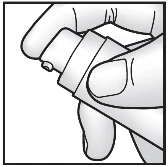
(see illustration) and press the pump several times downward until cream emerges from the opening.
- Press the pump slowly to the end another 10 times and dispense the cream onto the piece of paper. The paper with the dispensed cream should be discarded in the trash bin.
- The pump is now ready for use. It is not necessary to re-prime the pump before subsequent uses.
Applying the cream using the pump cap
- Remove the pump cap.
- Hold the pump in one hand so that the opening of the pump is directed toward the removed cap.
- Press the pump fully two times to dispense the recommended amount of cream
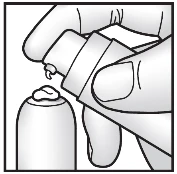
onto the top of the cap (see illustration).
- Using the cap, spread the cream evenly under one arm.
- Repeat this process for the other underarm.
- Then, for safety, immediately and thoroughly wash the cap and hands with soap and water. It is important to avoid contact of the cream with the nose, eyes, or mouth (see section 2, "Warnings and precautions").
- Mark the number of the next treatment dose in the table on the cardboard box (see section 6). One treatment dose corresponds to 4 actuations of the pump dispenser, i.e., 2 actuations per underarm.
Use in children and adolescents
Adolescents aged 12 years and older should receive the same dose and method of administration as adults.
Parents or caregivers should practice with adolescents the correct preparation of the pump and cream application.
Use of a higher than recommended dose of Axhidrox
Overdose is unlikely if Axhidrox is used only under the arms as described.
However, if Axhidrox is used too frequently or in excessive amounts, adverse effects may become more pronounced (see section 4).
Therefore, Axhidrox must not be applied to other body parts (hands, feet, face) or to large body surfaces with increased sweating. Excessive inhibition of sweating may lead to overheating of the body and potentially life-threatening heat stroke. The use of Axhidrox should be stopped immediately and medical advice sought if the patient experiences increasing sensation of heat or elevated body temperature.
Missed dose of Axhidrox
Do not use a double dose to make up for a missed dose.
Stopping treatment with Axhidrox
If the patient or physician decides to discontinue treatment with Axhidrox, excessive sweating will return.
If you have any further questions about the use of this medicine, consult your doctor or pharmacist.
4. Possible adverse effects
Like all medicines, this medicine can cause adverse effects, although not everyone will experience them.
You should stop using the medicine Axhidrox and contact your doctor or the emergency department of the nearest hospital if the patient experiences any of the following serious adverse effects:
- swelling, mainly of the face, lips or throat, causing difficulty in swallowing or breathing, itching and rash. This may be a sign of a severe allergic reaction or angioedema (frequency unknown, cannot be estimated from available data), in which case the patient may require urgent medical attention.
- blurred vision (common adverse effect) (see section 2, "Driving and use of machines").
The following other adverse effects have been observed:
Very common adverse effects (may affect more than 1 in 10 people)
- dry mouth.
Common adverse effects (may affect up to 1 in 10 people)
- in the treated area: irritation, pain, itching, rash, skin inflammation, eruption, redness of the skin, nodules
- dry nose
- dry eyes
- dry skin
- headache
- constipation.
Uncommon adverse effects (may affect up to 1 in 100 people)
- in the treated area: dryness, acne, swelling, skin hardening, scarring, small blisters, wound, pustules, folliculitis
- rash
- itching, generalized itching
- skin eruption
- redness of the skin
- prolonged skin rash (atopic dermatitis)
- skin irritation
- plaques (elevated, firm, superficial skin lesions larger than 1 cm)
- acne
- urticaria
- unusual body odor
- skin disorder resembling psoriasis (parapsoriasis)
- dry lips, hands, mucous membranes, throat
- lack of saliva
- sensation of nasal congestion
- itchy, red or irritated eyes
- unequal pupil size
- dilated pupils
- worsening of vision
- abdominal distension
- hard stools
- indigestion
- nausea
- pain in the mouth and throat
- sensation of tightness in the throat
- drowsiness
- fatigue
- attention disturbances
- anxiety
- psychomotor restlessness
- sleep disturbances, poor sleep quality
- dizziness
- feeling of discomfort in the head
- bladder voiding disorders
- excessive sweating
- decreased platelet count, observed in blood tests
- rapid heartbeat
- change in heart rhythm (so-called "QT interval prolongation" visible on ECG, i.e. electrical activity of the heart)
- increased liver enzyme activity, bilirubin concentration and red blood cell volume observed in blood tests
- decreased hemoglobin concentration in red blood cells observed in blood tests.
The frequency, type and severity of adverse effects in adolescents are expected to be similar to those in adults.
Reporting of adverse effects
If any adverse effects occur, including any adverse effects not listed in this leaflet, inform your doctor or pharmacist. Adverse effects can be reported directly to the Department of Monitoring Adverse Effects of Medicinal Products at the Office for Registration of Medicinal Products, Medical Devices and Biocidal Products:
Al. Jerozolimskie 181C
02-222 Warsaw
Phone: +48 22 49 21 301
Fax: +48 22 49 21 309
Website: https://smz.ezdrowie.gov.pl
Adverse effects can also be reported to the marketing authorization holder.
By reporting adverse effects, additional information on the safety of the medicine can be collected.
5. How to store Axhidrox
Keep this medicine out of sight and reach of children.
Do not use this medicine after the expiry date stated on the label and the outer carton
following: “Expiry date (EXP)”. The expiry date refers to the last day of the stated month.
No special storage precautions are required for this medicine.
Shelf life after first opening the container: 12 months.
Medicines must not be disposed of via wastewater or household waste. Ask your pharmacist how to dispose of medicines no longer required. These measures help protect the environment.
6. Contents of the package and other information
What Axhidrox contains
- The active substance is glycopyrronium (as glycopyrronium bromide). 1 g of cream contains glycopyrronium bromide equivalent to 8 mg of glycopyrronium. One dose (one pump actuation) delivers 270 mg of cream containing glycopyrronium bromide equivalent to 2.2 mg of glycopyrronium.
- Other ingredients are: benzyl alcohol (E 1519), propylene glycol (E 1520) and cetearyl alcohol (see section 2), citric acid (E 330), glycerol monostearate 40-55, polyglycerol-20 glyceryl monostearate, sodium citrate (E 331), octyldodecanol and purified water.
What Axhidrox looks like and contents of the pack
Axhidrox is a white, shiny cream, available in packaging containing one multi-dose container with a pump dispenser and a cap. The multi-dose container holds 50 g of cream. After priming, the pump can be pressed 124 times, providing 31 therapeutic doses for both underarms.
After each therapeutic dose is applied, the next number should be marked off in the table on the cardboard box. The pump must not be used after 31 therapeutic doses have been delivered, even if the multi-dose container is not completely empty.
Marketing Authorisation Holder and Manufacturer
Dr. August Wolff GmbH & Co. KG Arzneimittel
Sudbrackstrasse 56
33611 Bielefeld, GERMANY
Tel.: +49 521 8808-05;
Fax: +49 521 8808-334
E-mail: [email protected]
For further information about this medicinal product, please contact the local representative of the Marketing Authorisation Holder.
SOLPHARM Sp. z o.o.
ul. Zakątek 1
05-270 Marki, POLAND
Tel.: +48 /22/ 616 28 08
E-mail: [email protected]
This medicinal product is authorised in the European Economic Area countries under the following names:
Austria Axhidrox 2.2 mg/Pumpenhub Creme
Belgium Axhidroks 8 mg/g crème
Bulgaria АКСХИДРОКС 2.2 mg/изпомпване, крем
Croatia Axhidrox 2.2 mg po potisku krema
Czech Republic Axhidrox
Denmark Axhidrox
Estonia Axhidrox 8 mg/g kreem
Finland Axhidrox 2.2 mg/pumpun käyttökerta emulsiovoide
France GLYCOPYRRONIUM WOLFF 8 mg/g, crème
Greece AXHIDROX
Netherlands Axhidrox 8 mg/g, Crème
Ireland Axhidrox 2.2 mg/pump actuation cream
Latvia Axhidrox 2.2 mg/dozējumā krēms
Lithuania Akshidroz 8 mg/g kremas
Luxembourg Axhidroks 8 mg/g crème
Germany Axhidrox 2.2 mg/Hub Creme
Norway Axhidrox 2.2 mg/pumpetrykk krem
Poland Axhidrox
Romania Axhidrox 2.2 mg/doza, cremă
Slovakia Axhidrox
Slovenia Axhidrox 2.2 mg/potisk krema
Sweden Axhidrox
Hungary Axhidrox 8 mg/g krém