Autokila
Poland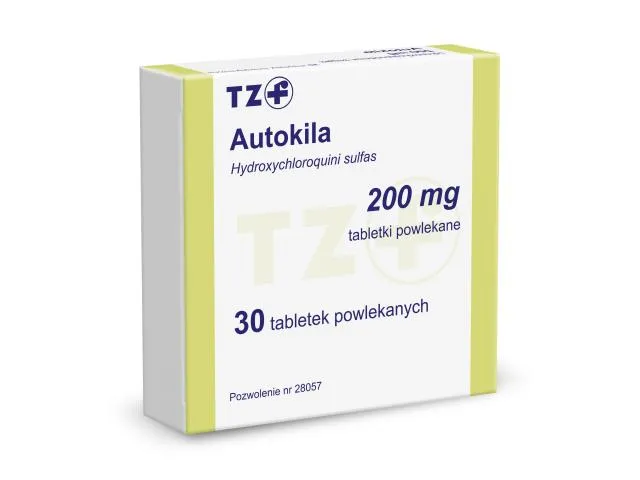
Table of Contents
Package leaflet: Information for the patient
Autokila, 200 mg, coated tablets
Hydroxychloroquini sulfas
Please read the entire leaflet carefully before using the medicine, as it contains
important information for the patient.
- Keep this leaflet, as you may need to read it again.
- If you have any questions, please consult your doctor or pharmacist.
- This medicine has been prescribed for a specific individual. Do not give it to others. The medicine may harm someone else, even if their symptoms are the same.
- If you experience any adverse reactions, including any adverse reactions not listed in this leaflet, inform your doctor or pharmacist. See section 4.
Table of contents
- What Autokila is and what it is used for
- Important information before taking Autokila
- How to take Autokila
- Possible side effects
- How to store Autokila
- Contents of the pack and other information
1. What Autokila is and what it is used for
Autokila contains hydroxychloroquine sulfate as the active substance. The action of Autokila is based on reducing inflammation in patients with autoimmune diseases, in which the immune system mistakenly attacks and ultimately destroys the body's own tissues.
The medicine may be used in the treatment of the following conditions:
- Rheumatoid arthritis
- Juvenile idiopathic arthritis
- Discoid and systemic lupus erythematosus
- Skin disorders associated with photosensitivity
2. Important information before using Autokila
When not to use Autokila
- If the patient is allergic to:
- hydroxychloroquine or any of the other ingredients of this medicine (listed in section 6)
- other similar medicines, such as quinolones and quinine. Symptoms of an allergic reaction include: rash, difficulty swallowing or breathing, swelling of the lips, face, throat or tongue.
- If the patient has certain eye disorders (maculopathy, change in eye colour or other eye problems).
- Autokila must not be used in children under 6 years of age or weighing less than 35 kg. Do not take this medicine if any of the above apply to you. If in doubt, consult your doctor or pharmacist before taking Autokila.
Warnings and precautions
Before starting treatment with Autokila, discuss this with your doctor or pharmacist if:
- the patient has liver or kidney disease,
- the patient has severe stomach or intestinal disorders,
- the patient has blood disorders. A blood test may be performed to check this condition,
- the patient has heart disease (symptoms include shortness of breath and chest pain), which may require monitoring,
- the patient has neurological or brain disorders,
- the patient has psoriasis (red, scaly patches on the skin, usually affecting knees, elbows and scalp),
- the patient previously experienced an adverse reaction to quinine,
- the patient has a genetic disorder known as glucose-6-phosphate dehydrogenase deficiency,
- the patient has a rare condition called porphyria, which affects metabolism,
- the patient has inactive chronic hepatitis B,
- hydroxychloroquine may reduce blood glucose levels. The patient should ask the doctor to explain the subjective and objective symptoms of low blood glucose. A blood glucose test may be necessary,
- hydroxychloroquine may cause heart rhythm disturbances in some patients. Exercise caution when using Autokila if the patient has congenital QT prolongation or if a family member has QT prolongation, if the patient has experienced QT prolongation (visible on electrocardiogram [ECG]), if the patient has heart function disorders or a previous heart attack (myocardial infarction), if the patient has electrolyte imbalances (especially low potassium or magnesium levels), or if the patient is taking medicines affecting heart rhythm (see section "Autokila with other medicines"). If palpitations or irregular heartbeat occur during treatment, stop taking the medicine and contact a doctor immediately. The risk of heart problems may increase with higher doses. Therefore, the recommended dose must be strictly followed.
- serious skin rashes have been reported with hydroxychloroquine use (see section 4 "Possible side effects"). Often, the rash may involve ulceration of the mouth, throat, nose, genital organs and conjunctivitis (redness and swelling of the eyes). Such serious skin rashes are often preceded by flu-like symptoms such as fever, headache and body aches. The rash may progress to extensive blistering and skin peeling. If such skin symptoms occur, stop taking hydroxychloroquine and contact a doctor immediately.
- some patients treated with Autokila may experience psychiatric symptoms such as irrational thoughts, anxiety, hallucinations, feelings of disorientation or depression, including self-harming or suicidal thoughts, even in individuals who have not previously had such disorders. If the patient or someone close to them notices such side effects (see section 4), seek medical help immediately.
- extrapyramidal disorders may occur during hydroxychloroquine treatment. If the patient experiences symptoms such as involuntary movements causing twisting and bending of various body parts, contact a doctor.
Before starting treatment:
- Before starting this medicine, an eye examination should be performed,
- This examination should be repeated at least every 12 months during treatment with Autokila,
- If the patient is over 65 years old, is taking a high dose (2 tablets daily), or has kidney problems, the examination should be performed more frequently,
- If in doubt whether any of the above situations apply, consult your doctor or pharmacist before using Autokila.
Children
Autokila must not be used in children under 6 years of age or weighing less than 35 kg.
Young children are particularly sensitive to the toxic effects of quinolones; therefore, this medicine must be stored out of reach of children.
Autokila with other medicines
Tell your doctor or pharmacist about all medicines the patient is currently taking, has recently taken, or plans to take, including those available without a prescription. Especially inform about the following medicines:
- The patient should inform the doctor if taking medicines known to affect heart rhythm. This includes medicines used to treat:
- heart rhythm disorders (antiarrhythmics),
- depression (tricyclic antidepressants),
- psychiatric disorders (antipsychotics),
- bacterial infections (e.g. moxifloxacin, azithromycin),
- HIV virus (e.g. saquinavir),
- fungal infections (e.g. fluconazole),
- parasitic infections (e.g. pentamidine),
- antimalarials (e.g. halofantrine).
- Insulin or other antidiabetic medicines
- Medicines for malaria, such as mefloquine (as it may increase the risk of seizures)
- Antiepileptic medicines, especially phenobarbital, phenytoin, carbamazepine
- Medicines affecting the skin, blood or eyes
- Tamoxifen, used in the treatment of breast cancer
- Agalsidase, used in a rare condition called Fabry disease
- Medicines used for bacterial infections (such as rifampicin, clarithromycin and aminoglycosides, e.g. gentamicin, neomycin or tobramycin)
- Neostigmine and pyridostigmine, used in the treatment of myasthenia gravis (muscle weakness)
- Rabies vaccine
- Medicines that may affect the kidneys or liver
- Medicines that neutralize gastric acid (for heartburn) and kaolin: Autokila should be taken at least 2 hours apart from these medicines
- Cimetidine, used in peptic ulcer disease
- Medicines used for fungal infections (such as itraconazole)
- Medicines used for lipid disorders (such as gemfibrozil, statins)
- Medicines used in HIV treatment (such as ritonavir)
- Medicines used in organ transplantation and immune system disorders (such as cyclosporine)
- Anticoagulants (such as dabigatran, clopidogrel)
- Medicines used for heart conditions (such as digoxin, flecainide, propafenone, quinidine and metoprolol)
- Praziquantel (an antiparasitic medicine)
- Medicines for depression (fluoxetine, paroxetine)
- St. John's wort (a herbal remedy for depression symptoms).
Autokila with food and drink
Avoid drinking grapefruit juice, as it may increase the risk of side effects.
Pregnancy and breastfeeding
If the patient is pregnant or breastfeeding, suspects she may be pregnant, or is planning to have a child, she should consult her doctor or pharmacist before using this medicine. The doctor will discuss whether Autokila is suitable for her.
Using Autokila during pregnancy may be associated with a small increased risk of serious developmental defects. This medicine should not be used during pregnancy unless the doctor considers that the benefits to the mother outweigh the risks to the child.
Autokila should not be used during breastfeeding unless the doctor considers that the benefits outweigh the risks.
Driving and operating machinery
This medicine may cause visual disturbances. If this occurs, do not drive or operate any machinery or equipment, and inform your doctor immediately.
Autokila contains lactose
If the patient has previously been diagnosed with intolerance to certain sugars, the patient should consult a doctor before taking this medicine.
3. How to use Autokila
This medicine should always be taken exactly as directed by a doctor or pharmacist. The doctor will determine the daily dose of the medicine. If in doubt, consult a doctor or pharmacist.
Dosage
Adults (including elderly patients)
- one or two tablets per day.
Children
- one tablet per day
- this medicine is suitable only for children weighing more than 35 kg.
It may take several weeks before the patient notices any benefit from taking Autokila.
How to take Autokila
- Take the medicine orally.
- Swallow the tablets whole with food or a glass of milk. Do not crush or chew the tablets.
- If this medicine is being taken for skin problems related to photosensitivity, Autokila should only be used during periods of high exposure to sunlight.
- The recommended dose is determined by the patient's body weight. If the effect of the medicine seems too strong or too weak, do not adjust the dose independently; consult a doctor.
- If the patient is taking this medicine for rheumatoid arthritis over a long period (more than 6 months) and does not notice improvement, they should consult a doctor. It may be necessary to discontinue treatment.
Taking more Autokila than recommended
- If a patient has taken more than the recommended dose of Autokila, contact a doctor immediately or go to the nearest hospital emergency department. Take the medicine along to allow the doctor to identify what has been taken.
- The following symptoms may occur: headache, vision problems, decreased blood pressure, seizures, heart rhythm disturbances, followed by sudden severe breathing difficulties and possibly myocardial infarction. Overdose with Autokila may result in death.
- Particular risk applies to small children and infants who accidentally ingest Autokila. The child must be taken to hospital immediately.
Missed dose of Autokila
If a dose is missed, take it as soon as possible. However, if it is almost time for the next dose, skip the missed dose. Do not take a double dose to make up for a missed one.
Stopping Autokila
Continue taking the medicine until the doctor advises stopping treatment. Do not stop taking Autokila because of feeling better. Stopping treatment may lead to a recurrence or worsening of symptoms.
If you have any further questions about the use of this medicine, consult your doctor or pharmacist.
4. Possible adverse effects
Like all medicines, this medicine can cause adverse effects, although not everyone will experience them.
You must stop taking Autokila and go immediately to a doctor or hospital if:
- The patient has an allergic reaction. Symptoms may include: red rash or raised rash, difficulty swallowing or breathing, swelling of the eyelids, lips, face, throat or tongue (frequency unknown: frequency cannot be determined from available data).
Stop taking Autokila and seek immediate medical help if the patient experiences any of the following serious adverse effects – urgent medical attention may be required:
Not common (occurring in no more than 1 in 100 patients)
- Eye disorders such as change in eye colour and vision disturbances, including blurred vision, light sensitivity, or changes in how colours are perceived.
- Any muscle weakness, pain, stiffness or cramps, or changes in sensation such as tingling. If the patient takes this medicine for a prolonged period, the doctor will monitor muscles and tendons to ensure they are functioning properly.
Frequency unknown (frequency cannot be determined from available data)
- Thoughts of self-harm or suicide (see section 2 "Warnings and precautions").
- Severe skin reactions (see section 2 "Warnings and precautions"), such as:
- rash with flu-like symptoms and fever, and swollen lymph nodes. This may be a condition called drug reaction with eosinophilia and systemic symptoms (DRESS).
- blisters, widespread peeling of the skin, pus-filled spots, occurring with fever. This may be a condition called acute generalised exanthematous pustulosis (AGEP).
- blisters or peeling of the skin around the lips, eyes, mouth, nose and genital organs, flu-like symptoms and fever. This may be a condition called Stevens-Johnson syndrome (SJS).
- numerous skin lesions, itchy skin, joint pain, fever and general malaise. This may be a disease called toxic epidermal necrolysis (TEN).
- skin reactions, including (plum-coloured, raised, painful lesions, particularly on arms, hands, fingers, face and neck), possibly accompanied by fever. This may be a condition called Sweet's syndrome.
- Increased susceptibility to infections. This may be due to bone marrow suppression or a blood disorder called agranulocytosis.
- Increased tendency to bruise. This may be due to a blood disorder called thrombocytopenia.
- Feeling of fatigue, fainting or dizziness, pale skin. These may be symptoms of anaemia.
- Feeling of weakness, shortness of breath, increased tendency to bruising and infections. These may be symptoms of aplastic anaemia.
- Liver problems, which may present as general malaise, with or without jaundice (yellowing of the skin and eyes), dark urine, nausea, vomiting and/or abdominal pain. Rare cases of liver failure (including fatal cases) have been observed.
- Irregular heart rhythm, life-threatening abnormal heart rhythm (observed on ECG; see section 2 "Warnings and precautions").
Tell your doctor or pharmacist if any of the following adverse effects worsen or persist for more than a few days:
Very common adverse effects (occurring in more than 1 in 10 patients)
- Abdominal pain, nausea.
Common adverse effects (occurring in no more than 1 in 10 patients)
- Skin rashes, itching of the skin.
- Diarrhoea, vomiting, loss of appetite (anorexia).
- Mood changes.
- Headache.
Not common (occurring in no more than 1 in 100 patients)
- Changes in skin colour or inside the nose or mouth.
- Excessive hair loss or loss of hair colour.
- Nervousness or anxiety.
- Ringing in the ears (tinnitus), dizziness, balance disturbances.
Frequency unknown (frequency cannot be determined from available data)
- Psoriasis (red, scaly patches on the skin, typically affecting knees, elbows and scalp).
- Feeling depressed, disorientation, agitation, difficulty sleeping, hallucinations, delusions, feeling of euphoria or excessive excitement (see section 2 "Warnings and precautions") (frequency unknown: frequency cannot be determined from available data).
- Hearing loss.
- Seizures.
- Breathing difficulties, cough, high blood pressure, swelling, rapid heartbeat, passing small amounts of urine – these may be symptoms of heart muscle weakness (cardiomyopathy).
- Increased susceptibility to infections (may be due to bone marrow suppression).
- Symptoms of a disease called "porphyria", which may include abdominal pain, vomiting, seizures, blisters, itching.
- Low blood sugar (hypoglycaemia), which may present as nervousness, trembling or sweating.
- Tremor, muscle cramps or irregular, sudden movements.
Blood tests
Periodic blood counts are recommended in patients receiving long-term treatment with Autokila. If abnormalities occur, treatment with Autokila should be discontinued. Blood tests may reveal liver function abnormalities (not common: no more than 1 in 100 patients).
Reporting of adverse effects
If any adverse effects occur, including any not listed in this leaflet, inform your doctor, pharmacist or nurse. Adverse effects can be reported directly to the Department of Monitoring Adverse Drug Reactions, Office for Registration of Medicinal Products, Medical Devices and Biocidal Products
Al. Jerozolimskie 181C, 02-222 Warsaw
Tel.: +48 22 49 21 301
Fax: +48 22 49 21 309
Website: https://smz.ezdrowie.gov.pl
Adverse effects can also be reported to the marketing authorisation holder.
Reporting adverse effects helps provide more information on the safety of the medicine.
5. How to store Autokila
Keep this medicine out of sight and reach of children.
No special storage instructions are required for this medicine.
Do not use this medicine after the expiry date (EXP) stated on the packaging. The expiry date refers to the last day of the stated month.
Medicines must not be disposed of via wastewater or household waste. Ask your pharmacist how to dispose of medicines no longer required. These measures help protect the environment.
6. Contents of the pack and other information
What Autokila contains
- The active substance is 200 mg of hydroxychloroquine sulfate, equivalent to 154.80 mg of hydroxychloroine.
- The other ingredients are: maize starch, monohydrate lactose, magnesium stearate, Povidone K29-32, and Aqua Polish P Yellow 020.202 coating containing: hypromellose, 6 mPa; titanium dioxide (E171); talc; macrogol 6000; iron oxide, yellow (E172).
What Autokila looks like and contents of the pack
Film-coated tablets are convex, round, light yellow in colour, 9 mm in diameter.
The tablets are packed in blisters. Packs contain 28, 30, 56 or 60 tablets.
Not all pack sizes may be marketed.
Marketing Authorisation Holder and Manufacturer
Tarchomin Pharmaceutical Works "Polfa" Joint Stock Company
A. Fleminga 2 Street
03-176 Warsaw
Phone number: 22 811-18-14
To obtain further information about this medicinal product, please contact the representative of the Marketing Authorisation Holder.