Auroxetyn
Poland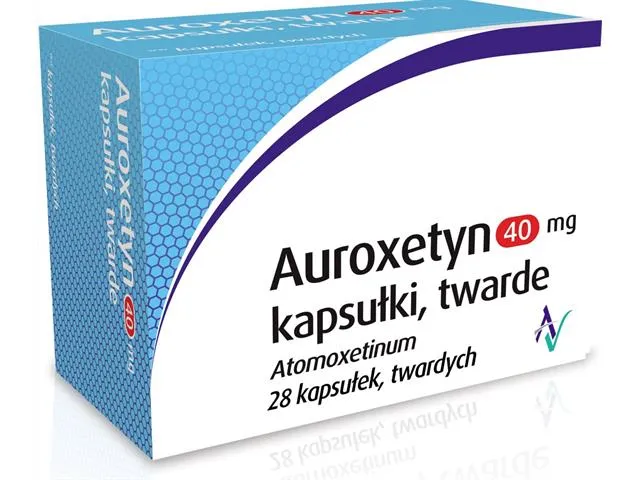
Table of Contents
Patient Information Leaflet
Warning! Keep this leaflet! Information on the immediate packaging is in a foreign language.
Auroxetyn (Atomoxetine HCl Aurobindo 40 mg)
40 mg, hard capsules
Atomoxetinum
Auroxetyn and Atomoxetine HCl Aurobindo 40 mg are different brand names for the same
medicinal product.
Please read this leaflet carefully before taking this medicine, as it contains
important information for you.
- Keep this leaflet so that you can read it again if necessary.
- If you have any further questions, please consult your doctor or pharmacist.
- This medicine has been prescribed for a specific individual. Do not pass it on to others. It may harm someone else, even if their symptoms are similar.
- If you experience any adverse reactions, including any not listed in this leaflet, inform your doctor or pharmacist. See section 4.
Table of contents
- What Auroxetyn is and what it is used for
- Important information before taking Auroxetyn
- How to take Auroxetyn
- Possible side effects
- How to store Auroxetyn
- Contents of the pack and other information
1. What Auroxetyn is and what it is used for
What this medicine is used for
Auroxetyn contains atomoxetine and is used in the treatment of attention deficit hyperactivity disorder (ADHD). Auroxetyn is used:
- in children over 6 years of age;
- in adolescents;
- in adults.
Auroxetyn should only be used as part of a comprehensive treatment programme, which may also include non-pharmacological interventions such as counselling and behavioural therapy.
Auroxetyn should not be used in the treatment of ADHD in children under 6 years of age, as its efficacy and safety have not been established in this age group.
In adults, Auroxetyn is used to treat ADHD when symptoms are particularly severe and interfere with work or social functioning, and when symptoms of the disorder were already present during childhood.
How this medicine works
Auroxetyn increases the concentration of noradrenaline in the brain. Noradrenaline is a chemical naturally produced by the body. It enhances concentration and reduces impulsivity and excessive motor activity in patients with ADHD. This medicine is prescribed to help control the symptoms of ADHD. This medicine is not a stimulant and therefore does not cause dependence.
It may take several weeks after starting treatment before symptoms fully improve.
About ADHD
Children and adolescents with ADHD have:
- difficulty staying still in one place and
- difficulty concentrating. It is not their fault that they struggle with these issues. Many children and young people have such problems. However, in individuals with ADHD, these difficulties may interfere with daily life. Children and adolescents with ADHD may have difficulties with learning and completing homework. They may find it hard to behave appropriately at home, at school, and in other settings. ADHD does not affect a child's or young person's intelligence.
Adults with ADHD have difficulties similar to those experienced by children with ADHD, and for adults this may lead to problems:
- at work;
- in interpersonal relationships;
- related to low self-esteem;
- in learning.
2. Important information before taking Auroxetyn
When not to take Auroxetyn:
- if the patient is allergic to atomoxetine or any of the other ingredients of this medicine (listed in section 6);
- if the patient has taken a monoamine oxidase inhibitor (MAOI) medicine within the last 2 weeks, e.g. phenelzine. MAOIs are sometimes used in the treatment of depression and other psychiatric disorders. Taking Auroxetyn together with an MAOI may cause severe adverse reactions or may be life-threatening. Also, at least 14 days should be waited after stopping Auroxetyn before starting an MAOI;
- if the patient has a condition of the eye called narrow-angle glaucoma (increased pressure in the eye);
- if the patient has severe heart problems that could worsen due to an increased heart rate and/or increased blood pressure (which may be caused by taking Auroxetyn);
- if the patient has severe cerebrovascular diseases such as stroke, cerebral edema, aneurysm (weakening of a blood vessel), stenosis or occlusion of a blood vessel;
- if the patient has a tumour of the adrenal gland (pheochromocytoma).
Auroxetyn must not be taken if any of the above conditions apply.
If the patient is unsure, they should consult their doctor or pharmacist before starting
treatment with Auroxetyn, as the medicine may worsen these conditions.
Warnings and precautions
Both adults and children should be aware of the following warnings and precautions.
Before starting treatment with Auroxetyn, discuss with the doctor or pharmacist if the
patient has:
- suicidal thoughts or behaviours;
- heart disease (including congenital heart defects) or a rapid heart rate. Auroxetyn may increase heart rate (pulse). Cases of sudden death have been reported in patients with heart defects;
- high blood pressure. Auroxetyn may increase blood pressure;
- low blood pressure. Auroxetyn may cause dizziness or fainting in patients with low blood pressure;
- sudden changes in blood pressure or heart rhythm;
- cardiovascular disorders or a history of stroke;
- liver disease. A dose reduction of the medicine may be necessary;
- psychotic reactions, including hallucinations (hearing voices or seeing things that are not real), believing in false ideas, or suspicion;
- manic state (excitement or excessive activation leading to unusual behaviour) and agitation;
- feelings of aggression;
- unfriendly and negative (hostile) attitude;
- a history of epilepsy or seizures for any reason. Auroxetyn may increase the frequency of seizures;
- unusual mood changes (mood swings) or feelings of deep sadness;
- uncontrollable, repetitive movements of any part of the body or repetition of sounds or words.
If any of the above conditions apply, the patient should discuss them with their
doctor or pharmacist before starting treatment with Auroxetyn. Auroxetyn may
worsen these conditions. The doctor will monitor how the medicine affects the patient.
Examinations required before starting treatment with Auroxetyn
These examinations are necessary to determine whether Auroxetyn is suitable for the patient.
The treating doctor will measure:
- the patient's blood pressure and heart rate (pulse) before starting Auroxetyn and during treatment;
- the patient's height and body weight during treatment with Auroxetyn, if the patient is a child or adolescent.
The patient should consult their doctor if:
- they are taking any other medicines;
- there has been a case of sudden unexplained death in a family member;
- the patient or any family members have other medical conditions (such as heart disease).
It is important to provide the doctor with as much information as possible. This will help the doctor decide whether Auroxetyn is appropriate for the patient. The doctor may also order additional medical tests before starting treatment with this medicine.
Auroxetyn and other medicines
Inform the doctor or pharmacist about all medicines currently taken, recently taken, or planned to be taken. This includes medicines available without a prescription. The doctor will decide whether Auroxetyn can be taken together with other medicines. In some cases, the doctor may decide to modify the dose or increase it more slowly.
Auroxetyn must not be used together with monoamine oxidase inhibitor (MAOI) medicines used for depression. See section 2 "When not to take Auroxetyn".
If the patient is taking other medicines, Auroxetyn may affect their action or may cause adverse effects. If taking any of the following medicines, consult the doctor or pharmacist before starting Auroxetyn:
- medicines that increase blood pressure or are used to control blood pressure;
- antidepressants, e.g. imipramine, venlafaxine, mirtazapine, fluoxetine or paroxetine;
- certain cough or cold medicines containing substances affecting blood pressure. It is important to check this with the pharmacist when purchasing any of these medicines;
- certain medicines used in the treatment of psychiatric disorders;
- medicines that increase the risk of seizures;
- certain medicines that may prolong the presence of Auroxetyn in the body (such as quinidine or terbinafine);
- oral or injectable salbutamol (a medicine used to treat asthma) may cause a sensation of rapid heartbeat, but will not worsen asthma symptoms.
The following medicines may increase the risk of abnormal heart rhythm when taken
together with Auroxetyn:
- medicines used to control heart function;
- medicines that alter blood electrolyte levels;
- medicines used to prevent and treat malaria;
- certain antibiotics (such as erythromycin and moxifloxacin).
If in doubt whether any of the medicines being taken are listed above, ask the
doctor or pharmacist before starting treatment with Auroxetyn.
Pregnancy and breastfeeding
It is unknown whether this medicine may affect the unborn child or pass into breast milk.
- This medicine should not be used during pregnancy unless advised by a doctor.
- Avoid using this medicine during breastfeeding or discontinue breastfeeding.
If the patient:
- is pregnant or breastfeeding;
- suspects she may be pregnant or is planning to become pregnant;
- plans to start breastfeeding; she should consult her doctor or pharmacist before using this medicine.
Driving and operating machinery
After taking Auroxetyn, fatigue, drowsiness or dizziness may occur.
The patient should exercise caution when driving or operating machinery until
they know how they react to Auroxetyn. If fatigue, drowsiness or dizziness occur, the patient should not drive or operate machinery.
Important information about capsule contents
Do not open Auroxetyn capsules, as the capsule contents may irritate the eyes.
If the capsule contents come into contact with the eye, immediately rinse the eye with water and seek medical advice. Hands and any other body parts that have come into contact with the capsule contents should also be washed immediately.
3. How to take Auroxetyn
Auroxetyn is available in the following strengths: 10 mg, 18 mg, 25 mg, 40 mg.
- This medicine should always be taken as prescribed by your doctor. Usually, the medicine is taken once or twice daily (in the morning and late afternoon, or early evening).
- Children should not take this medicine without adult supervision.
- If drowsiness or feeling unwell occurs while taking Auroxetyn once daily, your doctor may recommend switching to twice-daily dosing.
- Capsules should be swallowed whole, with or between meals.
- Do not open the capsules, sprinkle out the contents, or take them in any other way.
- Taking the medicine every day at the same time will help you remember to take it.
What dose to take
Children and adolescents (aged 6 years and older)
Your doctor will determine the appropriate dose of Auroxetyn based on the patient's body weight.
Treatment will start with a lower dose before increasing it to the dose appropriate for the patient's body weight.
- Body weight up to 70 kg: the total initial daily dose is approximately 0.5 mg per kg of body weight for at least 7 days. Then, your doctor may increase the dose to the usual maintenance dose of approximately 1.2 mg per kg of body weight per day.
- Body weight greater than 70 kg: the total initial daily dose is 40 mg for at least 7 days. Then, your doctor may increase the dose to the usual maintenance dose of approximately 80 mg per day. The maximum daily dose that a doctor may prescribe is 100 mg.
Adults
- Treatment with Auroxetyn should begin with a total daily dose of 40 mg for at least 7 days. Then, your doctor may increase the dose to the usual maintenance dose of 80 mg to 100 mg per day. The maximum daily dose that a doctor may prescribe is 100 mg.
If you have liver disease, your doctor may prescribe a lower dose.
Taking more Auroxetyn than prescribed
Contact your doctor or nearest hospital immediately and inform them of the number of capsules taken. The most commonly reported symptoms following overdose include gastrointestinal symptoms, drowsiness, dizziness, tremor, and unusual behavior.
Missing a dose of Auroxetyn
If you miss a dose, take it as soon as possible. However, do not take more than the total recommended daily dose within 24 hours. Do not take a double dose to make up for a missed dose.
Stopping Auroxetyn
Usually, no adverse effects occur after stopping Auroxetyn, but ADHD symptoms may return. Talk to your doctor before stopping the medicine.
While taking this medicine, your doctor will carry out the following procedures:
Your doctor will conduct examinations
- before starting treatment – to ensure that taking Auroxetyn will be safe and beneficial for the patient;
- during treatment – examinations will be performed at least every 6 months, although likely more frequently.
Examinations will also be carried out if the dose is changed. These will include:
- measuring height and body weight in children and young people;
- measuring blood pressure and pulse;
- checking whether any problems have occurred or whether any adverse effects have worsened during treatment with Auroxetyn.
Long-term treatment
Auroxetyn does not need to be taken for life. After one year of treatment with Auroxetyn, your doctor will evaluate the treatment results to determine whether continued use of the medicine is necessary.
If you have any further questions about the use of this medicine, please consult your doctor or pharmacist.
4. Possible adverse reactions
Like all medicines, this medicine can cause adverse reactions, although not everyone will get them.
Although some people may experience adverse reactions, Auroxetyn helps most people.
Your doctor will inform you about possible adverse reactions.
Some adverse reactions can be serious. If any of the following adverse reactions occur, contact your doctor immediately:
Uncommon (may occur in no more than 1 in 100 people)
- perceived or actual rapid heartbeat, heart rhythm disorders;
- suicidal thoughts or behaviour;
- feelings of aggression;
- hostility or anger (hostility);
- mood swings or changes in mood;
- severe allergic reactions, which may include:
- swelling of the face and throat;
- difficulty breathing;
- hives (small itchy skin rash).
- seizures;
- psychotic symptoms, including hallucinations (hearing voices or seeing things that are not there), believing in false ideas, or suspiciousness.
In children and young adults under 18 years of age, there is an increased risk of adverse reactions compared to adults, such as:
- suicidal thoughts or behaviour (may occur in no more than 1 in 100 people);
- mood swings or changes in mood (may occur in no more than 1 in 10 people).
In adult patients, the risk of adverse reactions is lower than in younger patients (may occur in no more than 1 in 1,000 people), such as:
- seizures;
- psychotic symptoms, including hallucinations (hearing voices or seeing things that are not there), believing in false ideas, or suspiciousness.
Rare (may occur in no more than 1 in 1,000 people)
- liver damage.
Stop taking Auroxetyn and contact your doctor immediately if any of the following symptoms occur:
- dark-coloured urine;
- yellowing of the skin or eyes;
- pain in the upper right part of the abdomen under the ribs, tender to pressure (tenderness);
- unexplained nausea;
- fatigue;
- itching;
- flu-like symptoms.
Other reported adverse reactions are listed below. If symptoms worsen, contact your doctor or pharmacist.
| Very common adverse reactions (may occur in more than 1 in 10 people) | |
| CHILDREN and ADOLESCENTS aged above 6 years | ADULTS |
|
|
| Common adverse reactions (may occur in no more than 1 in 10 people) | |
| CHILDREN and ADOLESCENTS aged above 6 years | ADULTS |
|
|
| |
| Uncommon adverse reactions (may occur in no more than 1 in 100 people) | |
| CHILDREN and ADOLESCENTS aged above 6 years | ADULTS |
|
|
| Rare adverse reactions (may occur in no more than 1 in 1,000 people) | |
| CHILDREN and ADOLESCENTS aged above 6 years | ADULTS |
|
|
Effect on growth
In some children, growth (body weight and height) may slow down after starting treatment with Auroxetyn.
However, during long-term treatment, children usually achieve body weight and height appropriate for their
age group.
The doctor will monitor the child's growth and body weight. If the child does not grow or gain weight as expected,
the doctor may decide to adjust the dose or temporarily discontinue treatment with Auroxetyn.
Reporting of adverse reactions
If any adverse reactions occur, including those not listed in this leaflet, inform your doctor or pharmacist.
Adverse reactions can be reported directly to the Department of Monitoring of Adverse Drug Reactions of the
Office for Registration of Medicinal Products, Medical Devices and Biocidal Products,
Al. Jerozolimskie 181C, 02-222 Warsaw, phone: +48 22 49 21 301, fax: +48 22 49 21 309,
website: https://smz.ezdrowie.gov.pl.
Reporting adverse reactions helps to provide more information on the safety of the medicine.
5. How to store the medicine Auroxetyn
Keep this medicine out of sight and reach of children.
Do not use this medicine after the expiry date stated on the packaging.
The expiry date refers to the last day of the stated month.
No special storage instructions apply for this medicine.
Medicines must not be disposed of via wastewater or household waste. Ask your pharmacist how to dispose of medicines no longer required. This will help protect the environment.
6. Contents of the packaging and other information
What Auroxetyn contains
- The active substance is atomoxetine hydrochloride. One hard capsule contains 40 mg of atomoxetine in the form of atomoxetine hydrochloride.
- Other ingredients are: pregelatinized starch, maize starch, simethicone emulsion (30%).
Cap: titanium dioxide (E 171), sodium lauryl sulfate, indigo carmine (E 132), gelatin, purified water.
Body: titanium dioxide (E 171), sodium lauryl sulfate, indigo carmine (E 132), gelatin, purified water.
Printing ink: shellac (E 904), iron oxide black (E 172).
What Auroxetyn looks like and contents of the pack
Hard capsule.
Blue, opaque gelatin hard capsules, size "2", filled with white or almost white powder, printed with "AT" on the cap and "40" on the body in black ink.
Auroxetyn is available in blisters made of PVC/PE/PVdC-Aluminium, packed in cardboard boxes.
Pack sizes: 30, 50, 60, 90 or 100 hard capsules.
For more detailed information about the medicine, please contact the marketing authorisation holder or the parallel importer.
Marketing Authorisation Holder in the Netherlands, country of export:
Aurobindo Pharma B.V.
Baarnsche Dijk 1
3741 LN Baarn, The Netherlands
Manufacturer:
APL Swift Services (Malta) Limited
HF26, Hal Far Industrial Estate
BBG 3000, Birzebbugia, Malta
Generis-Farmaceutica, S.A.
Rua Joao de Deus, n° 19
2700-487, Venda Nova, Amadora, Portugal
Parallel Importer:
InPharm Sp. z o.o.
ul. Strumykowa 28/11, 03-138 Warsaw, Poland
Repackaged in:
InPharm Sp. z o.o. Services sp. k.
ul. Chełmżyńska 249, 04-458 Warsaw, Poland
Marketing Authorisation Number in the Netherlands, country of export: RVG 121293
Parallel Import Authorisation Number: 19/23
This medicinal product is authorised in the Member States of the European Economic Area under the following names:
Czech Republic: AURODEHADE
Germany: Atomoxetin PUREN 40 mg, Hartkapseln
Poland: Auroxetyn
Portugal: Atomoxetina Aurovitas
Netherlands: Atomoxetine HCl Aurobindo 40 mg, harde capsules
Romania: Atomoxetina Aurobindo 40 mg, capsule
Spain: Atomoxetina Aurovitas 40 mg, capsulas duras EFG