Aulin
Poland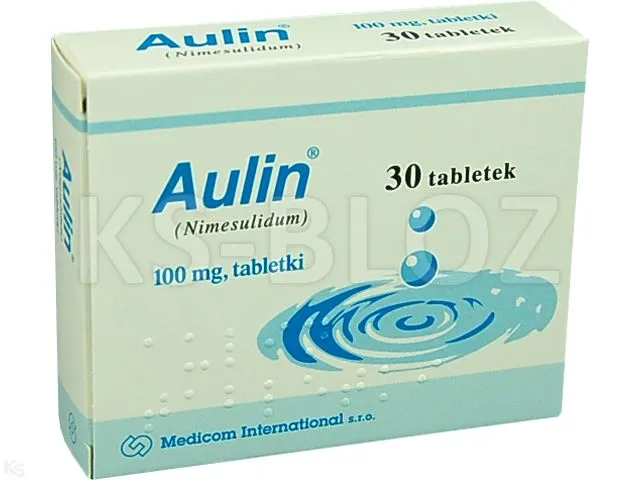
Table of Contents
Package leaflet: Information for the patient
Aulin 100 mg, tablets
Nimesulidum
Please read the following information carefully before taking the medicine, as it contains
important information for the patient.
- Keep the leaflet, as you may need to read it again.
- Consult your doctor or pharmacist if you have any doubts.
- This medicine has been prescribed for a specific individual. Do not give it to others. The medicine may harm another person, even if their symptoms are the same.
- If any adverse effects occur, including any possible adverse effects not listed in this leaflet, inform your doctor or pharmacist. See section 4.
Table of contents:
- What Aulin is and what it is used for
- Important information before taking Aulin
- How to take Aulin
- Possible side effects
- How to store Aulin
- Contents of the pack and other information
1. What Aulin is and what it is used for
Aulin is a non-steroidal anti-inflammatory drug (NSAID) with analgesic properties, used in the treatment of acute pain and painful menstruation.
Before prescribing Aulin, the doctor will assess whether the benefits of treatment outweigh the risk of adverse effects.
2. Important information before taking Aulin
Do not take Aulin if:
- you are allergic (hypersensitive) to nimesulide or any of the other ingredients of this medicine (listed in section 6 at the end of this leaflet);
- you have previously experienced any of the following after taking acetylsalicylic acid or other NSAIDs:
- wheezing, tightness in the chest, shortness of breath (asthma);
- nasal congestion due to swelling (nasal polyps);
- skin rash or hives;
- sudden swelling of the skin or mucous membranes, e.g. around the eyes, face, lips, mouth or throat, and difficulty breathing (angioedema);
- you have been treated with NSAIDs and experienced:
- bleeding from the stomach or intestines;
- perforation of the stomach or intestines;
- you currently have or have had stomach or intestinal ulcers or bleeding (ulcers or bleeding occurring at least twice);
- you have experienced bleeding into the brain (stroke);
- you have bleeding disorders or any problems related to impaired blood coagulation;
- you have liver function impairment;
- you are taking other medicines with proven hepatotoxic effects, e.g.: paracetamol, other painkillers or other NSAIDs;
- you are taking drugs causing dependence or are addicted to drugs or other substances;
- you regularly abuse alcohol;
- you previously experienced liver disorders after taking nimesulide;
- you have severe renal insufficiency and are not undergoing dialysis;
- you have severe heart failure;
- you have fever or flu-like symptoms (generalized muscle pain, malaise, chills, elevated body temperature);
- you are a woman in the last 3 months of pregnancy;
- you are breastfeeding.
Do not give Aulin to children under 12 years of age.
Warnings
Taking medicines such as Aulin may be associated with a small increased risk of heart attack (myocardial infarction) or stroke. This risk increases with long-term use of high doses.
Do not exceed the recommended dose or duration of treatment.
If you have heart problems, a history of stroke, or suspect you are at risk of these conditions (e.g. high blood pressure, diabetes, high cholesterol levels or smoking), discuss your treatment with your doctor or pharmacist.
In case of serious allergic reactions, immediately stop taking Aulin and contact your doctor at the first sign of skin rash, soft tissue damage (mucosal damage), or any other allergic symptoms.
Do not use this medicine or inform your doctor before taking Aulin if you have ever experienced a persistent rash (circular or oval red patches and swelling of the skin, blisters, hives and itching) after taking nimesulide.
Immediately discontinue treatment with Aulin if gastrointestinal bleeding (causing tarry stools) or gastrointestinal ulceration (causing abdominal pain) occurs.
Precautions
If symptoms indicating liver disorders occur during treatment with nimesulide, stop taking the medicine and contact your doctor immediately. Symptoms indicating liver disorders include loss of appetite, nausea, vomiting, abdominal pain, persistent fatigue or darkening of urine.
If you have previously experienced gastrointestinal ulcers, gastrointestinal bleeding, or inflammatory bowel diseases such as ulcerative colitis or Crohn's disease, inform your doctor before taking Aulin.
If fever and/or flu-like symptoms (generalized muscle pain, malaise, chills) occur during treatment with Aulin, stop taking the medicine and inform your doctor.
If you have mild heart disease, high blood pressure, circulatory or kidney problems, inform your doctor before taking Aulin.
During treatment of elderly patients, periodic check-ups may be necessary to ensure that Aulin does not worsen the condition of the stomach, kidneys, heart or liver.
If a woman plans to become pregnant, she should inform her doctor, as Aulin may adversely affect fertility.
If a sugar intolerance has previously been diagnosed in the patient, the patient should consult a doctor before taking the medicine.
Aulin and other medicines
If you are taking any of the following medicines:
- Corticosteroids (medicines used to treat inflammatory conditions),
- Anticoagulants (blood-thinning medicines, e.g. warfarin, antiplatelet agents, acetylsalicylic acid or other salicylates),
- Antihypertensive medicines or diuretics (medicines used to regulate blood pressure or heart function),
- Lithium, used in the treatment of depression and similar disorders,
- Selective serotonin reuptake inhibitors (medicines used to treat depression),
- Methotrexate (used in the treatment of rheumatoid arthritis and cancer),
- Cyclosporine (a medicine used after organ transplantation or in treating immune system disorders), inform your doctor or pharmacist before taking Aulin.
Pregnancy, breastfeeding and fertility
Before taking Aulin or any other medicine, consult your doctor or pharmacist.
- Inform your doctor if you are planning pregnancy, as Aulin may adversely affect fertility.
- Aulin must not be used during the last 3 months of pregnancy, as it may harm the unborn child and cause problems during delivery. It may cause kidney and heart problems in the unborn child. It may affect the tendency to bleed in both the mother and the child and may result in delayed or prolonged labour.
- Do not take Aulin during the first 6 months of pregnancy unless absolutely necessary and prescribed by a doctor. If treatment is required during this period or when trying to conceive, use the lowest possible dose for the shortest possible time. Taking Aulin for longer than a few days from week 20 of pregnancy may cause kidney problems in the unborn child, which may lead to low levels of amniotic fluid surrounding the baby (oligohydramnios) or narrowing of a blood vessel (ductus arteriosus) in the baby's heart. If longer-term treatment is needed, your doctor may recommend additional monitoring.
Do not take Aulin while breastfeeding.
Driving and using machines
Do not drive or operate machinery if Aulin causes dizziness or drowsiness in you.
Aulin contains lactose
Aulin contains sugars. If you have been diagnosed with an intolerance to certain sugars, consult your doctor before taking this medicine.
3. How to use Aulin
Aulin should always be used as directed by the physician. If in doubt, consult a doctor or pharmacist.
Adverse effects may be minimized by using the lowest effective dose for the shortest duration necessary to relieve symptoms.
The usual dose is one 100 mg tablet twice daily. Aulin should be used for as short a time as possible and not for longer than 15 days in a single, uninterrupted treatment cycle.
For oral use.
It is recommended to take Aulin after meals.
Taking more Aulin than recommended
In case of overdose or suspected overdose, seek immediate medical advice from a doctor or go to hospital. Bring all remaining medicines with you.
Symptoms of overdose may include: drowsiness, nausea, abdominal pain, gastric bleeding, or difficulty breathing.
Missing a dose of Aulin
Do not take a double dose to make up for a missed dose.
4. Possible adverse reactions
Like all medicines, Aulin may cause adverse reactions, although not everyone experiences them.
If any of the following symptoms occur, treatment with the medicine should be discontinued and a doctor should be contacted immediately, as these symptoms may indicate a rare, serious adverse reaction which may require urgent medical intervention:
- indigestion or abdominal pain, loss of appetite, nausea, vomiting, gastrointestinal bleeding or black stools,
- skin disorders such as rash or redness,
- wheezing or shortness of breath (dyspnoea),
- yellowing of the skin and whites of the eyes (jaundice),
- unexpected changes in the amount or colour of urine,
- swelling of the face, feet or hands,
- persistent feeling of fatigue.
General adverse reactions associated with non-steroidal anti-inflammatory drugs (NSAIDs).
Long-term use of high doses of certain non-steroidal anti-inflammatory drugs (NSAIDs) may be associated with a small increased risk of arterial thrombosis (e.g. myocardial infarction or stroke).
Fluid retention (oedema), high blood pressure (hypertension) and heart failure have been reported in association with treatment with NSAIDs.
The most commonly observed gastrointestinal adverse reactions (gastrointestinal disorders) include:
- gastric and upper small intestine ulcers (gastric and/or duodenal ulceration),
- intestinal wall perforation (perforation) or gastrointestinal bleeding (sometimes fatal, particularly in elderly patients).
Adverse reactions that may occur during treatment with Aulin include:
- Common (more than 1 in 100 people): diarrhoea, nausea, vomiting, minor changes in liver enzyme activity.
- Uncommon (less than 1 in 100 people): shortness of breath (dyspnoea), dizziness, increased blood pressure, constipation, flatulence, gastritis (inflammation of the gastric mucosa), pruritus, rash, sweating, oedema, gastrointestinal bleeding, duodenal ulceration and perforation, gastric ulceration and perforation.
- Rare (less than 1 in 1,000 people): anaemia, decreased white blood cell count, eosinophilia (increase in a specific type of white blood cells, i.e. eosinophils), changes in blood pressure, bleeding, painful urination and urinary retention, haematuria, increased blood potassium levels, feeling of anxiety and nervousness, nightmares, blurred vision, tachycardia, hot flushes, skin redness, dermatitis, malaise, asthenia (fatigue).
- Very rare (less than 1 in 10,000 people): severe skin reactions (e.g. erythema multiforme, Stevens-Johnson syndrome and toxic epidermal necrolysis) leading to blistering of the skin and severe malaise; renal failure or inflammatory state (nephritis); brain function disorders (encephalopathy); decreased platelet count leading to subcutaneous bleeding or bleeding in other parts of the body; black stools due to bleeding; hepatitis, sometimes severe, leading to jaundice and cholestasis; allergic reactions including collapse and wheezing; asthma; hypothermia; dizziness; headache; somnolence; abdominal pain; dyspepsia; stomatitis (inflammation of the oral mucosa); itchy rash (urticaria), facial and periorbital swelling; visual disturbances.
- Frequency not known: persistent erythema (may appear as circular or oval macular redness and swelling of the skin, urticaria, pruritus).
Taking medicines such as Aulin may be associated with a small increased risk of myocardial infarction or stroke.
Reporting of adverse reactions
If any adverse reactions occur, including any possible adverse reactions not listed in this leaflet, inform a doctor or pharmacist. Adverse reactions can be reported directly to:
Department of Monitoring Adverse Reactions of Medicinal Products, Office for Registration of Medicinal Products, Medical Devices and Biocidal Products, Al. Jerozolimskie 181C, 02-222 Warsaw, tel. +48 22 49 21 301, fax: +48 22 49 21 309, website: https://smz.ezdrowie.gov.pl
Adverse reactions can also be reported to the marketing authorisation holder.
Reporting adverse reactions helps to provide more information on the safety of the medicine.
5. How to store the medicine Aulin
Keep the medicine out of the sight and reach of children.
There are no special storage instructions for this medicine.
Do not use this medicine after the expiry date stated on the packaging.
The expiry date refers to the last day of the stated month.
6. Contents of the pack and other information
What Aulin contains
The active substance is nimesulid.
Other ingredients are: sodium docosate, hydroxypropylcellulose, lactose monohydrate,
sodium carboxymethyl starch (type A), microcrystalline cellulose, hydrogenated vegetable oil,
magnesium stearate.
What Aulin looks like and contents of the pack
Aulin is a white or light yellow, round tablet. The tablets are packed in PVC/Aluminium blisters.
The outer packaging is a cardboard box containing 6, 15 or 30 tablets.
Not all pack sizes may be marketed.
Marketing Authorisation Holder and Manufacturer
Marketing Authorisation Holder:
Angelini Pharma Česká republika s.r.o.
Palachovo náměstí 799/5, 625 00 Brno
Czech Republic
Manufacturers:
Helsinn Birex Pharmaceuticals Ltd., Damastown, Mulhuddart, Dublin 15, Ireland
Mipharm S.p.A., Via Bernardo Quaranta, 12, 20141 – Milan (MI), Italy
Farmácia Martin a.s., Sklabinská 28, 036 01 Martin, Slovak Republic
Aziende Chimiche Riunite Angelini Francesco ACRAF SPA, Via Vecchia del Pinocchio, 22, 60131 Ancona, Italy
Dovema s.r.o., Bříství 172, Bříství 28915, Czech Republic
Representative of the Marketing Authorisation Holder:
Angelini Pharma Polska Sp. z o.o.
Aleje Jerozolimskie 181B, 02-222 Warsaw
Tel. (22) 70 28 200
e-mail: [email protected]