Atimos
Poland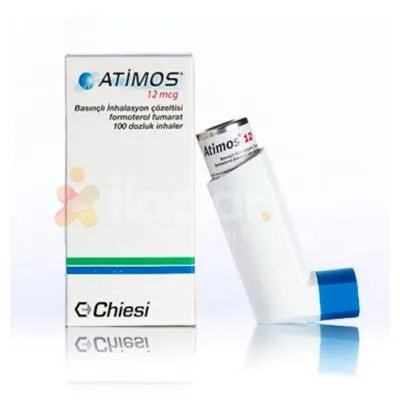
Table of Contents
Package leaflet: Information for the user
Atimos, 12 micrograms/dose, inhalation aerosol, solution
Formoteroli fumaras dihydricus
Please read this leaflet carefully before use, as it contains important information for the patient.
- Keep this leaflet for future reference.
- If you have any questions, consult your doctor or pharmacist.
- This medicine has been prescribed for a specific individual. Do not share it with others. This medicine may harm others, even if their symptoms are the same.
- If you experience any adverse reactions, including those not listed in this leaflet, inform your doctor or pharmacist. See section 4.
Table of contents:
- What Atimos is and what it is used for
- What you need to know before using Atimos
- How to use Atimos
- Possible side effects
- How to store Atimos
- Contents of the pack and other information
1. What Atimos is and what it is used for
Atimos is an inhaled medicine whose active substance reaches directly to the lungs, where it acts. It is used in the treatment of symptoms (wheezing and breathlessness) of moderate or severe bronchial asthma. The active substance of the medicine, formoterol fumarate, belongs to a group of medicines called bronchodilators. These medicines help breathing by relaxing the muscles of the airways. Regular use of Atimos together with steroids (inhaled or taken orally) helps long-term prevention of breathing difficulties.
Atimos may also be used to relieve symptoms such as cough, wheezing, and breathlessness in patients with chronic obstructive pulmonary disease (COPD) who require long-term treatment with bronchodilators.
2. Information before using Atimos
When not to use Atimos:
- if the patient is allergic to formoterol or any of the other ingredients of this medicine (listed in section 6).
- during asthma attacks, as it is ineffective. In such cases, a fast-acting inhaled bronchodilator should be used, which must always be kept at hand.
Warnings and precautions
Before starting Atimos, discuss this with your doctor or pharmacist. Always inform your doctor if the patient:
- has severe heart disease, especially if they have recently had a heart attack, have coronary artery disease, or significant weakening of the heart muscle (congestive heart failure),
- has heart rhythm disorders, such as rapid heartbeat, heart valve disorders, or abnormal electrocardiogram, as well as other heart diseases,
- has arteriosclerosis, especially atherosclerosis, or abnormal dilation of a blood vessel,
- has high blood pressure,
- has high blood sugar levels (diabetes),
- has low potassium levels in the blood,
- has hyperthyroidism,
- has a tumour of the adrenal gland producing adrenaline and noradrenaline (phaeochromocytoma),
- is scheduled for general anaesthesia with halogenated anaesthetic agents.
Atimos with other medicines
Tell your doctor or pharmacist about all medicines the patient is currently taking or has recently taken, including those obtained without a prescription.
Some medicines may affect the action of Atimos. These include medicines:
- used to treat irregular heart rhythms (e.g. quinidine, disopyramide, procainamide),
- used to treat heart conditions (e.g. cardiac glycosides such as digoxin),
- used for nasal mucosal congestion (e.g. ephedrine),
- beta-blockers used for heart conditions or glaucoma (increased intraocular pressure), in the form of tablets or eye drops,
- containing erythromycin (used to treat infections),
- used to treat symptoms of depression: monoamine oxidase inhibitors (e.g. phenelzine and isocarboxazid) or tricyclic antidepressants (e.g. amitriptyline and imipramine),
- used to treat severe psychiatric disorders (e.g. chlorpromazine and trifluoperazine),
- used to treat allergic reactions (such as antihistamines, e.g. terfenadine, astemizole, mizolastine),
- used to treat bronchial asthma (e.g. theophylline, aminophylline or steroids),
- used to increase urine output (such as diuretics),
- used to treat Parkinson's disease (e.g. levodopa),
- containing oxytocin, which causes uterine contractions,
- used to treat hypothyroidism (e.g. thyroxine).
Concomitant use of anticholinergic medicines (such as tiotropium or ipratropium bromide) with
Atimos may help further widen the airways.
Your doctor may also prescribe inhaled corticosteroids, which are used in respiratory disorders. In such cases, it is very important to use them regularly. After starting Atimos treatment, do not stop the recommended steroid treatment or change the dose.
Pregnancy and breastfeeding
If the patient is pregnant or breastfeeding, suspects she may be pregnant, or is planning to become pregnant, she should consult her doctor or pharmacist before using this medicine.
Atimos may be used during pregnancy only if absolutely necessary.
Driving and operating machinery
It is unlikely that Atimos will have any effect on the ability to drive or operate machinery.
Atimos contains ethanol
This medicine contains small amounts of ethanol (alcohol): 8.9 mg of alcohol (ethanol) per spray, equivalent to 0.25 mg/kg body weight per dose when two sprays are used in adults, and equivalent to 0.44 mg/kg body weight per dose when two sprays are used in adolescents. The amount of alcohol in two sprays of this medicine is less than that in 1 ml of beer or wine. The small amount of alcohol in this medicine will not cause noticeable effects.
3. How to use Atimos
This medicine should always be used exactly as prescribed by your doctor. If in doubt, consult your doctor.
Recommended dose in asthma:
The dose of Atimos depends on the type of asthma and the severity of symptoms. Your doctor will individually adjust the dose for each patient. It is important that the patient uses Atimos regularly at the prescribed doses.
The usual dose for adults, including elderly patients, and for adolescents aged 12 years and older is: 1 puff in the morning and 1 puff in the evening. This means a total of 2 puffs (24 micrograms) of Atimos per day.
In severe asthma, your doctor may prescribe up to 4 puffs per day (48 micrograms): 2 puffs in the morning and 2 puffs in the evening.
Maximum daily dose is 4 puffs (48 micrograms) of Atimos, and you must not use more than the dose prescribed by your doctor.
This medicine is not intended for use in children with asthma under 12 years of age.
Recommended dose in chronic obstructive pulmonary disease (COPD):
The usual dose for adults (aged 18 years and older), including elderly patients, is: 1 puff in the morning and 1 puff in the evening. This means a total of 2 puffs (24 micrograms) of Atimos per day.
In severe COPD, your doctor may prescribe up to 4 puffs per day (48 micrograms), i.e. 2 puffs in the morning and 2 puffs in the evening.
Maximum daily dose is 4 puffs (48 micrograms) of Atimos, and you must not use more than the dose prescribed by your doctor.
Do not use more than 2 puffs at the same time.
This medicine is not intended for use in patients with COPD under 18 years of age.
Atimos must not be used during asthma attacks. In such cases, a fast-acting inhaled bronchodilator prescribed by your doctor should be used. This medicine should always be kept with you.
Taking more than the recommended dose of Atimos
An increased heart rate and weakness may occur. Headache, tremor, nausea and vomiting, or drowsiness may also occur. Seek medical advice immediately.
Missing a dose of Atimos
If you miss a dose of Atimos, take it as soon as possible. If it is almost time for your next dose, do not take the missed dose; instead, take only one dose at the usual scheduled time. Do not use a double dose.
Do not stop using Atimos or reduce the dose without consulting your doctor. Do not discontinue, without consulting your doctor, any other prescribed treatment intended to help breathing, even if you feel better. Regular use of these medicines is very important.
Do not increase the dose of Atimos without first discussing it with your doctor. If shortness of breath or wheezing occurs while using Atimos, continue using Atimos and consult your doctor as soon as possible, as additional treatment may be necessary. Once asthma symptoms are under control, your doctor may consider gradually reducing the dose of Atimos.
Instructions for use
It is important that the patient knows how to use the inhaler correctly. Your doctor, nurse, or pharmacist should show you how to use the inhaler properly. Follow the instructions carefully to know how, when, and how many doses of the medicine to take. Instructions for using the inhaler are provided later in this patient leaflet. If you have any doubts or difficulties using the inhaler, consult your doctor, nurse, or pharmacist.
Test for correct inhaler function: Before first use, or if the inhaler has not been used for 3 days or longer, release one puff into the air to ensure the inhaler is working properly.
When using the inhaler, stand or sit in an upright position.
- Remove the protective cap from the mouthpiece and hold the inhaler between your thumb and index finger, as shown in Figure No. 1.
- Breathe out as deeply as possible.
- Hold the canister upright, with the stem pointing upwards, then place the mouthpiece in your mouth and close your lips tightly around it.
- Breathe in deeply through your mouth while pressing down on the top of the inhaler to release a dose of medicine.
- Hold your breath for as long as possible without discomfort, then remove the inhaler from your mouth.
- If a second dose is required, keep holding the inhaler upright, wait about half a minute, and repeat steps 2 to 5.
- After use, replace the protective cap over the mouthpiece to protect it from dust and dirt. Press it firmly into place and snap it shut correctly.
1 2 3 4 5-6 7
IMPORTANT: Perform the steps described in points 2, 3, 4, and 5 without rushing.
It is important to take slow, deep breaths before using the inhaler.
If a "mist" appears above the upper opening of the mouthpiece or from the side of the mouth, this means
that Atimos has not been inhaled correctly and has not reached the lungs. Take another dose,
following the instructions exactly, starting from step 2.
Patients with a weak grip may find it easier to hold the inhaler with both hands. In this case, place both index fingers on top of the medicine canister and place your thumbs below the mouthpiece.
If you experience any difficulties using the inhaler, contact your doctor, nurse, or pharmacist.
Cleaning the inhaler
To ensure proper functioning of the inhaler, it is important to clean it at least once or twice a week. To do this:
- Remove the metal canister from the plastic inhaler casing and remove the protective cap from the mouthpiece.
- Rinse the plastic casing and protective cap with warm water.
- Do not immerse the metal canister in water.
- Leave to dry in a warm place; avoid excessive heat.
- Replace the protective cap on the mouthpiece and reinsert the canister into the casing.
If you have any further questions about using this medicine, consult your doctor or pharmacist.
4. Possible adverse reactions
Like any medicine, this medicine may cause adverse reactions, although not everyone experiences them.
The possible adverse reactions are listed below according to their frequency of occurrence. If you have
any doubts regarding the adverse reactions listed below, please contact your doctor.
If breathing difficulties or wheezing worsen after inhaling the medicine, stop using Atimos
immediately and inform your doctor without delay.
These symptoms are caused by narrowing of the airways, but they occur rarely.
Common (occurring in 1 out of 10 people): abnormally rapid heartbeat and palpitations, cough,
tremor, headache.
Uncommon (occurring in less than 1 out of 100 people): muscle cramps, muscle pain, nausea,
restlessness, anxiety, particularly motor restlessness, sleep disturbances, dizziness, taste disturbances,
throat irritation, rapid heartbeat, cardiac arrhythmia with increased heart rate, abnormally low blood
potassium levels, increased blood glucose levels, increased insulin levels, increased levels of free
fatty acids, glycerol and ketone bodies in blood, excessive sweating.
Rare (occurring in less than 1 out of 1,000 people): additional heartbeats caused by premature
ventricular contractions, feeling of chest tightness, increased or decreased blood pressure, wheezing
occurring immediately after inhalation of the medicine, sudden drop in blood pressure, kidney
inflammation, allergic reactions such as skin itching, skin rash, bronchospasm, urticaria, skin and
mucous membrane swelling lasting for several days.
Very rare (occurring in less than 1 out of 10,000 people): worsening of asthma, breathing difficulties,
swelling around wrists and ankles, irregular heartbeat, decreased platelet count, hyperactivity,
inappropriate behaviour, hallucinations.
The intensity of some adverse reactions such as: tremor, nausea, altered or impaired taste, throat
irritation, excessive sweating, anxiety (particularly motor restlessness), headache, dizziness and
muscle cramps, may decrease within one to two weeks of continuous asthma treatment.
Reporting of adverse reactions
If any adverse reactions occur, including any adverse reactions not listed in this leaflet, inform your
doctor, pharmacist or nurse.
Adverse reactions can be reported directly to the Department of Monitoring of Adverse Drug Reactions
at the Office for Registration of Medicinal Products, Medical Devices and Biocidal Products:
Al. Jerozolimskie 181C, 02-222 Warsaw,
tel. (22) 49 21 301, fax (22) 49 21 309,
website: https://smz.ezdrowie.gov.pl
Adverse reactions can also be reported to the marketing authorization holder.
Reporting adverse reactions helps to provide more information on the safety of the medicine.
5. How to store the medicine Atimos
- Keep the medicine out of the sight and reach of children.
- Do not use the medicine for longer than three months after the date it was dispensed from the pharmacy. Never use the medicine after the expiry date stated on the carton and label. The expiry date refers to the last day of the stated month.
- Do not store above 30°C.
- If the inhaler becomes cold, remove the metal container from the plastic holder and warm it in the hands for several minutes before using. Never use other methods to heat the container.
- Warning. The container contains pressurised liquid. Do not expose to temperatures above 50°C. Do not pierce the container.
- Do not dispose of medicines via wastewater or household waste. Ask your pharmacist how to dispose of medicines no longer in use. This will help protect the environment.
6. Contents of the package and other information
What Atimos contains:
The active substance in Atimos is formoterol fumarate dihydrate. One metered dose contains 12 micrograms of formoterol fumarate dihydrate, corresponding to an amount delivered containing 10.1 micrograms.
The other ingredients are: hydrochloric acid, ethanol and norflurane (HFC 134a).
This medicine contains fluorinated greenhouse gases.
Each inhaler delivering 50 doses contains 5.842 g of norflurane (HFC 134a), equivalent to 0.008 tonnes of CO(_2) equivalent (global warming potential GWP = 1430).
Each inhaler delivering 100 doses contains 9.087 g of norflurane (HFC 134a), equivalent to 0.013 tonnes of CO(_2) equivalent (global warming potential GWP = 1430).
Each inhaler delivering 120 doses contains 10.384 g of norflurane (HFC 134a), equivalent to 0.015 tonnes of CO(_2) equivalent (global warming potential GWP = 1430).
What Atimos looks like and contents of the pack:
Atimos is a solution in aerosol form, contained in an aluminum pressurized canister with a metering valve, spray adapter and protective cap.
Each pack contains 1 inhaler delivering 50, 100 or 120 doses.
Not all pack sizes may be marketed.
Marketing Authorisation Holder:
Chiesi Farmaceutici S.p.A., Via Palermo 26/A, 43122 Parma, Italy
Manufacturer:
Chiesi Farmaceutici S.p.A., Via S. Leonardo 96, 43122 Parma, Italy
Chiesi Pharmaceuticals GmbH, Gonzagagasse 16/16, 1010 Vienna, Austria
For detailed information, please contact the local representative of the Marketing Authorisation Holder:
Chiesi Poland Sp. z o.o., Al. Jerozolimskie 134, 02-305 Warsaw, Poland
Tel.: (22) 620 14 21, Fax: (22) 652 37 79, E-mail: [email protected]
This medicinal product is authorised in the European Economic Area and in the United Kingdom (Northern Ireland) under the following names:
| Germany | Atifor Chiesi | Hungary | Atimos |
| Estonia | Atimos | Portugal | Atimos |
| Spain | Broncoral Neo | Slovenia | Atimos |
| Netherlands | Atimos | Poland | Atimos |
| United Kingdom (Northern Ireland) | Atimos Modulite | Latvia | Atimos |
| Czech Republic | Atimos | ||
| Slovak Republic | Atimos |