Astorid
Poland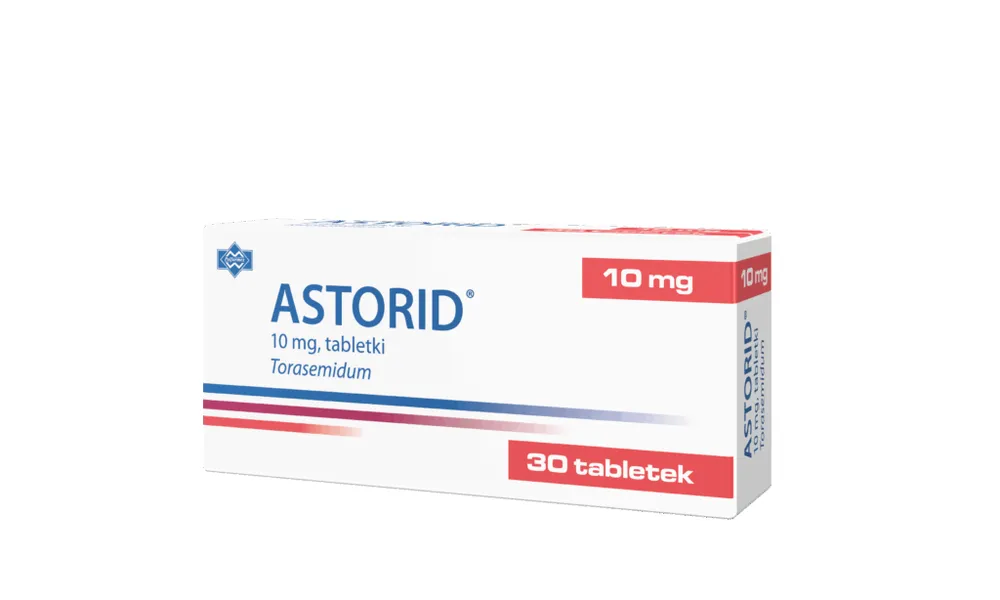
Table of Contents
Package leaflet: Information for the patient
ASTORID, 10 mg, tablets
Torasemidum
Please read carefully all the information in this leaflet before taking the medicine, as it contains
important information for the patient.
- Keep this leaflet so that you can read it again if necessary.
- If you have any doubts, please consult your doctor or pharmacist.
- This medicine has been prescribed for a specific individual. Do not pass it on to others. The medicine may harm someone else, even if their symptoms are the same.
- If the patient experiences any adverse reactions, including any not listed in this leaflet, inform a doctor or pharmacist immediately. See section 4.
Table of contents of the leaflet
- What is ASTORID and what is it used for
- Important information before taking ASTORID
- How to take ASTORID
- Possible side effects
- How to store ASTORID
- Contents of the pack and other information
1. What is ASTORID and what is it used for
ASTORID is a diuretic and antihypertensive medicine belonging to the group of loop diuretics.
ASTORID is used to treat and prevent recurrence of fluid retention in tissues (cardiac oedema) and/or fluid accumulation in body cavities (effusions), which may occur due to heart function disorders (heart muscle failure).
2. Important information before using ASTORID
When not to take ASTORID:
- if the patient is allergic to the active substance or any of the other ingredients of this medicine (listed in section 6);
- in renal failure with absence of urine production (anuria);
- in severe liver function disorders (e.g. hepatic coma) until improvement or resolution of this condition;
- in cases of very low blood pressure (hypotension);
- in reduced circulating blood volume (hypovolemia);
- if the patient has sodium or potassium deficiency (hyponatremia, hypokalemia);
- in disorders of bladder emptying (e.g. due to pathological prostate enlargement);
- during breastfeeding;
- in patients with gout;
- in high-grade cardiac conduction disturbances (e.g. sinoatrial block, second- or third-degree atrioventricular block);
- when undergoing concomitant treatment with certain antibiotics (aminoglycosides, cephalosporins);
- in kidney dysfunction caused by nephrotoxic substances.
Warnings and precautions
Before starting treatment with ASTORID, discuss this with your doctor or pharmacist.
Since there are not yet sufficient study results, ASTORID should not be used in the following cases:
- pathological disturbances in acid-base balance;
- pathological changes in blood morphology (e.g. thrombocytopenia or anemia in patients without kidney dysfunction);
- urinary flow disorders should be corrected before initiating treatment with torasemide;
- in patients with cardiac arrhythmia, administration of loop diuretics may pose a life-threatening risk due to changes in electrolyte levels (potassium, sodium, calcium, magnesium). Regular blood tests to monitor electrolyte levels, especially potassium and calcium, are required.
Effect on doping tests
Use of ASTORID may result in positive anti-doping test results. Using ASTORID as a doping aid may be hazardous to health.
ASTORID and other medicines
Inform your doctor or pharmacist about all medicines you are currently taking or have recently taken, as well as any medicines you plan to take.
Use of ASTORID enhances the blood pressure-lowering effect of other antihypertensive medicines, especially angiotensin-converting enzyme (ACE) inhibitors. Administration of ACE inhibitors additionally or immediately after treatment with ASTORID may cause a sudden drop in blood pressure. There may be an increased risk of renal failure induced by ACE inhibitors.
Potassium deficiency caused by ASTORID may lead to increased adverse effects of concurrently administered digitalis preparations.
ASTORID may reduce the effectiveness of medicines used in diabetes treatment.
Probenecid (a medicine used in the treatment of gout) and certain anti-inflammatory medicines (e.g. indomethacin, acetylsalicylic acid) may reduce the diuretic and antihypertensive effects of ASTORID. Diuretics may increase the risk of kidney failure caused by such anti-inflammatory agents.
In patients undergoing treatment with high doses of salicylates (e.g. painkillers and treatment of rheumatism), their effect on the central nervous system may increase after administration of ASTORID. In patients taking salicylates, the risk of recurrent gout attacks increases.
ASTORID may exacerbate the following adverse effects, especially when high doses are used:
hearing and kidney damage caused by aminoglycoside antibiotics (e.g. kanamycin, gentamicin, tobramycin), cisplatin preparations (medicines used in cancer treatment, inhibiting cell division), nephrotoxic agents, cephalosporins (medicines used in the treatment of infections).
ASTORID may affect (enhance or reduce) the action of theophylline (a medicine used in asthma treatment), as well as the muscle-relaxing effects of drugs similar to curare. Monitoring of theophylline blood levels is recommended.
Laxatives and adrenal cortex hormones (mineralocorticoids, glucocorticosteroids, e.g. cortisone) may increase potassium loss caused by ASTORID.
Concomitant treatment with ASTORID and lithium may increase lithium blood levels and may also potentiate the cardiotoxic and nephrotoxic effects of lithium.
ASTORID may reduce arterial sensitivity to vasoconstrictive medicines (e.g. adrenaline, noradrenaline).
Concomitant use of ASTORID with cholestyramine (a lipid-lowering medicine) may reduce gastrointestinal absorption of ASTORID, thereby reducing its effect.
Torasemide is metabolized in the liver by enzymes (cytochrome P450 CYP2C8 and CYP2C9). It may interact with other medicines metabolized by the same enzymes. Therefore, concomitant administration of such medicines should be closely monitored to avoid undesirable blood concentrations of these drugs. This interaction has been demonstrated, for example, with coumarin derivatives (e.g. Marcumar).
Drug-drug interactions may be critically important for substances with a narrow therapeutic index.
Pregnancy and breastfeeding
If the patient is pregnant or breastfeeding, suspects she may be pregnant, or is planning to have a child, she should consult her doctor or pharmacist before using this medicine.
There is insufficient knowledge regarding the effects of ASTORID on unborn children.
Animal studies with torasemide (the active substance) in ASTORID did not show any harmful effects on fertility. However, after administration of high doses of the active substance, adverse effects on the unborn animal and the mother were observed.
Until further data are available, ASTORID should be administered to pregnant women only if the physician considers it absolutely necessary. In such a case, only the lowest effective dose should be used.
There are insufficient data on the passage of torasemide, the active substance of ASTORID, into human breast milk. Risk to newborns/infants cannot be excluded. Loop diuretics may reduce milk production. Therefore, ASTORID must not be administered to patients during breastfeeding. If the physician decides that use of ASTORID is necessary during lactation, breastfeeding must be discontinued.
Driving and operating machinery
ASTORID may alter reaction time and impair the ability to drive vehicles, operate machinery, or work at heights, even when used as directed. This particularly applies during the initial treatment period, after dose increase, after switching medications, or when starting additional treatment with another medicine, as well as in combination with alcohol.
ASTORID contains lactose
If the patient has previously been diagnosed with intolerance to certain sugars, the patient should consult a doctor before taking ASTORID.
3. How to use ASTORID
This medicine should always be used as directed by the physician or pharmacist. If in doubt,
consult your doctor or pharmacist.
Adults
Recommended dose:
Unless otherwise directed by the physician, treatment is initiated at a dose of 5 mg torasemide per day.
For this purpose, tablets with the appropriate strength of active substance are available.
This dose is usually also the maintenance dose.
Treatment with 1 tablet of ASTORID (corresponding to 10 mg torasemide) per day is
indicated if the dose of 5 mg torasemide per day is insufficiently effective.
In such cases, 1 tablet of ASTORID (corresponding to 10 mg torasemide) per day is taken. If efficacy is inadequate, the dose may be increased to 2 tablets of ASTORID (corresponding to 20 mg torasemide) per day, depending on the severity of symptoms.
Use in children
The safety and efficacy of torasemide in children under 12 years of age have not been established.
In adolescents (12–18 years of age), the dosage is the same as in adults.
Patients with renal function impairment
In patients with impaired renal function, renal excretion is reduced, but total blood concentration does not change significantly.
Patients with hepatic impairment
In patients with mild to moderate liver impairment, dose adjustment is not necessary, as the half-lives of torasemide and its metabolites are only slightly prolonged in these patients.
Torasemide must not be used in patients with severe liver dysfunction or disturbances of consciousness (hepatic coma) (see section 2).
Particular caution should be exercised in patients with liver cirrhosis and ascites. Special care should be taken when administering torasemide to patients with reversible cerebral disorders in their medical history due to impaired detoxifying liver function (hepatic encephalopathy).
Elderly patients
Dose modification is not required in elderly patients.
Method of administration
The tablets should be taken in the morning, unchewed, with liquid. ASTORID may be taken with or without food.
Duration of treatment
The duration of treatment with ASTORID is determined by the attending physician.
If you feel that the effect of ASTORID is too strong or too weak, consult your doctor or pharmacist.
Taking more ASTORID than recommended
Accidental or intentional ingestion of an excessive amount of ASTORID may lead to excessive diuresis, potentially dangerous, with loss of fluids and electrolytes, possible disturbance of consciousness, confusion, drop in blood pressure, circulatory collapse, and gastrointestinal complaints.
In such a case, contact a physician immediately; appropriate management will be advised.
Missing a dose of ASTORID
Taking too low a dose or missing a dose of ASTORID reduces the effectiveness of the medicine.
This may manifest, for example, as weight gain and increased fluid retention in the body (edema).
Take the missed dose as soon as possible. However, do not take the missed dose if the time for the next dose is approaching. Do not take a double dose to make up for a missed dose; instead, continue treatment with the recommended dose.
Stopping ASTORID treatment
Discontinuation or premature termination of ASTORID treatment may lead to worsening of symptoms.
Under no circumstances should you alter or discontinue the prescribed ASTORID treatment without consulting your doctor.
If you have any further doubts regarding the use of this medicine, consult your doctor or pharmacist.
4. Possible adverse effects
Like all medicines, this medicine can cause adverse effects, although not everyone will experience them.
Possible adverse effects:
Common (may affect up to 1 in 10 people):
- increased acid-base imbalance (metabolic alkalosis);
- potassium deficiency (hypokalaemia), particularly when combined with a low-potassium diet, vomiting, diarrhoea, laxative abuse, as well as in patients with chronic liver function disorders;
- depending on dose and duration of treatment, disturbances in water and electrolyte balance may occur, particularly fluid loss from the blood (hypovolaemia), potassium and/or sodium deficiency (hypokalaemia and/or hyponatraemia);
- headache, dizziness;
- gastrointestinal disturbances (e.g. loss of appetite, abdominal pain, nausea, vomiting, diarrhoea, constipation), particularly at the beginning of treatment;
- increased activity of certain liver enzymes (gamma-GT) in blood;
- muscle cramps (especially at the beginning of treatment);
- fatigue, weakness (particularly at the beginning of treatment);
- elevated levels of uric acid, glucose, and lipids (triglycerides, cholesterol) in blood.
Uncommon (occur in no more than 1 in 100 people):
- numbness and cold sensation in the extremities (paraesthesiae);
- dryness of the mouth;
- increased levels of urea and creatinine in blood. In case of urinary disorders, urine retention may occur.
Very rare (occur in less than 1 in 10,000 people):
- reduced number of red blood cells, white blood cells, and platelets (decreased erythrocytes, leukocytes, and thrombocytes);
- allergic reactions, for example itching, rash, photosensitivity, and severe skin reactions (e.g. Stevens-Johnson syndrome, toxic epidermal necrolysis);
- visual disturbances;
- tinnitus, hearing loss;
- due to blood concentration, low blood pressure (hypotension), circulatory disturbances, and reduced blood flow to the heart muscle may occur. This may lead, for example, to heart rhythm disorders (arrhythmia), chest pain (angina pectoris), acute myocardial infarction, or sudden loss of consciousness (fainting);
- thromboembolic complications caused by blood concentration;
- pancreatitis.
Frequency not known (cannot be estimated from the available data):
- reduced blood flow to the brain, confusion states.
Reporting of adverse effects
If any adverse effects occur, including any adverse effects not listed in this leaflet, inform your doctor or pharmacist. Adverse effects can be reported directly to the Department of Monitoring Adverse Drug Reactions of the Office for Registration of Medicinal Products, Medical Devices and Biocidal Products:
Al. Jerozolimskie 181C
PL-02-222 Warszawa
Tel.: + 48 22 49 21 301
Fax: + 48 22 49 21 309
Website: https://smz.ezdrowie.gov.pl
Adverse effects can also be reported to the marketing authorisation holder.
Reporting adverse effects helps provide more information on the safety of this medicine.
5. How to store ASTORID
Keep this medicine out of sight and reach of children.
No special storage instructions apply to this medicine.
Do not use this medicine after the expiry date stated on the blister and carton after "EXP". The expiry date refers to the last day of the stated month.
Medicines should not be disposed of via wastewater or household waste. Ask your pharmacist how to dispose of medicines no longer required. This will help protect the environment.
6. Contents of the package and other information
What the medicine ASTORID contains
- The active substance in this medicine is torasemide. Each tablet contains 10 mg of torasemide.
- Other ingredients are: lactose monohydrate, maize starch gelatinised, colloidal anhydrous silica, magnesium stearate.
What ASTORID looks like and contents of the pack
White to off-white, round, biconvex tablets, 7 mm in diameter.
ASTORID is available in a pack containing 30 tablets, in a cardboard box.
Marketing Authorisation Holder and Manufacturer
Polfarmex S.A.
ul. Józefów 9
99-300 Kutno
Poland
Tel.: + 48 24 357 44 44
Fax: + 48 24 357 45 45
e-mail: [email protected]