Aspulmo
Poland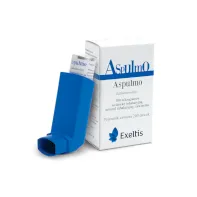
Table of Contents
Package leaflet: Information for the patient
Aspulmo, 100 micrograms per inhalation dose, inhalation aerosol, suspension
Salbutamolum
Please read this leaflet carefully before using the medicine, as it contains
important information for the patient.
- Keep this leaflet, as you may need to read it again.
- If you have any questions, please consult your doctor or pharmacist.
- This medicine has been prescribed for a specific individual. Do not pass it on to others. It may harm other people, even if their symptoms are the same.
- If you experience any adverse reactions, including any not listed in this leaflet, inform your doctor or pharmacist. See section 4.
Table of contents of the leaflet
- What Aspulmo is and what it is used for
- Important information before using Aspulmo
- How to use Aspulmo
- Possible side effects
- How to store Aspulmo
- Contents of the pack and other information
1. What Aspulmo is and what it is used for
Salbutamol, the active substance in Aspulmo, belongs to a group of medicines known as bronchodilators.
It produces a short-acting (4–6 hours), rapid-onset (within 5 minutes) dilation of the bronchi
in cases of reversible airway obstruction.
The Aspulmo inhalation aerosol is recommended:
- for the treatment of bronchospasm or reversible airway obstruction;
- prophylactically before physical exertion in patients with exercise-induced asthma, and before anticipated exposure to allergens that usually provoke attacks of breathlessness.
Aspulmo is particularly recommended for the treatment of mild, moderate, or severe asthma, provided that its use does not delay the initiation of inhaled corticosteroid therapy.
2. Important information before using Aspulmo
When not to use Aspulmo:
- if the patient is allergic to salbutamol or any of the other ingredients of this medicine (listed in section 6); carefully read the information on hypersensitivity reactions contained in section 4 of this leaflet;
- in threatened abortion;
- in preventing premature labour. In cases of premature labour or threatened abortion, the doctor may decide to administer salbutamol not by inhalation, but intravenously or in tablet form.
Warnings and precautions
To ensure optimal delivery of the inhaled medicine to the lungs, the doctor, nurse, or pharmacist will check the patient's inhalation technique.
Patients may experience a different taste compared to previously used aerosol medicines.
If the response to the previously used dose is weaker, or if a greater number of inhalations than before is required, immediately contact the doctor.
Aspulmo should be used with particular caution in patients who have the following conditions:
- hyperthyroidism;
- heart failure;
- hypertension;
- aneurysm;
- impaired glucose tolerance;
- diabetes;
- phaeochromocytoma;
- myocardial ischaemia;
- tachyarrhythmia;
- hypertrophic cardiomyopathy.
Aspulmo should be used with particular caution in patients concurrently taking cardiac glycosides.
Patients with concomitant severe heart disease who are using salbutamol should consult a doctor if chest pain or other symptoms indicating worsening of heart disease occur. Particular attention should be paid to symptoms such as shortness of breath and chest pain, which may result from disorders of the heart or respiratory system.
If symptoms worsen during treatment, medical advice should be sought, as a change in treatment may be necessary.
Aspulmo contains ingredients that may cause positive results in anti-doping tests.
Aspulmo and other medicines
Tell your doctor or pharmacist about all medicines the patient is currently taking or has recently taken, as well as any medicines the patient plans to take.
Before starting treatment with Aspulmo, inform the doctor if any of the following medicines are being used:
- medicines causing bronchospasm. These are beta-adrenergic receptor blockers (e.g. propranolol, atenolol) used in the treatment of high blood pressure or angina pectoris. Aspulmo should not be used with such medicines;
- cardiac glycosides (e.g. digoxin) used in heart diseases. Cardiac glycosides increase the force of heart contractions while making them less frequent;
- medicines that reduce blood potassium levels, because salbutamol may decrease potassium levels in the blood. These include:
- diuretics used as adjunctive therapy in hypertension, circulatory failure, renal failure, oedema, and poisoning;
- xanthine derivatives (e.g. theophylline, aminophylline) – medicines used in the treatment of asthma or other chronic obstructive pulmonary diseases;
- steroids (medicines used in the treatment of asthma and other inflammatory diseases);
- medicines that may increase the risk of cardiovascular adverse effects in patients using Aspulmo. Such medicines include monoamine oxidase inhibitors (e.g. isocarboxazid, iproniazid, tranylcypromine, clorgyline, selegiline, moclobemide) or tricyclic antidepressants (e.g. imipramine, desipramine, clomipramine, amitriptyline).
Salbutamol should not be taken simultaneously with other inhaled vasodilating medicines.
After administration of certain general anaesthetics (e.g. halothane, methoxyflurane, or enflurane), an increased risk of severe cardiac arrhythmias and hypotension may be expected in patients treated with salbutamol. If administration of these medicines is planned, salbutamol should not be used for at least 6 hours before the start of anaesthesia.
Pregnancy and breastfeeding
Before using any medicine, consult a doctor or pharmacist.
Use during pregnancy
This medicine may be used during pregnancy only if the benefits to the mother clearly outweigh the risks to the foetus.
Use during breastfeeding
In cases where administration of the medicine to breastfeeding women is necessary, breastfeeding should be discontinued. Salbutamol may pass into breast milk, and it is unknown whether this has a negative effect on newborns. Therefore, use of salbutamol in breastfeeding women should be limited to cases where the expected benefit to the mother exceeds the possible risk to the infant.
Driving and operating machinery
This medicine may affect the ability to drive and operate machinery.
If adverse effects such as muscle cramps or tremors occur, which may impair the ability to drive or operate machinery, caution should be exercised when performing these activities.
Aspulmo contains ethanol
This medicine contains 3 mg of alcohol (ethanol) per inhalation dose. The amount of alcohol in one dose of this medicine is equivalent to less than 1 ml of beer or 1 ml of wine.
The small amount of alcohol in this medicine will not cause noticeable effects.
3. How to use Aspulmo
Aspulmo should always be used as directed by the doctor. If in doubt, contact your doctor or pharmacist.
Aspulmo should be used as needed, not regularly.
If asthma symptoms become active (for example, frequent symptoms or exacerbations such as breathlessness interfering with speaking, eating or sleeping, coughing, wheezing, chest tightness or reduced physical performance), the patient should immediately inform the doctor, who may initiate or increase the dose of a medication to maintain control of asthma symptoms, such as an inhaled corticosteroid.
If the patient feels that the medicine is not working as well as usual, they should inform the doctor as soon as possible (for example, if higher doses are needed to relieve breathing difficulties, or if asthma symptoms do not improve within at least 3 hours after using the inhaler), because asthma may be worsening and another medication may be required.
If the patient uses Aspulmo more than twice a week to relieve asthma symptoms, excluding preventive use before physical exertion, this indicates poor asthma control and increases the risk of severe asthma attacks (asthma exacerbations), which may lead to serious complications, be life-threatening, and even result in death. The patient should contact their doctor as soon as possible to review their asthma treatment regimen.
If the patient is using an anti-inflammatory lung medication daily, such as an "inhaled corticosteroid," it is important to continue using it regularly, even if they feel better.
Aspulmo is for inhalation use only.
Before use, read the instructions for using the inhaler provided in the package leaflet.
Increasing the dose or frequency of use is only permitted under medical supervision.
Patients who have difficulty coordinating inhalation with releasing the medication from the inhaler may use Aspulmo with a spacer device.
Children under 5 years of age may use Aspulmo with a pediatric spacer.
Adults and elderly patients:
To relieve bronchospasm, inhale one to two puffs (100 micrograms to 200 micrograms of salbutamol). If the expected improvement is not achieved, more than two puffs may be taken.
The maximum recommended dose is two puffs three times daily.
If a previously effective inhaled dose of salbutamol does not provide relief within three hours, the patient should consult a doctor.
For prevention before physical exertion or anticipated exposure to allergens, inhale two puffs (2 × 100 micrograms of salbutamol) 10–15 minutes before the activity or exposure.
One press of the inhaler releases one dose of medication.
Children:
For acute bronchospasm and exercise-induced asthma, one puff (100 micrograms of salbutamol) is recommended.
If necessary, the dose may be increased to 200 micrograms (2 × 100 micrograms of salbutamol).
It is not recommended to use more than four puffs per day.
If the effect of Aspulmo seems too strong or too weak, consult a doctor.
Do not stop using salbutamol without consulting your treating physician.
Instructions for using the medicine
To ensure the inhaler is working, remove the protective cap, shake the inhaler vigorously, and release a dose into the air.
Instructions for using the inhaler:
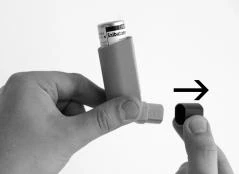
- Remove the protective cap from the mouthpiece.
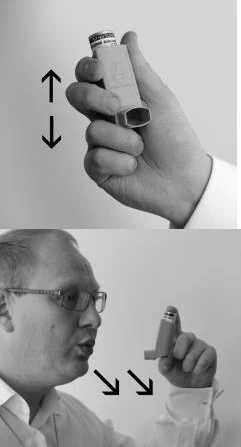
- Shake the inhaler vigorously.
- Breathe out as deeply as possible.
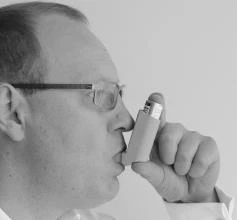
- Place the inhaler mouthpiece in the mouth and close lips tightly around it, as shown in the picture.
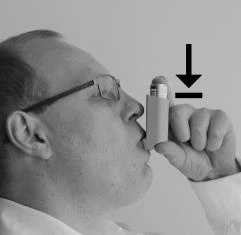
- While inhaling slowly and deeply through the mouth, press down on the inhaler, as shown in the picture.
- Remove the inhaler from the mouth and try to hold your breath for a few seconds or
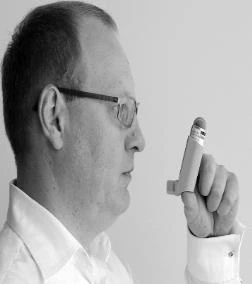
as long as possible. After this time, breathe out slowly.
- Rinsing the mouth with water and spitting it out after inhalation helps prevent hoarseness and oral candidiasis (thrush).
- After inhalation, always replace the protective cap on the mouthpiece to prevent dust from entering. Secure the cap by pressing it into place until a "click" is heard.
- Store the inhaler with the cap on to protect it from dust and dirt.
Inhaler contents:
Shake the inhaler to check the amount of remaining medication. Do not use Aspulmo if no liquid movement is observed when shaking the inhaler.
Cleaning the inhaler
To prevent blockage, clean the inhaler at least once a week.
To clean the inhaler:
- Remove the protective cap from the mouthpiece.
- Do not remove the canister from the plastic holder during cleaning or at any other time.
- Wipe the mouthpiece inside and outside, and the outside of the plastic holder, with a dry cloth or tissue.
- Replace the protective cap on the mouthpiece. Do not immerse the metal canister in water.
Use of a higher than recommended dose of Aspulmo
If more inhalations than recommended have been taken, seek immediate medical advice from a doctor or pharmacist.
Stop using Aspulmo immediately if any symptoms of overdose occur, such as rapid heartbeat, headache, or excessive excitability (see section 4: Possible side effects).
A selective beta-adrenergic receptor blocker may be indicated; however, such medications should be used with caution in patients with a history of bronchospasm.
Salbutamol overdose may cause decreased potassium levels in the blood. The doctor may recommend monitoring serum potassium levels.
Missed dose of Aspulmo
Do not use a double dose to make up for a missed dose.
Take the next dose according to the prescribed schedule, or earlier if experiencing shortness of breath or wheezing.
If you have any further questions about the use of this medicine, consult your doctor or pharmacist.
4. Possible adverse reactions
Like all medicines, this medicine can cause adverse reactions, although not everyone will experience them.
Common (occurs in more than 1 in 100 but less than 1 in 10 patients using the medicine) adverse reactions associated with the use of Aspulmo:
- skeletal muscle tremor, headache,
- increased heart rate (tachycardia).
Uncommon (occurs in more than 1 in 1,000 but less than 1 in 100 patients using the medicine) adverse reactions associated with the use of Aspulmo:
- palpitations,
- irritation of the oral and pharyngeal mucosa.
Rare (occurs in more than 1 in 10,000 but less than 1 in 1,000 patients using the medicine) adverse reactions associated with the use of Aspulmo:
- decreased blood potassium levels,
- peripheral vasodilation,
- muscle cramps.
Very rare (occurs in less than 1 in 10,000 patients using the medicine) adverse reactions associated with the use of Aspulmo:
- hypersensitivity reactions, including angioedema (localized swelling of the skin and mucous membranes, including facial and throat swelling, which may cause difficulty in breathing and swallowing), urticaria, bronchospasm, hypotension, shock. If any of these symptoms occur, contact a doctor immediately;
- excessive excitability,
- cardiac arrhythmias (including atrial fibrillation, supraventricular tachycardia, and extrasystoles),
- paradoxical bronchospasm. As with other inhaled medicines, paradoxical bronchospasm may occur, characterized by wheezing immediately after inhalation of the medicine. In such a case, administration of Aspulmo must be stopped immediately and medical advice must be sought. The doctor will assess the patient's condition and, if necessary, recommend alternative treatment.
Frequency not known (frequency cannot be estimated from available data): myocardial ischemia.
If any of the adverse reactions worsen, inform your doctor or pharmacist.
Reporting of adverse reactions
If any adverse reactions occur, including any not listed in this leaflet, inform your doctor or pharmacist. Adverse reactions can be reported directly to the Department of Monitoring Adverse Reactions of Medicinal Products at the Office for Registration of Medicinal Products, Medical Devices and Biocidal Products:
Al. Jerozolimskie 181C, 02-222 Warsaw, tel.: +48 22 49 21 301, fax: +48 22 49 21 309,
website: https://smz.ezdrowie.gov.pl.
Reporting adverse reactions helps to provide more information on the safety of the medicine. Adverse reactions may also be reported to the marketing authorization holder.
5. How to store Aspulmo
Do not store above 30°C.
Keep in the original packaging to protect from light.
Pressurised container: do not pierce, do not burn, even if the container is empty.
Keep this medicine out of the sight and reach of children.
Do not use this medicine after the expiry date stated on the carton and container after EXP. The expiry date refers to the last day of the specified month.
Medicines should not be disposed of via wastewater or household waste. Ask your pharmacist how to dispose of medicines no longer in use. This will help protect the environment.
6. Contents of the pack and other information
What Aspulmo contains
- The active substance is salbutamol in the form of salbutamol sulfate. One inhalation dose contains 100 μg (micrograms) of salbutamol (as salbutamol sulfate).
- Other ingredients: oleic acid, anhydrous ethanol, 1,1,1,2-tetrafluoroethane (HFA 134a).
What Aspulmo looks like and contents of the pack
A pressurized aluminium container fitted with a metering valve, equipped with a mouthpiece and a protective cap, packed in a cardboard box. The container contains 200 doses (10 ml of suspension).
This medicine contains fluorinated greenhouse gases.
Each inhaler contains 13.05 g of HFA 134a (1,1,1,2-tetrafluoroethane), equivalent to 0.0187 tonnes of CO\₂e (global warming potential GWP = 1430).
Marketing Authorisation Holder and Manufacturer
Marketing Authorisation Holder:
Exeltis Poland Sp. z o.o.
ul. Szamocka 8
01-748 Warsaw
e-mail: [email protected]
Manufacturer:
Laboratorio Aldo-Unión, S.L.
Baronesa de Maldá, 73
08950 ESPLUGUES DE LLOBREGAT
Barcelona, Spain