Aspirin antigrip hot
Poland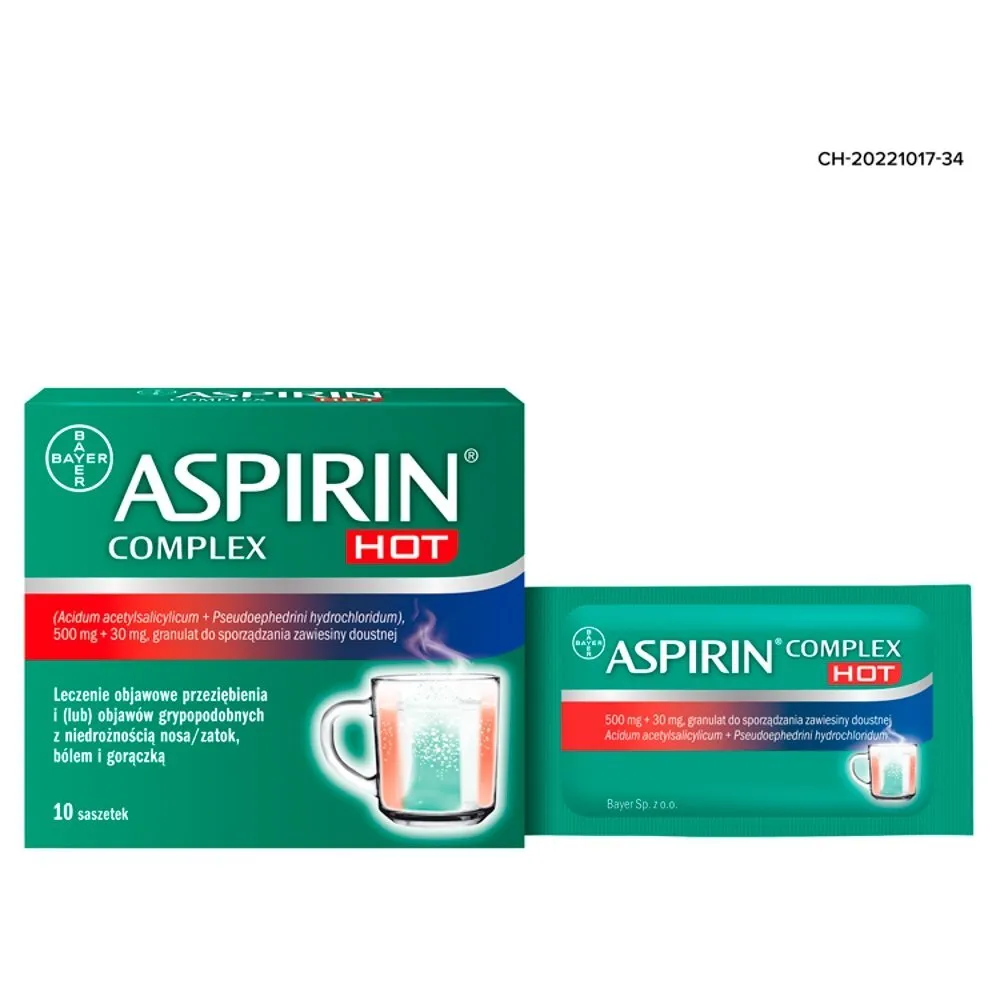
Table of Contents
- Package leaflet: Information for the user
- 1. What Aspirin Antigrip Hot is and what it is used for
- 2. Important information before taking Aspirin Antigrip Hot
- 3. How to take Aspirin Antigrip Hot
- 4. Possible adverse reactions
- 5. How to store Aspirin Antigrip Hot
- 6. Contents of the pack and other information
Package leaflet: Information for the user
Aspirin Antigrip Hot
500 mg + 30 mg, effervescent granules for oral suspension
Acetylsalicylic acid + Pseudoephedrine hydrochloride
Please read all of this leaflet carefully before taking this medicine, because it contains
important information for the patient.
This medicine should always be taken exactly as described in this patient leaflet or as directed by
a doctor or pharmacist.
- Keep this leaflet, so that you can read it again if necessary.
- If you need advice or further information, please consult your pharmacist.
- If you experience any adverse reactions, including any possible adverse reactions not listed in this leaflet, inform your doctor or pharmacist. See section 4.
- If there is no improvement after 3 days, or if your condition worsens, contact your doctor.
Contents of the leaflet
- What Aspirin Antigrip Hot is and what it is used for
- Important information before taking Aspirin Antigrip Hot
- How to take Aspirin Antigrip Hot
- Possible side effects
- How to store Aspirin Antigrip Hot
- Contents of the pack and other information
1. What Aspirin Antigrip Hot is and what it is used for
Aspirin Antigrip Hot contains the active substances: acetylsalicylic acid and pseudoephedrine hydrochloride. This medicine has analgesic, anti-inflammatory, antipyretic, and decongestant properties that reduce swelling and congestion of the nasal mucosa.
Aspirin Antigrip Hot is used for the symptomatic treatment of nasal mucosal swelling and/or sinus congestion (rhinitis, sinusitis), as well as for pain and fever associated with the common cold and/or influenza-like symptoms. If the patient has only one of these symptoms, a medicine containing only one of the active ingredients may be more appropriate.
If there is no improvement after 3 days, or if your condition worsens, contact your doctor.
Aspirin Antigrip Hot is intended for use in adults and adolescents aged 16 years and older.
2. Important information before taking Aspirin Antigrip Hot
When not to take Aspirin Antigrip Hot
- if the patient is allergic to acetylsalicylic acid, pseudoephedrine hydrochloride, or any of the other ingredients of this medicine (listed in section 6)
- if the patient has previously experienced asthma caused by salicylates or substances with similar action (i.e. non-steroidal anti-inflammatory drugs)
- if the patient has gastric ulcer disease
- if the patient has increased tendency to bleed
- if the patient has liver failure
- if the patient has severe acute (sudden) or chronic (long-term) kidney disease or renal failure
- if the patient has severe heart failure
- if the patient has severe coronary artery disease
- if the patient has very high blood pressure (severe hypertension) or hypertension that cannot be controlled with medication
- if the patient is taking methotrexate at a dose of 15 mg per week or higher
- if the patient is pregnant
- if the patient is breastfeeding
- if the patient is taking antidepressant medicines known as monoamine oxidase inhibitors (MAO inhibitors), or has taken these medicines within the past two weeks
- if the patient has angle-closure glaucoma
- if the patient has urinary retention
Warnings and precautions
Before starting to take Aspirin Antigrip Hot, discuss this with your doctor or
pharmacist:
- if the patient has been diagnosed with allergy (hypersensitivity) to other painkillers, anti-rheumatic or anti-inflammatory medicines
- if the patient has allergies (e.g. accompanied by rash, itchy skin, hives), asthma, hay fever, nasal mucosal swelling (nasal polyps), or chronic respiratory diseases
- if the patient has previously had gastric ulcer disease or gastrointestinal bleeding
- if the patient is taking blood-thinning and anticoagulant medicines (antithrombotic agents)
- if the patient is scheduled for surgery (including minor procedures such as tooth extraction), because acetylsalicylic acid, even at low doses, increases the risk of bleeding
- in patients with impaired liver function
- in patients with impaired kidney or circulatory function (e.g. when the heart does not pump blood sufficiently to other parts of the body, in cases of reduced circulating blood volume, after major surgery, in cases of blood infection or massive bleeding)
- in patients prone to gout attacks; low-dose acetylsalicylic acid reduces uric acid excretion, which may trigger an attack of gout
- if the patient has glucose-6-phosphate dehydrogenase (G6PD) deficiency (an inherited condition affecting red blood cells), because elevated levels of acetylsalicylic acid may lead to hemolysis (breakdown of red blood cells)
- if the patient is chronically taking multiple painkillers simultaneously (especially a combination of different painkillers), as this may lead to permanent kidney damage
- if the patient has hyperthyroidism, mild to moderate hypertension, diabetes, heart disease, increased intraocular pressure, prostate enlargement (prostatic hypertrophy), or hypersensitivity to certain active substances found in cough suppressants or cold medicines, such as phenylephrine and ephedrine (sympathomimetic agents)
- if the patient has renal tubular acidosis, meaning the kidneys cannot properly remove acid from the body. This may increase the risk of adverse effects due to higher blood levels of pseudoephedrine. If the patient develops fever with generalized skin redness and vesicular rash, discontinue taking Aspirin Antigrip Hot and contact a doctor or seek immediate medical help. See section 4.
- during treatment with Aspirin Antigrip Hot, sudden abdominal pain or rectal bleeding due to inflammation of the large intestine (ischemic colitis) may occur. If such gastrointestinal symptoms occur, discontinue use of Aspirin Antigrip Hot and seek immediate medical advice or help. See section 4.
- during treatment with Aspirin Antigrip Hot, reduced blood flow to the optic nerve may occur. In case of sudden vision loss, discontinue use of Aspirin Antigrip Hot and contact your doctor or seek medical help immediately. See section 4.
- cases of posterior reversible encephalopathy syndrome (PRES) and reversible cerebral vasoconstriction syndrome (RCVS) have been reported after using medicines containing pseudoephedrine. PRES and RCVS are rare conditions that may involve reduced blood flow to the brain. If symptoms suggestive of PRES or RCVS occur, discontinue Aspirin Antigrip Hot immediately and seek immediate medical help (symptoms, see section 4 "Possible side effects").
Doping
Athletes should be aware that this medicine may cause a positive result in
anti-doping tests.
Elderly patients
Elderly patients may be particularly sensitive to the effects of pseudoephedrine and may experience
insomnia or seeing things that are not real (hallucinations).
Children and adolescents
There is a potential association between the use of acetylsalicylic acid in children and adolescents
and the occurrence of Reye's syndrome. This is a very rare condition that may lead to death.
For this reason, acetylsalicylic acid should not be used in children and adolescents under 16 years
of age, unless advised by a doctor.
Other medicines and Aspirin Antigrip Hot
Tell your doctor or pharmacist about all medicines you are currently taking, have recently taken,
or plan to take, especially if you are using medicines containing:
- methotrexate used in the treatment of severe arthritis, cancer, or psoriasis. Do not use Aspirin Antigrip Hot if the patient is taking methotrexate at a dose of 15 mg per week or higher. Medical monitoring is recommended if the patient is taking methotrexate at doses lower than 15 mg per week.
- monoamine oxidase inhibitors (MAO inhibitors) used in the treatment of depression or Parkinson’s disease. Do not use Aspirin Antigrip Hot if the patient has taken the above-mentioned medicines within the last 2 weeks.
- medicines that prevent blood clotting or dissolve clots,
- non-steroidal anti-inflammatory drugs (NSAIDs) used to treat pain, inflammation, or rheumatism,
- selective serotonin reuptake inhibitors (SSRIs) used in the treatment of depression,
- other medicines used in the treatment of depression,
- digoxin used in heart failure or irregular heartbeats,
- blood sugar-lowering agents,
- diuretics used to remove excess fluid from the body,
- glucocorticoids taken orally or administered by injection or infusion – except hydrocortisone used in replacement therapy. Glucocorticoids may be used to treat skin inflammation or asthma,
- ACE inhibitors, i.e. medicines whose names end in “pril”, used mainly to treat high blood pressure,
- other medicines used to treat high blood pressure, such as guanethidine, methyldopa, or those whose names end in “lol”,
- valproic acid used in the treatment of epilepsy,
- benzbromarone or probenecid used in the treatment of gout,
- oral salbutamol tablets used to dilate airways. This does not exclude the use of inhalers at doses prescribed by a doctor,
- phenylephrine and ephedrine or other sympathomimetic agents contained in nasal drops or sprays.
Aspirin Antigrip Hot with food, drink and alcohol
The medicine can be taken regardless of meals. It is important to pour the granules into water and mix well before taking. While taking acetylsalicylic acid, avoid alcohol, as its consumption may increase the risk of gastrointestinal bleeding.
Pregnancy, breastfeeding and fertility
Aspirin Antigrip Hot should not be used during pregnancy or breastfeeding due to lack of data on the safety of both active ingredients when used in combination.
Additionally, consider that acetylsalicylic acid:
- may cause kidney and heart problems in the unborn child if taken from week 20 of pregnancy,
- may harm the unborn child or cause complications during delivery if taken during the third trimester of pregnancy,
- may affect the tendency of the mother and child to bleed and may delay or prolong labour if taken before or during delivery.
If the patient is pregnant or planning to become pregnant, she should consult her doctor or
pharmacist before using this medicine.
This medicine belongs to a group of medicines known as non-steroidal anti-inflammatory drugs (NSAIDs), which may adversely affect fertility in women. This effect is reversible and resolves after discontinuation of the medicine.
Driving and operating machinery
While taking Aspirin Antigrip Hot, reduced ability to react to stimuli may occur. Avoid driving if this applies to the patient. The risk of such effects may be increased by concomitant alcohol consumption. This should be taken into account in situations requiring high concentration.
Aspirin Antigrip Hot contains sucrose
This medicine contains 2 g of sucrose (sugar) in each sachet (equivalent to 0.17 carbohydrate exchange units, WW). This should be taken into account by patients with diabetes. If the patient has previously been diagnosed with intolerance to certain sugars, he or she should consult a doctor before taking this medicine.
Aspirin Antigrip Hot contains benzyl alcohol
This medicine contains 3.78 mg of benzyl alcohol in each sachet.
Benzyl alcohol may cause allergic reactions.
Patients with liver or kidney disease should consult a doctor before using this medicine, as large amounts of benzyl alcohol may accumulate in their bodies and cause adverse effects (so-called metabolic acidosis).
3. How to take Aspirin Antigrip Hot
This medicine should always be taken exactly as described in the patient information leaflet or as advised by a doctor or pharmacist. If in doubt, consult a doctor or pharmacist.
Recommended dose for adults and adolescents from 16 years of age:
- Single dose: 1–2 sachets. The single dose may be repeated after 4 hours.
- Maximum daily dose: 6 sachets
Do not exceed the maximum daily dose.
Instructions for use
Empty the contents of one or two Aspirin Antigrip Hot sachets into a glass of cold or hot, but not boiling, water and stir thoroughly. Allow the hot preparation to cool to a drinkable temperature before consuming. The resulting suspension has an orange flavour. Drink the entire contents of the glass immediately. Note: The granules do not dissolve completely.
Duration of use
Do not take this medicine for longer than 3 days without consulting a doctor.
Accidental overdose of Aspirin Antigrip Hot
If an overdose is suspected, contact a doctor immediately.
Symptoms of overdose include: headache, dizziness, convulsions, vomiting, tinnitus, increased heart rate, chest pain, restlessness, or shortness of breath.
If you have any further doubts regarding the use of this medicine, consult your doctor or pharmacist.
4. Possible adverse reactions
Like all medicines, this medicine can cause adverse reactions, although they do not occur in everyone.
The frequency of their occurrence cannot be determined from the available data – frequency
unknown.
Possible adverse reactions of acetylsalicylic acid:
If any of the following very serious adverse reactions occur, seek immediate medical advice or go to the nearest hospital:
- Allergic reactions (including difficulty breathing, rash, possibly with a drop in blood pressure), especially in patients suffering from bronchial asthma;
- Respiratory system disease aggravated by aspirin (symptoms of existing respiratory disease worsen under the influence of the drug);
- Gastric ulcers, which in isolated cases may lead to perforation;
- Constrictive enteropathy of the intestines (especially during long-term use);
- Gastrointestinal bleeding, which in isolated cases may lead to iron-deficiency anaemia. Black stools or vomiting blood are symptoms of gastrointestinal bleeding.
- Impaired kidney function, kidney failure;
- Haemolysis (breakdown of red blood cells) in severe forms of G6PD (glucose-6-phosphate dehydrogenase) deficiency.
If any of the following serious adverse reactions occur, contact your doctor immediately:
- Increased risk of bleeding, e.g. bleeding from the mouth, vagina or rectum
- Gastrointestinal or intestinal complaints such as stomach pain, indigestion, and inflammation of the stomach mucosa
- Temporary reduction in liver function with increased activity of liver enzymes known as transaminases
- Dizziness
- Tinnitus (ringing in the ears)
Mild adverse reactions:
- Nausea, vomiting, diarrhoea.
Possible adverse reactions of pseudoephedrine:
- Severe disorders affecting blood vessels in the brain, known as posterior reversible encephalopathy syndrome (PRES) and reversible cerebral vasoconstriction syndrome (RCVS)
You must immediately stop using Aspirin Antigrip Hot and seek immediate medical help if symptoms indicating posterior reversible encephalopathy syndrome (PRES) or reversible cerebral vasoconstriction syndrome (RCVS) occur. These include:
- Sudden, severe headache,
- Nausea,
- Vomiting,
- Confusion,
- Seizures,
- Vision changes.
If any of these serious adverse reactions occur, contact your doctor immediately:
- Increased blood pressure (does not apply to individuals with controlled hypertension)
- Adverse effects on the heart (e.g. rapid or irregular heartbeat)
- Insomnia, rarely hallucinations and other symptoms of central nervous system stimulation
- Urinary retention, especially in patients with benign prostatic hyperplasia (enlarged prostate)
- Skin reactions such as rash, urticaria, itching
- Sudden fever, skin redness, or numerous small pustules (possible symptoms of acute generalized exanthematous pustulosis - AGEP) may occur within the first 2 days of using Aspirin Antigrip Hot. See section 2. If such symptoms occur, discontinue use of Aspirin Antigrip Hot and contact your doctor or seek immediate medical help.
- Inflammation of the large intestine caused by insufficient blood supply (ischaemic colitis)
- Reduced blood flow to the optic nerve (ischaemic optic neuropathy)
Mild adverse reactions
- Sudden facial skin redness
- Dry mouth
Reporting of adverse reactions
If any adverse reactions occur, including any not listed in this leaflet, inform your doctor or pharmacist. Adverse reactions can be reported directly to the Department of Monitoring Adverse Drug Reactions at the Office for Registration of Medicinal Products, Medical Devices and Biocidal Products:
Al. Jerozolimskie 181C, 02-222 Warsaw,
Tel.: (22) 49 21 301,
Fax: (22) 49 21 309
Website: https://smz.ezdrowie.gov.pl
Adverse reactions can also be reported to the marketing authorisation holder.
Reporting adverse reactions helps provide more information on the safety of the medicine.
5. How to store Aspirin Antigrip Hot
Keep this medicine out of sight and reach of children.
Do not use this medicine after the expiry date stated on the carton and sachets.
The expiry date refers to the last day of the stated month.
Do not store above 30°C.
Medicines must not be disposed of via wastewater or household waste. Ask your pharmacist how to dispose of medicines no longer required. Such measures help protect the environment.
6. Contents of the pack and other information
What Aspirin Antigrip Hot contains
The active substances are acetylsalicylic acid (500 mg) and pseudoephedrine hydrochloride (30 mg).
The other ingredients are: citric acid, sucrose, hypromellose, saccharin, orange flavour (containing benzyl alcohol, acetic acid, alpha-tocopherol, modified starch and maltodextrin).
What Aspirin Antigrip Hot looks like and contents of the pack
Aspirin Antigrip Hot is in the form of granules for oral suspension, white to slightly yellowish in colour.
The medicine is available in packs containing 10 or 20 sachets.
Not all pack sizes may be marketed.
Marketing Authorisation Holder and Manufacturer
Marketing Authorisation Holder
Bayer Sp. z o.o.
Al. Jerozolimskie 158
02-326 Warsaw
Poland
Manufacturer
Bayer Bitterfeld GmbH
OT Greppin
Salegaster Chaussee 1
06803 Bitterfeld-Wolfen
Germany
This medicinal product is authorised in the Member States of the European Economic Area under the following names:
Although this product is authorised in other Member States, it may not be marketed in all of them.
Germany: ASPIRIN COMPLEX 500 mg / 30 mg Granulat zur Herstellung einer Suspension zum Einnehmen
Austria: Aspirin Complex Granulat zur Herstellung einer Suspension zum Einnehmen
Bulgaria: Аспирин Антигрип Хот 500 mg / 30 mg Гранули за перорална суспензия
Croatia: Aspirin Complex 500 mg/30 mg granule za oralnu suspenziju
Hungary: Aspirin Complex 500 mg / 30 mg granulátum belsőleges szuszpenzióhoz
Italy: Aspirina influenza e naso chiuso 500mg/30mg granulato per sospensione orale
Poland: Aspirin Antigrip Hot, 500 mg + 30 mg, granulat do sporządzania zawiesiny doustnej
Portugal: Aspirinagripe 500 + 30 mg granulado para suspensão oral
Romania: Aspirin Antigrip Hot 500 mg/30 mg granule pentru suspensie orală
Slovenia: Aspirin Complex 500 mg/30 mg zrnca za peroralno suspenzijo