Aspicam
Poland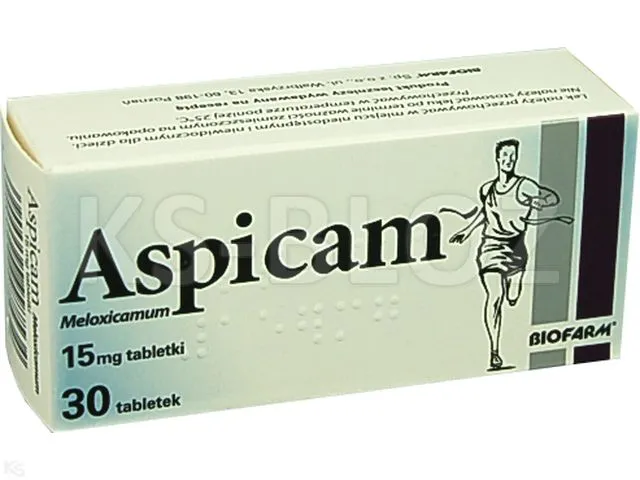
Table of Contents
Package leaflet: Information for the user
Aspicam, 15 mg, tablets
Meloxicamum
Please read the entire leaflet carefully before using this medicine, as it contains important information for the patient.
- Keep this leaflet for future reference.
- If you have any questions, consult your doctor or pharmacist.
- This medicine has been prescribed for a specific individual. Do not give it to others. This medicine may harm others, even if their symptoms are the same.
- If you experience any adverse reactions, including any adverse reactions not listed in this leaflet, inform your doctor or pharmacist. See section 4.
Table of contents
- What Aspicam is and what it is used for
- Important information before taking Aspicam
- How to take Aspicam
- Possible side effects
- How to store Aspicam
- Contents of the pack and other information
1. What Aspicam is and what it is used for
Aspicam contains the active substance meloxicam.
This medicine belongs to the group of non-steroidal anti-inflammatory drugs (NSAIDs), which have anti-inflammatory and analgesic effects.
Indications
- Short-term symptomatic treatment of exacerbations of osteoarthritis.
- Long-term symptomatic treatment of rheumatoid arthritis.
- Long-term symptomatic treatment of ankylosing spondylitis.
2. Important information before using Aspicam
When not to use Aspicam
- if the patient is allergic to meloxicam, other non-steroidal anti-inflammatory drugs (including acetylsalicylic acid) or any of the other ingredients of this medicine (listed in section 6);
- if the patient has experienced or currently has symptoms of allergy such as rhinitis, urticaria, angioedema or bronchial asthma associated with the use of acetylsalicylic acid or other non-steroidal anti-inflammatory drugs (NSAIDs);
- if the patient has active or recurrent peptic ulcer disease of the stomach and/or duodenum;
- if the patient has experienced or currently has gastrointestinal perforations or bleeding related to treatment with other non-steroidal anti-inflammatory drugs (NSAIDs);
- if the patient has experienced or currently has other gastrointestinal bleeding, cerebral hemorrhage or other bleeding;
- if the patient has severe hepatic insufficiency;
- if the patient has severe renal insufficiency and is not undergoing dialysis;
- if the patient has severe heart failure;
- during pregnancy, if the patient plans to become pregnant, or during breastfeeding.
Warnings and precautions
Before starting treatment with Aspicam, discuss the following with your doctor or pharmacist:
- if the patient has or has had inflammation of the mucous membrane of the oesophagus, stomach and/or gastric ulceration (these conditions must be completely healed before starting meloxicam treatment);
- if the patient has gastrointestinal disorders or gastrointestinal disease (e.g. ulcerative colitis, Crohn's disease), due to the risk of worsening of the condition;
- if the patient is elderly, as the risk of adverse effects is increased (particularly gastrointestinal bleeding or perforation, which may be life-threatening);
- if the patient has experienced toxicity caused by non-steroidal anti-inflammatory drugs (any unusual abdominal symptoms, especially at the beginning of treatment, should be reported to the doctor);
- if the patient is taking concomitant medications that may increase the risk of gastrointestinal ulceration or bleeding (such as oral corticosteroids), anticoagulants (e.g. warfarin), selective serotonin reuptake inhibitors, or antiplatelet agents (e.g. acetylsalicylic acid);
- because at the beginning of treatment patients are at highest risk of developing severe skin reactions including: exfoliative dermatitis, Stevens-Johnson syndrome and toxic epidermal necrolysis (sometimes life-threatening). If skin rash, mucosal lesions or any signs of hypersensitivity occur, meloxicam should be discontinued immediately;
- if the patient has impaired liver or kidney function;
- if the patient has reduced renal blood flow and decreased circulating blood volume, as this may lead to the manifestation of latent renal insufficiency. However, after discontinuation of Aspicam treatment, renal function returns to the pre-treatment state. This risk applies to all elderly patients, patients with circulatory failure, liver cirrhosis, nephrotic syndrome or impaired kidney function, as well as patients taking diuretics or undergoing extensive surgical procedures leading to hypovolemia (reduced circulating blood volume);
- if the patient has cardiac dysfunction, hypertension, peripheral arterial disease or cerebrovascular disease;
- if the patient has ever developed a persistent drug eruption (rash) after taking meloxicam or other oxicams (e.g. piroxicam) [circular or oval, red and swollen skin patches, usually recurring in the same location(s), blisters, urticaria and itching].
Concomitant use of meloxicam with other non-steroidal anti-inflammatory drugs should be avoided.
To minimize the risk of adverse effects, the doctor will prescribe the lowest effective dose of meloxicam for the shortest possible duration.
Use of medicines such as Aspicam may be associated with a small increased risk of heart attack or stroke. This risk increases with prolonged use of meloxicam at high doses. Higher doses or longer treatment durations than recommended should not be used.
If the patient has heart problems, has had a stroke, or there is suspicion of risk for these conditions (e.g. high blood pressure, diabetes, elevated cholesterol levels, smoking), the treatment approach should be discussed with a doctor or pharmacist.
In patients with gastric or duodenal ulcer disease, elderly patients, and patients requiring concomitant use of low-dose acetylsalicylic acid or other drugs increasing the risk of gastrointestinal damage, the doctor will initiate treatment with the lowest effective dose due to the risk of gastrointestinal bleeding, ulceration or perforation. The doctor may recommend concomitant use of drugs that protect the gastric mucosa.
Treatment should be discontinued if gastrointestinal bleeding occurs (often manifested by vomiting blood or black, tarry stools).
Like other non-steroidal anti-inflammatory drugs, meloxicam may mask symptoms of existing infections.
Rarely, non-steroidal anti-inflammatory drugs may cause interstitial nephritis, glomerulonephritis, renal papillary necrosis or nephrotic syndrome.
Use of Aspicam in patients with renal impairment
During treatment of patients with impaired renal function, the doctor will order appropriate tests to monitor kidney function.
Use of Aspicam in patients with hepatic impairment
During treatment of patients with impaired liver function, the doctor may order appropriate tests to monitor liver function.
Use in elderly patients
Elderly or debilitated patients often tolerate adverse effects of the drug less well and therefore require careful medical supervision. Particular caution should be exercised in elderly patients, in whom impaired kidney, liver and heart function are common. Treatment should be initiated with the lowest effective dose.
Children and adolescents
Aspicam should not be used in children and adolescents under 15 years of age.
Aspicam and other medicines
Inform your doctor or pharmacist about all medicines currently used, recently used or planned for use.
In particular, inform about the following medicines:
- anticoagulants such as acenocoumarol, heparin, ticlopidine;
- other anti-inflammatory drugs, including acetylsalicylic acid;
- lithium;
- methotrexate;
- cyclosporine;
- diuretics;
- antihypertensive drugs including beta-blockers (e.g. atenolol, propranolol), angiotensin II receptor antagonists (e.g. irbesartan), ACE inhibitors (e.g. enalapril, perindopril);
- thrombolytic agents (drugs causing dissolution of blood clots in blood vessels, e.g. streptokinase, urokinase);
- antidepressants belonging to the group of selective serotonin reuptake inhibitors (e.g. fluoxetine, sertraline);
- corticosteroids;
- cholestyramine.
Aspicam with food and drink
The medicine should be taken during meals, with water.
Pregnancy, breastfeeding and fertility
If the patient is pregnant or breastfeeding, suspects she may be pregnant, or plans to have a child, she should consult a doctor or pharmacist before using this medicine.
Use of this medicine is contraindicated in pregnant women.
Aspicam should not be taken during the last three months of pregnancy, as it may harm the unborn child or cause complications during delivery. Aspicam may cause kidney and heart problems in the unborn child. It may increase the tendency to bleeding in both mother and child and may delay or prolong labour.
During the first 6 months of pregnancy, Aspicam should not be used unless the doctor considers it absolutely necessary. If treatment is required during this period or when trying to conceive, the lowest possible dose should be used for the shortest possible time. From week 20 of pregnancy, Aspicam may cause kidney problems in the unborn child if used for longer than a few days. This may lead to low levels of amniotic fluid surrounding the baby (oligohydramnios) or narrowing of a blood vessel (ductus arteriosus) in the baby's heart. If treatment is required for longer than a few days, the doctor may recommend additional monitoring.
Aspicam should not be used by women who are breastfeeding.
Aspicam may impair fertility. If the patient plans to become pregnant or has difficulty becoming pregnant, she should inform her doctor.
Driving and operating machinery
Aspicam may cause difficulty concentrating, headache and dizziness, tinnitus, drowsiness, and rarely visual disturbances including blurred vision.
In such cases, driving and operating machinery should be avoided.
Aspicam contains lactose
If the patient has previously been diagnosed with intolerance to certain sugars, he or she should consult a doctor before taking this medicine.
3. How to use Aspicam
This medicine should always be used according to the doctor's instructions. If in doubt, consult your
doctor or pharmacist.
The daily dose of Aspicam should be taken as a single dose, with food, and accompanied by water.
DO NOT EXCEED THE DOSE OF 15 mg PER DAY.
In adolescents over the age of 15 and adults, the usual doses are:
- Short-term treatment of exacerbations of osteoarthritis: 7.5 mg per day. If the desired therapeutic effect is not achieved, the doctor may increase the dose to 15 mg per day.
- Long-term symptomatic treatment of rheumatoid arthritis: 15 mg per day. In elderly patients with rheumatoid arthritis, the dose of meloxicam is 7.5 mg per day. In patients at increased risk of adverse effects, treatment should be initiated with a dose of 7.5 mg per day.
- Long-term symptomatic treatment of ankylosing spondylitis: 15 mg per day. In patients undergoing dialysis or with severe renal impairment, the daily dose should not exceed 7.5 mg.
Use in children and adolescents
Aspicam should not be used in children and adolescents under 15 years of age.
Taking more than the recommended dose of Aspicam
If more than the recommended dose of the medicine is taken, contact your doctor or nearest hospital immediately.
Missing a dose of Aspicam
If a dose is missed, take the next dose at the scheduled time.
Do not take a double dose to make up for a missed dose.
Stopping Aspicam
If you have any further questions about the use of this medicine, consult your doctor or pharmacist.
4. Possible adverse effects
Like all medicines, this medicine can cause adverse effects, although not everyone will experience them.
If any of the following symptoms occur, stop taking the medicine immediately,
and seek medical advice from a doctor or go to the nearest hospital:
- gastrointestinal bleeding;
- asthma attack;
- facial swelling;
- swelling of the mouth and/or throat causing difficulty in swallowing or breathing.
Adverse effects of Aspicam are listed below according to their frequency of occurrence:
Common (occurring in 1 to 10 out of 100 patients):
- anaemia;
- dizziness;
- headache;
- dyspepsia, nausea and vomiting, abdominal pain, constipation, bloating, diarrhoea;
- itching, rash;
- oedema, including oedema of the lower limbs.
Uncommon (occurring in 1 to 10 out of 1,000 patients):
- blood cell disorders: leucopenia (reduced number of white blood cells in blood), thrombocytopenia (reduced number of platelets in blood), agranulocytosis (absence of granulocytes in blood);
- vertigo;
- tinnitus;
- somnolence;
- palpitations, heart failure;
- increased blood pressure;
- sudden facial flushing;
- gastrointestinal bleeding, peptic ulcers, oesophagitis, stomatitis (including ulcerative stomatitis);
- transient abnormalities in liver function tests (e.g. increased aminotransferase activity or bilirubin concentration);
- urticaria;
- abnormalities in kidney function tests (e.g. increased creatinine or urea concentration).
Rare (occurring in 1 to 10 out of 10,000 patients):
- anaphylactic or anaphylactoid reactions;
- mood disturbances;
- insomnia and nightmares;
- disorientation;
- visual disturbances (including blurred vision);
- asthma attacks in some patients with hypersensitivity to acetylsalicylic acid or other non-steroidal anti-inflammatory drugs (NSAIDs);
- gastrointestinal perforation, gastritis, colitis (gastrointestinal perforation or bleeding may sometimes be severe, especially in elderly patients), tarry stools, blood in vomit, or exacerbation of Crohn's disease;
- hepatitis;
- Stevens-Johnson syndrome and toxic epidermal necrolysis;
- angioedema;
- bullous skin reactions such as erythema multiforme;
- photosensitivity (during exposure to sunlight, blisters resembling severe burns may develop);
- renal failure.
Frequency not known (cannot be estimated from available data):
- pancreatitis;
- a characteristic skin allergic reaction known as fixed drug eruption, usually recurring in the same location(s) upon re-administration of the drug, which may appear as itchy, round or oval, red and swollen skin patches, or blisters (urticaria).
Taking medicines such as Aspicam may be associated with a small increased risk of
heart attack ("myocardial infarction") or stroke.
In connection with treatment with NSAIDs, oedema, hypertension and heart failure have been reported.
Reporting of adverse effects
If any adverse effects occur, including any adverse effects not listed in this leaflet, inform your doctor or pharmacist. Adverse effects can be reported directly to the Department of Monitoring Adverse Drug Reactions, Office for Registration of Medicinal Products, Medical Devices and Biocidal Products
Al. Jerozolimskie 181C
02-222 Warsaw
Tel.: + 48 22 49 21 301
Fax: + 48 22 49 21 309
Website: https://smz.ezdrowie.gov.pl
Adverse effects can also be reported to the marketing authorisation holder.
Reporting adverse effects helps to provide more information on the safety of the medicine.
5. How to store Aspicam
Keep this medicine out of sight and reach of children.
Store below 25°C.
Do not use this medicine after the expiry date stated on the carton and blister.
The expiry date refers to the last day of the stated month.
Medicines must not be disposed of via the sewage system or household waste. Ask your pharmacist how to dispose of medicines no longer required. This will help protect the environment.
6. Contents of the pack and other information
What Aspicam contains
- The active substance is meloxicam. One tablet contains 15 mg of meloxicam.
- The other ingredients are: monohydrate lactose, povidone, crospovidone, magnesium stearate.
What Aspicam looks like and contents of the pack
Round, biconvex tablets of light yellow colour.
The tablets are packed in PVC/PVDC/Aluminium blisters, placed together with the patient leaflet in a cardboard box.
Pack contents: 10, 20, 30 or 60 tablets.
Not all pack sizes may be marketed.
Marketing Authorisation Holder and Manufacturer
Biofarm Sp. z o.o.
ul. Wałbrzyska 13
60-198 Poznań
Tel.: +48 61 66 51 500
Fax: +48 61 66 51 505