Ascofer
Poland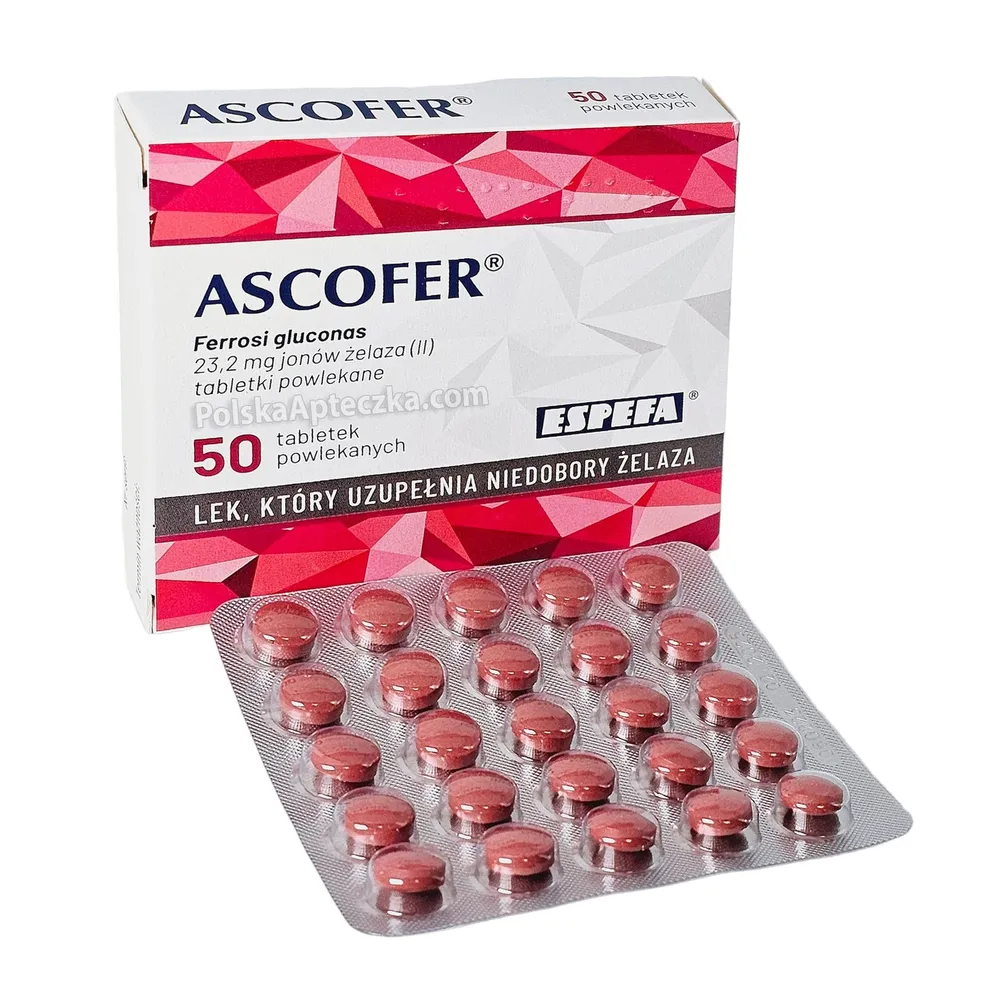
Table of Contents
Package leaflet: Information for the patient
ASCOFER, 23.2 mg iron(II) ions, coated tablets
Ferrosi gluconas
Please read the entire leaflet carefully before using the medicine, as it contains
important information for the patient.
This medicine should always be used exactly as described in the patient leaflet or as directed by the
physician.
- Keep this leaflet, so that you may read it again if necessary.
- If you need advice or further information, please consult your pharmacist.
- If you experience any adverse reactions, including any possible adverse reactions not listed in this leaflet, inform your doctor or pharmacist. See section 4.
- If there is no improvement or if you feel worse after 30 days, consult your doctor.
Table of contents of the leaflet:
- What Ascofer is and what it is used for
- Important information before taking Ascofer
- How to take Ascofer
- Possible side effects
- How to store Ascofer
- Contents of the pack and other information
1. What Ascofer is and what it is used for
Ascofer coated tablets contain 200 mg of hydrated iron(II) gluconate, corresponding to 23.2 mg of iron(II) ions, and are used to correct iron deficiency in the body. Iron deficiency may impair the production of red blood cells and tissue respiration by reducing the amount of oxygen-carrying and oxygen-utilizing proteins (hemoglobin and myoglobin).
Indications:
- Iron deficiency states associated with blood loss;
- Conditions of increased iron demand in the body (in children during periods of rapid growth, during pregnancy and breastfeeding);
- Conditions associated with impaired iron absorption or with a diet low in iron.
2. Important information before using Ascofer
When not to use Ascofer:
- if the patient is allergic to the active substance or to any of the other ingredients of this medicine listed in section 6;
- if the patient has blood disorders: haemosiderosis, haemochromatosis (hereditary conditions characterised by increased absorption and excessive deposition of iron in internal organs), haemolytic anaemia (reduced number of red blood cells due to shortened lifespan), aplastic anaemia (reduced number of red blood cells, white blood cells and platelets due to bone marrow failure), or proliferative disorders (blood cancers);
- if the patient is undergoing repeated blood transfusions;
- if the patient is receiving intravenous infusions of other iron-containing medicines;
- if the patient has been diagnosed with porphyria cutanea tarda (a disease caused by abnormal haem production, a component of haemoglobin);
- if the patient has gastrointestinal absorption disorders;
- if the patient has liver cirrhosis.
Warnings and precautions
Before starting treatment with Ascofer, consult a doctor or pharmacist.
- do not exceed the recommended doses of the medicine, especially in children;
- do not use Ascofer independently based on suspicion of iron deficiency (this should be confirmed medically);
- do not use iron-containing medicines for prolonged periods without medical advice, as this may lead to harmful accumulation of excess iron in the body;
- inform the doctor if the patient has hepatitis or impaired liver function, kidney disorders, intestinal inflammation, or active peptic ulcer disease of the stomach and/or duodenum;
- use of the medicine may cause black discoloration of stools due to unabsorbed iron; this does not affect the efficacy of the medicine and is not harmful to health;
- elderly patients have an increased risk of adverse reactions.
Ascofer with other medicines
Inform the doctor about all medicines currently used or recently used, as well as any medicines the patient plans to take.
Iron absorption is reduced by agents that neutralize gastric acid, certain antibiotics (e.g. tetracycline derivatives, neomycin), cholestyramine, magnesium trisilicate, trientine, entacapone, proton pump inhibitors, calcium and bismuth salts, and pancreatic extracts.
Concomitant use of iron salts and tetracycline antibiotics may reduce absorption of both.
Simultaneous administration of iron and zinc may reduce absorption of both.
Iron absorption is enhanced in the presence of ascorbic acid (vitamin C).
Oral iron compounds reduce the effectiveness of methyldopa, levodopa, carbidopa, bisphosphonates, and thyroxine (worsening symptoms of hypothyroidism).
Iron reduces the absorption of penicillamine, fluoroquinolones (ciprofloxacin, norfloxacin, levofloxacin, ofloxacin), and mycophenolate mofetil (a medicine used in transplant patients).
The antibiotic chloramphenicol may delay the action of iron.
Concomitant use of iron with dimercaprol should be avoided.
Simultaneous use of medicines containing bicarbonates, carbonates, oxalates, or phosphates reduces iron absorption.
When taking oral iron preparations, an interval of at least one hour before or two hours after taking the above-mentioned medicines should be maintained.
Ascofer with food and drink
It is not recommended to take the medicine simultaneously with coffee, tea, eggs, food containing bicarbonates, carbonates, oxalates or phosphates, milk and dairy products, wholemeal bread or cereal flakes, and other fibre-containing foods, as they may reduce iron absorption.
Oral iron preparations should not be taken within one hour before or two hours after consuming the above-mentioned food products.
Use of Ascofer in patients with impaired kidney and/or liver function
Consult a doctor before using the medicine.
Pregnancy and breastfeeding
If the patient is pregnant or breastfeeding, suspects she may be pregnant, or is planning to have a child, she should consult a doctor before using this medicine.
Driving and operating machinery
Ascofer does not affect the ability to drive or operate machinery.
Ascofer contains an azo dye – Allura Red AC, lake (E 129)
This medicine may cause allergic reactions.
3. How to use Ascofer
This medicine should always be used exactly as described in this patient leaflet or as directed by your
doctor. If in doubt, consult your doctor or pharmacist.
Recommended dose
Adults
Therapeutic use: usually 2 coated tablets three times daily during or after meals;
in cases of significant deficiency: 2 coated tablets four times daily.
Prophylactic use: approximately 60 mg of iron (3 coated tablets) daily in divided doses.
Use in children
Therapeutic use in children over 3 years of age: 4 mg to 6 mg of iron per kg of body weight daily in divided doses.
Prophylactic use: 2 mg of iron per kg of body weight daily in divided doses.
Achieving the full therapeutic effect requires regular and prolonged use.
Taking more Ascofer than recommended
If you take more than the recommended dose, consult your doctor or pharmacist.
In case of a significantly overdose (e.g. by a child), seek immediate medical attention at a clinic or hospital, as swallowing a large number of tablets may cause severe poisoning.
Missing a dose of Ascofer
Do not take a double dose to make up for a missed dose.
Stopping treatment with Ascofer
Ascofer should be taken as directed by your doctor. Do not discontinue treatment without consulting your doctor.
If you have any further questions about the use of this medicine, consult your doctor or pharmacist.
4. Possible adverse effects
Like all medicines, this medicine may cause adverse effects, although not everybody will experience them.
Gastrointestinal disorders:
Diarrhoea, constipation, nausea, vomiting, heartburn, epigastric pain.
In such cases, reducing the dose of the medicine is recommended.
Immune system disorders:
Hypersensitivity reactions.
Reporting of adverse effects
If any adverse effects occur, including any adverse effects not listed in this leaflet, inform a doctor or pharmacist. Adverse effects can be reported directly to the Department of Monitoring Adverse Drug Reactions of the Office for Registration of Medicinal Products, Medical Devices and Biocidal Products
Al. Jerozolimskie 181C
02-222 Warszawa
Tel.: + 48 22 49 21 301
Faks: + 48 22 49 21 309
Website: https://smz.ezdrowie.gov.pl
Adverse effects may also be reported to the responsible entity.
Reporting adverse effects enables the collection of further information on the safety of using the medicine.
5. How to store Ascofer
Keep the medicine out of the reach and sight of children.
Do not use this medicine after the expiry date stated on the carton. The expiry date refers to the last day of the stated month.
Store below 25°C.
Keep in the original packaging to protect from light.
Medicines should not be disposed of via wastewater or household waste. Ask your pharmacist how to dispose of medicines no longer in use. This will help protect the environment.
6. Contents of the packaging and other information
What Ascofer contains:
- The active substance is iron(II) gluconate monohydrate in a dose of 200 mg, corresponding to 23.2 mg of iron ions. Each coated tablet contains 200 mg of iron(II) gluconate monohydrate.
- The other ingredients (excipients) are: ascorbic acid, talc, potato starch, stearic acid, propylene glycol, and the coating AquaPolish P red consisting of: hypromellose, hydroxypropylcellulose, polyethylene glycol, medium-chain triglycerides, talc, titanium dioxide (E 171), Allura red AC, lac (E 129), black iron oxide (E 172), red iron oxide (E 172).
What Ascofer looks like and contents of the pack
The pack contains 50 coated tablets (2 blisters with 25 coated tablets each).
Marketing Authorisation Holder and Manufacturer
Chemiczno-Farmaceutyczna Spółdzielnia Pracy ESPEFA
ul. J. Lea 208,
30-133 Kraków, Poland
tel.: 12 639 27 27
Information for blind and partially sighted people: 800-007-777