Ascalcin plus raspberry flavor
Poland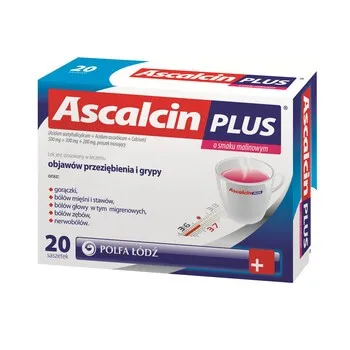
Table of Contents
- Patient Information Leaflet
- 1. What Ascalcin Plus Raspberry Flavour is and what it is used for
- 2. Important information before using Ascalcin Plus raspberry-flavoured
- 3. How to use Ascalcin Plus raspberry-flavoured
- 4. Possible adverse effects
- 5. How to store Ascalcin Plus raspberry-flavoured
- 6. Contents of the package and other information
Patient Information Leaflet
Ascalcin Plus Raspberry Flavour,
500 mg + 300 mg + 200 mg, effervescent powder
( Acetylsalicylic acid + Ascorbic acid + Calcium )
Please read this leaflet carefully before using the medicine, as it contains important information for you.
Always use this medicine exactly as described in this patient leaflet or as directed by your doctor or pharmacist.
- Keep this leaflet, as you may need to read it again.
- If you need advice or further information, please consult your pharmacist.
- If you experience any adverse reactions, including any possible side effects not listed in this leaflet, inform your doctor or pharmacist. See section 4.
- If there is no improvement or if your condition worsens after 3–5 days, consult your doctor.
Table of contents:
- What Ascalcin Plus Raspberry Flavour is and what it is used for
- Important information before taking Ascalcin Plus Raspberry Flavour
- How to take Ascalcin Plus Raspberry Flavour
- Possible side effects
- How to store Ascalcin Plus Raspberry Flavour
- Contents of the pack and other information
1. What Ascalcin Plus Raspberry Flavour is and what it is used for
Ascalcin Plus Raspberry Flavour contains acetylsalicylic acid, ascorbic acid (vitamin C), and calcium.
Acetylsalicylic acid belongs to a group of medicines called non-steroidal anti-inflammatory drugs (NSAIDs). It has antipyretic, analgesic, and anti-inflammatory properties.
Ascorbic acid (vitamin C) and calcium support normal vascular wall function. They reduce vascular permeability and exert anti-exudative and anti-edematous effects.
Ascalcin Plus Raspberry Flavour contains ingredients that allow rapid and complete dissolution of its components in water. This ensures good absorption and tolerability.
The medicine has analgesic, antipyretic, and anti-inflammatory properties.
It is used for the treatment of:
- symptoms of cold and flu;
- fever;
- muscle and joint pain;
- headaches, including migraines;
- toothache;
- neuralgia.
If there is no improvement or if your condition worsens after 3 to 5 days, consult your doctor.
2. Important information before using Ascalcin Plus raspberry-flavoured
When not to use Ascalcin Plus raspberry-flavoured
if the patient is allergic to acetylsalicylic acid (present in many cold and flu medicines) or other salicylates, ascorbic acid, calcium, or any of the other ingredients of this medicine (listed in section 6);
if the patient has active peptic ulcer disease of the stomach or duodenum; inflammatory conditions of the gastrointestinal tract;
if the patient has an increased tendency to bruising or bleeding (bleeding diathesis, coagulation disorders);
if the patient is taking anticoagulant medicines or antiplatelet agents;
if the patient has acid-base balance disorders (e.g. diabetes, uraemia, tetany);
if the patient has significantly increased calcium levels in the blood;
if the patient has a history of bronchial asthma attacks triggered by salicylates or substances with similar action, particularly non-steroidal anti-inflammatory drugs (NSAIDs);
if the patient has severe kidney disease;
if the patient has severe liver disease;
if the patient has severe heart failure;
if the patient is in the last trimester of pregnancy;
if the patient has phenylketonuria (a genetic disorder characterised by deficiency of the enzyme phenylalanine hydroxylase);
in children under 12 years of age with viral infections, as this may lead to the development of a rare condition known as Reye's syndrome;
do not administer simultaneously with methotrexate taken in doses of 15 mg per week or higher.
Warnings and precautions
Exercise special caution when using Ascalcin Plus raspberry-flavoured:
if the patient is allergic to other medicines in the group of non-steroidal anti-inflammatory drugs (NSAIDs);
if the patient has allergies (e.g. hay fever) or asthma;
if the patient experiences uterine bleeding or excessive menstrual bleeding;
if the patient is scheduled for surgery (do not take the medicine at least 5 days before the procedure);
if the patient has gout;
if the patient has had stomach or intestinal ulcers or gastrointestinal bleeding;
if the patient has mild kidney or liver disease;
if the patient has moderate heart failure (heart disease which may present with breathlessness and swelling of the feet);
if the patient uses an intrauterine contraceptive device;
if the patient has hypertension;
if the patient lacks the enzyme called glucose-6-phosphate dehydrogenase;
if the patient is on a low-sodium diet: the medicine contains 178–356 mg of sodium per dose, which should be taken into account in patients with reduced kidney function and in patients monitoring sodium intake in their diet;
the medicine contains a source of phenylalanine. It may be harmful to patients with phenylketonuria.
Other important information:
Taking medicines containing acetylsalicylic acid may be associated with a small increased risk of heart attack (myocardial infarction) or stroke. This risk increases with long-term use of high doses. Do not use higher doses or longer treatment duration than the recommended 3–5 days.
In case of heart disorders, history of stroke, or suspected risk of such conditions (e.g. high blood pressure, diabetes, elevated cholesterol, smoking), discuss the treatment approach with a doctor or pharmacist.
Adolescents and children suffering from viral infections (with or without fever) should not take Ascalcin Plus raspberry-flavoured without consulting a doctor. Otherwise, Reye's syndrome—a rare but life-threatening condition—may occur.
Ascalcin Plus raspberry-flavoured and other medicines
Inform your doctor or pharmacist about all medicines currently used or recently used, as well as any medicines planned for future use.
Do not use Ascalcin Plus raspberry-flavoured simultaneously with methotrexate taken in doses of 15 mg per week or higher, as this increases the toxic effect of methotrexate on bone marrow.
Concomitant use of selective serotonin reuptake inhibitors (SSRIs, medicines used e.g. for depression) with acetylsalicylic acid increases the risk of upper gastrointestinal bleeding due to synergistic effects of these medicines.
Do not use Ascalcin Plus raspberry-flavoured if the patient is simultaneously taking:
anticoagulants or antiplatelet agents (e.g. coumarin derivatives, heparin, ticlopidine);
antidiabetic medicines (insulin, sulfonylurea derivatives);
sulfonamides (used in bacterial infections);
phenytoin or valproic acid (antiepileptic medicines);
digoxin (used in heart failure treatment);
methotrexate in doses less than 15 mg (used e.g. in cancer diseases and rheumatoid arthritis).
Ascalcin Plus raspberry-flavoured may reduce or enhance the effect of other medicines. Exercise particular caution when taking concomitantly:
corticosteroids and other non-steroidal anti-inflammatory drugs (NSAIDs), as this may lead to adverse gastrointestinal effects and kidney damage;
cardiac glycosides (digoxin and strophanthin derivatives, medicines used in heart diseases), as cardiac arrhythmias may occur;
medicines used in gout treatment (e.g. probenecid);
diuretics (e.g. furosemide, thiazide diuretics);
antihypertensive medicines (captopril, enalapril);
amphetamines;
tricyclic antidepressants (e.g. opipramol, doxepin);
fluoride compounds;
certain antibiotics (fluoroquinolones and tetracyclines, used in bacterial infections); a 3-hour interval should be maintained between these antibiotics and Ascalcin Plus raspberry-flavoured;
vitamin D and calcium channel blockers (a group of medicines used in hypertension).
Ascalcin Plus raspberry-flavoured with food, drink and alcohol
The medicine should be taken after meals.
Consumption of alcohol during treatment may intensify the irritating effect of acetylsalicylic acid on the gastrointestinal tract.
Pregnancy, breastfeeding and fertility
If the patient is pregnant or breastfeeding, suspects she may be pregnant, or is planning to have a child, she should consult a doctor or pharmacist before using this medicine.
Do not use Ascalcin Plus raspberry-flavoured during pregnancy or breastfeeding.
Ascalcin Plus raspberry-flavoured may adversely affect fertility in women. This effect is reversible and resolves after discontinuation of treatment.
Driving and operating machinery
Ascalcin Plus raspberry-flavoured, when used at recommended doses, has no effect or negligible effect on the ability to drive vehicles or operate machinery.
Ascalcin Plus raspberry-flavoured contains sodium.
The medicine contains 178–356 mg of sodium per dose (1–2 sachets). This should be taken into account in patients with reduced kidney function and in patients monitoring sodium intake in their diet.
Ascalcin Plus raspberry-flavoured contains aspartame – a source of phenylalanine. It may be harmful to patients with phenylketonuria.
Ascalcin Plus raspberry-flavoured contains a small amount of sucrose.
If the patient has previously been diagnosed with intolerance to certain sugars, the patient should consult a doctor before taking this medicine.
The ascorbic acid (vitamin C) contained in the medicine may interfere with the results of certain tests performed by redox methods (e.g. blood and urine glucose or creatinine tests, faecal occult blood testing).
3. How to use Ascalcin Plus raspberry-flavoured
This medicine should always be taken exactly as described in this patient leaflet or as directed by a doctor or pharmacist. In case of doubt, consult your doctor or pharmacist.
Ascalcin Plus raspberry-flavoured is indicated for use in adults and children over 12 years of age.
Recommended dose:
Adults:
1 or 2 sachets 3 times daily.
Maximum daily dose is 6 sachets.
Elderly patients (over 65 years of age):
1 sachet 3 times daily.
Maximum daily dose is 3 sachets.
Use in children and adolescents
Children over 12 years of age:
1 sachet 3 times daily.
Maximum daily dose is 3 sachets.
Dissolve the contents of one sachet in ½ glass of lukewarm water, mix and drink.
It is recommended to take the medicine after meals.
Do not use Ascalcin Plus raspberry-flavoured for longer than the recommended 3–5 days.
Taking more Ascalcin Plus raspberry-flavoured than recommended
If you accidentally take more than the recommended daily dose, symptoms of overdose (related to the presence of acetylsalicylic acid) may occur: increased breathing rate, nausea, vomiting, visual and hearing disturbances (tinnitus), headache and dizziness, acid-base and electrolyte imbalances (e.g. potassium deficiency), decreased blood glucose levels, skin changes.
In cases of acute poisoning, the following may occur: delirium, tremor, shortness of breath, excessive sweating, psychomotor agitation, high fever, coma.
If you take more than the recommended dose, seek immediate medical advice from a doctor or pharmacist.
If you forget to take Ascalcin Plus raspberry-flavoured
Ascalcin Plus raspberry-flavoured is taken as needed. If you miss a dose and symptoms persist, take the next dose as scheduled.
Do not take a double dose to make up for a missed dose.
Stopping Ascalcin Plus raspberry-flavoured
If you have any further questions about the use of this medicine, consult your doctor or pharmacist.
4. Possible adverse effects
Like all medicines, this medicine can cause adverse effects, although not everybody gets them.
You should contact a doctor if any of the following serious adverse effects occur:
- gastrointestinal bleeding in the form of coffee-ground vomit and tarry stools;
- erosion of the gastrointestinal mucosa;
- allergic reactions (such as severe difficulty breathing or wheezing, shortness of breath).
Other adverse effects may also occur:
- increased risk of bleeding;
- exacerbation or recurrence of peptic ulcer disease;
- nausea, vomiting, abdominal pain;
- increased menstrual bleeding;
- skin reactions: erythema, urticaria;
- oedema;
- hypertension;
- heart failure;
- dizziness;
- tinnitus;
- sweating.
Medicines containing acetylsalicylic acid may be associated with a small increased risk of heart attack (myocardial infarction) or stroke.
The medicine, when used at recommended doses, is generally well tolerated.
Reporting of adverse effects
If any adverse effects occur, including any adverse effects not listed in this leaflet, inform your doctor, pharmacist, or nurse. Adverse effects can be reported directly to the Department of Monitoring of Adverse Drug Reactions at the Office for Registration of Medicinal Products, Medical Devices and Biocidal Products:
Al. Jerozolimskie 181C
02-222 Warsaw
tel.: + 48 22 49 21 301
fax: + 48 22 49 21 309
e-mail: [email protected]
Adverse effects can also be reported to the marketing authorization holder.
Reporting adverse effects helps to provide more information on the safety of this medicine.
5. How to store Ascalcin Plus raspberry-flavoured
Do not store above 25°C.
Keep in the original packaging to protect from moisture.
Keep the medicine out of sight and reach of children.
Do not use this medicine after the expiry date stated on the packaging after EXP.
The expiry date refers to the last day of the stated month. Do not use the medicine if you notice
any changes in the appearance of the powder in the sachets.
Medicines should not be disposed of via wastewater or household waste. Ask your pharmacist how to dispose of medicines no longer required. Such measures will help protect the environment.
6. Contents of the package and other information
What Ascalcin Plus raspberry-flavoured contains
- The active substances are:
- acetylsalicylic acid 500 mg
- ascorbic acid (vitamin C) 300 mg
- calcium (as calcium lactogluconate) 200 mg
- The other ingredients (excipients) are: sodium hydrogen carbonate, anhydrous citric acid, povidone K-25, raspberry flavour, aspartame, beta-carotene 1% (containing sucrose), sodium lauryl sulfate.
What Ascalcin Plus raspberry-flavoured looks like and contents of the pack
The medicine is a pink-coloured effervescent powder in sachets.
The outer packaging – a cardboard box – contains 6, 8, 10, 14, 20 or 28 sachets and the patient information leaflet.
Not all pack sizes may be marketed.
Marketing Authorisation Holder
URGO Sp. z o.o.
Al. Jerozolimskie 142 B
02-305 Warsaw
tel/fax: 22 616 33 48 / 22 617 69 21
Manufacturer
SENSILAB Polska Spółka z ograniczoną odpowiedzialnością – Spółka komandytowo-akcyjna
ul. gen. Mariana Langiewicza 58
95-050 Konstantynów Łódzki