Asanix pph
Poland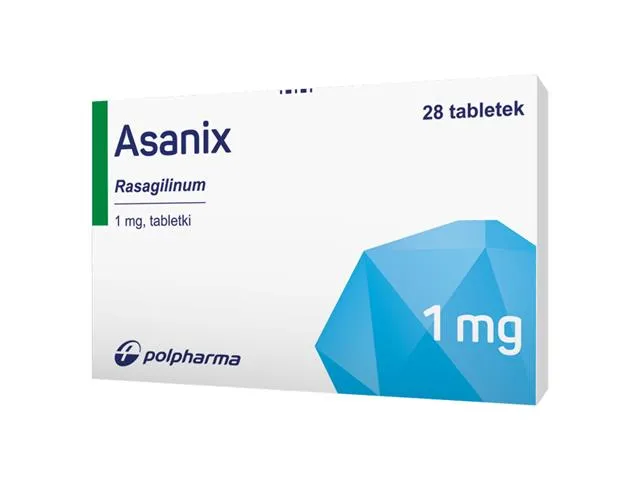
Table of Contents
Package leaflet: Information for the patient
Asanix PPH, 1 mg, tablets
Rasagilinum
Please read all of this leaflet carefully before taking this medicine, because it contains
important information for you
- Keep this leaflet, as you may need to read it again.
- If you have any further questions, please ask your doctor or pharmacist.
- This medicine has been prescribed for a specific individual. Do not pass it on to others. It may harm someone else, even if their symptoms are the same.
- If you experience any adverse effects, including any not listed in this leaflet, tell your doctor or pharmacist. See section 4.
Leaflet contents:
- What Asanix PPH is and what it is used for
- Important information before taking Asanix PPH
- How to take Asanix PPH
- Possible side effects
- How to store Asanix PPH
- Contents of the pack and other information
1. What Asanix PPH is and what it is used for
Asanix PPH contains the active substance rasagiline and is used in adults to treat Parkinson's disease. It may be given either in combination with levodopa (another medicine used in the treatment of Parkinson's disease) or without levodopa.
In Parkinson's disease, there is loss of nerve cells that produce dopamine in the brain. Dopamine acts in the brain as a neurotransmitter affecting movement control. Asanix PPH increases and maintains dopamine concentration in these areas.
2. Important information before using Asanix PPH
When not to use Asanix PPH
- if the patient is allergic to rasagiline or any of the other ingredients of this medicine (listed in section 6);
- if the patient has severe liver function impairment.
During treatment with Asanix PPH, the following medicines must not be used concomitantly:
- monoamine oxidase inhibitors (MAO inhibitors) (used, for example, in the treatment of depression associated with Parkinson's disease or for any other indication), including over-the-counter medicines and herbal remedies such as St. John's wort.
- pethidine (a strong painkiller). At least 14 days must elapse between stopping Asanix PPH and starting treatment with MAO inhibitors or pethidine.
Warnings and precautions
Before starting treatment with Asanix PPH, consult your doctor or pharmacist if:
- the patient has any liver function disorders;
- the patient has suspicious skin lesions. Treatment with Asanix PPH may increase the risk of skin cancer.
Inform your doctor if the patient or their family notice unusual behaviour characterised by an inability to resist an impulse, drive or urge to perform certain actions that could be harmful to the patient or others. These behaviours are known as impulse control disorders. Such behaviours have been observed in patients treated with Asanix PPH and/or other medicines used in the treatment of Parkinson's disease, including compulsions, obsessive thoughts, pathological gambling, uncontrolled spending, impulsive actions, increased sexual drive or intense sexual feelings. Your doctor may decide to adjust the dose or discontinue the medicine (see section 4).
Asanix PPH may cause drowsiness and sudden sleep onset during daily activities, especially when other dopaminergic medicines (used in the treatment of Parkinson's disease) are taken concomitantly. Further information is provided in the section: "Driving and using machines".
Children and adolescents
The use of Asanix PPH in children and adolescents is not recommended. Therefore, Asanix PPH should not be used in patients under 18 years of age.
Asanix PPH with other medicines
Tell your doctor or pharmacist about all medicines currently used, recently taken, or planned to be used.
In particular, inform your doctor if the patient is taking any of the following medicines:
- certain antidepressants (selective serotonin reuptake inhibitors, selective serotonin and noradrenaline reuptake inhibitors, tricyclic or tetracyclic antidepressants);
- ciprofloxacin – an antibiotic used for infections;
- dextromethorphan – a cough suppressant;
- sympathomimetics, such as those contained in eye drops, nasal decongestants (nasal and oral), and cold remedies containing ephedrine or pseudoephedrine.
Concomitant use of Asanix PPH with antidepressants containing fluoxetine or fluvoxamine should be avoided.
Treatment with Asanix PPH may be initiated at least 5 weeks after discontinuation of fluoxetine.
Treatment with fluoxetine or fluvoxamine may be initiated at least 14 days after discontinuation of Asanix PPH.
Inform your doctor or pharmacist if you smoke or plan to stop smoking. Smoking may reduce the amount of Asanix PPH in the blood.
Pregnancy, breastfeeding and fertility
If the patient is pregnant or breastfeeding, suspects she may be pregnant, or plans to become pregnant, she should consult her doctor or pharmacist before using this medicine.
If the patient is pregnant, she should avoid taking Asanix PPH, as the effects of Asanix PPH on pregnancy and the unborn child are unknown.
Driving and using machines
Consult your doctor before driving or operating machinery, because Parkinson's disease and treatment with Asanix PPH may affect the ability to perform these activities. Asanix PPH may cause dizziness or drowsiness. It may also cause episodes of sudden sleep.
These effects may be more pronounced when other medicines used to treat symptoms of Parkinson's disease or other sedative medicines are taken concomitantly, or if alcohol is consumed during treatment with Asanix PPH. Patients who experience drowsiness and/or episodes of sudden sleep before or during treatment with Asanix PPH should not drive or operate machinery (see section 2).
Asanix PPH contains sodium
This medicine contains less than 1 mmol (23 mg) of sodium per tablet, i.e. this medicine is considered "sodium-free".
3. How to use Asanix PPH
This medicine should always be used according to the instructions given by the doctor or pharmacist. In case of doubts,
consult the doctor or pharmacist.
The recommended dose of Asanix PPH is 1 tablet of 1 mg taken orally once daily.
Asanix PPH can be taken with food or independently of meals.
Use of a higher than recommended dose of Asanix PPH
If the patient thinks they have taken too many tablets of Asanix PPH, they should immediately
consult a doctor or pharmacist. The Asanix PPH medicine package should be brought along to
show to the doctor or pharmacist.
Symptoms reported after overdose of Asanix PPH included: slightly euphoric mood (a mild form of mania), extremely high blood pressure, and serotonin syndrome (see section 4).
Missed dose of Asanix PPH
Do not take a double dose to make up for a missed dose. Take the next dose of Asanix PPH at the usual time.
Stopping treatment with Asanix PPH
Do not stop using Asanix PPH without first talking to your doctor.
If you have any further doubts regarding the use of this medicine, consult
your doctor or pharmacist.
4. Possible adverse reactions
Like all medicines, this medicine may cause adverse reactions, although not everyone experiences them.
If any of the following symptoms occur, you should contact a doctor immediately.
The patient may require urgent medical advice or treatment:
- if they develop unusual behaviours such as compulsions, obsessive thoughts, gambling addiction, uncontrollable shopping or spending, impulsive behaviour, excessive sex drive or increased sexual thoughts (impulse control disorders, see section 2).
- if they see or hear things that are not there (hallucinations).
- if any of the following symptoms occur together: hallucinations, fever, agitation, tremor, and sweating (serotonin syndrome).
Contact a doctor if the patient notices suspicious skin changes, as there may be an increased risk of skin cancer (not only melanoma) during treatment with this medicine (see section 2).
Other adverse reactions
Very common (may affect more than 1 in 10 people)
- involuntary body movements (dyskinesias)
- headache
Common (may affect up to 1 in 10 people)
- abdominal pain
- fall
- allergy
- fever
- flu-like symptoms
- malaise (weakness)
- neck pain
- chest pain (angina pectoris)
- low blood pressure upon standing with symptoms resembling dizziness (orthostatic hypotension)
- decreased appetite
- constipation
- dry mouth
- nausea and vomiting
- bloating
- abnormal blood test results (leukopenia)
- joint pain
- musculoskeletal pain
- arthritis
- numbness and weakness in the hand (carpal tunnel syndrome)
- weight loss
- unusual dreams
- impaired coordination of muscle groups (balance disorders)
- depression
- dizziness (vestibular origin)
- prolonged muscle tension (dystonia)
- cold (nasopharyngitis)
- skin irritation (dermatitis)
- rash
- eye congestion (conjunctivitis)
- sudden urge to urinate
Uncommon (may affect up to 1 in 100 people)
- stroke
- myocardial infarction
- blistering rash (vesiculobullous rash)
- confusion
Unknown frequency (cannot be estimated from available data)
- elevated blood pressure
- excessive sleepiness
- sudden sleep onset
Reporting of adverse reactions
If any adverse reactions occur, including any adverse reactions not listed in this leaflet, inform a doctor or pharmacist. Adverse reactions can be reported directly to the Department of Monitoring Adverse Drug Reactions of the Office for Registration of Medicinal Products, Medical Devices and Biocidal Products
Al. Jerozolimskie 181C
02-222 Warsaw
Phone: +48 22 49 21 301
Fax: +48 22 49 21 309
Website: https://smz.ezdrowie.gov.pl
Adverse reactions can also be reported to the marketing authorization holder.
Reporting adverse reactions helps provide more information on the safety of this medicine.
5. How to store Asanix PPH
Keep this medicine out of sight and reach of children.
Do not use this medicine after the expiry date stated on the cardboard box,
tablet container, or blister pack. The expiry date refers to the last day of the stated month.
The marking on the packaging following "EXP" indicates the expiry date, and following "LOT" indicates the batch number.
No special storage instructions for this medicine.
Medicines must not be disposed of via the sewage system or household waste. Ask your pharmacist how to dispose of medicines no longer in use. Proper disposal helps protect the environment.
6. Contents of the pack and other information
What Asanix PPH contains
- The active substance is rasagiline. Each tablet contains 1 mg of rasagiline (as rasagiline hydrogen tartrate).
- The other ingredients are: microcrystalline cellulose, maize starch, pregelatinized starch (maize), talc, sodium stearyl fumarate.
What Asanix PPH looks like and contents of the pack
Asanix PPH tablets are white or almost white, round, flat tablets with bevelled edges.
Pack sizes: 28, 30, 60, 84, 98, 100 and 112 tablets in blisters.
Pack sizes: 30 and 100 tablets in bottles with child-resistant closure containing a desiccant (silica gel). The desiccant is not intended for consumption.
Not all pack sizes may be marketed.
Marketing Authorisation Holder and Manufacturer
Marketing Authorisation Holder
Zakłady Farmaceutyczne POLPHARMA S.A.
ul. Pelplińska 19, 83-200 Starogard Gdański
tel. + 48 22 364 61 01
Manufacturer
Delorbis Pharmaceuticals Ltd
17 Athinon Street, Ergates Industrial Area
2643 Ergates
Cyprus
Iberfar – Indústria Farmacêutica, S.A.
Rua Consiglieri Pedroso, no. 121-123
Queluz de Baixo,
2734-501 Barcarena
Portugal