Artelac
Poland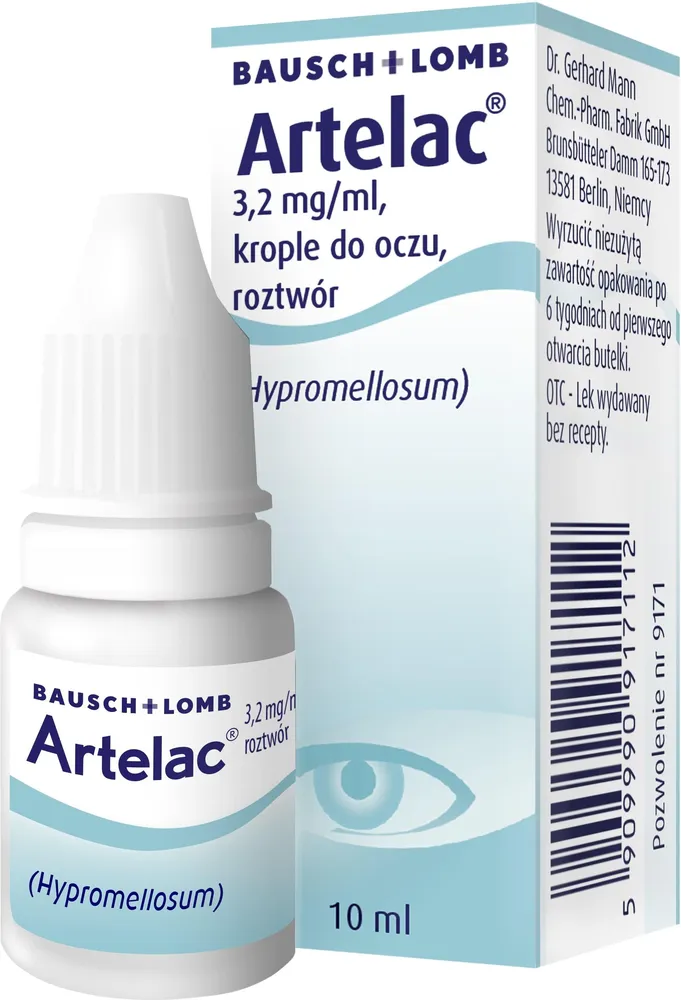
Table of Contents
Package leaflet: Information for the user
Warning! Keep this leaflet. The information on the immediate packaging is in a foreign language.
Artelac
3.2 mg/ml, eye drops, solution
Hypromellose
Please read the entire leaflet carefully before using this medicine, as it contains
important information for the patient.
This medicine should always be used exactly as described in this patient leaflet or as directed by the
physician or pharmacist.
- Keep this leaflet for future reference.
- If advice or further information is needed, consult a pharmacist.
- If the patient experiences any adverse reactions, including any possible adverse reactions not listed in this leaflet, inform the doctor, pharmacist, or nurse. See section 4.
- If there is no improvement or if the patient feels worse, contact the doctor.
Table of contents:
- What Artelac is and what it is used for
- Important information before using Artelac
- How to use Artelac
- Possible side effects
- How to store Artelac
- Contents of the pack and other information
1. What Artelac is and what it is used for
Artelac is an eye drop formulation. The active substance in Artelac is hypromellose.
Indications
Artelac is used for the symptomatic treatment of dry eye syndrome. Dry eye syndrome may occur
due to impaired tear secretion or when the eyelids cannot be fully or partially closed.
The product may also be used to moisten rigid contact lenses.
If there is no improvement or if the patient feels worse, contact the doctor.
One in five patients treated by an ophthalmologist has symptoms of dry eye syndrome. There are
many causes of this condition, such as reduced tear production associated with aging, working in air-conditioned rooms, computer work, hormonal changes during menopause, etc. Environmental pollution and climatic conditions may also contribute to the development of dry eye syndrome.
Understanding the term "dry eye"
During the day, we blink our eyelids approximately 14,000 times. With each blink, a very thin layer of tears is spread over the surface of the eye, maintaining smoothness, cleanliness, and moisture, and protecting against environmental contaminants. If the quantity or composition of the tear fluid is disturbed, drying of the cornea and conjunctiva occurs, leading to symptoms such as burning, dryness of the eye, sensation of sand in the eye, pressure sensation, and light sensitivity.
Page 1 of 5
2. Information before using Artelac
When not to use Artelac
- if the patient is allergic to hypromellose or any of the other ingredients of this medicine (listed in section 6).
Warnings and precautions
Before starting to use Artelac, discuss this with a doctor or pharmacist:
- Artelac is intended for ophthalmic use only.
- If eye irritation symptoms occur or worsen, or if eye pain, eye redness, or vision problems develop, discontinue use and contact an ophthalmologist.
- If symptoms of dry eye syndrome persist or worsen, use of the medicine should be discussed with a doctor.
- Contact lenses should be removed before administering the medicine and should not be reinserted earlier than approximately 15 minutes after application.
Artelac and other medicines
Inform your doctor or pharmacist about all medicines currently or recently used, as well as any medicines planned for future use.
Interactions with other medicines are currently unknown.
If Artelac is used together with other ophthalmic medicines applied locally, a 15-minute interval should be maintained between applications. Artelac should always be administered last, 15 minutes after the other medicine has been applied, to ensure sufficient duration of action and thus the moisturizing effect of Artelac.
Pregnancy and breastfeeding
If the patient is pregnant or breastfeeding, suspects she may be pregnant, or is planning to have a child, she should consult a doctor or pharmacist before using this medicine.
Artelac should not be used during pregnancy or breastfeeding unless otherwise decided by a doctor.
Driving and operating machinery
Artelac may temporarily blur vision shortly after instillation. Do not drive or operate machinery as long as vision remains blurred.
Artelac contains cetrimide as a preservative. It may cause eye irritation (burning sensation, redness, foreign body sensation) and corneal epithelial damage, especially when the medicine is used long-term.
Therefore, for long-term or continuous treatment of dry eye syndrome, preservative-free formulations are recommended.
Artelac contains disodium dihydrogen diphosphate dihydrate and sodium hydrogen phosphate dodecahydrate
(1 ml of solution contains 1.84 mg of phosphates).
In patients with severe damage to the transparent, anterior part of the eye (cornea), phosphates may very rarely cause corneal opacities during treatment due to calcium accumulation.
3. How to use Artelac
Page 2 of 5
This medicine should always be used exactly as described in this patient information leaflet or as directed by your doctor or pharmacist. If in doubt, consult your doctor or pharmacist.
Recommended dose
Treatment of dry eye syndrome requires individual dosing.
Depending on the severity and intensity of symptoms, one drop should usually be instilled into the conjunctival sac 3 to 5 times daily, or more frequently as needed.
Consult an ophthalmologist if long-term or continuous treatment with Artelac is required.
The medicine may also be used to moisten rigid contact lenses.
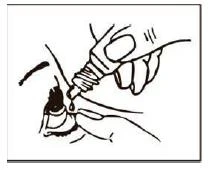
Instructions for administering the medicine:
Caution!
To avoid contamination of the eye drops, do not touch the dropper tip with your fingers, or touch it to the eye surface or any other surface. Using contaminated drops may lead to serious eye damage, including loss of vision.
- Wash your hands thoroughly.
- Unscrew the protective cap.
- Hold the bottle upright above the eye, using your thumb and index finger.
- Tilt your head backward.
- With the index finger of the other hand, gently pull down the lower eyelid to form a "pocket" between the eyeball and the eyelid, into which the drop will be instilled.
- Bring the dropper tip close to the eye, without touching the eye, eyelid, surrounding area, or any other surface.
- Gently squeeze the bottle walls to release a single drop of the medicine.
- Look upward and instill 1 drop into the formed "pocket." If the drop misses the eye, repeat the procedure.
- Try to keep the eye open and move it around to spread the drop evenly.
- If drops are to be administered to both eyes, repeat the above steps for the second eye.
- Immediately after use, close the bottle carefully.
Having assistance from another person or using a mirror may make administration easier.
If you feel that the effect of Artelac is too strong or too weak, consult your doctor or pharmacist.
Overdose of Artelac
If more medicine is accidentally used than recommended, this may cause visual disturbances, which resolve quickly.
Missed dose of Artelac
Page 3 of 5
If a dose is missed, apply the next dose at the usual time according to the recommended dosing schedule. Do not use a double dose to make up for a missed dose.
If you have any further doubts regarding the use of this medicine, consult your doctor or pharmacist.
4. Possible adverse reactions
Like all medicines, this medicine can cause adverse reactions, although not everybody gets them.
The frequency of possible adverse reactions is defined as follows:
Very common – occurs in more than 1 in 10 people
Common – occurs in 1 to 10 in 100 people
Uncommon – occurs in 1 to 10 in 1,000 people
Rare – occurs in 1 to 10 in 10,000 people
Very rare – occurs in fewer than 1 in 10,000 people
Frequency not known – cannot be estimated from available data
The following adverse reactions may occur:
Frequency not known:
- Conjunctival hyperaemia
- Eye irritation
- Eye pain
- Itching of the eye
- Burning sensation in the eye
- Eye redness
- Foreign body sensation
- Excessive tearing
- Eyelid sticking
- Visual disturbances
- Hypersensitivity
- Itching
- Rash
- Corneal opacities due to calcium deposits (see section 2 for additional information)
Reporting of adverse reactions
If any adverse reactions occur, including any adverse reactions not listed in this leaflet, inform your doctor, pharmacist or nurse. Adverse reactions can also be reported directly to the Department of Monitoring Adverse Drug Reactions of the Office for Registration of Medicinal Products, Medical Devices and Biocidal Products
Al. Jerozolimskie 181 C
02-222 Warsaw
Phone: +48 22 49 21 301
Fax: +48 22 49 21 309
Website: https://smz.ezdrowie.gov.pl
Reporting adverse reactions helps to provide more information on the safety of this medicine.
Page 4 of 5
5. How to store Artelac
Keep the medicine out of sight and reach of children.
Store below 30°C.
Keep the bottle tightly closed.
Do not use this medicine after the expiry date stated on the container. The expiry date refers to the last day of the stated month.
The shelf life after first opening the bottle is 6 weeks.
The unused contents of the container should be discarded 6 weeks after first opening the bottle.
Medicines should not be disposed of via wastewater or household waste. Ask your pharmacist how to dispose of medicines no longer required. These measures will help protect the environment.
6. Contents of the package and other information
What Artelac contains
- The active substance is hypromellose. 1 ml of solution contains 3.2 mg of hypromellose.
- The other ingredients are: cetylpyridinium chloride, disodium edetate, sodium dihydrogen phosphate dihydrate, disodium phosphate dodecahydrate, sorbitol, water for injections.
What Artelac looks like and contents of the pack
The medicine is in the form of eye drops, solution.
Available pack sizes:
Bottle containing 10 ml of eye drops.
For more detailed information, please contact the responsible party or the parallel importer.
Marketing Authorisation Holder in the Netherlands, country of export:
BAUSCH + LOMB IRELAND LIMITED, 3013 Lake Drive, Citywest Business Campus, Dublin 24, D24PPT3, Ireland
Manufacturer:
Dr. Gerhard Mann Chem-Pharm Fabrik GmbH, Brunsbütteler Damm 165/173, D-13581 Berlin, Germany
Parallel Importer:
Delfarma Sp. z o.o., ul. Św. Teresy od Dzieciątka Jezus 111, 91-222 Łódź, Poland
Repackaged in:
Delfarma Sp. z o.o., ul. Św. Teresy od Dzieciątka Jezus 111, 91-222 Łódź, Poland
Marketing Authorisation Number in the Netherlands, country of export: RVG 32371
Parallel Import Licence Number: 136/23
Page 5 of 5