Arilin rapid
Poland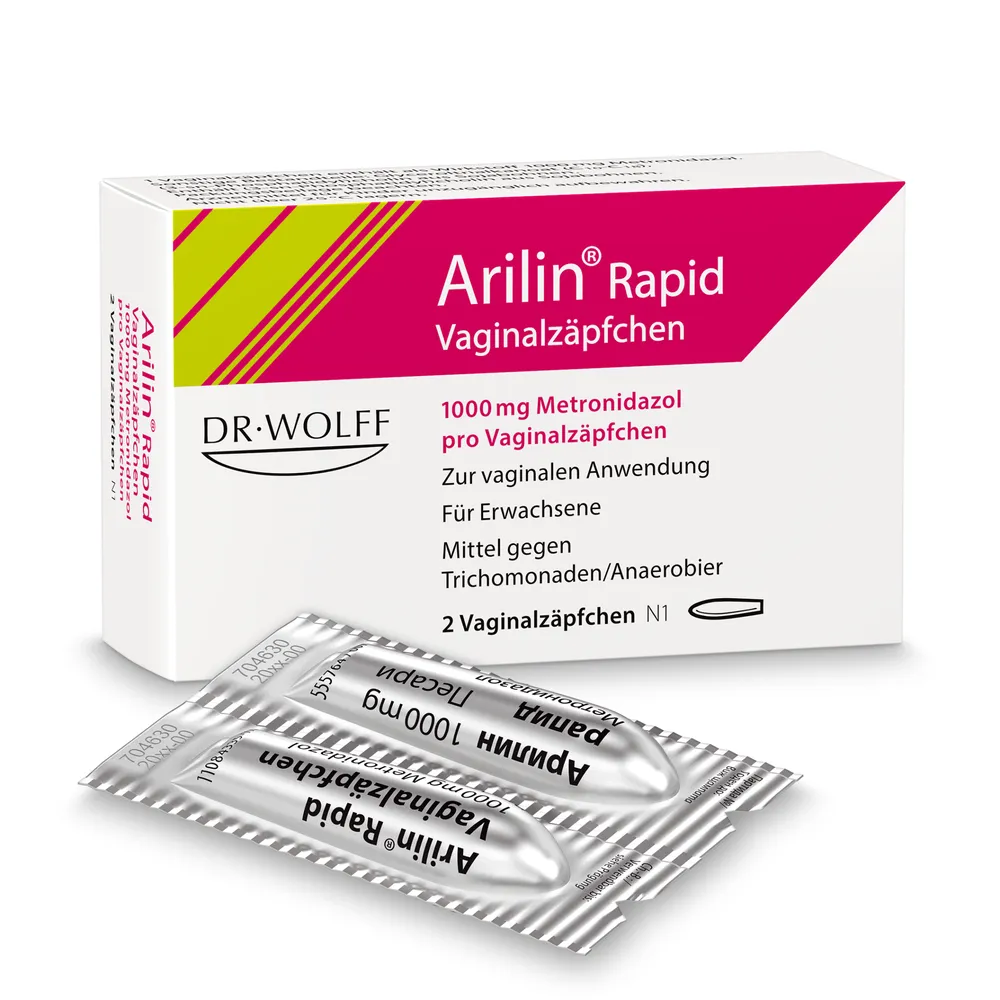
Table of Contents
Package leaflet: Information for the patient
Keep this leaflet! Information on the immediate packaging in a foreign language.
Arilin Rapid
1000 mg, globules
Metronidazolum
Please read this leaflet carefully before using the medicine, as it contains
important information for the patient.
- Keep this leaflet so that you can read it again if necessary.
- If you have any questions, consult your doctor or pharmacist.
- This medicine has been prescribed for a specific individual. Do not pass it on to others. The medicine may harm another person, even if their symptoms are the same.
- If the patient experiences any adverse reactions, including any not listed in this leaflet, inform the doctor or pharmacist. See section 4.
Table of contents of the leaflet
- What is Arilin Rapid and what is it used for
- Important information before using Arilin Rapid
- How to use Arilin Rapid
- Possible side effects
- How to store Arilin Rapid
- Contents of the pack and other information
1. What is Arilin Rapid and what is it used for
Arilin Rapid is a medicine in the form of vaginal globules containing metronidazole –
a chemotherapeutic agent belonging to the nitroimidazole group. In susceptible anaerobic bacteria, as well as in certain protozoa, metronidazole inhibits nucleic acid synthesis, leading to microbial cell death. Resistance to antibiotics does not imply resistance to metronidazole (i.e. no cross-resistance has been observed).
Arilin Rapid is indicated for the treatment of trichomoniasis or nonspecific bacterial vaginitis.
2. Important information before using Arilin Rapid
When not to use Arilin Rapid:
- if the patient is allergic to metronidazole, other 5-nitroimidazole derivatives, soy, peanuts, or any of the other ingredients of this medicine (listed in section 6).
Warnings and precautions
Before starting treatment with Arilin Rapid, discuss this with a doctor or pharmacist,
especially if the patient has:
- severe liver impairment,
- blood cell formation disorders,
- diseases of the central or peripheral nervous system. In such cases, the doctor will carefully assess the risks of treatment versus potential benefits.
If any of the following symptoms occur during treatment with Arilin Rapid,
seek immediate medical help and discontinue the medicine. See also section 4.
- Sudden drop in blood pressure, shortness of breath, dizziness, vomiting, altered consciousness, cold sweats, and pallor and coldness of hands and feet. These may be symptoms of life-threatening anaphylactic shock.
Until medical help arrives, the patient should be placed in a horizontal position with legs elevated, covered with a blanket to prevent loss of body heat. The doctor will initiate appropriate emergency measures (e.g. administer antihistamines, corticosteroids, sympathomimetic drugs, and if necessary, provide respiratory support).
- Severe, persistent diarrhoea occurring during or within the first few weeks after completing treatment. This may be a sign of pseudomembranous colitis (a serious intestinal disease, most commonly caused by Clostridium difficile bacteria). This condition, associated with antibiotic use, may be life-threatening and requires immediate medical attention. The doctor may consider appropriate treatment (e.g. specific antibiotics or chemotherapeutic agents). Do not take medications that inhibit intestinal motility (peristalsis).
- Fever, exhaustion, tonsillitis, and oral cavity inflammation. These may be symptoms of agranulocytosis. If these symptoms occur, contact a doctor immediately. The doctor will recommend a blood count test.
- Numbness, sensory disturbances, and tingling in the limbs. These may be symptoms of peripheral neuropathy. Immediate medical attention is required.
In patients with Cockayne syndrome, severe hepatotoxicity (acute liver failure), including fatal cases, has been reported during treatment with metronidazole-containing medicines.
In patients with Cockayne syndrome, the doctor should monitor liver function during and after metronidazole treatment.
Immediately inform the doctor and discontinue metronidazole if the patient develops any of the following symptoms: abdominal pain, loss of appetite, nausea, vomiting, fever, malaise, fatigue, jaundice, dark urine, pale or loose stools, or skin itching.
Metronidazole should not be used for longer than 10 days, except in special circumstances.
Repeated courses of treatment are rarely recommended, as damage to human germ cells cannot be excluded. Furthermore, various tumour changes have been observed in animal studies.
Arilin Rapid may damage latex-containing products (e.g. condoms, vaginal caps), thereby reducing their effectiveness.
Arilin Rapid and other medicines
Inform the doctor or pharmacist about all medicines currently used or recently used, as well as any medicines planned for future use.
The interactions listed below have been observed after systemic administration of metronidazole (oral, rectal, or intravenous).
Anticoagulants of the coumarin group (e.g. warfarin, acenocoumarol). The doctor should carefully monitor coagulation parameters, as metronidazole increases blood coagulability and may necessitate an increase in the dose of the anticoagulant.
Lithium. Increased serum lithium concentrations have been observed when used concomitantly with metronidazole.
Barbiturates and phenytoin reduce the effectiveness of metronidazole.
Cimetidine may, in individual cases, affect the elimination of metronidazole from the body and thus increase metronidazole serum concentrations.
Administration of silymarin/silibinin (active substances used in the treatment of liver poisoning) reduces the effectiveness of Arilin Rapid.
Medicines containing diosmin (an active substance used in the treatment of venous disorders) may increase metronidazole blood levels and consequently intensify the effect and/or adverse effects of Arilin Rapid.
Concomitant administration of cyclosporine (a medicine that suppresses or weakens the immune response) and Arilin Rapid may increase cyclosporine serum concentrations. Therefore, serum cyclosporine and creatinine levels should be closely monitored.
The toxic effect of 5-fluorouracil (a chemotherapeutic agent used in cancer treatment) may increase, as its excretion is reduced when administered together with Arilin Rapid.
The toxic effect of busulfan (a chemotherapeutic agent) may be significantly enhanced.
Effect on results of certain laboratory tests. Metronidazole may reduce serum aspartate aminotransferase (AspAT) enzyme activity test results.
Concomitant administration of metronidazole and tacrolimus (a medicine used to prevent organ transplant rejection) leads to increased blood tacrolimus concentrations. Therefore, frequent monitoring of blood tacrolimus levels and kidney function is required.
Concomitant use of metronidazole and amiodarone (a medicine used to treat cardiac arrhythmias) may affect heart function. Therefore, regular monitoring of heart function with ECG is recommended. Consult a doctor if the patient experiences symptoms of cardiac arrhythmia, such as dizziness, palpitations, or brief fainting.
Concomitant administration with antibiotics may reduce the systemic availability of mycophenolate mofetil (an immunosuppressive medicine). Therefore, simultaneous monitoring through laboratory tests is recommended.
Arilin Rapid and alcohol
Alcohol consumed during metronidazole treatment may increase the risk of adverse effects such as flushing of the skin and neck, nausea, vomiting, headache, and dizziness (a disulfiram-like reaction).
The patient should not drink alcohol during treatment and for 48 hours after stopping Arilin Rapid, as symptoms of alcohol intolerance may occur following vaginal administration of metronidazole.
Pregnancy and breastfeeding
If the patient is pregnant or breastfeeding, suspects she may be pregnant, or plans to have a child, she should consult a doctor or pharmacist before using this medicine.
Arilin Rapid should not be used during the first trimester of pregnancy (if pregnancy is possible, a pregnancy test should be performed before starting treatment).
During the second and third trimesters of pregnancy, Arilin Rapid may be used only if, in the doctor's opinion, it is necessary and other treatment methods are ineffective or contraindicated.
Arilin Rapid should not be used during breastfeeding. If its use is necessary, breastfeeding must be discontinued.
If the patient has taken a single dose of the medicine, breastfeeding should be interrupted for 24 hours, during which time milk should be expressed and discarded.
Driving and operating machinery
Arilin Rapid may affect reaction speed and thus the ability to drive vehicles and operate machinery. The greatest effect may occur at the beginning of treatment and when the patient consumes alcohol simultaneously. Alcohol consumption during metronidazole treatment may increase the risk of adverse effects such as skin and neck flushing, nausea, vomiting, headache, and dizziness.
3. How to use Arilin Rapid
This medicine should always be used as directed by the physician. In case of doubt, consult your
doctor or pharmacist.
For initial infections, administration of one globule (i.e. 1000 mg metronidazole) is sufficient.
For severe and recurrent infections, a two-day course is recommended (one globule per day for two days).
The globules should be inserted deeply into the vagina, preferably in the evening, while lying on the back
with knees slightly bent.
Use of a higher than recommended dose of Arilin Rapid
After oral administration of doses up to 15 g of metronidazole, nausea, vomiting, hyperreflexia
(exaggerated reflexes resulting, for example, from increased excitability of the nervous system), ataxia
(lack of motor coordination, disturbances in body movement coordination), tachycardia (accelerated heart rate),
shortness of breath, and confusion have been observed. No cases of death have been reported.
No specific antidote is known. Complete resolution of symptoms was observed within a few days
of symptomatic treatment.
In case of accidental ingestion of a higher than recommended dose of the medicine, consult a doctor.
4. Possible adverse effects
Like all medicines, this medicine can cause adverse effects, although not everyone will experience them.
After vaginal administration, only 20% of metronidazole passes into the bloodstream; therefore, adverse effects during treatment with Arilin Rapid occur rarely.
The adverse effects listed below have been observed during systemic administration of metronidazole (oral, rectal, intravenous).
Common (occurred in 1 to 10 out of 100 patients):
- metallic taste in the mouth, bitter taste during regurgitation, tongue coating, glossitis, inflammation, pressure in the stomach, nausea, vomiting, loss of appetite, diarrhoea.
- dark discoloration of urine may occur (caused by a metabolite of metronidazole). This change has no clinical significance.
Uncommon (occurred in 1 to 10 out of 1,000 patients):
- headache, dizziness, somnolence, insomnia, psychotic disorders including hallucinations and confusion, agitation, depression, disturbances in body motor coordination (ataxia);
- peripheral neuropathy (numbness, sensory disturbances and tingling in the limbs) and convulsions; see section 2. Warnings and precautions;
- skin reactions (e.g. itching, urticaria with blisters and vesicles – urticarial rash);
- drug fever;
- leukopenia (decreased number of leukocytes in peripheral blood) and granulocytopenia (decreased number of granulocytes in peripheral blood); for this reason, the doctor may recommend blood tests during prolonged treatment;
- anaphylactic reactions (rapidly developing hypersensitivity reactions); in mild form, they may lead to redness of inflamed skin, formation of blisters on the skin, allergic rhinitis (nasal catarrh) and allergic conjunctivitis; in severe form, they may be life-threatening due to dyspnoea and circulatory disturbances;
- dysuria (painful urination), cystitis, urinary incontinence;
- liver function disorders (increased aminotransferase activity and bilirubin concentration in blood);
- fungal infections (Candida) in the genital area;
- weakness (muscle), visual disturbances.
Very rare (occurred in fewer than 1 out of 10,000 patients):
- anaphylactic shock (sudden drop in blood pressure due to hypersensitivity); in severe cases, dyspnoea, dizziness, vomiting, disturbances in consciousness, cold sweats, pallor and coldness of hands and feet may occur; see section 2. Warnings and precautions;
- decreased number of blood platelets (thrombocytopenia);
- absence of a specific type of leukocytes (agranulocytosis);
- pancreatitis;
- pseudomembranous colitis (a severe intestinal disease characterized by persistent diarrhoea); see section 2. Warnings and precautions;
- allergic reactions caused by 3-sn-phosphatidylcholine (from soybean) – a component of lecithin contained in the globules;
- joint pain.
Frequency not known (cannot be estimated from the available data):
- unusual changes in the brain, cerebellar syndrome [e.g. speech impairment, gait disturbances, involuntary eye movements (nystagmus) and convulsions];
- severe skin reactions with life-threatening systemic reactions (e.g. erythema multiforme; (inflammatory skin condition with redness), bullous erythema multiforme (Stevens-Johnson syndrome), toxic epidermal necrolysis (Lyell's syndrome);
- hepatitis, sometimes with jaundice. In patients treated simultaneously with other antibiotics, cases of liver failure requiring liver transplantation have been reported.
- acute liver failure in patients with Cockayne syndrome (see section 2 "Warnings and precautions").
Reporting of adverse effects
If any adverse effects occur, including any adverse effects not listed in this leaflet, inform your doctor or pharmacist. Adverse effects can be reported directly to the Department of Monitoring of Adverse Drug Reactions of the Office for Registration of Medicinal Products, Medical Devices and Biocidal Products, Al. Jerozolimskie 181C, 02-222 Warsaw, tel.: + 48 22 49 21 301, fax: + 48 22 49 21 309, website: https://smz.ezdrowie.gov.pl.
Reporting adverse effects helps to provide more information on the safety of the medicine.
5. How to store Arilin Rapid
Keep this medicine out of sight and reach of children.
Do not store above 25°C.
Do not use this medicine after the expiry date stated on the packaging. The expiry date refers to the last day of the stated month.
Medicines must not be disposed of via wastewater or household waste. Ask your pharmacist how to dispose of medicines no longer required. Such measures help protect the environment.
6. Contents of the packaging and other information
What Arilin Rapid contains
- The active substance is metronidazole. One vaginal globule contains 1000 mg of metronidazole.
- The other ingredients are: glyceryl trialkanonate (a mixture of mono-, di- and triglycerides of saturated fatty acids and polyoxyethylene esters of fatty acids), lecithin.
What Arilin Rapid looks like and contents of the pack
Arilin Rapid is a beige, torpedo-shaped vaginal globule.
The pack contains 2 globules in a blister made of PVC/PE or Al/PE foil, packed in a cardboard box.
For more detailed information, please contact the marketing authorisation holder or the parallel importer.
Marketing authorisation holder in Bulgaria, the country of export:
Dr. August Wolff GmbH & Co. KG Arzneimittel
Sudbrackstrasse 56, 33611 Bielefeld, Germany
Manufacturer:
Dr. August Wolff GmbH & Co. KG Arzneimittel
Sudbrackstrasse 56, 33611 Bielefeld, Germany
Parallel importer:
InPharm Sp. z o.o.
ul. Strumykowa 28/11
03-138 Warsaw, Poland
Repackaged by:
InPharm Sp. z o.o. Services sp. k.
ul. Chełmżyńska 249
04-458 Warsaw, Poland
Marketing authorisation number in Bulgaria, the country of export: 20000474
Parallel import authorisation number: 336/24