Argosulfan
Poland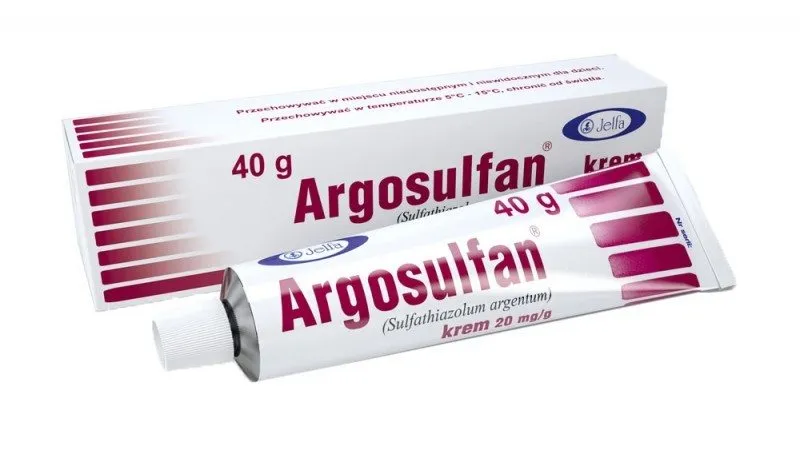
Table of Contents
Package leaflet: Information for the patient
Warning! Keep the leaflet – the information on the immediate packaging is in a foreign language!
Argosulfan
20 mg/g, cream
Sulfathiazolum argentum
Please read the entire leaflet carefully before using the medicine, as it contains
important information for the patient.
- Keep this leaflet, as you may need to read it again.
- If you have any doubts, consult your doctor or pharmacist.
- This medicine has been prescribed for a specific individual. Do not pass it on to others. The medicine may harm another person, even if their symptoms are the same.
- If you experience any adverse reactions, including any adverse reactions not listed in this leaflet, inform your doctor, pharmacist, or nurse. See section 4.
Table of contents
- What Argosulfan is and what it is used for
- Important information before using Argosulfan
- How to use Argosulfan
- Possible side effects
- How to store Argosulfan
- Contents of the pack and other information
1. What Argosulfan is and what it is used for
Argosulfan is a topical cream containing silver sulfadiazine, which exhibits strong antibacterial activity against numerous Gram-negative and Gram-positive bacteria.
Argosulfan is used in the treatment of infections in cases of:
- burns of all degrees (including radiation burns),
- pressure ulcers (wounds caused by prolonged pressure on areas of skin, e.g. due to lying in one position for too long),
- chronic leg ulcers (shallow wounds usually occurring on the legs as a result of impaired blood circulation in the veins).
Argosulfan protects the burn wound against infection, forms a protective layer, maintains proper moisture, and also accelerates wound healing.
2. Important information before using Argosulfan
When not to use Argosulfan:
- if the patient is allergic to sulfathiazole, other sulfonamides, or any of the other ingredients of this medicine (listed in section 6),
- in breastfeeding women, due to the possibility of active substance passing into breast milk,
- in premature infants, newborns, and infants up to the age of two months, due to the risk of developing kernicterus (a condition caused by deposition of excess unconjugated bilirubin—a substance formed during the breakdown of red blood cells—in the brain nuclei and spinal cord),
- in patients with a congenital disorder characterized by deficiency of an enzyme essential for normal red blood cell function (glucose-6-phosphate dehydrogenase deficiency), due to the risk of hemolytic anemia (caused by rapid destruction of red blood cells).
Warnings and precautions
Before starting treatment with Argosulfan, consult your doctor or pharmacist.
Special caution is required:
- in patients with extensive burn wounds who are in shock or have impaired contact with the environment,
- in patients with impaired liver or kidney function, due to the risk of drug accumulation in the body and associated adverse effects.
Avoid contact of the medicine with eyes and mucous membranes. In case of accidental contact, rinse thoroughly with large amounts of water.
Inform your doctor about any allergies to other medicines, especially sulfonamides. During treatment with Argosulfan, cross-sensitivity may occur to other drugs such as sulfonylureas (medicines used in diabetes treatment), benzothiadiazines (medicines used for hypertension and edema), and p-aminosalicylic acid (a medicine used in tuberculosis treatment).
If, in the doctor's opinion, wound healing is not progressing adequately, the doctor may order microbiological tests and, if necessary, change the treatment.
Prolonged use of Argosulfan should be avoided, particularly in patients with impaired liver or kidney function.
In cases of long-term therapy prescribed by a doctor or when Argosulfan is applied over large skin areas, the doctor will monitor:
- serum sulfonamide levels, especially in patients with impaired kidney or liver function;
- liver, kidney, and hematopoietic system function, particularly white blood cell count, due to the risk of agranulocytosis (severe reduction or absence of granulocytes in the blood) or anemia.
Consult your doctor, even if the above warnings refer to conditions that occurred in the past.
Children
Do not use Argosulfan in premature infants, newborns, and infants under two months of age, due to the risk of developing kernicterus (a condition caused by deposition of excess unconjugated bilirubin—a substance formed during the breakdown of red blood cells—in the brain nuclei and spinal cord).
Argosulfan with other medicines
Tell your doctor or pharmacist about all medicines the patient is currently using, has recently used, or plans to use.
Do not use Argosulfan simultaneously with other topical medicines.
The use of drugs or other preparations containing folic acid or derivatives of p-aminobenzoic acid may reduce the antibacterial effect of Argosulfan.
Pregnancy, breastfeeding, and fertility
If the patient is pregnant, breastfeeding, suspects she may be pregnant, or plans to become pregnant, she should consult her doctor or pharmacist before using this medicine.
Do not use Argosulfan during pregnancy or while breastfeeding.
Use of Argosulfan in patients with impaired kidney function
Due to lack of clinical data, caution should be exercised when using Argosulfan in patients with impaired kidney function. In patients with severe kidney impairment, the doctor may order monitoring of serum sulfonamide levels.
Use of Argosulfan in patients with impaired liver function
Due to lack of clinical data, caution should be exercised when using Argosulfan in patients with impaired liver function.
Driving and operating machinery
Argosulfan has no effect on the ability to drive motor vehicles or operate machinery.
Argosulfan contains cetostearyl alcohol, propyl parahydroxybenzoate, and methyl parahydroxybenzoate
Due to the presence of cetostearyl alcohol, this medicine may cause local skin reactions (e.g., contact dermatitis).
Due to the presence of propyl parahydroxybenzoate and methyl parahydroxybenzoate, this medicine may cause allergic reactions (including delayed-type reactions).
The medicine contains sodium lauryl sulfate
The medicine contains 10 mg of sodium lauryl sulfate per 1 g of cream.
Sodium lauryl sulfate may cause local skin irritation (such as stinging or burning) or exacerbate skin reactions caused by other topical medicines applied to the same area of skin.
3. How to use Argosulfan
This medicine should always be used as directed by the physician. In case of doubt, consult the physician again.
Argosulfan is intended for topical use on the skin.
The medicine may be applied without a dressing or under dressings (both occlusive and non-occlusive).
Recommended dosage:
Use in burns
The cleaned burn wound should be covered under aseptic conditions with a 2–3 mm thick layer of Argosulfan cream. The wound should remain covered with cream throughout the treatment period. If part of the wound becomes exposed for any reason, the exposed areas should be covered with a fresh layer of cream. Application of a dressing is not necessary, but may be used when clinically justified.
Argosulfan should be used until wound healing or skin grafting is performed.
Use in the treatment of pressure ulcers and chronic leg ulcers
A thin layer of cream should be applied to the affected area 2–3 times daily. Exudate may occur during treatment. Before reapplying Argosulfan cream, the wound should be cleansed, for example, with a 3% aqueous solution of boric acid or a 0.1% aqueous solution of chlorhexidine.
If the effect of the medicine seems too strong or too weak, consult the physician or pharmacist.
Use in children and adolescents
Argosulfan should not be used in premature infants, newborns, or infants under two months of age.
In older children, dosage adjustment is not necessary.
Use of a higher than recommended dose of Argosulfan
In case of application of a higher than recommended dose or accidental ingestion of the cream, seek immediate advice from a physician or pharmacist.
Missed dose of Argosulfan
If a dose of Argosulfan is missed, apply it as soon as possible and continue treatment as directed. Do not use a double dose to make up for the missed dose.
Discontinuation of Argosulfan
In case of any further doubts regarding the use of this medicine, consult the physician or pharmacist.
4. Possible adverse reactions
Like all medicines, this medicine can cause adverse reactions, although not everybody will experience them.
When using Argosulfan, symptoms of irritation and hypersensitivity may occur (burning, itching, erythema).
With prolonged treatment, there is a risk of general adverse reactions associated with sulfonamides, including: kidney and liver damage, changes in blood cell count or blood cell damage (agranulocytosis, haemorrhagic diathesis, aplastic and haemolytic anaemia, thrombocytopenia, leukopenia), skin reactions and hypersensitivity, e.g. Stevens-Johnson syndrome (manifesting as mucosal swelling), skin desquamation.
In some individuals, other adverse reactions may occur during treatment with Argosulfan.
Reporting of adverse reactions
If any adverse reactions occur, including any adverse reactions not listed in this leaflet, inform your doctor, pharmacist, or nurse. Adverse reactions can be reported directly to the Department of Monitoring Adverse Reactions of Medicinal Products at the Office for Registration of Medicinal Products, Medical Devices and Biocidal Products: Al. Jerozolimskie 181C, 02-222 Warsaw, phone: +48 22 49 21 301, fax: +48 22 49 21 309, website: https://smz.ezdrowie.gov.pl
Reporting adverse reactions enables further information on the safety of this medicine to be collected.
5. How to store the medicinal product Argosulfan
Do not store above 25°C. Do not freeze.
Keep the medicine out of the sight and reach of children.
Shelf-life after first opening – 2 months.
Medicines must not be disposed of via wastewater or household waste. Ask your pharmacist how to dispose of medicines no longer required. Such practices help protect the environment.
6. Package contents and other information
What Argosulfan contains
- The active substance is silver sulfadiazine. 1 g of cream contains 20 mg of silver sulfadiazine.
- Other ingredients are: liquid paraffin, cetostearyl alcohol, white soft paraffin, sodium lauryl sulfate, glycerol, propyl p-hydroxybenzoate (E 216), methyl p-hydroxybenzoate (E 218), potassium dihydrogen phosphate, disodium phosphate dodecahydrate,
water for injections.
What Argosulfan looks like and contents of the pack
Argosulfan is a uniform emulsion mass, white or almost white, with a pinkish to light grey tint.
Argosulfan is available in an aluminum tube containing 40 g of cream.
For more detailed information, please contact the marketing authorization holder or the parallel importer.
Marketing Authorization Holder in Lithuania, the country of export:
Bausch Health Ireland Limited
3013 Lake Drive
Citywest Business Campus
Dublin 24, D24PPT3
Ireland
Manufacturer:
Pharmaceutical Works Jelfa S.A.
ul. Wincentego Pola 21
58-500 Jelenia Góra
Poland
Parallel Importer:
Pharmapoint SA
ul. Zbąszyńska 3
91-342 Łódź
Repackaging sites:
Laboratorium Galenowe Olsztyn Sp. z o.o.
ul. Spółdzielcza 25A
11-001 Dywity
CEFEA Sp. z o.o. Sp. komandytowa
ul. Działkowa 56
02-234 Warszawa
Pharma Innovations Sp. z o.o.
ul. Jagiellońska 76
03-301 Warszawa
Marketing Authorization Number in Lithuania, the country of export: LT/1/96/3284/001
Parallel Import License Number: 250/18