Apo-feno 200m
Poland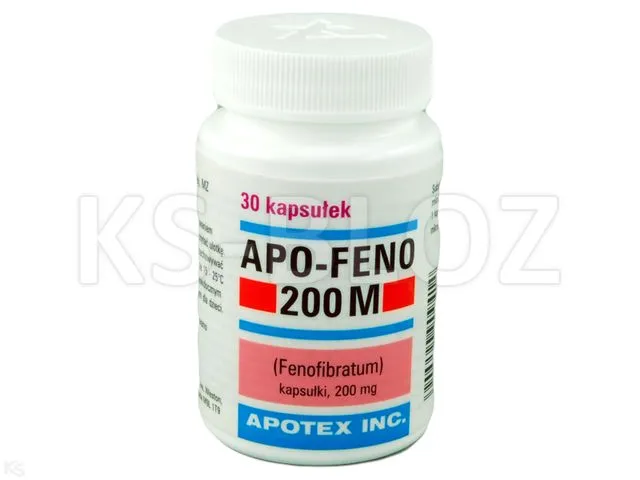
Table of Contents
Package leaflet: Information for the patient
Apo-Feno 200 M
200 mg, hard capsules
(Fenofibrate)
Please read this leaflet carefully before taking this medicine, because it contains
important information for the patient.
- Keep this leaflet, so that you can read it again if necessary.
- If you have any doubts, please consult your doctor or pharmacist.
- This medicine has been prescribed for a specific individual. Do not pass it on to others. This medicine may harm another person, even if their symptoms are the same.
- If you experience any adverse reactions, including any adverse reactions not listed in this leaflet, inform your doctor or pharmacist. See section 4.
Table of contents of the leaflet:
- What Apo-Feno 200 M is and what it is used for
- Important information before taking Apo-Feno 200 M
- How to take Apo-Feno 200 M
- Possible side effects
- How to store Apo-Feno 200 M
- Contents of the pack and other information
1. What Apo-Feno 200 M is and what it is used for
Apo-Feno 200 M belongs to a group of medicines generally known as fenofibrates. These medicines are used to lower the levels of fats (lipids) in the blood. An example of such fats are triglycerides.
Apo-Feno 200 M is used in combination with a low-fat diet and other non-medical treatments, such as physical exercise and weight loss, aimed at lowering blood fat levels.
In certain cases, Apo-Feno 200 M may be used as an add-on to other medicines [statins] when blood fat levels cannot be controlled by statins alone.
2. Important information before using Apo-Feno 200 M
When not to use Apo-Feno 200 M:
- if the patient has hypersensitivity to fenofibrate or to any of the other components of this medicine (listed in section 6),
- in case of severe liver dysfunction,
- in case of severe kidney dysfunction,
- in case of symptomatic gallbladder disease (gallstones, cholecystitis),
- if photosensitivity or phototoxic reactions occurred during treatment with fibrates or ketoprofen,
- in patients with hyperlipoproteinemia type I, characterized by elevated chylomicron and triglyceride levels in plasma, but with normal levels of very low-density lipoproteins (VLDL),
- in patients with chronic or acute pancreatitis, except acute pancreatitis due to severe hypertriglyceridemia.
Before initiating fenofibrate therapy, the physician should treat underlying conditions causing secondary hypercholesterolemia, such as: type 2 diabetes, hypothyroidism, nephrotic syndrome, dysproteinemia, liver diseases with impaired bile flow, alcoholism.
Warnings and precautions
Before starting Apo-Feno 200 M, discuss with your doctor or pharmacist:
- if the patient has kidney function disorders,
- it is possible that patients treated with fenofibrate may experience adverse effects observed in individuals taking other fibrates such as clofibrate, gemfibrozil, ciprofibrate, or benzafibrate. If such effects occur, consult your doctor,
- if the patient is taking other fibrates. Apo-Feno 200 M should not be used concomitantly with other fibrates. Excessive cholesterol excretion into bile may lead to gallstone formation. Patients treated simultaneously with fenofibrate and gemfibrozil may develop rhabdomyolysis,
- if the patient is taking atorvastatin, cerivastatin, fluvastatin, lovastatin, pravastatin, simvastatin, beta-blockers, thiazide diuretics, or estrogens. Inform your doctor before taking Apo-Feno 200 M,
- if the patient has gallstones. Fenofibrate increases cholesterol excretion into bile, which may promote gallstone formation,
- if the patient has liver function disorders or if such disorders occurred during fenofibrate treatment, including increased aminotransferase activity and decreased or increased alkaline phosphatase activity. These abnormalities usually resolve after discontinuation of the drug. Your doctor may recommend periodic (every 3 months) monitoring of aminotransferase activity (AST, ALT, GGT). If abnormalities persist, only the doctor can decide on modifying the treatment. If aminotransferase activity increases 2–3 times above normal values, the doctor will consider discontinuing the drug,
- if the patient developed pancreatitis during fenofibrate treatment or has a history of pancreatitis. In such cases, the effectiveness of Apo-Feno 200 M may be reduced, and biliary obstruction or gallstones may occur,
- if the patient is taking anticoagulant medications, inform your doctor,
- if the patient has risk factors for myopathy and/or rhabdomyolysis, such as: age over 70 years, personal or family history of muscle disorders, kidney dysfunction, hypothyroidism, or alcoholism. The risk of rhabdomyolysis is higher in such patients. The decision to treat with a fibrate in these cases is made by the doctor. The risk of muscle toxicity may increase if the drug is used concomitantly with another fibrate or with statins. If muscle pain, tenderness, or muscle weakness occur, contact your doctor immediately. The doctor will order creatine kinase activity testing. If activity increases 5 times above normal values, the doctor will discontinue fenofibrate treatment,
- if the patient has diabetes or hypothyroidism. Frequent medical consultations are recommended,
- if acute skin hypersensitivity reactions occur requiring hospital treatment. At the beginning of treatment, transient decreases in hemoglobin concentration (red blood pigment), hematocrit value (ratio of red blood cells to plasma), and white blood cell count may occur. Rarely, thrombocytopenia (reduced platelet count) and granulocytopenia (reduced granulocyte count) have been reported,
- if the medicine is used in elderly patients. Apo-Feno 200 M can be used without dose reduction.
Before starting treatment with Apo-Feno 200 M, the doctor will recommend measuring blood lipid levels, initiating a low-fat diet, regular physical exercise, and maintaining appropriate body weight.
In female patients with hyperlipidemia taking estrogens or estrogen-containing oral contraceptives, the doctor will assess whether hyperlipidemia is primary or secondary (possible lipid elevation due to oral estrogens).
Periodically, the doctor may recommend blood laboratory tests, including cholesterol and triglyceride levels. These tests are necessary to determine the appropriate fenofibrate dose. If after two months of treatment with Apo-Feno 200 M, triglyceride and cholesterol levels have not decreased satisfactorily, the doctor will decide on modifying the treatment.
The efficacy and safety of Apo-Feno 200 M in children have not been fully established.
Apo-Feno 200 M and other medicines
Inform your doctor or pharmacist about all medicines currently or recently taken, as well as any medicines planned for use. In particular, inform your doctor if the patient is taking:
- anticoagulants such as warfarin. Apo-Feno 200 M may enhance their effect. The doctor will consider reducing the anticoagulant dose and will recommend frequent prothrombin time monitoring to adjust the appropriate anticoagulant dose,
- other fibrates or HMG-CoA reductase inhibitors (statins), which increases the risk of acute myopathy, rhabdomyolysis, and acute kidney failure,
- cyclosporine, which intensifies the adverse renal effects of fenofibrate. Apo-Feno 200 M may increase nephrotoxic effects of other immunosuppressive drugs. If the patient is taking these drugs concomitantly, the doctor may consider appropriate dose reductions,
- cholestyramine or colestipol. Apo-Feno 200 M should be taken at least 1 hour before or 4 to 6 hours after administration of cholestyramine or colestipol.
Apo-Feno 200 M with food and drink
Fenofibrate absorption increases by approximately 35% when taken with food. Apo-Feno 200 M should be taken during meals. The capsules should be swallowed whole with a small amount of liquid.
Pregnancy and breastfeeding
If the patient is pregnant or breastfeeding, suspects she may be pregnant, or plans to become pregnant, she should consult her doctor or pharmacist before using this medicine.
Pregnancy:
Adequately sized, well-controlled studies with fenofibrate in pregnant women have not been conducted. Women of childbearing potential should exercise particular caution and remain under continuous medical supervision. If a woman becomes pregnant, she should immediately consult her doctor.
Breastfeeding:
Apo-Feno 200 M should not be used during breastfeeding. Breastfeeding mothers should consult their doctor whether to discontinue breastfeeding or to stop taking the medicine.
Driving and operating machinery
No effects of Apo-Feno 200 M on the ability to drive vehicles or operate machinery have been observed.
Apo-Feno 200 M contains lactose
Apo-Feno 200 M contains lactose. If the patient has previously been diagnosed with intolerance to certain sugars, he or she should consult the doctor before taking this medicine.
Apo-Feno 200 M contains sodium
The medicine contains less than 1 mmol (23 mg) of sodium per capsule, meaning it is considered "sodium-free".
3. How to use Apo-Feno 200 M
This medicine should always be taken exactly as directed by your doctor or pharmacist. If in doubt,
consult your doctor or pharmacist.
Your doctor will determine the appropriate dose based on the patient's condition, ongoing treatment,
and potential risks.
During treatment, a low-fat diet and regular physical exercise should be maintained.
The medicine should be taken with food. Swallow the capsule whole with a small amount of liquid.
Do not open or chew the capsules.
The recommended dose is 1 capsule of Apo-Feno 200 M once daily.
Caution is advised in patients with impaired renal function (creatinine clearance greater than 20 ml/min and less than 100 ml/min) and in elderly patients. Treatment should be initiated at a daily dose of 100 mg of non-micronized fenofibrate or 67 mg of micronized fenofibrate.
Apo-Feno 200 M is contraindicated in patients with severe renal impairment (creatinine clearance < 30 ml/min).
Use in children and adolescents
Use of Apo-Feno 200 M is not recommended in individuals under 18 years of age.
The duration of treatment depends on the indication and is determined by the physician. Do not extend treatment without consulting your doctor.
Taking more Apo-Feno 200 M than recommended
If you take more than the recommended dose, contact your doctor or pharmacist immediately.
No cases of fenofibrate overdose or poisoning have been reported. The doctor may administer symptomatic treatment, such as gastric lavage.
Missed dose of Apo-Feno 200 M
Do not take a double dose to make up for a missed dose. Take the next dose at the usual time.
Stopping Apo-Feno 200 M
If you have any further questions about the use of this medicine, consult your doctor or pharmacist.
4. Possible adverse reactions
Like all medicines, this medicine can cause adverse reactions, although not everyone will experience them.
If any of the following serious adverse reactions occur, stop taking Apo-Feno 200 M immediately and contact your doctor – immediate treatment may be necessary:
- allergic reaction, including swelling of the face, lips, tongue, and throat, which may cause difficulty breathing
- muscle cramps, muscle pain, tenderness, or weakness – these may be symptoms of muscle inflammation and breakdown, which can lead to kidney damage or even death
- abdominal pain – may be a sign of pancreatitis
- chest pain and shortness of breath – may be symptoms of blood clots in the lungs (pulmonary embolism)
- pain, redness, and swelling in the legs – may be symptoms of blood clots in the legs (deep vein thrombosis)
- yellowing of the skin and whites of the eyes (jaundice) or increased liver enzyme activity – may be symptoms of liver inflammation. If any of the above adverse symptoms occur, stop taking Apo-Feno 200 M immediately and contact your doctor.
Other adverse reactions
Common (affects less than 1 in 10 people)
- diarrhoea
- abdominal pain
- bloating with flatulence
- nausea
- vomiting
- increased liver enzyme activity in blood – detected in laboratory tests
Uncommon (affects less than 1 in 100 people)
- headache
- gallstones
- decreased libido
- skin rash, itching, or red skin lesions
- increased creatinine levels (a substance excreted by the kidneys) – detected in laboratory tests
Rare (affects less than 1 in 1000 people)
- hair loss
- dizziness
- fatigue
- increased urea levels (a substance excreted by the kidneys) – detected in laboratory tests
- increased skin sensitivity to sunlight, sunlamps, and tanning beds
- decreased haemoglobin concentration (the red blood pigment that carries oxygen) and decreased white blood cell count – detected in laboratory tests
Frequency not known
- severe skin reactions (erythema multiforme, Stevens-Johnson syndrome, toxic epidermal necrolysis)
- chronic lung tissue disorders. If unusual breathing problems occur, contact your doctor immediately.
Reporting of adverse reactions
If any adverse symptoms occur, including any not listed in this leaflet, inform your doctor, pharmacist, or nurse. Adverse reactions can be reported directly to the Department of Monitoring Adverse Drug Reactions of the Office for Registration of Medicinal Products, Medical Devices and Biocidal Products, Al. Jerozolimskie 181C, 02-222 Warsaw, phone: 22 49-21-301, fax: 22 49-21-309, website: https://smz.ezdrowie.gov.pl
Adverse reactions can also be reported to the marketing authorization holder.
Reporting adverse reactions helps provide more information on the safety of this medicine.
5. How to store Apo-Feno 200 M
Keep this medicine out of sight and reach of children.
Store the medicine at a temperature below 25°C.
Do not use this medicine after the expiry date stated on the packaging after: EXP.
The first two digits indicate the month, the following four digits indicate the year. The expiry date refers to the last day of the stated month.
Medicines must not be disposed of via wastewater or household waste. Ask your pharmacist how to dispose of medicines no longer required. This will help protect the environment.
6. Contents of the packaging and other information
What Apo-Feno 200 M contains
The active substance is micronized fenofibrate.
Each capsule contains 200 mg of micronized fenofibrate.
The other ingredients are:
sodium croscarmellose, monohydrate lactose, stearic acid, colloidal anhydrous silica.
Capsule shell composition: iron oxide red (E 172), iron oxide yellow (E 172), titanium dioxide (E 171),
gelatin.
What Apo-Feno 200 M looks like and contents of the pack
Light orange, opaque hard gelatin capsules marked with "Apo 200".
The pack contains 30 capsules.
Marketing Authorisation Holder
Aurovitas Pharma Polska Sp. z o.o.
ul. Sokratesa 13D lok. 27
01-909 Warszawa
Poland
Importer
APL Swift Services (Malta) Limited
HF26, Hal Far Industrial Estate, Hal Far
Birzebbugia, BBG 3000
Malta