Apixaban teva
Poland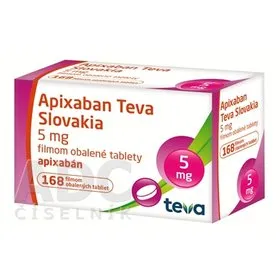
Table of Contents
Package leaflet: Information for the user
Apixaban Teva 2.5 mg film-coated tablets
Apixabanum
Read the entire leaflet before using this medicine, as it contains important information for you.
- Keep this leaflet. You may need to read it again.
- If you have any further questions, ask your doctor, pharmacist, or nurse.
- This medicine has been prescribed for you only. Do not pass it on to others. It may harm someone else, even if their symptoms are the same as yours.
- If you experience any adverse effects, including any not listed in this leaflet, inform your doctor, pharmacist, or nurse. See section 4.
Leaflet contents
- What Apixaban Teva is and what it is used for
- What you need to know before taking Apixaban Teva
- How to take Apixaban Teva
- Possible side effects
- How to store Apixaban Teva
- Contents of the pack and other information
1. What Apixaban Teva is and what it is used for
Apixaban Teva contains the active substance apixaban and belongs to a group of medicines called anticoagulants. This medicine helps prevent blood clots by blocking factor Xa, an important component in the blood clotting process.
Apixaban Teva is used in adults:
- to prevent blood clots (deep vein thrombosis) after hip or knee replacement surgery. After hip or knee surgery, patients have an increased risk of developing blood clots in the deep veins of the legs. This may lead to leg swelling, with or without pain. If a blood clot travels from the leg to the lungs, it may block blood flow through the lungs, causing breathlessness with or without chest pain. This condition (pulmonary embolism) can be life-threatening and requires immediate medical attention.
- to prevent blood clots in the heart in patients with an irregular heartbeat (atrial fibrillation) and at least one additional risk factor. Blood clots may break loose and travel to the brain, causing stroke, or to other organs, impairing blood flow to these organs (also known as systemic embolism). Stroke can be life-threatening and requires immediate medical attention.
- to treat existing blood clots in the deep veins of the legs (deep vein thrombosis) and in the blood vessels of the lungs (pulmonary embolism), and to prevent recurrence of blood clots in the veins of the legs and/or lungs.
Apixaban Teva is used in children from 28 days of life up to below 18 years of age, for the treatment of blood clots and prevention of recurrent blood clots in veins or in the blood vessels of the lungs.
Information regarding body weight and recommended dosage can be found in section 3.
DE/H/6351/001-002/IB/020
2. Important information before using Apixaban Teva
When not to use Apixaban Teva:
- if the patient is allergic to apixaban or any of the other ingredients of this medicine (listed in section 6),
- if the patient has excessive bleeding,
- if the patient has a disease that increases the risk of major bleeding (such as active or recently diagnosed peptic ulcer of the stomach or intestine, recently diagnosed intracranial bleeding),
- if the patient has liver disease leading to an increased risk of bleeding (hepatic coagulopathy),
- if the patient is taking anticoagulant medicines (e.g. warfarin, rivaroxaban, dabigatran or heparin), except in situations of switching anticoagulant therapy, when a venous or arterial line has been inserted and heparin is administered through the line to maintain its patency, or when the patient is undergoing catheter ablation (a catheter is inserted into the vein) due to irregular heartbeat (arrhythmia).
Warnings and precautions
Before starting treatment, discuss with your doctor, pharmacist or nurse if the patient has any of the following conditions:
- increased risk of bleeding, for example:
- conditions associated with bleeding, including those resulting in reduced platelet activity
- very high blood pressure not controlled by medication
- if the patient is over 75 years of age
- if the patient weighs 60 kg or less
- severe kidney disease or if the patient is on dialysis
- liver problems or history of liver problems
- This medicine should be used with caution in patients showing signs of liver function abnormalities.
- spinal catheter or spinal injection (anaesthetic or pain relief), in which case the doctor will advise taking this medicine at least 5 or more hours after removal of the catheter
- if the patient has a heart valve prosthesis
- if the doctor determines that the patient's blood pressure is unstable, or if other treatment or a surgical procedure to remove a blood clot from the lungs is planned.
When to exercise particular caution when using Apixaban Teva
- if the patient has a disorder called antiphospholipid syndrome (an immune system disorder causing increased risk of blood clots), the patient should inform the doctor, who will decide whether a change in treatment is necessary.
If surgery or a procedure that may involve bleeding is required, the doctor may ask the patient to temporarily stop taking this medicine for a short period. If in doubt whether a procedure may involve bleeding, consult the doctor.
Children and adolescents
This medicine is not recommended for use in children and adolescents weighing less than 35 kg.
Apixaban Teva and other medicines
Tell your doctor, pharmacist or nurse about all medicines the patient is currently taking or has recently taken, as well as any medicines the patient plans to take.
DE/H/6351/001-002/IB/020
Some medicines may enhance the effect of Apixaban Teva, while others may reduce its effectiveness.
The doctor will decide whether the patient should receive Apixaban Teva while taking other medicines and how closely monitoring should be performed.
The following medicines may enhance the effect of Apixaban Teva and increase the risk of unwanted bleeding:
- certain medicines used to treat fungal infections (e.g. ketoconazole and others)
- certain antiviral medicines used to treat HIV/AIDS infection (e.g. ritonavir)
- other medicines used to reduce blood clotting (e.g. enoxaparin and others)
- anti-inflammatory or pain-relieving medicines (e.g. acetylsalicylic acid or naproxen). Particularly when the patient is over 75 years of age and taking acetylsalicylic acid, the risk of unwanted bleeding may be increased.
- medicines used for high blood pressure or heart problems (e.g. diltiazem)
- antidepressant medicines known as selective serotonin reuptake inhibitors or serotonin-noradrenaline reuptake inhibitors.
The following medicines may reduce the ability of Apixaban Teva to prevent blood clots:
- medicines used to prevent seizures or convulsions (e.g. phenytoin and others)
- St. John’s wort (an herbal supplement used for depression)
- medicines used to treat tuberculosis or other infections (e.g. rifampicin).
Pregnancy and breastfeeding
If the patient is pregnant or breastfeeding, suspects she may be pregnant, or is planning to have a child, she should consult her doctor, pharmacist or nurse before using this medicine.
The effect of apixaban on pregnancy and the unborn child is unknown. This medicine should not be taken during pregnancy. If the patient becomes pregnant while taking this medicine, she should contact her doctor immediately.
It is not known whether apixaban passes into human milk. The patient should consult her doctor, pharmacist or nurse before using this medicine while breastfeeding. The patient may be advised to discontinue breastfeeding or to discontinue/avoid taking this medicine.
Driving and operating machinery
Apixaban has no effect or has a negligible effect on the ability to drive motor vehicles and operate machinery.
Apixaban Teva contains lactose (a sugar) and sodium
If the patient has previously been diagnosed with intolerance to certain sugars, the patient should consult their doctor before taking this medicine.
This medicine contains less than 1 mmol (23 mg) of sodium per tablet; therefore, this medicine is considered "sodium-free".
3. How to take Apixaban Teva
This medicine should always be taken as instructed by your doctor or pharmacist. If you are unsure,
please consult your doctor, pharmacist, or nurse.
DE/H/6351/001-002/IB/020
Dosage
Swallow the tablet with water. Apixaban Teva can be taken with or without food. For best treatment
results, it is recommended to take the tablets at the same times each day.
If you have difficulty swallowing the tablets whole, talk to your doctor about other ways to take
Apixaban Teva. The tablet may be crushed and mixed with water or 5% aqueous glucose solution,
juice, or apple puree immediately before administration.
Instructions for crushing tablets:
- Crush the tablet with a pestle in a mortar.
- Carefully transfer the powder to a suitable container and mix it with a small amount, e.g., 30 mL (2 tablespoons), of water or another liquid listed above to prepare a mixture.
- Swallow the mixture.
- Rinse the pestle and mortar used to crush the tablet, as well as the container, with a small amount of water or another liquid (e.g., 30 mL), and swallow the rinse liquid.
If necessary, your doctor may administer crushed Apixaban Teva tablets mixed with 60 mL of water or
5% aqueous glucose solution via a nasogastric tube.
Apixaban Teva should be taken as directed for the following indications:
Prevention of blood clots after hip or knee replacement surgery
The recommended dose is one 2.5 mg tablet twice daily.
For example, one tablet in the morning and one in the evening.
The first tablet should be taken 12 to 24 hours after surgery.
If you have undergone major hip surgery, you will usually take the tablets for 32 to 38 days.
If you have undergone major knee surgery, you will usually take the tablets for 10 to 14 days.
Prevention of blood clots in the heart in patients with irregular heart rhythm
(atrial fibrillation) and at least one additional risk factor
The recommended dose is one 5 mg tablet twice daily.
The recommended dose is one 2.5 mg tablet twice daily if:
- you have severe kidney problems, or
- two or more of the following conditions apply:
- blood test results suggest reduced kidney function (serum creatinine level of 1.5 mg/dL (133 micromoles/L) or higher),
- you are 80 years of age or older,
- your body weight is 60 kg or less.
The recommended dose is one tablet twice daily, for example, one in the morning and one in the
evening. Your doctor will decide how long treatment should continue.
Treatment of blood clots in the deep veins of the legs and blood clots in the blood vessels of the lungs
DE/H/6351/001-002/IB/020
The recommended dose is two 5 mg tablets twice daily for the first 7 days, for example, two tablets
in the morning and two in the evening.
After 7 days, the recommended dose is one 5 mg tablet twice daily, for example, one tablet in the
morning and one in the evening.
Prevention of recurrent blood clots after completion of 6-month treatment
The recommended dose is one 2.5 mg tablet twice daily, for example, one tablet in the morning and one in the evening.
Your doctor will decide how long treatment should continue.
Use in children and adolescents
Treatment and prevention of blood clots in the veins or in the blood vessels of the lungs.
This medicine should always be taken or administered as directed by your paediatrician or
pharmacist. If you are unsure, consult your paediatrician, pharmacist, or nurse.
To achieve the best treatment effect, try to take or administer the dose at the same time each day.
The dose of Apixaban Teva depends on body weight and will be calculated by your doctor.
The recommended dose for children and adolescents weighing at least 35 kg is four 2.5 mg tablets
of Apixaban Teva, taken twice daily for the first 7 days, for example, four in the morning and four in
the evening. After 7 days, the recommended dose is two 2.5 mg tablets of Apixaban Teva, taken
twice daily, for example, two in the morning and two in the evening.
For parents and caregivers: observe the child to ensure the full dose has been taken.
It is important to attend scheduled doctor’s appointments, as dose adjustments may be necessary
with changes in body weight.
Your doctor may switch anticoagulant treatment as follows:
- Switching from Apixaban Teva to other anticoagulants Stop taking Apixaban Teva. Start treatment with anticoagulant medicines (e.g., heparin) at the time the next tablet was due.
- Switching from anticoagulants to Apixaban Teva Stop taking anticoagulant medicines. Start treatment with Apixaban Teva at the time the next dose of the anticoagulant was due, then continue taking it as usual.
- Switching from anticoagulant treatment including a vitamin K antagonist (e.g., warfarin) to Apixaban Teva Discontinue the vitamin K antagonist medicine. Your doctor will perform blood tests and inform you when to start taking Apixaban Teva.
- Switching from Apixaban Teva to anticoagulant treatment including a vitamin K antagonist (e.g., warfarin) If your doctor tells you to start taking a vitamin K antagonist medicine, continue taking Apixaban Teva for at least 2 days after taking the first dose of the vitamin K antagonist medicine. Your doctor will perform blood tests and inform you when to stop taking Apixaban Teva.
DE/H/6351/001-002/IB/020
Patients undergoing cardioversion
Patients who require cardioversion to restore normal heart rhythm should take this medicine at the
times specified by their doctor to prevent blood clots in the blood vessels of the brain and in other
blood vessels of the body.
Taking more than the recommended dose of Apixaban Teva
If you take more than the recommended dose of this medicine, you should contact your doctor
immediately. Take the medicine packaging with you, even if it is empty.
If you take more than the recommended dose of Apixaban Teva, your risk of bleeding may increase.
In case of bleeding, surgical treatment, blood transfusion, or other treatment to reverse the effect of
factor Xa inhibition may be required.
Missing a dose of Apixaban Teva
- If you miss a morning dose, take it as soon as you remember, and you may take it together with your evening dose.
- A missed evening dose may only be taken on the same evening. Do not take two doses the next morning; instead, continue taking the medicine the next day as directed, twice daily.
If you have any doubts about taking the medicine or if you miss more than one dose, consult your
doctor, pharmacist, or nurse.
Stopping Apixaban Teva
DO NOT stop taking this medicine without consulting your doctor, as stopping treatment early may
increase the risk of developing a blood clot.
If you have any further questions about using this medicine, consult your doctor, pharmacist, or
nurse.
4. Possible adverse reactions
Like all medicines, this medicine can cause adverse reactions, although not everyone will experience them.
The medicine Apixaban Teva may be used in three different medical conditions. Known adverse reactions and their frequency of occurrence may differ in each of these conditions and are listed separately below. In these conditions, the most common general adverse reaction with this medicine is bleeding, which may potentially be life-threatening and may require immediate medical attention.
The following adverse reactions may occur when taking apixaban to prevent blood clots after hip or knee replacement surgery.
Common adverse reactions (may occur in up to 1 in 10 people)
- Anaemia, which may cause fatigue or paleness
- Bleeding including:
- Subcutaneous haemorrhages and swelling
- Nausea (feeling sick)
Uncommon adverse reactions (may occur in up to 1 in 100 people)
- Decreased platelet count (which may affect blood clotting)
- Bleeding:
- After surgery, including bruising and swelling, leakage of blood or other fluid from the surgical wound/incision site or injection site (wound discharge)
- From the stomach, intestines, or bright red blood in stool
- Blood in urine
- Nosebleeds
- Vaginal bleeding
- Low blood pressure, which may lead to fainting or rapid heartbeat
- Blood test results may show:
- Liver function abnormalities
- Increased activity of certain liver enzymes
- Increased bilirubin levels, a product formed from destroyed red blood cells, which may cause yellowing of the skin and eyes
- Itching
Rare adverse reactions (may occur in up to 1 in 1000 people)
- Allergic reactions (hypersensitivity), which may cause: swelling of the face, lips, mouth, tongue and (or) throat, and breathing difficulties. If any of these symptoms occur, contact your doctor immediately.
- Bleeding:
- Into muscle tissue
- Into the eyes
- From gums and coughing up blood
- From the rectum
- Hair loss
Adverse reactions of unknown frequency (frequency cannot be estimated from available data)
- Bleeding:
- Into the brain or spinal cord
- In the lungs or throat
- In the mouth
- Into the abdominal cavity or retroperitoneal space
- From haemorrhoids
- Test results indicating presence of blood in stool or urine
- Skin rash, which may form blisters and resembles small target-like lesions (dark spots in the centre surrounded by a lighter ring, with a dark ring around the edge) (erythema multiforme)
- Vasculitis (inflammation of blood vessels), which may cause skin rash or raised, flat, red, circular spots beneath the skin surface, or bruising
- Bleeding in the kidney, sometimes with blood in urine, leading to impaired kidney function (anticoagulant-related nephropathy)
The following adverse reactions may occur when taking apixaban to prevent blood clots in the heart in patients with irregular heart rhythm and at least one additional risk factor.
Common adverse reactions (may occur in up to 1 in 10 people)
- Bleeding, including:
- Into the eye
- In the stomach or intestine
- From the rectum
- Blood in urine
- Nosebleeds
- From gums
- Subcutaneous haemorrhage and swelling
- Anaemia, which may cause fatigue or paleness
- Low blood pressure, which may lead to fainting or rapid heartbeat
- Nausea (feeling sick)
- Blood test results may show:
- Increased gamma-glutamyl transferase (GGT) activity
Uncommon adverse reactions (may occur in up to 1 in 100 people)
- Bleeding:
- Into the brain or spinal cord
- In the mouth or coughing up blood
- In the abdominal cavity or from the vagina
- Bright red blood in stool
- Bleeding occurring after surgery, including bruising and swelling, leakage of blood or fluid from the surgical wound/cut tissue site (wound discharge) or injection site
- From haemorrhoids
- Presence of blood in stool or urine detected in laboratory tests
- Decreased platelet count (which may affect clotting)
- Blood test results may show:
- Abnormal liver function
- Increased activity of certain liver enzymes
- Increased bilirubin levels – a breakdown product of red blood cells, which may cause yellowing of the skin and eyes
- Skin rash
- Itching
- Hair loss
- Allergic reactions (hypersensitivity), which may cause: swelling of the face, lips, mouth, tongue and (or) throat, and breathing difficulties. If any of these symptoms are observed, seek medical advice immediately.
Rare adverse reactions (may occur in up to 1 in 1000 people)
- Bleeding:
- In the lungs or throat
- Into the retroperitoneal space
- Into muscle tissue
Very rare adverse reactions (may occur in up to 1 in 10,000 people)
- Skin rash, which may form blisters and resembles small target-like lesions (dark spots in the centre surrounded by a lighter ring, with a dark ring around the edge) (erythema multiforme)
Frequency not known (frequency cannot be estimated from available data)
- Vasculitis (inflammation of blood vessels), which may cause skin rash or raised, flat, red, circular spots beneath the skin surface, or bruising
- Bleeding in the kidney, sometimes with blood in urine, leading to impaired kidney function (anticoagulant-related nephropathy)
The following adverse reactions may occur when taking apixaban for the treatment or prevention of recurrent blood clots in the deep veins of the legs and blood clots in the blood vessels of the lungs.
Common adverse reactions (may occur in up to 1 in 10 people)
- Bleeding, including:
- Nosebleeds
- From gums
- Blood in urine
- Subcutaneous haemorrhage and swelling
- In the stomach, intestine, or from the rectum
- In the mouth
- From the vagina
- Anaemia, which may cause fatigue or paleness
- Decreased platelet count (which may affect clotting)
- Nausea (feeling sick)
- Skin rash
- Blood test results may show:
- Increased gamma-glutamyl transferase (GGT) or alanine aminotransferase (AlAT) activity
Uncommon adverse reactions (may occur in up to 1 in 100 people)
- Low blood pressure, which may lead to fainting or rapid heartbeat
- Bleeding:
- Into the eyes
- In the mouth or coughing up blood
- Bright red blood in stool
- Test results indicating blood in stool or urine
- Bleeding occurring after surgery, including bruising and swelling, leakage of blood or fluid from the surgical wound/tissue incision site (wound discharge) or injection site
- From haemorrhoids
- Into muscle tissue
- Itching
- Hair loss
- Allergic reactions (hypersensitivity), which may cause: swelling of the face, lips, mouth, tongue and (or) throat, and breathing difficulties. If any of these symptoms are observed, seek medical advice immediately.
- Blood test results may show:
- Abnormal liver function
- Increased activity of certain liver enzymes
- Increased bilirubin levels – a breakdown product of red blood cells, which may cause yellowing of the skin and eyes
Rare adverse reactions (may occur in up to 1 in 1000 people)
- Bleeding:
- Into the brain or spinal cord
- In the lungs
Adverse reactions of unknown frequency (frequency cannot be estimated from available data)
- Bleeding:
- Into the abdominal cavity or retroperitoneal space
- Skin rash, which may form blisters and resembles small target-like lesions (dark spots in the centre surrounded by a lighter ring, with a dark ring around the edge) (erythema multiforme)
- Vasculitis (inflammation of blood vessels), which may cause skin rash or raised, flat, red, circular spots beneath the skin surface, or bruising
- Bleeding in the kidney, sometimes with blood in urine, leading to impaired kidney function (anticoagulant-related nephropathy)
Additional adverse reactions in children and adolescents
If any of the following symptoms occur, contact your paediatrician immediately:
- Allergic reactions (hypersensitivity), which may cause: swelling of the face, lips, mouth, tongue and (or) throat, and breathing difficulties. The frequency of these adverse reactions is classified as "common" (may occur in up to 1 in 10 people). Generally, adverse reactions observed in children and adolescents treated with Apixaban Teva were similar to those seen in adults and were mostly mild or moderate in severity. Adverse reactions occurring more frequently in children and adolescents include nosebleeds and abnormal vaginal bleeding.
Very common adverse reactions (may occur in more than 1 in 10 people)
- Bleeding, including:
- From the vagina
- Nosebleeds
Common adverse reactions (may occur in up to 1 in 10 people)
- Bleeding, including:
- From gums
- Blood in urine
- Subcutaneous haemorrhages (bruising) and swelling
- From intestine or rectum
- Bright red blood in stool
- Postoperative bleeding, including subcutaneous haemorrhages (bruising) and swelling, leakage of blood (discharge) from surgical wound or injection site
- Hair loss
- Anaemia, which may cause fatigue or paleness
- Decreased platelet count (which may affect clotting)
- Nausea (feeling sick)
- Skin rash
- Itching
- Low blood pressure, which may cause fainting or rapid heartbeat
- Blood test results may show:
- Abnormal liver function
- Increased activity of certain liver enzymes
- Increased alanine aminotransferase (ALT) activity
Frequency not known (cannot be estimated from available data)
- Bleeding:
- Into the abdominal cavity or retroperitoneal space
- In the stomach
- In the eyes
- In the mouth
- From haemorrhoids
- In the mouth or blood in sputum when coughing
- In the brain or spine
- In the lungs
- In muscle
- Skin rash, which may form blisters and resembles small target-like lesions (dark spots in the centre surrounded by a lighter ring, with a dark ring around the edge) (erythema multiforme)
- Vasculitis, which may cause skin rash or raised, flat, circular, red spots beneath the skin surface or bruising
- Blood test results may show:
- Increased gamma-glutamyl transferase (GGT) activity
- Presence of blood in stool or urine
- Bleeding in the kidney, sometimes with blood in urine, leading to impaired kidney function (anticoagulant-related nephropathy)
Reporting of adverse reactions
If any adverse reactions occur, including any not listed in this leaflet, inform your doctor or pharmacist.
Adverse reactions can be reported directly to the Department of Monitoring Adverse Drug Reactions, Office for Registration of Medicinal Products, Medical Devices and Biocidal Products, Al. Jerozolimskie 181C, 02-222 Warsaw, Tel.: +48 22 49 21 301, Fax: +48 22 49 21 309, Website: https://smz.ezdrowie.gov.pl
Adverse reactions can also be reported to the responsible entity.
Reporting adverse reactions helps provide more information on the safety of this medicine.
5. How to store Apixaban Teva
Keep this medicine out of the sight and reach of children.
Do not use this medicine after the expiry date stated on the outer carton, bottle, and blister after: EXP. The expiry date refers to the last day of the stated month.
This medicine does not require any special storage conditions.
Medicines should not be disposed of via wastewater or household waste. Ask your pharmacist how to dispose of medicines no longer required. Such measures help protect the environment.
6. Contents of the pack and other information
What Apixaban Teva contains
- The active substance is apixaban. Each tablet contains 2.5 mg of apixaban.
- The other ingredients are:
- Tablet core: lactose (see section 2), microcrystalline cellulose, sodium croscarmellose, sodium lauryl sulfate, magnesium stearate.
- Coating: monohydrate lactose (see section 2), hypromellose 2910 (6 MPA.S), titanium dioxide (E 171), macrogol MW3350, triacetin, yellow iron oxide (E 172), red iron oxide (E 172).
What Apixaban Teva looks like and contents of the pack
Light yellow, round, film-coated tablets, embossed with the letters "TV" on one side and "G1" on the
other side. Dimensions: diameter 5.9 - 6.5 mm, thickness 3.0 - 3.6 mm.
Single-dose transparent blisters made of PVC/PE/PVDC/Aluminum, in a cardboard box containing:
10 x 1, 14 x 1, 20 x 1, 30 x 1, 56 x 1, 60 x 1, 100 x 1, 120 x 1, 168 x 1, 200 x 1 film-coated tablets.
White HDPE bottle with white PP screw cap with child-resistant closure, containing 180, 200 and 500
film-coated tablets, in a cardboard box.
DE/H/6351/001-002/IB/020
White HDPE bottle with white PP screw cap with child-resistant closure, with cotton wool seal,
containing 180, 200 and 500 film-coated tablets, in a cardboard box.
Not all pack sizes may be marketed.
Patient Alert Card: information for use
Inside the packaging of Apixaban Teva, alongside the patient leaflet, there is a Patient Alert Card, or your doctor may provide you with a similar card.
The Patient Alert Card contains helpful information for the patient and warns other physicians that the patient is taking Apixaban Teva. You should always carry this card with you.
- Take the card
- Fill in the following details or ask your doctor to complete them:
- Name:
- Date of birth:
- Indication:
- Dose: ........ mg twice daily
- Doctor's name:
- Doctor's telephone number:
- Fold the card and always carry it with you
Marketing Authorisation Holder
Teva Pharmaceuticals Polska Sp. z o.o.
ul. Emilii Plater 53
00-113 Warsaw
Importer
Balkanpharma-Dupnitsa AD
3 Samokovsko Shosse Str.,
Dupnitsa, 2600,
Bulgaria
For further information, please contact the local representative of the Marketing Authorisation Holder:
Teva Pharmaceuticals Polska Sp. z o.o., ul. Emilii Plater 53, 00-113 Warsaw, tel. (22) 345 93 00.
This medicinal product is authorised for marketing in the European Economic Area Member States under the following names:
| Member State | Product Name | |------------|--------------| | Austria | Apixaban ratiopharm 2.5 mg Filmtabletten | | Belgium | Apixaban Teva 2.5 mg filmomhulde tabletten / comprimés pelliculés / Filmtabletten | | Bulgaria | Апиксабан Тева 2.5 mg филмирани таблетки | | Czech Republic | Apixaban Teva | | Germany | Apixaban-ratiopharm 2.5 mg Filmtabletten | | Denmark | Apixaban Teva | | Estonia | Apixaban Teva | | Spain | Apixaban Teva 2.5 mg comprimidos recubiertos con película EFG | | Finland | Apixaban ratiopharm 2.5 mg tabletti, kalvopäällysteinen | | France | Apixaban TEVA 2.5 mg, comprimé pelliculé | | Croatia | Apiksaban Teva GmbH 2.5 mg filmom obložene tablete | | Hungary | Apixaban Teva 2.5 mg filmtabletta | | Ireland | Apixaban Teva 2.5 mg film-coated tablets | | Iceland | Apixaban Teva | | Italy | APIXABAN TEVA | | Lithuania | Apixaban Teva 2.5 mg plėvele dengtos tabletės | | Latvia | Apixaban Teva 2.5 mg apvalkotās tabletes | | Luxembourg | Apixaban-ratiopharm 2.5 mg Filmtabletten | | Netherlands | Apixaban Teva 2.5 mg, filmomhulde tabletten | | Norway | Apixaban Teva | | Romania | Apixaban Teva BV 2.5 mg Film-coated tablets | | Poland | Apixaban Teva | | Sweden | Apixaban Teva 2.5 mg, 5 mg filmdragerade tabletter | | Slovenia | Apiksaban Teva 2.5 mg filmsko obložene tablete | | Slovakia | Apixaban Teva 2.5 mg | | United Kingdom | Apixaban Teva 2.5 mg and 5 mg Film-coated Tablets |
DE/H/6351/001-002/IB/020