Apap migraine
Poland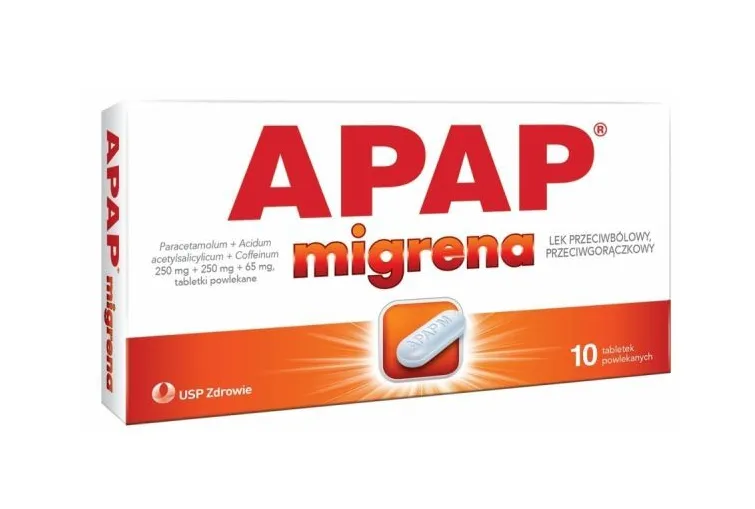
Table of Contents
Package leaflet: Information for the patient
APAP migrena, 250 mg + 250 mg + 65 mg, coated tablets
Paracetamolum + Acidum acetylsalicylicum + Coffeinum
Please read this leaflet carefully before using the medicine, as it contains
important information for the patient.
This medicine should always be used exactly as described in this patient leaflet or as directed by a doctor or pharmacist.
- Keep this leaflet for future reference. If advice or further information is needed, please consult a pharmacist.
- If any adverse reactions occur, including any possible adverse reactions not listed in this leaflet, inform a doctor or pharmacist. See section 4.
- If there is no improvement after 3 days of treatment for migraine or 4 days of treatment for headache, or if the patient feels worse, consult a doctor.
Table of contents of the leaflet:
- What APAP migrena is and what it is used for
- Important information before taking APAP migrena
- How to take APAP migrena
- Possible side effects
- How to store APAP migrena
- Contents of the pack and other information
1. What APAP migrena is and what it is used for
Each coated tablet of APAP migrena contains three active substances: paracetamol, acetylsalicylic acid, and caffeine. Paracetamol and acetylsalicylic acid reduce pain and fever. Acetylsalicylic acid additionally has anti-inflammatory properties. Caffeine is a mild stimulant and enhances the effects of acetylsalicylic acid and paracetamol.
APAP migrena is used for the short-term treatment of headache and migraine attacks (symptoms such as: headache, nausea, sensitivity to light and sound, and disturbances in daily functioning), with or without aura.
APAP migrena is intended for adults aged 18 years and over.
2. Important information before using APAP migrena
When not to use APAP migrena
-
if you are allergic (hypersensitive) to acetylsalicylic acid, paracetamol, caffeine, or any of the excipients of APAP migrena coated tablets listed in section 6;
-
if you have ever experienced allergic reactions to other pain-relieving, anti-inflammatory, or antipyretic medicines such as acetylsalicylic acid and salicylates, or other non-steroidal anti-inflammatory drugs (NSAIDs), such as diclofenac or ibuprofen. Symptoms of an allergic reaction may include: asthma, wheezing or shortness of breath, rash or urticaria, swelling of the face or tongue, runny nose. In case of any doubts, consult your doctor or pharmacist.
-
in patients with gastric or intestinal ulcers, or if peptic ulcer disease has occurred in the past;
-
if there is blood in the stool or black stools (symptoms of gastrointestinal bleeding or perforation);
-
in case of haemophilia or other blood disorders;
-
in severe heart, liver, or kidney disease;
-
during treatment with more than 0.15 mg of methotrexate weekly (see section "APAP migrena and other medicines");
-
during the third trimester of pregnancy (see section "Pregnancy, breastfeeding and fertility").
Warnings and precautions
APAP migrena contains paracetamol. Do not exceed the recommended dose, as overdose may cause serious liver damage.
Acetylsalicylic acid may cause bleeding. Inform your doctor if unusual bleeding occurs.
APAP migrena may not be suitable for every patient for the following reasons. Consult your doctor before taking this medicine if:
- migraine has not been previously diagnosed, as other potentially serious neurological or brain-related conditions should be ruled out before using the medicine;
- the migraine is so severe that bed rest is required, or if the pain differs from usual migraines, or if migraine headaches are accompanied by vomiting;
- headaches occur after head injury or are caused by head trauma, fatigue, coughing, or bending forward;
- headaches are chronic (occurring on 15 or more days per month for longer than 3 months), or if headaches first occurred after age 50;
- the patient has liver or kidney problems, underweight, malnutrition, or regularly consumes alcohol. It may be necessary to completely discontinue the medicine or limit the amount of paracetamol taken;
- immediately inform your doctor if the patient has serious illnesses, including severe kidney dysfunction or sepsis (when bacteria and their toxins circulate in the blood, leading to organ damage), malnutrition, chronic alcoholism, or if the patient is also taking flucloxacillin (an antibiotic). In these situations, patients have experienced a serious condition called metabolic acidosis (an abnormality in blood and body fluids) when taking paracetamol regularly over a long period or when taking paracetamol together with flucloxacillin. Symptoms of metabolic acidosis may include: severe breathing difficulties, including rapid deep breathing, drowsiness, nausea, and vomiting;
- hereditary glucose-6-phosphate dehydrogenase deficiency, which affects red blood cells. As a result, after consuming certain foods or taking other anti-inflammatory drugs (including acetylsalicylic acid), anaemia, jaundice, enlargement of the spleen, or other diseases may develop;
- previous gastrointestinal disorders such as gastric ulcers, gastrointestinal bleeding, or black stools. If the patient has previously experienced stomach discomfort or heartburn after taking pain-relieving or anti-inflammatory medicines;
- bleeding disorders or abnormal genital bleeding other than menstrual bleeding (e.g. abnormally heavy and prolonged menstrual bleeding);
- the patient has recently undergone surgery (including minor procedures such as dental surgery) or will undergo surgery within the next 7 days;
- bronchial asthma, hay fever, nasal polyps, chronic obstructive pulmonary disease, or symptoms indicating allergy (skin reactions, itching, urticaria);
- gout, diabetes, hyperthyroidism, cardiac arrhythmia, uncontrolled hypertension, or impaired kidney or liver function;
- problems with alcohol abuse (see section "Use of APAP migrena with food and drink");
- the patient is currently taking other medicines containing acetylsalicylic acid or paracetamol, or other drugs, as some medicines may interact with the components of APAP migrena and cause adverse effects (see section "APAP migrena and other medicines");
- risk of dehydration (e.g. due to vomiting, diarrhoea, before or after major surgery);
- the patient is under 18 years of age. There may be an association between acetylsalicylic acid administered to children and adolescents and the occurrence of Reye's syndrome. Reye's syndrome is a disease that causes changes in the brain and liver and, although very rare, may lead to death. Therefore, APAP migrena should not be given to children and adolescents under 18 years of age without medical advice.
Other warnings
As with other medicines used to treat headache, too frequent use of APAP migrena (for 10 days or more per month) in the treatment of chronic headache (occurring on 15 or more days per month for longer than 3 months) lasting more than 3 months may worsen headache or migraine. If you feel this situation applies to you, seek medical advice. Discontinuation of APAP migrena may lead to improvement.
APAP migrena may reduce symptoms of infection (e.g. headache, fever), which may make diagnosis more difficult. Therefore, if you feel unwell, remember to inform your doctor that you are taking APAP migrena.
APAP migrena may also affect the results of certain laboratory tests. Therefore, if blood, urine, or other laboratory tests are to be performed, remember to inform your doctor that you are taking APAP migrena.
The medicine contains 0.24 mg of propylene glycol and 0.05 mg of benzoic acid per tablet.
Benzoic acid may increase the risk of jaundice (yellowing of the skin and eyes) in newborns (up to 4 weeks of age).
APAP migrena and other medicines
Inform your doctor or pharmacist if you are taking, have recently taken, or might take any other medicines, including those obtained without a prescription.
Especially inform your doctor if you are taking any of the following medicines:
- other medicines containing paracetamol, acetylsalicylic acid, or any other pain-relieving and/or antipyretic medicines;
- anticoagulants ("blood thinners"), such as oral anticoagulants (e.g. warfarin), heparin, thrombolytic agents (e.g. streptokinase), or other antiplatelet agents (e.g. ticlopidine, clopidogrel, cilostazol);
- corticosteroids (used to treat inflammation);
- barbiturates and benzodiazepines (for treatment of anxiety and insomnia);
- lithium, selective serotonin reuptake inhibitors, or fluvoxamine (for treatment of depression);
- sulfonylureas or insulin (for treatment of diabetes);
- methotrexate (for treatment of certain cancers and rheumatoid arthritis);
- certain medicines used to treat infections (e.g. rifampicin, isoniazid, chloramphenicol, ciprofloxacin, or pipemidic acid);
- levothyroxine (for treatment of hypothyroidism);
- metoclopramide (for treatment of nausea and vomiting);
- medicines used to treat epilepsy;
- medicines used for hypertension and heart failure;
- diuretics (used to increase urine production and for dehydration);
- medicines used to treat gout;
- oral contraceptives;
- zidovudine (for treatment of HIV infection);
- medicines delaying gastric emptying, such as propantheline;
- clozapine (for treatment of schizophrenia);
- sympathomimetic medicines (to raise low blood pressure and treat nasal mucosal congestion);
- antiallergic medicines (to prevent or treat allergies);
- theophylline (for treatment of asthma);
- terbinafine (for treatment of fungal infections);
- cimetidine (for treatment of heartburn and gastrointestinal ulcers);
- disulfiram (for treatment of alcohol dependence);
- nicotine (used to quit smoking);
- cholestyramine (for treatment of high blood cholesterol);
- flucloxacillin (an antibiotic), due to the serious risk of disturbances in blood and body fluids (called metabolic acidosis), which require urgent treatment (see section 2).
Use of APAP migrena with food and drink
Alcohol:
Ask your doctor whether you can take APAP migrena or other pain-relieving/antipyretic medicines while consuming 3 or more alcoholic drinks daily.
Paracetamol and acetylsalicylic acid may cause liver damage and gastrointestinal bleeding.
Caffeine:
The caffeine content in the recommended dose of the medicine corresponds to approximately one cup of coffee.
While taking the medicine, limit consumption of medicines, food, or drinks containing caffeine, as excessive intake may cause nervousness, irritability, insomnia, and in some cases, increased heart rate.
Pregnancy, breastfeeding and fertility
This medicine is not recommended during pregnancy. Before taking any medicine, consult your doctor or pharmacist.
If you are pregnant, suspect you may be pregnant, or are planning to become pregnant, inform your doctor and do not use APAP migrena. It is very important not to use APAP migrena during the last three months of pregnancy due to the risk of harm to the fetus or complications during delivery.
Do not use the medicine during breastfeeding, as it may be harmful to the infant.
APAP migrena belongs to the group of non-steroidal anti-inflammatory drugs (NSAIDs), which may impair fertility. This effect reverses after discontinuation of NSAIDs.
Driving and using machines
There are no data confirming the effect of APAP migrena coated tablets on the ability to drive or operate machinery.
If dizziness or drowsiness occurs, do not drive or operate mechanical equipment. Inform your doctor immediately if any of the above symptoms occur.
3. How to use APAP migrena
APAP migrena should be used according to the information contained in the leaflet or as directed by a doctor or pharmacist. If in doubt, consult a doctor or pharmacist.
Adults (over 18 years of age):
Treatment of headache
When a headache occurs, take 1 tablet with a full glass of water. If necessary, a second tablet may be taken 4–6 hours after the first dose.
In case of more intense headache, 2 tablets may be taken at once; if necessary, another 2 tablets may be taken 4–6 hours after the previous dose.
Do not use APAP migrena for headache for longer than 4 days without consulting a doctor.
Treatment of migraine
When symptoms of migraine or migraine aura occur, take 2 tablets with a glass of water. If necessary, another 2 tablets may be taken, maintaining a 4–6 hour interval between doses.
Do not use APAP migrena for migraine for longer than 3 days without consulting a doctor.
In both headache and migraine treatment, do not exceed a total of 6 tablets per day. This corresponds to a daily dose of 1500 mg acetylsalicylic acid, 1500 mg paracetamol, and 390 mg caffeine.
Prolonged use of APAP migrena without medical supervision may be harmful to health.
Do not exceed the recommended dose. Use the lowest effective dose for the shortest possible duration.
Children and adolescents:
APAP migrena should not be used in children and adolescents under 18 years of age (see section Warnings and precautions).
Elderly patients:
There are no special dosage recommendations for elderly patients. However, in patients with low body weight, consult a doctor or pharmacist.
Patients with renal and/or hepatic impairment:
Inform your doctor if you have liver or kidney disease. The doctor may recommend different intervals between doses or a different treatment duration than recommended.
Do not use APAP migrena in patients with severe renal or hepatic impairment.
Use of a higher than recommended dose of APAP migrena
APAP migrena contains acetylsalicylic acid and paracetamol. During treatment with APAP migrena, do not exceed the recommended dose or take other medications containing either of these components, or other drugs used to treat pain, inflammation, or fever (non-steroidal anti-inflammatory drugs).
If an overdose of APAP migrena is taken, contact a doctor, pharmacist, or go immediately to the nearest hospital and contact a poison control center. Immediate medical attention is required due to the risk of irreversible liver damage from paracetamol. Do not wait for symptoms of overdose to appear, as they may initially be unnoticeable.
Symptoms of overdose may include:
- For acetylsalicylic acid: dizziness, tinnitus, hearing loss, excessive sweating, hyperventilation, fever, nausea, vomiting, headache, confusion or restlessness, circulatory collapse, or respiratory failure.
- For paracetamol: early symptoms may include nausea, vomiting, loss of appetite, pallor, drowsiness, excessive sweating, followed by abdominal pain.
- For caffeine: anxiety, nervousness, insomnia, excitement, muscle tremors, confusion, hyperglycemia (increased blood sugar), tachycardia (rapid heartbeat), and cardiac arrhythmias.
Even if the above symptoms do not occur or resolve, immediate medical assistance is required.
Missed dose of APAP migrena
Take the missed dose as soon as possible, but do not take a double dose to make up for the missed dose. Do not exceed 6 tablets per day.
If you have any doubts about how to use this medicine, consult your doctor or pharmacist.
4. Possible adverse effects
Like all medicines, APAP migrena can cause adverse effects, although not everyone experiences them.
You should stop using APAP migrena immediately and contact your doctor if any of the following adverse symptoms occur:
- Allergic reactions such as swelling of the face, lips, oral cavity, tongue, or throat. These symptoms may cause difficulty swallowing, wheezing, breathing difficulties, or a feeling of tightness in the chest (asthma-like symptoms). Skin rash, itching, and fainting may also occur.
- Redness of the skin, blisters on the lips, conjunctiva, or inside the mouth, skin peeling, or oral ulceration.
- Gastrointestinal bleeding or ulcers of the stomach or intestines. These may be accompanied by severe abdominal pain, bloody or black stools, or vomiting blood. These symptoms may occur without warning signs and may arise at any stage of treatment with NSAIDs and may lead to death. This risk is particularly high in elderly patients.
- Yellowing of the skin or eyes (signs of liver failure).
- Dizziness or a feeling of "light-headedness" (symptom of low blood pressure).
- Irregular heartbeat.
- If the patient has previously experienced breathing problems after taking acetylsalicylic acid or nonsteroidal anti-inflammatory drugs and has a similar reaction after using this product.
- Unexplained bruising or bleeding.
- Increased frequency of nosebleeds or bruising.
- Swelling or fluid retention.
- Ringing in the ears or temporary hearing loss.
- Changes in behavior, nausea, and vomiting (these may be signs of Reye's syndrome).
The following adverse effects were observed during 16 clinical trials involving over 4800 individuals. You should contact your doctor if any of the following symptoms occur:
Common (occur in 1 out of 10 patients)
- Nervousness, dizziness;
- Nausea, abdominal discomfort.
Uncommon (occur in 1 out of 100 patients)
- Insomnia, tremor, numbness, headache;
- Tinnitus (ringing in the ears);
- Dry mouth, diarrhea, vomiting;
- Fatigue, feeling anxious;
- Rapid heartbeat.
Rare (occur in 1 out of 1000 patients)
- Sore throat, difficulty swallowing, numbness and tingling around the mouth, excessive salivation;
- Decreased appetite, taste disturbances;
- Restlessness, euphoric mood, feeling of tension;
- Attention disturbances, memory loss, impaired coordination;
- Pain in the forehead and cheek area;
- Eye pain, visual disturbances;
- Hot flushes, peripheral vascular problems (e.g., in hands or feet);
- Nosebleeds, flatulence, and slow breathing, nasal congestion;
- Bloating, belching;
- Excessive sweating, itching, itchy rash, increased skin sensitivity;
- Muscle, bone, or joint stiffness, neck pain, back pain, muscle cramps;
- Weakness, discomfort in the chest.
The following adverse effects have been reported after the medicine was placed on the market. The frequency of these effects is difficult to determine:
- Restlessness, unusual or unpleasant feelings;
- Drowsiness, migraine;
- Skin redness, rash; very rare cases of serious skin reactions have been reported;
- Palpitations, shortness of breath, sudden breathing difficulty, chest tightness, wheezing, or cough (asthma-like symptoms);
- Abdominal pain, gastrointestinal discomfort occurring after meals;
- Increased liver enzyme activity;
- Nasal swelling and irritation;
- Kidney problems.
Frequency unknown (cannot be estimated based on available data):
- Serious condition that may cause blood acidification (so-called metabolic acidosis) in patients with severe illness taking paracetamol (see section 2).
Reporting of adverse effects
If any adverse effects occur, including any not listed in this leaflet, inform your doctor, pharmacist, or nurse. Adverse effects can be reported directly to the Department of Monitoring Adverse Drug Reactions of the Office for Registration of Medicinal Products, Medical Devices and Biocidal Products: Warsaw Al. Jerozolimskie 181C, 02-222 Warsaw;
Tel. (22) 49 21 301; Fax (22) 49 21 309;
Website: https://smz.ezdrowie.gov.pl
Adverse effects can also be reported to the marketing authorization holder.
Reporting adverse effects helps to provide more information on the safety of the medicine.
5. How to store APAP migrena
Keep the medicine out of sight and reach of children.
Do not use APAP migrena after the expiry date stated on the blister and carton. The expiry date refers to the last day of the stated month.
Do not store above 25°C.
Medicines must not be disposed of via wastewater or household waste. Ask your pharmacist how to dispose of medicines no longer required. This will help protect the environment.
6. Package contents and other information
What APAP migrena contains:
The active substances in APAP migrena are: acetylsalicylic acid, paracetamol, and caffeine. Each coated tablet contains 250 mg of acetylsalicylic acid, 250 mg of paracetamol, and 65 mg of caffeine.
Other ingredients of the medicine are: microcrystalline cellulose, low-substituted hydroxypropylcellulose, stearic acid 50. Coating: Forcoat White W010 (hypromellose, titanium dioxide (E 171), propylene glycol, benzoic acid), carnauba wax.
What APAP migrena looks like and contents of the pack
White, oblong tablets, film-coated, with the imprint "APAP M" on one side.
Aluminum/OPA/Aluminum/PVC foil blister pack containing 10 tablets in a cardboard box.
10 tablets – 1 blister with 10 tablets.
20 tablets – 2 blisters with 10 tablets each.
Marketing authorization holder and manufacturer
US Pharmacia Sp. z o.o.
Ziębicka 40, 50-507 Wrocław, Poland
For further information about this medicinal product, please contact the marketing authorization holder's representative:
USP Zdrowie Sp. z o.o.
Poleczki 35
02-822 Warszawa, Poland
Tel. +48 (22) 543 60 00