Apap for children forte raspberry flavor
Poland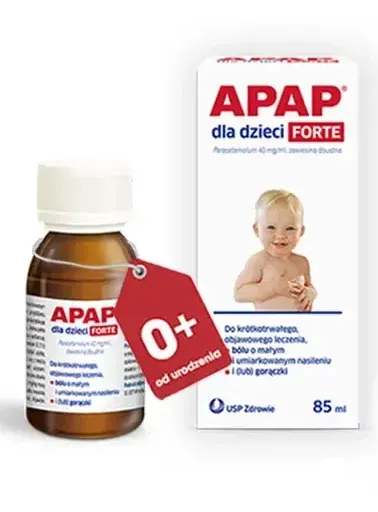
Table of Contents
- Package leaflet: Information for the patient
- 1. What APAP for children FORTE raspberry flavour is and what it is used for
- 2. Important information before using the medicine for children raspberry flavour
- 3. How to use the raspberry-flavoured children's medicine
- 4. Possible adverse reactions
- 5. How to store the raspberry-flavoured children's medicine
- 6. Contents of the packaging and other information
Package leaflet: Information for the patient
APAP for children FORTE raspberry flavour, 40 mg/ml, oral suspension
Paracetamolum
Please read the entire leaflet carefully before using the medicine, as it contains
important information for the patient.
APAP for children FORTE raspberry flavour should always be used according to the instructions in this patient leaflet or as directed by a physician or pharmacist.
- Keep this leaflet, as you may need to read it again.
- If you need advice or further information, consult your pharmacist.
- If the patient experiences any adverse reactions, including any possible adverse reactions not listed in this leaflet, inform a physician or pharmacist immediately. See section 4.
- If there is no improvement after 2 days of treatment, or if the patient's condition worsens, consult a physician.
Table of contents of the leaflet:
- What APAP for children FORTE raspberry flavour is and what it is used for
- Important information before using APAP for children FORTE raspberry flavour
- How to use APAP for children FORTE raspberry flavour
- Possible side effects
- How to store APAP for children FORTE raspberry flavour
- Contents of the package and other information
1. What APAP for children FORTE raspberry flavour is and what it is used for
APAP for children FORTE raspberry flavour contains paracetamol. Paracetamol is an analgesic and antipyretic medicine used to treat mild to moderate pain and (or) fever.
This medicine is indicated for short-term symptomatic treatment of fever (high temperature) and (or) mild to moderate pain (e.g. headache, sore throat, pain and (or) fever associated with influenza or common cold, pain due to otitis media, toothache, teething pain, menstrual pain, muscle and bone pain, pain and (or) fever following tonsillectomy, pain and (or) fever associated with post-vaccination reactions, fever in chickenpox or viral gastroenteritis).
APAP for children FORTE raspberry flavour is intended for the treatment of mild to moderate pain and (or) fever in children weighing up to 40 kg (approximately from 0 months to 12 years of age), adolescents, and adults (including elderly individuals).
In infants under 3 months of age, this medicine should be used only on medical advice.
If there is no improvement after 2 days of treatment, or if the patient's condition worsens, consult a physician.
2. Important information before using the medicine for children raspberry flavour
When not to use the medicine for children raspberry flavour
- if the patient is allergic (hypersensitive) to paracetamol or any of the other ingredients of the medicine (listed in section 6).
Warnings and precautions
Consult a doctor or pharmacist before taking the medicine for children raspberry flavour:
- if the patient has liver diseases (including Gilbert’s syndrome or hepatitis);
- if the patient has kidney function disorders;
- if the patient has haemolytic anaemia (abnormal breakdown of red blood cells);
- if the patient is dehydrated or chronically undernourished;
- if the patient has glucose-6-phosphate dehydrogenase enzyme deficiency;
- if the patient is taking other medicines affecting liver function;
- if the patient is taking other medicines containing paracetamol, as this may cause severe liver damage;
- if the patient with bronchial asthma has an allergy to acetylsalicylic acid.
While using the medicine for children raspberry flavour, immediately
inform a doctor if:
the patient develops severe conditions, including severe kidney function disorders or sepsis
(when bacteria and their toxins circulate in the blood, leading to organ damage), or
malnutrition, chronic alcoholism, or if the patient is also taking flucloxacillin
(an antibiotic). In these situations, patients taking paracetamol regularly over a prolonged period or taking paracetamol together with flucloxacillin have been reported to develop a serious condition called metabolic acidosis (an imbalance in blood and body fluids). Symptoms of metabolic acidosis may include: severe breathing difficulties, including rapid deep breathing, drowsiness, nausea and vomiting.
Taking pain-relieving medicines frequently, often for a long time, may cause headaches or worsen them. In such cases, the dose of the pain-relieving medicine should not be increased; instead, consult a doctor for advice.
Warning: Taking doses higher than recommended does not result in stronger pain relief but is associated with the risk of severe liver damage. Therefore, the maximum daily dose of paracetamol must not be exceeded. Consult a doctor or pharmacist before simultaneously using other medicines also containing paracetamol. Symptoms of liver damage usually appear several days after overdose. It is therefore essential to seek medical advice immediately after taking a higher dose than recommended. See also section 3 “Taking a higher than recommended dose of the medicine for children raspberry flavour”.
In case of high fever (>39°C), signs of secondary infection, or symptoms persisting longer than 2 days, the patient should contact a doctor.
Children and adolescents
See sections 1 and 3.
Medicine for children raspberry flavour and other medicines
Inform the doctor or pharmacist about all medicines currently taken or recently taken, as well as any medicines the patient plans to take. The medicine APAP for children FORTE raspberry flavour may affect other medicines, and other medicines may interfere with its action. This is especially important in the case of:
- other medicines containing paracetamol, such as those used to treat flu;
- warfarin or acenocoumarol (oral anticoagulants used to “thin” the blood);
- glycopyrronium and propanteline (anticholinergic medicines that may reduce paracetamol absorption);
- oral contraceptives;
- phenytoin, phenobarbital, primidone and lamotrigine (medicines used to treat epilepsy);
- chloramphenicol (an antibiotic);
- isoniazid and rifampicin (medicines used to treat tuberculosis);
- metoclopramide and domperidone (medicines that accelerate gastric emptying);
- probenecid (a medicine used to treat high blood uric acid levels (gout));
- propranolol (a medicine used to treat high blood pressure);
- colestyramine (a medicine used to reduce cholesterol levels);
- zidovudine (a medicine used to treat AIDS).
Inform the doctor or pharmacist if the patient is taking:
- flucloxacillin (an antibiotic) due to the serious risk of blood and body fluid disorders (called metabolic acidosis), which require urgent treatment (see section 2).
Paracetamol may affect the results of certain laboratory tests, such as measurements of blood uric acid and glucose levels.
Medicine for children raspberry flavour with food, drink and alcohol
The medicine for children raspberry flavour is ready-to-use and may be taken with food and drink (except alcoholic beverages). If the patient regularly consumes large amounts of alcoholic drinks, the medicine should be taken with particular caution, and alcoholic beverages must not be consumed during treatment with this medicine. Eating a meal has not been shown to affect the medicine’s effectiveness; however, taking the medicine after a meal may delay its onset of action.
Pregnancy and breastfeeding
If the patient is pregnant or breastfeeding, suspects she may be pregnant, or is planning to have a child, she should consult a doctor or pharmacist.
The medicine may be used during pregnancy if clinically justified. The lowest recommended dose that reduces pain and (or) fever should be taken for the shortest possible time and as infrequently as possible. Consult a doctor if pain and (or) fever do not subside or if the patient needs to take the medicine more frequently.
During pregnancy, paracetamol should not be taken in combination with other medicines.
The medicine for children raspberry flavour may be taken during breastfeeding at the recommended doses.
Driving and operating machinery
Usually, the medicine for children raspberry flavour does not affect the ability to drive or operate machinery. However, if the patient experiences mild drowsiness or dizziness as side effects, driving and operating machinery should be avoided.
The medicine for children raspberry flavour contains sucrose, methyl
parahydroxybenzoate (E 218), propyl parahydroxybenzoate (E 216), ethanol and
propylene glycol.
This medicine contains sucrose. If the patient has previously been diagnosed with intolerance to certain sugars, he or she should consult a doctor before using the medicine. A dose exceeding 10 ml of oral suspension contains more than 5 g of sucrose per dose, which should be considered in patients with diabetes. Sucrose may be harmful to teeth.
This medicine contains methyl parahydroxybenzoate (E 218) and propyl parahydroxybenzoate (E 216), which may cause allergic reactions (including delayed-type reactions).
This medicine contains 0.195 mg of ethanol in each 1 ml, equivalent to 4.875 mg/25 ml (maximum single dose). The amount of ethanol in 25 ml of this medicine is equivalent to less than 1 ml of beer or 1 ml of wine. The small amount of ethanol in this medicine will not cause noticeable effects.
The medicine contains less than 1 mmol (23 mg) of sodium per 25 ml (maximum single dose), meaning the medicine is considered “sodium-free”.
The medicine contains 6.4 mg of propylene glycol in each 1 ml, corresponding to 160 mg in 25 ml (maximum single dose). Before administering the medicine to a child under 4 weeks of age, consult a doctor or pharmacist, especially if the child is taking other medicines containing propylene glycol or alcohol.
3. How to use the raspberry-flavoured children's medicine
This medicine should always be taken exactly as described in the patient leaflet or
as advised by the doctor or pharmacist. If in doubt, consult your doctor or
pharmacist.
This medicine should only be used in infants under 3 months of age on the advice of a doctor.
Dosage should be determined primarily according to the patient's body weight.
The recommended daily dose of paracetamol is approximately 60 mg/kg body weight/day, divided into
4 to 6 doses per day, i.e. 15 mg/kg body weight every 6 hours or
10 mg/kg body weight every 4 hours.
Example dosing instructions for 15 mg/kg body weight every 6 hours:
Body weight Single dose Volume of Single daily dose Volume of
(approximate age in months or years) of paracetamol single dose of medicine (paracetamol) medicine
paracetamol
every 6 hours raspberry-flavoured raspberry-flavoured
every 6 hours
3 kg (0 months) 45 mg 1.125 ml 180 mg 4.5 ml
4 kg (1 month) 60 mg 1.5 ml 240 mg 6 ml
5 kg (2 months) 75 mg 1.875 ml 300 mg 7.5 ml
6 kg (3 months) 90 mg 2.25 ml 360 mg 9 ml
7 kg (4-5 months) 105 mg 2.625 ml 420 mg 10.5 ml
8-10 kg (6-12 months) 120-150 mg 3-3.75 ml 480-600 mg 12-15 ml
11-15 kg (2-3 years) 165-225 mg 4.125-5.625 ml 660-900 mg 16.5-22.5 ml
16-22 kg (4-6 years) 240-330 mg 6-8.25 ml 960-1320 mg 24-33 ml
23-30 kg (6-9 years) 345-450 mg 8.625-11.25 ml 1380-1800 mg 34.5-45 ml
31-40 kg (9-12 years) 465-600 mg 11.625-15 ml 1860-2400 mg 46.5-60 ml
| more than 41 kg | 615-1000 mg | 15.375-25 ml | 2460-3000 mg (more than 41 to 50 kg b.w.) | 61.5-75 ml |
| 4000 mg (more than 51 kg b.w.) | 100 ml |
5 ml of oral suspension (full oral syringe with a capacity of 5 ml) = 200 mg paracetamol
6 ml of oral suspension (full oral syringe with a capacity of 6 ml) = 240 mg paracetamol
When using this dosing regimen, the interval between consecutive doses must be
at least 6 hours.
Example dosing schedule: 10 mg/kg body weight every 4 hours:
| Body weight | Single dose | Volume of | Daily dose | Volume of |
| (approximate age in months or years) | of paracetamol | APAP dla dzieci FORTE raspberry flavour | of paracetamol | APAP dla dzieci FORTE raspberry flavour |
| (every 4 hours) | | (every 4 hours) | |
| 3 kg (0 months) | 30 mg | 0.75 ml | 180 mg | 4.5 ml |
| 4 kg (1 month) | 40 mg | 1.0 ml | 240 mg | 6 ml |
| 5 kg (2 months) | 50 mg | 1.25 ml | 300 mg | 7.5 ml |
| 6 kg (3 months) | 60 mg | 1.5 ml | 360 mg | 9 ml |
| 7 kg (4-5 months) | 70 mg | 1.75 ml | 420 mg | 10.5 ml |
| 8-10 kg (6-12 months) | 80-100 mg | 2-2.5 ml | 480-600 mg | 12-15 ml |
| 11-15 kg (2-3 years) | 110-150 mg | 2.75-3.75 ml | 660-900 mg | 16.5-22.5 ml |
| 16-22 kg (4-6 years) | 160-220 mg | 4-5.5 ml | 960-1320 mg | 24-33 ml |
| 23-30 kg (6-9 years) | 230-300 mg | 5.75-7.5 ml | 1380-1800 mg | 34.5-45 ml |
| 31-40 kg (9-12 years) | 310-400 mg | 7.75-10 ml | 1860-2400 mg | 46.5-60 ml |
| more than 41 kg | 410-1000 mg | 10.25-25 ml | 2460-3000 mg | 61.5-75 ml |
| (more than 41 to | | | | |
| 50 kg body weight) | | | | |
| 4000 mg (more than | 100 ml | | | |
| 51 kg body weight) | | | | |
5 ml of oral suspension (full oral syringe with a capacity of 5 ml) = 200 mg paracetamol
6 ml of oral suspension (full oral syringe with a capacity of 6 ml) = 240 mg paracetamol
When using this dosing regimen, the interval between consecutive doses must be
at least 4 hours.
In infants with body weight less than 7 kg (up to 6 months of age), rectal suppositories should be considered if available and if administration of this pharmaceutical form is not clinically contraindicated (e.g. due to diarrhoea).
In children with body weight greater than 41 kg (older than 12 years), adolescents and adults, other pharmaceutical forms of paracetamol may be considered as more appropriate.
Route and method of administration:
- The medicine is intended for oral use;
- Shake well before use;
- The bottle cap is child-resistant. To open, press down on the cap while turning it counterclockwise;
- The oral suspension should not be diluted or mixed with other beverages;
- Do not exceed the recommended dose. Remember that doses higher than recommended may cause a risk of severe liver damage.
The exact amount of medicine should be administered using the 5 ml oral syringe (graduated in 0.25 ml increments) or the 6 ml oral syringe (graduated in 0.25 ml increments) provided in the package.
After use, the oral syringe should be rinsed several times thoroughly up to its tip (by filling it with water).
In case of high fever (>39°C), signs of infection, or symptoms persisting longer than 2 days, consult a doctor.
Patients with hepatic or renal impairment
In patients with mild to moderate liver dysfunction or patients with Gilbert's syndrome (familial non-hemolytic jaundice), the effective daily dose should not exceed 60 mg/kg body weight/day (up to a maximum dose of 2 g/day).
In patients with renal impairment, the dose should be reduced or the intervals between doses should be prolonged. In patients with severe renal impairment, the intervals between doses of APAP dla dzieci FORTE raspberry flavour must be at least 8 hours.
Consult a doctor or pharmacist for advice.
Administration of a higher than recommended dose of APAP dla dzieci FORTE raspberry flavour
Seek immediate medical advice in case of overdose, even if the patient feels well, because there is a risk of delayed, irreversible liver damage. Bring the medicine bottle or empty packaging to assist in identification. To avoid potential liver damage, it is important that an antidote is administered by a doctor as quickly as possible. Symptoms of liver damage usually do not appear until several days after ingestion. Symptoms of overdose may include nausea, vomiting, anorexia (loss of appetite), pallor, and abdominal pain, typically occurring within 24 hours of taking the medicine.
Missed dose of APAP dla dzieci FORTE raspberry flavour
Do not take a double dose to make up for a missed dose. Instead, take the next dose at the usual time.
If you have any further doubts regarding the use of this medicine, consult your doctor or pharmacist.
4. Possible adverse reactions
Like all medicines, APAP dla dzieci FORTE smak malinowy may cause adverse reactions,
although not everyone experiences them.
The medicine must be discontinued immediately and a doctor should be consulted if
allergic reactions (hypersensitivity) to paracetamol occur, such as: Quincke's edema (facial,
neck, and genital swelling), shortness of breath, profuse sweating, nausea, or drop in blood pressure.
Common (may occur in up to 1 in 10 patients):
- moderate drowsiness;
- nausea;
- vomiting.
Uncommon (may occur in up to 1 in 100 patients):
- dizziness;
- drowsiness;
- irritability;
- burning sensation in the throat;
- diarrhea;
- abdominal pain (including cramps and heartburn);
- constipation;
- headache;
- excessive sweating;
- decreased body temperature (chills).
Rare (may occur in up to 1 in 1000 patients):
- skin redness.
Very rare (may occur in up to 1 in 10,000 patients):
- blood disorders (reduced platelet count, reduced white blood cell count, and sporadic cases of complete absence of white blood cells, bone marrow suppression affecting blood cell formation);
- bronchospasm in predisposed patients.
Severe skin reactions have been reported very rarely.
Frequency not known (cannot be estimated from available data):
- serious condition potentially causing blood acidification (so-called metabolic acidosis) in patients with severe illness taking paracetamol (see section 2).
Reporting of adverse reactions
If any adverse reactions occur, including any adverse reactions not listed in this leaflet, inform your doctor or pharmacist. Adverse reactions can be reported directly to the Department of Monitoring Adverse Drug Reactions, Office for Registration of Medicinal Products, Medical Devices and Biocidal Products.
Al. Jerozolimskie 181C, 02-222 Warsaw
Phone: +48 22 49 21 301, Fax: +48 22 49 21 309
Website: https://smz.ezdrowie.gov.pl
Adverse reactions may also be reported to the marketing authorization holder.
Reporting adverse reactions helps to provide more information on the safety of the medicine.
5. How to store the raspberry-flavoured children's medicine
Store below 30°C.
Store in the original packaging to protect from light.
Keep out of sight and reach of children.
Do not use this medicine after the expiry date stated on the carton and on the bottle label after "EXP". The expiry date refers to the last day of the specified month.
Expiry after first opening: 9 months.
Do not use this medicine if signs of deterioration are observed.
Medicines must not be disposed of via wastewater or household waste. Ask your pharmacist how to dispose of medicines no longer required. Such measures help protect the environment.
6. Contents of the packaging and other information
What the medicinal product contains
- The active substance is paracetamol. Each 1 ml contains 40 mg of paracetamol.
- The other ingredients are: citric acid monohydrate, sodium citrate dihydrate,
sucrose, methyl parahydroxybenzoate (E 218), propyl parahydroxybenzoate (E
216), xanthan gum, purified water, raspberry flavour (23688A): flavouring substances, flavouring preparations, natural flavouring substances, propylene glycol (E-1520), ethanol; cream flavour (63.3626): flavouring substances, flavouring preparations, propylene glycol (E-1520), glycerol (E-422), ethanol.
What the medicinal product looks like and contents of the pack
APAP dla dzieci FORTE smak malinowy is a white to almost white, homogeneous liquid with a raspberry flavour. The pH ranges between 4–6.
Packaged in an amber glass bottle (type III) with a PPH/HDPE screw cap with an LDPE plug and LDPE tamper-evident ring, child-resistant closure, together with an oral syringe made of LDPE/PS with a capacity of 5 ml, graduated every 0.25 ml, in a cardboard box.
Alternatively: an amber glass bottle (type III) with a PP screw cap with a PP tamper-evident ring, child-resistant closure, with an LDPE adapter for the oral syringe, and an oral syringe made of LDPE/PS with a capacity of 6 ml, graduated every 0.25 ml, in a cardboard box.
The bottle contains 85 ml of oral suspension.
Marketing Authorisation Holder and Manufacturer
Marketing Authorisation Holder
US Pharmacia Sp. z o.o.
ul. Ziębicka 40
50-507 Wrocław
Poland
Manufacturer
Laboratórios Basi – Indústria Farmacêutica, S.A.
Parque Industrial Manuel Lourenço Ferreira, lots 8, 15 and 16
3450-232 Mortágua
Portugal
For further information about this medicinal product, please contact:
USP Zdrowie Sp. z o.o.
ul. Poleczki 35
02-822 Warszawa
tel.: +48 (22) 543 60 00