Apap caps
Poland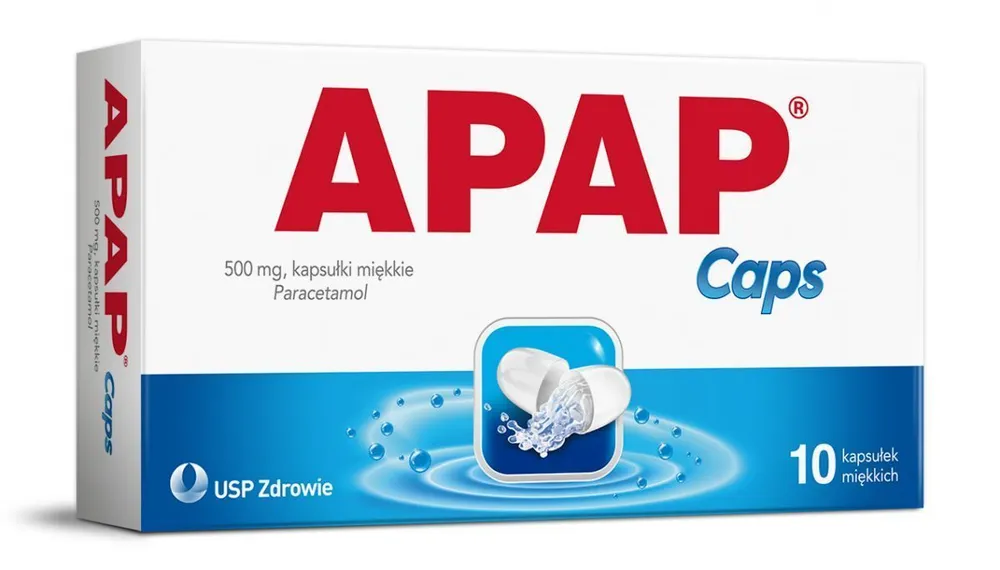
Table of Contents
Package leaflet: Information for the user
APAP caps, 500 mg, soft capsules
Paracetamol
Please read all of this leaflet carefully before taking this medicine because it contains
important information for you.
This medicine should always be used exactly as described in this patient leaflet or as directed by
your doctor or pharmacist.
This medicine is available without a prescription. However, caution should be exercised when using it.
Following these instructions will ensure the best treatment outcome.
- Keep this leaflet, so that you can read it again if necessary.
- If you need advice or further information, please consult your pharmacist.
- If you experience any adverse reactions, including any possible side effects not listed in this leaflet, inform your doctor or pharmacist. See section 4.
- If there is no improvement or if you feel worse after 3 days, consult your doctor.
Contents of the leaflet
- What APAP caps is and what it is used for
- What you need to know before taking APAP caps
- How to take APAP caps
- Possible side effects
- How to store APAP caps
- Contents of the pack and other information
1. What APAP caps is and what it is used for
APAP caps contains the active substance paracetamol, which belongs to a group of medicines called
analgesics (painkillers).
APAP caps is used for the symptomatic treatment of mild to moderate pain and (or) fever.
APAP caps can be used in adults, adolescents, and children, but is not intended for use in children under 9 years of age.
2. Important information before using APAP caps
When not to use APAP caps:
- if the patient is allergic to the active substance or any of the other ingredients of this medicine (listed in section 6).
Warnings and precautions
Before starting treatment with APAP caps, consult a doctor or pharmacist:
- if the patient has impaired liver or kidney function
- if the patient has moderate to severe renal impairment (inadequate kidney function)
- if the patient has mild to severe hepatic impairment (inadequate liver function)
- if the patient has Gilbert's syndrome
1/6
- if the patient has glucose-6-phosphate dehydrogenase deficiency
- if the patient has haemolytic anaemia
- if the patient is dehydrated
- if the patient is chronically undernourished
- if the patient has asthma and is allergic to aspirin (acetylsalicylic acid)
- if the patient drinks large amounts of alcohol daily; in this case, there is an increased risk of harmful effects on the liver
- if symptoms persist for more than 3 days or recur, contact a doctor
- if the patient is already taking other analgesics containing paracetamol, do not use APAP caps.
Prolonged or frequent use of this medicine is not recommended.
Consult a doctor if any of the above warnings apply or have applied in the past.
APAP caps and other medicines
Tell your doctor or pharmacist about all medicines currently taken or recently used, as well as any medicines the patient plans to take, including those prescribed by a doctor.
Different medicines taken simultaneously may interact with each other.
Before using paracetamol, contact a doctor or pharmacist. Also contact them if taking the following medicines:
- barbiturates (medicines with sedative or anaesthetic effects)
- certain antidepressants
- probenecid (used in the treatment of jaundice)
- chloramphenicol (antibiotic)
- metoclopramide or domperidone (medicines used against nausea and vomiting)
- cholestyramine (anticholinergic medicine)
- warfarin and other coumarin derivatives (anticoagulant medicines)
- zidovudine (used in the treatment of AIDS)
- salicylamide (analgesic medicine)
- isoniazid (used in the treatment of tuberculosis)
- lamotrigine (antiepileptic medicine)
- flucloxacillin (antibiotic), due to the serious risk of blood and body fluid disorders (metabolic acidosis with a high anion gap), which require urgent treatment and may occur particularly in patients with severe kidney function disorders, sepsis (a condition where bacteria and their toxins circulate in the blood, leading to organ damage), malnutrition, chronic alcoholism, and in patients taking maximum daily doses of paracetamol.
Paracetamol may affect the results of various laboratory tests.
APAP caps with food, drink and alcohol
In patients with chronic alcoholism, the dose used must not exceed 2 g (4 capsules) per day. Long-term use of paracetamol combined with alcohol consumption may cause liver damage due to paracetamol overdose.
Do not drink alcohol during treatment with APAP caps.
Pregnancy, breastfeeding and fertility
If the patient is pregnant, breastfeeding, suspects she may be pregnant, or is planning to have a child, she should consult a doctor or pharmacist before using this medicine.
2/6
Pregnancy
APAP caps may be used during pregnancy if necessary. Use the lowest effective dose to relieve pain or reduce fever, and take the medicine for as short a time as possible. If pain is not relieved or fever does not subside, or if it becomes necessary to increase the frequency of dosing, consult a doctor.
Breastfeeding
Although paracetamol passes into breast milk in small amounts, it does not affect breastfed infants. Paracetamol may be used short-term by breastfeeding women at the recommended doses.
Driving and operating machinery
Based on current observations, paracetamol has no effect on the ability to drive or operate machinery.
Soy warning
APAP caps contains soy lecithin. If the patient is allergic to peanuts or soy, this medicine must not be used.
APAP caps contains sorbitol:
If the patient has previously been diagnosed with intolerance to certain sugars, consult a doctor before using this medicine.
3. How to use APAP caps
This medicine should always be used according to the instructions provided by the doctor or pharmacist. In case of doubt, consult a doctor or pharmacist.
Method of administration:
Swallow the capsule with a large amount of water (half a glass).
Recommended dose:
Adults and adolescents over 15 years of age (body weight >55 kg):
1 or 2 capsules (500 mg – 1 g) as a single dose, maximum 6 capsules (3 g) per day.
Children and adolescents under 15 years of age:
Children aged 9 to 12 years (30 – 40 kg): 1 capsule (500 mg) as a single dose, 3 – 4 times daily.
Children aged 12 to 15 years (40 – 55 kg): 1 capsule (500 mg) as a single dose, 4 – 6 times daily.
Lower dosing frequency is intended for younger children within each age group.
In children under 12 years of age, do not exceed a dose greater than 60 mg/kg body weight/day.
- APAP caps should not be used in children under 9 years of age.
- Maintain at least 4-hour intervals between doses.
- Do not use simultaneously with other medicines containing paracetamol.
- Do not exceed the recommended doses.
- If symptoms of fever and/or pain recur, treatment may be repeated according to the recommended dosing schedule.
- If pain persists for more than 5 days or fever for more than 3 days, or if symptoms worsen or new symptoms appear, discontinue use and consult a doctor.
3/6
The effective daily dose must not exceed 60 mg/kg body weight/day (more than 2 g/day) in the following cases:
- in adults with body weight less than 50 kg
- in mild to moderate hepatic impairment, Gilbert's syndrome (hereditary non-haemolytic jaundice)
- dehydration
- chronic malnutrition.
This medicine should always be used exactly as described in the patient leaflet or as otherwise directed by a doctor.
If the effect of the medicine seems too strong or too weak, consult a doctor or pharmacist.
Taking more than the recommended dose of APAP caps
If the patient has taken more than the recommended dose, seek immediate advice from a doctor or pharmacist. Taking a higher than recommended dose may cause nausea, vomiting, and loss of appetite. Taking several times the maximum daily dose at once may cause severe liver damage. Loss of consciousness usually does not occur. Nevertheless, the patient should seek medical help immediately.
If appropriate medical help is not provided in time, liver damage may become irreversible.
Missed dose of APAP caps
Do not take a double dose to make up for a missed dose.
Stopping treatment with APAP caps
Stopping treatment does not cause any specific symptoms.
If you have any further questions about the use of this medicine, consult your doctor or pharmacist.
4. Possible adverse effects
Like all medicines, this medicine can cause adverse effects, although not everyone will experience them.
The following adverse effects may occur:
Rare (occur in 1 to 10 patients in 10,000)
- various abnormalities in blood test results, including agranulocytosis, thrombocytopenia, thrombocytopenic purpura, leukopenia and haemolytic anaemia
- allergic reactions (excluding angioedema)
- liver function disorders, liver failure, hepatic necrosis and jaundice
- itching, rash, sweating, purpura, urticaria
- overdose and poisoning
- depression, confusion, hallucinations
- tremor, headache
- blurred vision
- swelling
- bleeding, abdominal pain, diarrhoea, nausea, vomiting
- dizziness, fever, somnolence.
Very rare (occur less frequently than in 1 in 10,000 patients)
- pancytopenia (reduced blood cell count)
- hypersensitivity reactions; if these occur, treatment must be discontinued, including angioedema, breathing difficulties, sweating, nausea, hypotension, shock and anaphylaxis 4/6
- feeling of chest tightness due to respiratory muscle spasm (bronchospasm) in patients allergic to aspirin and other non-steroidal anti-inflammatory drugs (NSAIDs, a group of pain-relieving medicines with anti-inflammatory and antipyretic effects)
- liver poisoning
- rash (skin eruptions)
- hypoglycaemia (low blood glucose concentration)
- dark urine colour (sterile pyuria) and kidney function disorders
- severe skin reactions.
Frequency unknown (frequency cannot be determined from available data)
- acute generalized exanthematous pustulosis, toxic epidermal necrolysis, drug-induced dermatoses, Stevens-Johnson syndrome.
Liver damage may occur after prolonged use of 3 to 4 grams of paracetamol per day.
Liver damage may also occur after a single intake of 6 g of paracetamol.
If any other adverse effects not listed in this leaflet occur, or if any symptoms are considered severe by the patient, a doctor or pharmacist should be informed.
Reporting of adverse effects
If any adverse effects occur, including any adverse effects not listed in this leaflet, inform a doctor or pharmacist.
Adverse effects can be reported directly to the Office for Registration of Medicinal Products, Medical Devices and Biocidal Products:
Al. Jerozolimskie 181 C, 02-222 Warsaw, tel.: 22 49-21-301, fax: 22 49-21-309,
website: https://smz.ezdrowie.gov.pl
Adverse effects can also be reported to the marketing authorisation holder.
Reporting adverse effects helps to provide more information on the safety of the medicine.
5. How to store APAP caps
Keep this medicine out of sight and reach of children.
Do not store above 25 °C.
Do not use this medicine after the expiry date stated on the carton after EXP.
The expiry date refers to the last day of the stated month.
Medicines must not be disposed of via wastewater or household waste. Ask your pharmacist how to dispose of medicines no longer required. This will help protect the environment.
6. Contents of the Package and Other Information
What APAP caps contains
The active substance is paracetamol. Each soft capsule contains 500 mg of paracetamol.
The other ingredients are:
Capsule contents: macrogol 400, macrogol 600, purified water, propylene glycol, povidone,
anhydrous colloidal silicon dioxide.
Capsule shell: gelatin, sorbitol liquid partially dehydrated, purified water, glycerol,
titanium dioxide (E171).
Contains trace amounts of isopropyl alcohol, saturated medium-chain triglycerides, and soybean lecithin.
What APAP caps looks like and contents of the pack
White, elongated, soft gelatin capsule (size 11).
White PVC/PVDC-Aluminium blisters in a cardboard box.
Pack sizes: 4, 6, 10, 20, 30, 50, 90, 100, 250 or 500 capsules in blisters or unit-dose divided blisters.
Not all pack sizes may be marketed.
Marketing Authorisation Holder and Manufacturer
Marketing Authorisation Holder:
US Pharmacia Sp. z o.o.
Ziębicka Street 40
50-507 Wrocław
Poland
Manufacturer:
Apotex Nederland B.V.
Archimedesweg 2
2333 CN Leiden
The Netherlands
Generis Farmaceutica S.A.,
Rua Joao de Deus, no 19, Venda Nova,
2700-487 Amadora,
Portugal
US Pharmacia Sp. z o.o.
Ziębicka Street 40
50-507 Wrocław
Poland
For further information, please contact:
USP Zdrowie Sp. z o.o.
Poleczki Street 35
02-822 Warsaw
Phone: +48 (22) 543 60 00
6/6