Androcur
Poland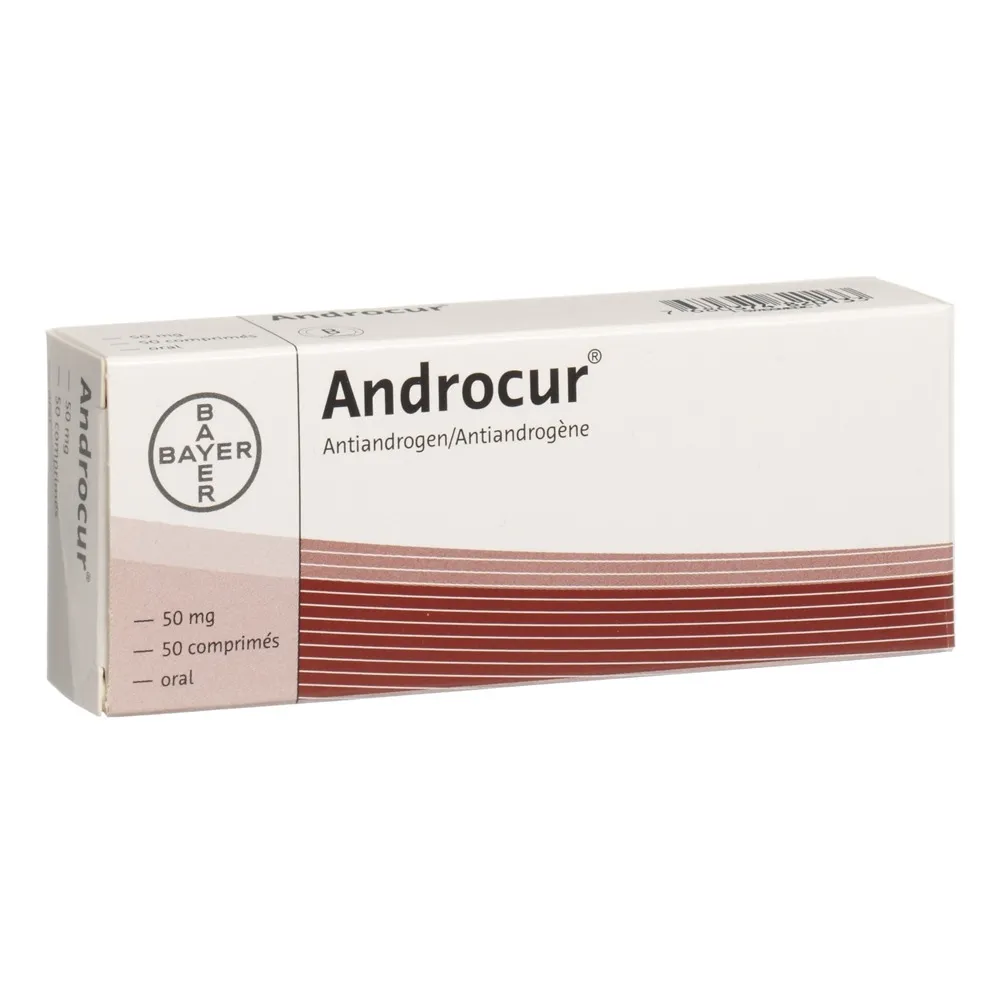
Table of Contents
Patient Information Leaflet
Androcur, 50 mg, tablets
Cyproterone acetate
Please read this leaflet carefully before taking this medicine, as it contains
important information for the patient.
- Keep this leaflet, as you may need to read it again.
- If you have any questions, please consult your doctor or pharmacist.
- This medicine has been prescribed for a specific individual. Do not pass it on to others. It may harm other people, even if their symptoms are the same.
- If you experience any adverse reactions, including any not listed in this leaflet, tell your doctor or pharmacist. See section 4.
Table of contents:
- What Androcur is and what it is used for
- What you need to know before taking Androcur
- How to take Androcur
- Possible side effects
- How to store Androcur
- Contents of the pack and other information
1. What Androcur is and what it is used for
Androcur is a hormonal medicine that works by inhibiting the effects of male sex hormones (androgens, which are also produced to a small extent in the female body). The active substance is cyproterone acetate.
In women, Androcur has a beneficial effect on conditions dependent on androgens, such as:
excessive hair growth in hirsutism (male-pattern hair growth in women), hair loss on the scalp (androgenetic alopecia), and excessive sebum secretion from sebaceous glands in acne and seborrhoea.
Additionally, during treatment with Androcur, your doctor may prescribe an estrogen-progestagen contraceptive (e.g. Diane-35) for contraceptive protection and cycle stabilization.
During combination therapy, ovarian function is suppressed. These changes are reversible after discontinuation of treatment.
In men, Androcur reduces the blood concentration of testosterone (an androgen). As a result, it leads to suppression of libido.
Androgens stimulate the growth of prostate cancer cells. In patients with prostate cancer, Androcur inhibits this effect.
Therapeutic indications
- Indications in women Severe symptoms of androgenization, such as marked hirsutism (abnormal excessive hair growth), severe androgen-dependent hair loss leading ultimately to baldness (androgenetic alopecia), and severe forms of acne and/or seborrhoea.
In cases of severe androgenization symptoms, cyproterone acetate should be administered at a dose of 50 mg only when satisfactory results have not been achieved with products containing lower doses of cyproterone acetate or with other treatment methods.
- Indications in men Suppression of libido in cases of sexual deviations. Cyproterone acetate 50 mg should be used solely when the physician determines that other methods are inappropriate. Antiandrogenic treatment in non-operable prostate cancer.
2. Important information before using Androcur
When not to use Androcur
Do not use Androcur if any of the conditions listed below apply. If any of these conditions are present, inform your doctor before taking Androcur.
Women:
- if the patient is allergic (hypersensitive) to cyproterone acetate or to any of the excipients of Androcur;
- if the patient is pregnant or breastfeeding;
- if the patient has liver disease;
- if the patient has a history of jaundice or persistent itching during a previous pregnancy;
- if the patient has previously experienced cholestatic pruritus of pregnancy;
- if the patient has Dubin-Johnson syndrome or Rotor syndrome (inherited disorders of liver function with impaired excretion of bilirubin from red blood cells);
- if the patient currently has or has previously had benign or malignant liver tumours;
- if the patient has debilitating diseases (conditions causing wasting or loss of strength);
- if the patient has severe chronic depression;
- if the patient currently has or has previously had circulatory disorders, particularly conditions associated with thrombosis (blood clot formation) in the venous vessels (thromboembolic disorders);
- if the patient has severe diabetes with vascular complications;
- if the patient has sickle cell anaemia;
- if the patient currently has or has previously had a benign brain tumour (meningioma).
If, in addition to Androcur, your doctor prescribes an oestrogen-progestogen contraceptive (e.g. Diane-35), carefully read the information provided in the leaflet of the additional prescribed medicine.
Men:
Suppression of sexual drive in cases of sexual deviations
- if the patient is allergic (hypersensitive) to cyproterone acetate or to any of the excipients of Androcur;
- if the patient has liver disease;
- if the patient has Dubin-Johnson syndrome or Rotor syndrome (inherited disorders of liver function with impaired excretion of bilirubin from red blood cells);
- if the patient currently has or has previously had benign or malignant liver tumours;
- if the patient has debilitating diseases (conditions causing wasting or loss of strength);
- if the patient has severe chronic depression;
- if the patient currently has or has previously had circulatory disorders, particularly conditions associated with thrombosis (blood clot formation) in the venous vessels (thromboembolic disorders);
- if the patient has severe diabetes with vascular complications;
- if the patient has sickle cell anaemia;
- if the patient currently has or has previously had a benign brain tumour (meningioma).
Antiandrogen treatment in cases of inoperable prostate cancer.
- if the patient is allergic (hypersensitive) to cyproterone acetate or to any of the excipients of Androcur;
- if the patient has liver disease;
- if the patient has Dubin-Johnson syndrome or Rotor syndrome (inherited disorders of liver function with impaired excretion of bilirubin from red blood cells);
- if the patient currently has or has previously had benign or malignant liver tumours (only if not resulting from metastases of prostate cancer);
- if the patient has debilitating diseases (conditions causing wasting or loss of strength, except inoperable prostate cancer);
- if the patient has severe chronic depression;
- if the patient currently has or has previously had circulatory disorders, particularly conditions associated with thrombosis (blood clot formation) in the venous vessels (thromboembolic disorders);
- if the patient currently has or has previously had a meningioma (benign tumour of the tissue layer between the brain and the skull). Please consult your doctor if you have any doubts.
Warnings and precautions
Discuss with your doctor before starting treatment with Androcur.
- Androcur is not recommended for use in children and adolescents under 18 years of age due to lack of data on safety and efficacy.
- Androcur should not be used before completion of the maturation process, as the drug may adversely affect growth and the function of the immature hormonal system.
- Inform your doctor if the patient has diabetes, as adjustment of antidiabetic treatment may be necessary. The course of diabetes should be closely monitored during treatment with Androcur (see also section "When not to use Androcur").
- Cases of anaemia have been reported during treatment with Androcur. Therefore, red blood cell counts should be monitored regularly.
- Animal studies suggest that high-dose cyproterone acetate may impair the function of endocrine glands associated with the kidneys (adrenal cortex). Therefore, your doctor may order tests to monitor adrenal cortex function during treatment with Androcur.
- An association has been observed between the use of cyproterone acetate and the development of usually benign brain tumours (meningiomas). This risk is particularly increased with long-term (several years) use or shorter-term use of high doses (25 mg per day or higher). If a meningioma is diagnosed, your doctor will discontinue treatment with cyproterone acetate (see section "When not to use Androcur"). If the patient experiences any symptoms such as visual disturbances (e.g. double or blurred vision), hearing loss or tinnitus, loss of smell, headache that worsens over time, memory loss, seizures, or weakness in the arms or legs, they should inform the doctor immediately. The doctor will evaluate the benefit-risk ratio of treatment in postmenopausal women.
- Thromboembolic events (blood clots) have been reported in association with Androcur use. However, a causal relationship has not been established. Patients with a history of blood clots or those with advanced cancer have an increased risk of thromboembolic disorders. Inform your doctor if the patient has previously experienced arterial or venous thrombosis (e.g. deep vein thrombosis), pulmonary embolism, myocardial infarction, or stroke ("ischaemic stroke").
Special warnings for women
Before starting treatment in women, a thorough gynaecological examination (including breast examination and cervical cytology) should be performed, and pregnancy must be excluded.
If light bleeding occurs during the first 3 weeks of treatment with Androcur combined with an oestrogen-progestogen contraceptive (e.g. prescribed by the doctor such as Diane-35), treatment should not be discontinued. However, if bleeding is heavy, the patient should consult the doctor.
If an oestrogen-progestogen contraceptive (e.g. Diane-35) is required as combination therapy, carefully read the information provided in the leaflet of the additional product.
Special warnings for men
Patients with prostate cancer should inform their doctor if they have previously had any of the following conditions:
- circulatory disorders, particularly thrombosis (blood clot formation) in blood vessels,
- sickle cell anaemia,
- severe diabetes with vascular complications. The doctor will consider whether prescribing Androcur is appropriate.
The effect of Androcur, prescribed by a doctor for "suppression of sexual drive in sexual deviations", may be reduced when alcohol is consumed concurrently.
Androcur and other medicines
Inform your doctor about all medicines currently used or recently used, including those obtained without a prescription, as well as any medicines the patient plans to take.
Inform your doctor if statins (medicines that lower blood lipid levels) are being taken, as concomitant use with high doses of Androcur may increase the risk of certain adverse effects (myopathy or rhabdomyolysis).
Also inform your doctor about taking medicines that affect the liver, such as:
- ketoconazole, itraconazole, clotrimazole (used in the treatment of fungal infections),
- ritonavir (used in the treatment of viral infections),
- rifampicin (used in the treatment of tuberculosis),
- phenytoin (used in the treatment of epilepsy),
- products containing St John's wort (Hypericum perforatum).
Androcur, when used in high doses (100 mg three times daily), may inhibit certain liver enzymes and thereby affect the efficacy of other medicines.
Pregnancy and breastfeeding
If the patient is pregnant or breastfeeding, suspects she may be pregnant, or is planning to have a baby, she should consult her doctor before using this medicine.
Use of Androcur during pregnancy and/or breastfeeding is contraindicated.
Driving and operating machinery
Androcur may cause fatigue, reduced vitality, and impaired concentration ability.
Androcur contains 105.5 mg of lactose per tablet. If the patient has previously been diagnosed with intolerance to certain sugars, the patient should consult a doctor before taking this medicine.
3. How to use Androcur
The tablets should be taken after meals, with a small amount of liquid. The dose should not exceed 300 mg per day.
If you feel that the effect of the medicine is too strong or too weak, you should contact your doctor or pharmacist.
This medicine should always be taken according to the doctor's instructions. In case of doubt, consult your doctor.
Dosage for women:
Do not take Androcur if you are pregnant. Therefore, pregnancy must be excluded before starting treatment.
In women of childbearing age, treatment should begin on the first day of the cycle (the first day of menstruation). Only women who no longer menstruate may start taking Androcur immediately. In this case, the first day of treatment is considered equivalent to the first day of the cycle, and the following recommendations should be applied accordingly.
Between days 1 and 10 of the cycle, take 2 tablets of Androcur (= 100 mg) once daily.
Additionally, in order to stabilize the cycle and ensure adequate contraceptive protection, patients should take an appropriate estrogen-progestagenic preparation (e.g. Diane-35) from day 1 to day 21 of the cycle.
| Day of taking tablets 1 10 21 1 | ||||||
| ○○○○○○○○○○○ | 7-day break |
| |||
| Bleeding | Bleeding | |||||
| ||||||
- 2 tablets of Androcur
- ○ 1 tablet of an estrogen-progestagenic drug
Women receiving combined therapy in cycles should take the medicines every day at approximately the same time.
After 21 days of taking the estrogen-progestagenic drug, a 7-day treatment break should be taken.
During this time, withdrawal bleeding occurs. Exactly 4 weeks (28 days) after starting treatment, i.e. on the same day of the week, the next cycle of combined therapy should begin, regardless of whether withdrawal bleeding has already stopped or is still ongoing.
After achieving clinical improvement during combined treatment with Diane-35, the physician may reduce the daily dose of Androcur to 1 (= 50 mg) or 1/2 tablet (= 25 mg), continuing to administer the drug during the first 10 days of combined therapy. It may also turn out that treatment with the estrogen-progestagenic drug alone is sufficient. After reaching menopause, the physician will reassess the treatment. Long-term use (several years) of Androcur should be avoided (see section "Warnings and precautions").
In patients who have undergone hysterectomy or in postmenopausal women, Androcur may be administered as monotherapy, i.e. there is no need to use additional drugs. Depending on the severity of symptoms, the average dose should be 1 to 1/2 tablet per day for 21 days, followed by a 7-day break from the medication.
If withdrawal bleeding does not occur
If withdrawal bleeding does not occur, consult a physician before continuing treatment to exclude pregnancy.
If you feel that the effect of Androcur is too strong or too weak, consult your physician or pharmacist.
Dosage in men:
Suppression of sexual drive in sexual deviations
The physician will determine the individual dosage.
- Initially, 1 tablet twice daily is usually prescribed.
- It may be necessary to temporarily increase the dose to 2 tablets twice daily or even up to 2 tablets three times daily.
- Once a satisfactory therapeutic response has been achieved, the physician will establish the lowest effective daily dose. Often, 1/2 tablet twice daily is sufficient.
- The daily dose should be gradually reduced, e.g. by 1/2 or 1 tablet every few weeks. To maintain the therapeutic effect, long-term administration of Androcur is necessary, preferably combined, if possible, with psychotherapy.
Antiandrogenic treatment in non-operable prostate cancer
2 tablets of Androcur 2 to 3 times daily (= 200 to 300 mg per day) are administered.
Treatment should not be discontinued or the dose reduced after improvement or symptom relief has been achieved.
To reduce the initial rise in male sex hormone levels during treatment with GnRH agonists (gonadotropin-releasing hormone agonists)
- Initially, 2 tablets of Androcur twice daily (= 200 mg per day) for 5–7 days.
- Then, 2 tablets of Androcur twice daily (= 200 mg per day) for 3–4 weeks, in combination with a gonadotropin-releasing hormone (GnRH) agonist at doses recommended by the marketing authorization holder (see information in the package leaflet of the GnRH agonist).
For treatment of hot flushes in patients treated with GnRH analogues or in patients after orchidectomy
- 1 to 3 tablets of Androcur per day (= 50 to 150 mg per day) are administered.
- If necessary, the dose may be increased to 2 tablets three times daily (= 300 mg per day).
Patients aged 65 years and older
There are no data suggesting the need to modify the dosage in elderly patients.
Patients with hepatic impairment
Androcur is contraindicated in patients with liver disease (see section "When not to use Androcur").
Patients with renal impairment
There are no data suggesting the need to modify the dosage in patients with renal impairment.
Use of a higher than recommended dose of Androcur
No severe intoxications have been reported following administration of multiple doses of Androcur.
Missed dose of Androcur
Missed dose in women
Do not take a double dose to make up for a missed dose. Take the next tablet at the usual time together with the estrogen-progestagenic contraceptive.
Women undergoing combined therapy with Androcur and an estrogen-progestagenic drug, e.g. Diane-35, should take the tablets daily at the same time. If a woman forgets to take the estrogen-progestagenic tablet at the usual time, the tablet should be taken within 12 hours. If more than 12 hours have passed since the usual time of administration, contraceptive efficacy may be reduced during this cycle. Refer to the patient information leaflet of the estrogen-progestagenic drug for instructions on contraceptive efficacy and actions to take in case of a missed tablet. If withdrawal bleeding does not occur after this cycle, pregnancy should be excluded before starting the next treatment cycle.
Missed dose in men
Do not take a double dose to make up for a missed dose.
Take the next tablet at the usual time.
Discontinuation of treatment
After stopping treatment with Androcur, symptoms of the disease may return. Do not discontinue treatment without medical advice. If a patient wishes to stop taking the medicine, they should consult their physician.
If you have any further questions about the use of this medicine, consult your physician or pharmacist.
4. Possible adverse effects
Like any medicine, this medicine can cause adverse effects, although not everyone will experience them.
If any of the adverse effects worsen or if any adverse effects not listed in this leaflet occur,
a doctor or pharmacist should be consulted.
A doctor should be informed immediately if any of the following symptoms occur:
- general malaise, fever, nausea, vomiting, loss of appetite, generalized itching, yellowing of the skin and eyes (jaundice), pale stools, dark urine. The above symptoms may indicate toxic liver damage, including hepatitis or liver failure. Liver function disorders, sometimes severe (jaundice, hepatitis, liver damage), have been observed in patients treated with Androcur. Cases leading to death have also been reported in patients taking Androcur at doses of 100 mg and higher. Most of the fatal cases occurred in men with advanced prostate cancer. Liver function disorders are dose-dependent and usually develop within several months after starting treatment. Therefore, the doctor should monitor liver function before and during treatment, especially if symptoms suggestive of hepatotoxicity occur. If hepatotoxicity is confirmed, Androcur should be discontinued.
- unusual upper abdominal discomfort not resolving spontaneously. These may indicate benign or malignant liver tumours, which may lead to life-threatening intra-abdominal haemorrhage.
- swelling of the calf or leg, chest pain, shortness of breath, or sudden weakness. These symptoms may indicate blood clot formation (thromboembolic disorders).
The frequency of adverse effects is defined as follows:
- very common,
- common,
- uncommon,
- rare,
- very rare,
- frequency not known.
Very common adverse effects (may occur in more than 1 in 10 people):
- reversible inhibition of spermatogenesis (men);
- decreased libido (men);
- erectile dysfunction (men).
Common adverse effects (may occur in up to 1 in 10 people):
- toxic liver damage, including jaundice, hepatitis, liver failure (men);
- weight gain (men);
- weight loss (men);
- depressive mood (men);
- motor restlessness (transient) (men);
- gynaecomastia (excessive breast enlargement in men) (men);
- fatigue (men);
- hot flushes (men);
- sweating (men);
- shallow breathing (men).
Uncommon adverse effects (may occur in up to 1 in 100 people):
- rash (men).
Rare adverse effects (may occur in up to 1 in 1,000 people):
- benign brain tumours (meningiomas) (women, men); (see section "When not to take Androcur" and "Warnings and precautions").
- hypersensitivity reactions (men).
Very rare adverse effects (may occur in up to 1 in 10,000 people):
- benign and malignant liver tumours (men).
Adverse effects with unknown frequency (frequency cannot be estimated from available data):
- benign and malignant liver tumours (women);
- allergic reactions (hypersensitivity) (women);
- weight gain (women);
- weight loss (women);
- depressive mood (women);
- motor restlessness (transient) (women);
- decreased libido (women);
- increased libido (women);
- blood clot formation (thromboembolic disorders) (see section "Warnings and precautions") (women, men);
- shallow breathing (women);
- intra-abdominal haemorrhage (women, men);
- toxic liver damage, including jaundice, hepatitis, liver failure (women);
- rash (women);
- inhibition of ovulation (women);
- breast tenderness (women);
- intermenstrual bleeding (women);
- fatigue (women);
- osteoporosis (men);
- anaemia (men).
In women, when treated in combination with a contraceptive agent such as Diane-35, ovarian function is suppressed, resulting in a state of infertility during treatment.
For combination therapy, information on adverse effects provided in the patient leaflet of the oestrogen-progestagen combination medicine, such as Diane-35, used in combination with Androcur, should also be considered.
In men, treatment with Androcur leads to suppression of libido and potency, as well as inhibition of testicular function. These changes are reversible after discontinuation of treatment.
After several weeks of treatment with Androcur, due to its antiandrogenic and antigonadotropic action, spermatogenesis (sperm production) is inhibited. Spermatogenesis gradually returns within several months after stopping treatment.
Androcur may cause breast gland enlargement in men (gynaecomastia, sometimes associated with increased sensitivity of the nipples to touch). These changes are usually reversible after treatment ends.
As with other antiandrogenic medicines, long-term use of Androcur in men may, in rare cases, lead to osteoporosis.
Benign brain tumours (meningiomas) have been observed in both women and men, with occurrence linked to long-term (several years) use of Androcur at doses of 25 mg and higher (see section "When not to take Androcur" and "Warnings and precautions").
Reporting of adverse effects
If any adverse effects occur, including any not listed in this leaflet, inform a doctor or pharmacist. Adverse effects can be reported directly to the Department of Monitoring Adverse Drug Reactions of the Office for Registration of Medicinal Products, Medical Devices and Biocidal Products:
Al. Jerozolimskie 181C, 02-222 Warsaw, tel.: +48 22 49 21 301, fax: +48 22 49 21 309,
website: https://smz.ezdrowie.gov.pl
Adverse effects can also be reported to the marketing authorisation holder.
Reporting adverse effects helps to provide more information on the safety of the medicine.
5. How to store Androcur
No special precautions for storage are required.
The medicine should be stored in a place inaccessible and not visible to children.
Do not use this medicine after the expiry date stated on the packaging.
Medicines must not be disposed of via wastewater or household waste. Ask your pharmacist how to dispose of medicines you no longer use. Such measures will help protect the environment.
6. Contents of the pack and other information
What Androcur contains
- The active substance is cyproterone acetate. One tablet contains 50 mg of cyproterone acetate.
- The other ingredients are: lactose monohydrate, maize starch, povidone K 25, colloidal anhydrous silica, magnesium stearate.
What Androcur looks like and contents of the pack
Androcur tablets are white or slightly yellowish, round, flat on both sides, with a groove on one side and the letters "BV" impressed within a regular hexagon on the other side of the tablet.
The tablet can be divided into two equal parts.
The pack contains 2 or 5 blisters of 10 tablets each, in a cardboard outer box.
Marketing Authorisation Holder and Manufacturer
Marketing Authorisation Holder
Advanz Pharma Limited
Unit 17, Northwood House
Northwood Crescent
Dublin 9
D09 V504
Ireland
e-mail: [email protected]
Manufacturer
Bayer Weimar GmbH und Co. KG
Döbereinerstrasse 20
99427 Weimar
Germany