Amphotericin b liposomal tillomed
PolandTable of Contents
- Patient Information Leaflet
- 1. What Amphotericinum B liposomalna Tillomed is and what it is used for
- 2. Information before using Amphotericinum B liposomalna Tillomed
- 3. How to use Amphotericinum B liposomalna Tillomed
- 4. Possible side effects
- 5. How to store Amphotericinum B liposomalna Tillomed
- 6. Contents of the pack and other information
- Information intended exclusively for medical professionals
Patient Information Leaflet
Amphotericinum B liposomalna Tillomed, 50 mg,
powder for concentrate for dispersion for infusion
Amphotericinum B
Please read all of this leaflet carefully before using this medicine, because it contains
important information for you.
- Keep this leaflet, as you may need to read it again.
- If you have any further questions, please ask your doctor, pharmacist or nurse.
- If you experience any side effects, including any not listed in this leaflet, please inform your doctor or pharmacist. See section 4.
Leaflet Contents
- What Amphotericinum B liposomalna Tillomed is and what it is used for
- What you need to know before using Amphotericinum B liposomalna Tillomed
- How to use Amphotericinum B liposomalna Tillomed
- Possible side effects
- How to store Amphotericinum B liposomalna Tillomed
- Contents of the pack and other information
1. What Amphotericinum B liposomalna Tillomed is and what it is used for
What is Amphotericinum B liposomalna Tillomed
The active substance in Amphotericinum B liposomalna Tillomed is amphotericin B.
Amphotericinum B liposomalna Tillomed is an antifungal antibiotic used in the treatment of severe fungal infections.
Amphotericinum B liposomalna Tillomed is used for:
- treatment of severe systemic or deep fungal infections
- empirical treatment in patients with suspected fungal infection who have low neutrophil counts (reduced number of white blood cells, neutropenia) and fever.
Amphotericinum B liposomalna Tillomed may be used as a second-line treatment for visceral leishmaniasis ( Leishmania donovani ) in immunocompetent patients and in immunocompromised patients (e.g. patients with HIV infection). In immunocompromised patients, disease relapse should be expected. There is no experience regarding prevention of relapses.
2. Information before using Amphotericinum B liposomalna Tillomed
When not to use Amphotericinum B liposomalna Tillomed
- If the patient is allergic to amphotericin B or to any of the other ingredients of this medicine (listed in section 6).
- Amphotericinum B liposomalna Tillomed contains soybean oil. Do not use this medicine if a hypersensitivity to peanuts or soy has been diagnosed.
Warnings and precautions
Before starting treatment with Amphotericinum B liposomalna Tillomed, discuss this with your doctor.
Special caution is required when using Amphotericinum B liposomalna Tillomed:
- If the patient experiences a severe allergic (anaphylactic) reaction. In such a case, the doctor will stop the infusion;
- If the patient experiences other reactions that may be related to the infusion. In such cases, the doctor may decide to reduce the infusion rate and extend the duration of the infusion of Amphotericinum B liposomalna Tillomed (to approximately 2 hours). To prevent or treat infusion-related reactions, the doctor may also administer medications such as diphenhydramine (an antihistamine), paracetamol, pethidine (analgesics), and/or hydrocortisone (an anti-inflammatory agent that suppresses the patient's immune response);
- If the patient is taking other medicines that may cause kidney damage, see section Amphotericinum B liposomalna Tillomed and other medicines. Amphotericinum B liposomalna Tillomed may cause kidney damage. The doctor or nurse will take blood samples to monitor creatinine levels (a chemical substance whose blood concentration reflects kidney function) and electrolytes (especially potassium and magnesium) before and during treatment with Amphotericinum B liposomalna Tillomed, as these levels may be abnormal in patients with impaired kidney function. This is particularly important if the patient has pre-existing kidney damage or is taking other medicines that may impair kidney function. Blood samples will also be analyzed for changes in liver function and the body's ability to produce new blood cells and platelets;
- If blood tests reveal kidney dysfunction or other significant changes, the doctor may reduce the dose of Amphotericinum B liposomalna Tillomed or discontinue treatment;
- If blood tests show too low a potassium level in the patient's blood, the doctor may prescribe potassium supplements to be administered during treatment with Amphotericinum B liposomalna Tillomed;
- If blood tests show too high a potassium level in the patient's blood, the patient may experience irregular heartbeat, sometimes severe;
- If the patient has recently received or is currently receiving white blood cell transfusions. If Amphotericinum B liposomalna Tillomed is administered during or shortly after white blood cell transfusion, sudden and severe pulmonary complications may occur. The doctor will recommend administering these treatments with the longest possible interval between infusions and will monitor lung function. This reduces the risk of pulmonary complications.
If the patient has any of the conditions described above, the doctor may decide to modify the treatment.
Amphotericinum B liposomalna Tillomed and other medicines
Inform the doctor about all medicines currently or recently taken by the patient, as well as any medicines the patient plans to take, including over-the-counter medicines.
The following medicines known to interact with amphotericin B may also interact with Amphotericinum B liposomalna Tillomed.
-
Medicines that may cause kidney damage:
- immunosuppressive agents (immunosuppressants), such as cyclosporine;
- certain antibiotics known as aminoglycosides (including gentamicin, neomycin, and streptomycin);
- pentamidine, used to treat pneumonia in patients with AIDS and leishmaniasis. If the patient is taking any of these medicines, inform the doctor. Amphotericinum B liposomalna Tillomed may exacerbate kidney damage caused by these medicines. If the patient is taking these medicines, the doctor or nurse will regularly take blood samples to monitor kidney function.
-
Medicines that may cause decreased potassium levels:
- corticosteroids, anti-inflammatory agents that reduce immune response;
- corticotropin (ACTH), used to regulate the body's production of corticosteroids in response to stress;
- diuretics, which increase urine production. These include furosemide;
- digitalis glycosides, derived from foxglove (Digitalis purpurea), used in the treatment of heart failure. Amphotericinum B liposomalna Tillomed may reduce blood potassium levels, which may exacerbate adverse effects of digitalis glycosides (irregular heartbeat);
- skeletal muscle relaxants, usually used during surgery, such as tubocurarine. Amphotericinum B liposomalna Tillomed may enhance muscle-relaxing effects. If the patient is taking any of these medicines, inform the doctor.
-
Other medicines:
- antifungal medicines (used to treat fungal infections), such as flucytosine. Amphotericinum B liposomalna Tillomed may intensify the adverse effects of flucytosine, including impaired production of new blood cells, which may be evident in blood tests;
- certain anticancer medicines, such as methotrexate, doxorubicin, carmustine, and cyclophosphamide. Concurrent use of these medicines with Amphotericinum B liposomalna Tillomed may cause kidney damage, wheezing, breathing difficulties, and low blood pressure.
- white blood cell (leukocyte) transfusions. If Amphotericinum B liposomalna Tillomed is administered during or shortly after white blood cell transfusion, sudden and severe pulmonary complications may occur. The doctor will recommend administering these treatments with the longest possible interval between infusions and will monitor lung function. This reduces the risk of pulmonary complications. If the patient is taking any of these medicines, inform the doctor.
Pregnancy and breastfeeding
If the patient is pregnant, breastfeeding, suspects she may be pregnant, or is planning to have a child, she should inform the doctor before using this medicine.
The safety of liposomal amphotericin B during pregnancy has not been established. The doctor will prescribe Amphotericinum B liposomalna Tillomed to a pregnant patient only if the benefits to the patient and her unborn child outweigh the potential risks.
It is not known whether liposomal amphotericin B passes into human milk. When deciding whether to breastfeed during treatment with Amphotericinum B liposomalna Tillomed, the potential risk to the infant, the benefits of breastfeeding for the infant, and the benefits of treatment with Amphotericinum B liposomalna Tillomed for the mother should be considered.
Driving and operating machinery
Some adverse effects of Amphotericinum B liposomalna Tillomed may affect the ability to drive and operate machinery safely; see section 4. Possible adverse effects.
Amphotericinum B liposomalna Tillomed contains sodium
This medicine contains less than 1 mmol (23 mg) of sodium per vial, meaning the medicine is considered "sodium-free".
3. How to use Amphotericinum B liposomalna Tillomed
Amphotericinum B liposomalna Tillomed is always administered by a doctor or nurse.
DO NOT use liposomal amphotericin B interchangeably with other products containing non-liposomal amphotericin B.
To prepare the dispersion for infusion, Amphotericinum B liposomalna Tillomed must be dissolved in sterile water for injections and then diluted with a glucose-containing solution. The medicine is administered intravenously (by infusion). Amphotericinum B liposomalna Tillomed must not be administered by any other route.
Do not mix Amphotericinum B liposomalna Tillomed with saline solutions or with other medicines or electrolytes (see the section "Information intended exclusively for healthcare professionals" in this leaflet).
Use in adults
The dosage of Amphotericinum B liposomalna Tillomed will be individually determined for each patient, depending on body weight and indication.
The medicine is intended for intravenous infusion after reconstitution and dilution.
Typically, the infusion duration is 30 to 60 minutes. To reduce the risk of infusion-related reactions, a slower infusion rate (administration over approximately 2 hours) may be considered, especially when higher daily doses are used.
Treatment of fungal infections:
Typically, Amphotericinum B liposomalna Tillomed is administered at a dose of 3 mg/kg body weight per day. In the treatment of fungal infections caused by Aspergillus species, the dose may be gradually increased to 5 mg/kg body weight per day.
Mucormycosis: Typically, Amphotericinum B liposomalna Tillomed is administered at a dose of 5 to 10 mg/kg body weight per day.
Empirical treatment in suspected fungal infection:
Typically, Amphotericinum B liposomalna Tillomed is administered at a dose of 3 mg/kg body weight per day.
Treatment of visceral leishmaniasis:
The physician will follow national and international treatment guidelines to determine the appropriate dose and dosing intervals. The usual dose is 3 to 5 mg/kg body weight per day. The duration of treatment ranges from 10 to 38 days, depending on the chosen treatment regimen and the presence of concomitant HIV infection.
Use in patients with renal impairment
Dosage adjustment or changes in infusion frequency are not required. During treatment with Amphotericinum B liposomalna Tillomed, the doctor or nurse will regularly take blood samples to monitor renal function.
If the patient has renal failure and is undergoing dialysis, the doctor may initiate treatment with Amphotericinum B liposomalna Tillomed after completion of dialysis.
If you have any further questions about the use of this medicine, consult your doctor, pharmacist, or nurse.
Use in children and adolescents
This medicine is used to treat children aged 1 month to 18 years. As in adults, the dose is individually determined for each patient based on body weight.
The use of Amphotericinum B liposomalna Tillomed is not recommended in children under 1 month of age.
4. Possible side effects
Like all medicines, this medicine can cause side effects, although not everybody gets them.
Side effects that may occur during infusion
The following side effects may occur during infusion:
- Very common (may occur in more than 1 in 10 people): fever, chills and feeling cold.
- Less common infusion-related reactions include: feeling of pressure, chest pain, shortness of breath, breathing difficulties (which may be accompanied by wheezing), sudden reddening of the skin, faster than normal heartbeat, low blood pressure, and musculoskeletal pain (described as joint pain, back pain or bone pain).
These symptoms quickly resolved after stopping the infusion. These reactions may not occur during
administration of subsequent doses of Amphotericinum B liposomalna Tillomed or when the
infusion rate is reduced (administration over 2 hours). The doctor may prescribe other medicines to
prevent possible infusion-related reactions or to treat their symptoms. If a patient experiences a severe
infusion-related reaction, the doctor will discontinue administration of Amphotericinum B liposomalna Tillomed
and the patient should not receive it in the future.
Very common (may occur in more than 1 in 10 people):
- low blood potassium levels, causing fatigue, confusion, muscle weakness or muscle cramps;
- nausea or vomiting;
- fever, chills or feeling cold.
Common (may occur in up to 1 in 10 people):
- low blood magnesium, calcium or sodium levels, causing fatigue, confusion, muscle weakness or muscle cramps;
- high blood sugar levels;
- headache;
- faster than normal heartbeat;
- blood vessel dilation, causing low blood pressure and facial flushing;
- shortness of breath;
- diarrhoea;
- stomach (abdominal) pain;
- rash;
- chest pain;
- back pain;
- abnormal liver or kidney function test results detected based on blood or urine samples;
- high blood potassium levels.
Uncommon (may occur in up to 1 in 100 people):
- subcutaneous haemorrhages, easy bruising, and prolonged bleeding after injury;
- severe allergic (anaphylactoid) reaction;
- seizures or convulsions;
- breathing difficulties, which may be accompanied by wheezing.
Other side effects
Frequency not known (frequency cannot be estimated from available data)
- anaemia (low number of red blood cells in the blood), presenting with symptoms such as excessive fatigue, shortness of breath on minimal physical exertion, and pale skin;
- severe allergic (anaphylactic) reactions or hypersensitivity;
- sudden circulatory arrest and heart rhythm disturbances;
- kidney failure or impaired kidney function. Symptoms include fatigue and reduced urine output;
- severe swelling of the lips, eyes or tongue;
- rhabdomyolysis (muscle breakdown);
- bone and joint pain.
Abnormalities in blood phosphate concentration test results. A false positive result indicating
increased blood phosphate levels may occur in patients receiving Amphotericinum B liposomalna Tillomed
if their samples are analysed using a special method with the PHOSm reagent.
If the test result indicates high blood phosphate levels, repeat testing using another method may be
necessary to confirm the result.
Reporting of side effects
If any side effects occur, including any not listed in this leaflet, patients should inform their doctor or nurse. Side effects can be reported directly to the Department of Monitoring Adverse Drug Reactions of the Office for Registration of Medicinal Products, Medical Devices and Biocidal Products
Al. Jerozolimskie 181C,
02-222 Warsaw,
Tel.: + 48 22 49 21 301,
Fax: + 48 22 49 21 309,
Website: https://smz.ezdrowie.gov.pl .
Side effects can also be reported to the marketing authorisation holder.
By reporting side effects, more information on the safety of this medicine can be collected.
5. How to store Amphotericinum B liposomalna Tillomed
Keep the medicine out of the sight and reach of children.
Do not use Amphotericinum B liposomalna Tillomed after the expiry date stated on the vial and carton after "EXP". The expiry date refers to the last day of the specified month.
Do not store above 25°C.
Shelf-life after reconstitution/dilution
Since Amphotericinum B liposomalna Tillomed does not contain preservatives, from a microbiological point of view, the medicine should be used immediately after reconstitution or dilution.
The user is responsible for storage conditions prior to administration. Usually, this period should not exceed 24 hours at 2–8°C, unless reconstitution has been carried out under controlled and validated aseptic conditions.
However, the following data on chemical and physical stability of Amphotericinum B liposomalna Tillomed during use have been confirmed:
Shelf-life after reconstitution
Glass vials: for 48 hours at 25 ± 2°C, exposed to ambient light.
Glass vials and polypropylene syringes: up to 7 days at 2–8°C.
Do not freeze.
Partially used vials MUST NOT be stored for subsequent administration to the patient.
Shelf-life after dilution with glucose solution for injection
PVC infusion bag: at 25 ± 2°C or 2–8°C. Do not freeze.
Recommendations are provided in the table below:
| Solvent | Dilution | Amphotericin B concentration [mg/mL] | Maximum storage time at 2ºC - 8ºC | Maximum storage time at 25 ± 2ºC |
| Glucose solution for infusion 50 mg/mL (5%) | 1:2 | 2.0 | 7 days | 72 hours |
| 1:8 | 0.5 | 7 days | 72 hours | |
| 1:20 | 0.2 | 4 days | 24 hours | |
| Glucose solution for infusion 100 mg/mL (10%) | 1:2 | 2.0 | 48 hours | 72 hours |
| Glucose solution for infusion 200 mg/mL (20%) | 1:2 | 2.0 | 48 hours | 72 hours |
Polyolefin infusion bag: 25 ± 2°C or 2 - 8°C. Do not freeze.
Recommendations are given in the table below:
| Solvent | Dilution | Concentration of amphotericin B [mg/mL] | Maximum storage time at 2ºC - 8ºC | Maximum storage time at 25 ± 2ºC |
| Glucose infusion solution 50 mg/mL (5%) | 1:2 | 2.0 | 7 days | 24 hours |
| 1:8 | 0.5 | 7 days | 24 hours | |
| 1:20 | 0.2 | 7 days | 24 hours | |
| Glucose infusion solution 100 mg/mL (10%) | 1:2 | 2.0 | 48 hours | |
| 1:20 | 0.2 | 48 hours | ||
| Glucose infusion solution 200 mg/mL (20%) | 1:2 | 2.0 | 48 hours |
Medicines should not be disposed of via the sewage system or in household waste containers. You should ask a pharmacist how to dispose of medicines that are no longer needed. Such procedures will help protect the environment.
6. Contents of the pack and other information
What Amphotericinum B liposomalna Tillomed contains
The active substance is amphotericin B. Each vial contains 50 mg of amphotericin B in liposomes (small lipid particles). After reconstitution, 1 mL of concentrate contains 4 mg of amphotericin B.
The other ingredients are hydrogenated soy phosphatidylcholine, cholesterol, distearoylphosphatidylglycerol, all-rac-α-tocopherol, sucrose (sugar), disodium succinate hexahydrate, sodium hydroxide (for pH adjustment), hydrochloric acid, concentrated (37%) (for pH adjustment).
What Amphotericinum B liposomalna Tillomed looks like and contents of the pack
Amphotericinum B liposomalna Tillomed is a sterile, light yellow, lyophilized powder for preparation of a concentrate for dispersion for infusion.
The medicine is supplied in 20 mL glass vials (Type I).
The closure consists of a rubber stopper and an aluminum flip-off cap with a removable blue plastic flip-off cap. Single vials are available in cardboard boxes with 5-micron filters.
Pack sizes: 1 vial with 1 filter or 10 vials with 10 filters. Not all pack sizes may be marketed.
Marketing Authorisation Holder and Manufacturer/Importer
Marketing Authorisation Holder
Tillomed Malta Limited
Tower Business Centre 2nd floor
Tower Street, SWATAR
Birkirkara, BKR 4013
Malta
Manufacturer/Importer
Tillomed Malta Limited
Malta Life Sciences Park
LS2.01.06 Industrial Estate
San Gwann, SGN 3000
Malta
| SGS Pharma Hungary Ltd. | |
| Derkovits Gyula Street 53 | |
1193 Budapest XIX
Hungary
For further information on this medicinal product, please contact the local representative:
Zentiva Polska Sp. z o.o.
ul. Bonifraterska 17
00-203 Warsaw
tel.: +48 22 375 92 00
Information intended exclusively for medical professionals
BEFORE RECONSTITUTION, READ THE FOLLOWING TEXT AND THE PRODUCT CHARACTERISTICS CAREFULLY.
Due to its unique pharmacokinetic properties, the medicinal product is not a substitute for
non-liposomal formulations of amphotericin B.
The medicinal product Amphotericin B liposomal Tillomed must be reconstituted using
sterile water for injections (without bacteriostatic agent) and diluted only with
glucose infusion solution 50 mg/mL (5%), 100 mg/mL (10%), or 200 mg/mL (20%).
Using a solution other than the recommended one or the presence of a bacteriostatic agent
(e.g., benzyl alcohol) in the solution may cause precipitation of the medicinal product Amphotericin B liposomal Tillomed.
The medicinal product Amphotericin B liposomal Tillomed is INCOMPATIBLE with sodium chloride solution and must not be reconstituted in saline solutions, nor diluted with saline solutions, nor administered through an intravenous line previously used for saline solution, unless the intravenous line has been flushed subsequently with glucose infusion solution 50 mg/mL (5%), 100 mg/mL (10%), or 200 mg/mL (20%). If this is not possible, the medicinal product Amphotericin B liposomal Tillomed should be administered through a separate intravenous access.
DO NOT mix the medicinal product Amphotericin B liposomal Tillomed with other medicinal products or electrolytes.
During solution preparation, strict aseptic techniques must be followed, as neither the medicinal product Amphotericin B liposomal Tillomed nor the fluids used for reconstitution and dilution contain preservatives or bacteriostatic agents.
Reconstitution of the medicinal product Amphotericin B liposomal Tillomed must be performed by appropriately trained personnel.
Vials of the medicinal product Amphotericin B liposomal Tillomed, containing 50 mg of amphotericin B, are prepared as follows:
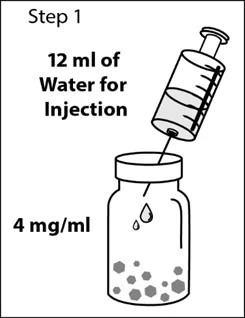
- Add 12 mL of sterile water for injections to each vial of the medicinal product Amphotericin B liposomal Tillomed to obtain a solution with an amphotericin B concentration of 4 mg/mL.
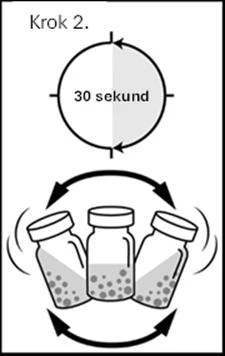
- IMMEDIATELY after adding water, VIGOROUSLY SHAKE THE VIAL FOR AT LEAST 30 SECONDS to achieve a uniformly mixed dispersion of the medicinal product Amphotericin B liposomal Tillomed. After reconstitution, the concentrate is a clear, yellow dispersion. Inspect vials for the presence of solid particles and continue shaking until a homogeneous dispersion is obtained, but not for longer than 120 seconds. Do not use the product if solid particles are present.
- Calculate the volume of reconstituted medicinal product Amphotericin B liposomal Tillomed (4 mg/mL) required for further dilution.
- The infusion solution for administration is obtained by diluting the prepared dispersion of the medicinal product Amphotericin B liposomal Tillomed with glucose infusion solution 50 mg/mL (5%), 100 mg/mL (10%), or 200 mg/mL (20%) in a volume ranging from 1 to 19 parts. The final concentration of the medicinal product Amphotericin B liposomal Tillomed will then be within the recommended range of 0.2 mg/mL to 2 mg/mL of amphotericin B.
- Draw the calculated volume of reconstituted medicinal product Amphotericin B liposomal Tillomed into a sterile syringe. Using the 5 µm filter provided in the package, inject it into a sterile container containing the calculated volume of glucose infusion solution 50 mg/mL (5%), 100 mg/mL (10%), or 200 mg/mL (20%).
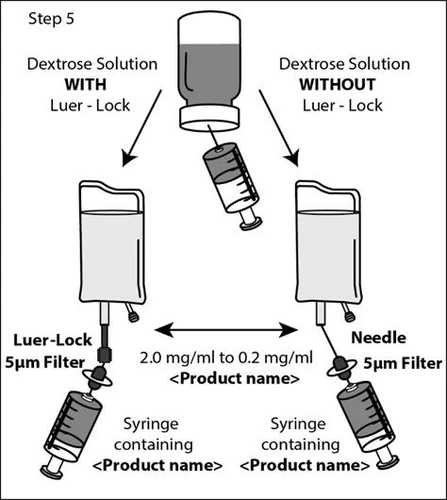
An integrated membrane filter may be used for intravenous infusion administration of the medicinal product Amphotericin B liposomal Tillomed. However, the average pore size of the filter should not be less than 1.0 micron.
OPENED VIALS MUST NOT BE STORED FOR READMINISTRATION TO A PATIENT.
Since the medicinal product Amphotericin B liposomal Tillomed does not contain preservatives, from a microbiological standpoint, it is recommended that the product be used immediately after reconstitution or dilution.
The user is responsible for the time and storage conditions prior to administration. Typically, this time should not exceed 24 hours at 2–8°C, unless reconstitution was performed under controlled and validated aseptic conditions.
The medicinal product is intended exclusively for single use and any unused portions of the solution must be discarded.
Opened vials must not be stored for re-administration to a patient.
Any unused portions of the medicinal product or waste material must be disposed of in accordance with local regulations.