Amoxil
Poland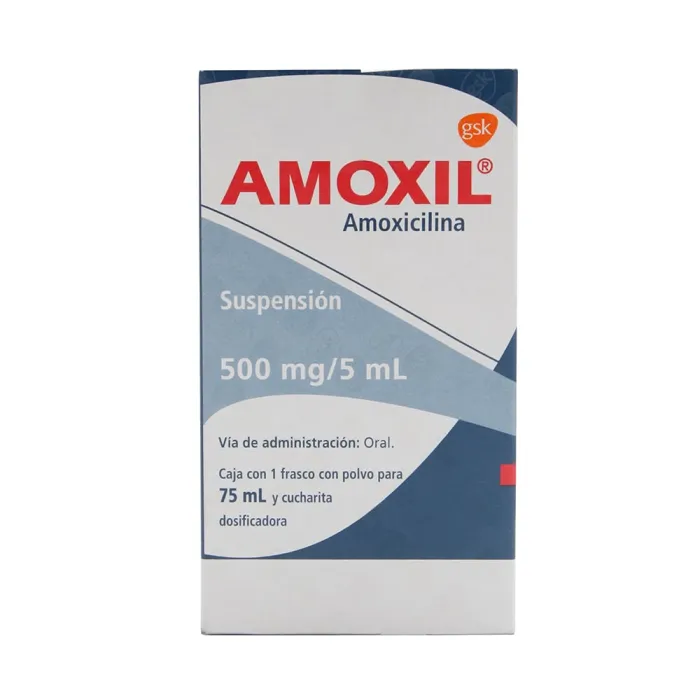
Table of Contents
Package leaflet: Information for the user
Amoxil, 250 mg/5 ml, powder for oral suspension
Amoxil, 500 mg/5 ml, powder for oral suspension
Amoxicillinum
Please read all of this leaflet carefully before taking this medicine because it contains important information for you.
- Keep this leaflet. You may need to read it again.
- If you have any further questions, ask your doctor or pharmacist.
- This medicine has been prescribed for you (or your child). Do not pass it on to others. It may harm them, even if their symptoms are the same as yours.
- If you experience any side effects, including any not listed in this leaflet, tell your doctor or pharmacist. See section 4.
Contents of the leaflet
- What Amoxil is and what it is used for
- What you need to know before taking Amoxil
- How to take Amoxil
- Possible side effects
- How to store Amoxil
- Contents of the pack and other information
1. What Amoxil is and what it is used for
What Amoxil is
Amoxil is an antibiotic. The active substance is amoxicillin. Amoxicillin belongs to a group of medicines called "penicillins".
What Amoxil is used for
Amoxil is used to treat bacterial infections affecting various parts of the body. Amoxil may also be used, together with other medicines, in the treatment of peptic ulcer disease.
2. Important information before using Amoxil
When not to use Amoxil:
- if the patient is allergic to amoxicillin, penicillin, or any of the other ingredients of this medicine (listed in section 6).
- if the patient has ever had an allergic reaction to any other antibiotic. This may include skin rash or swelling of the face or throat.
If any of the above apply to the patient, Amoxil should not be taken. In case of
doubt, consult the doctor or pharmacist before starting treatment with
Amoxil.
Warnings and precautions
Before starting treatment with Amoxil, discuss with a doctor or pharmacist if the
patient:
- has infectious mononucleosis (fever, sore throat, swollen lymph nodes, and extreme fatigue)
- has kidney disease
- passes urine irregularly.
If in doubt whether any of the above conditions apply to the patient, consult the
doctor or pharmacist before starting to take Amoxil.
Blood and urine tests
If the patient is due to have:
- urine tests (for glucose) or blood tests to assess liver function,
- estriol level tests (performed during pregnancy to check whether the baby is developing normally), inform the doctor or pharmacist that the patient is taking Amoxil. Amoxil may affect the results of these tests.
Amoxil and other medicines
Tell the doctor or pharmacist about all medicines currently used or recently used, as well as any medicines the patient plans to use.
- If the patient is taking allopurinol (used for gout), skin allergic reactions may be more likely.
- If the patient is taking probenecid (used to treat gout), concomitant use may reduce the elimination of amoxicillin and is not recommended. The doctor may decide to adjust the dose of Amoxil.
- If the patient is taking anticoagulant medicines (such as warfarin), additional blood tests may be required.
- If the patient is taking other antibiotics (such as tetracyclines), Amoxil may be less effective.
- If the patient is taking methotrexate (used in the treatment of cancer and severe psoriasis)
- penicillins may reduce the elimination of methotrexate, increasing the risk of adverse effects.
Pregnancy and breastfeeding
If the patient is pregnant or breastfeeding, suspects she may be pregnant, or is planning to have
a baby, she should consult a doctor or pharmacist before using this medicine.
Driving and operating machinery
Amoxil may cause adverse effects and symptoms (such as allergic reactions,
dizziness and seizures) that may impair the ability to drive.
Do not drive or operate machinery unless the patient feels well.
Amoxil 250 mg/5 ml, powder for oral suspension contains aspartame,
maltodextrin (containing glucose), sodium, sodium benzoate, trace amounts of benzyl alcohol.
Amoxil 500 mg/5 ml, powder for oral suspension contains aspartame,
maltodextrin (containing glucose), sodium, sodium benzoate, trace amounts of benzyl alcohol.
- Aspartame (E 951) is a source of phenylalanine. It may be harmful for patients with phenylketonuria.
- This medicine contains maltodextrin. Maltodextrin is absorbed like glucose. If the patient has previously been diagnosed with intolerance to certain sugars, the patient should consult the doctor before taking this medicine.
- Sodium benzoate (E 211) may cause mild irritation of the eyes, skin, and mucous membranes and may increase the risk of jaundice in newborns.
- This medicine contains trace amounts of benzyl alcohol. Benzyl alcohol may cause allergic reactions.
Amoxil 250 mg/5 ml powder for oral suspension
- This medicine contains 1.4 mg (0.06 mmol) of sodium per 1 ml. This should be taken into account in patients who are controlling sodium intake in their diet.
Amoxil 500 mg/5 ml powder for oral suspension
- This medicine contains 1.6 mg (0.07 mmol) of sodium per 1 ml. This should be taken into account in patients who are controlling sodium intake in their diet.
3. How to take Amoxil
This medicine should always be taken according to the instructions given by your doctor or pharmacist. If you are unsure,
you should consult your doctor or pharmacist.
- Always shake the bottle well before administering each dose.
- Use the measuring spoon provided with the packaging.
- Maintain regular intervals of at least 4 hours between doses taken during the day.
Usual dose:
Children weighing less than 40 kg
All doses are determined based on the child's body weight in kilograms.
- Your doctor will advise you on the dose of Amoxil to give to the child.
- The usual dose is 40 mg to 90 mg per kilogram of body weight per day, given in two or three divided doses.
- The maximum recommended dose is 100 mg per kilogram of body weight per day.
Adults and children weighing 40 kg or more
This oral suspension is not usually recommended for use in adults and children weighing more than 40 kg. However, it may be used in certain situations, especially if the patient is unable to swallow capsules. Different strengths of oral suspension are available. Please consult your doctor or pharmacist for advice.
Kidney disease
If the patient has kidney problems, the dose of this medicine may be lower than usual.
Taking more Amoxil than recommended
If you take more Amoxil than you should, symptoms such as stomach and intestinal irritation (nausea, vomiting or diarrhoea) or crystals in the urine may occur, which may appear as cloudy urine or difficulty passing urine. You should contact your doctor as soon as possible. Take the medicine with you so you can show it to the doctor.
If you forget to take Amoxil
- If you forget to take a dose, take it as soon as you remember.
- Do not take the next dose too soon; wait approximately 4 hours before taking the next dose.
- Do not take a double dose to make up for a forgotten dose.
How long to take Amoxil
- You should continue taking Amoxil for as long as your doctor has instructed, even if you start to feel better. All doses are necessary to treat the infection. If some bacteria survive, they may cause the infection to return.
- If you still do not feel better after finishing treatment with Amoxil, consult your doctor.
If Amoxil is taken for a prolonged period, fungal infections (candidiasis – yeast infections of mucous membranes causing local pain, itching and white discharge) may occur. In such cases, consult your doctor.
If you are taking Amoxil for a long time, your doctor may recommend additional tests to monitor kidney and liver function and blood counts.
If you have any further questions about the use of this medicine, consult your doctor or pharmacist.
4. Possible adverse reactions
Like all medicines, this medicine can cause adverse reactions, although not everyone will experience them.
If any of the following serious adverse reactions occur in the patient, treatment with Amoxil must be
stopped immediately and the doctor should be contacted – the patient may require immediate
medical attention:
Very rare adverse reactions (may occur in not more than 1 in 10,000 patients)
- allergic reactions, including: itching and skin rash, swelling of the face, lips, tongue, body or difficulty breathing. These symptoms may be severe and, in rare cases, may lead to death.
- rash or flat, red, round spots under the skin surface or skin bruising, which may indicate vasculitis due to an allergic reaction. This may be associated with joint pain (arthritis) and kidney disease.
- delayed-type allergic reactions, usually occurring 7 to 12 days after taking Amoxil; observed symptoms may include rashes, fever, joint pain and enlarged lymph nodes, especially under the arms.
- a skin reaction called erythema multiforme, characterized by itchy red-purple skin lesions, especially on the palms or soles of the feet, skin swelling (resembling hives), irritation around the mouth, eyes or genital organs. Fever and fatigue may also occur.
- other severe skin reactions such as changes in skin color, lumps under the skin, blisters, pustules, skin peeling, redness, pain, itching and flaking of the skin. These may be accompanied by fever, headache and body aches.
- flu-like symptoms with rash, fever, enlarged lymph nodes and abnormal blood test results (including increased white blood cell count (eosinophilia) and increased liver enzyme activity); drug reaction with eosinophilia and systemic symptoms (DRESS).
- fever, chills, sore throat and other signs of infection or tendency to bruise easily. These may be symptoms of blood cell disorders.
- inflammation of the large intestine causing diarrhoea (sometimes with blood), abdominal pain and fever.
- severe adverse reactions affecting the liver may occur. These usually occur in patients undergoing prolonged treatment, in men and in elderly patients. The doctor should be informed immediately if the patient experiences:
o severe diarrhoea associated with bleeding
o blisters, redness or bruising on the skin
o dark urine or pale stools
o yellowing of the skin and whites of the eyes (jaundice). Please also read the information below regarding anaemia which may be the cause of jaundice.
The above symptoms may occur during treatment or up to several weeks after stopping the medicine.
Adverse reactions occurring with unknown frequency (frequency cannot be estimated from
available data)
- Jarisch-Herxheimer reaction. During treatment with Amoxil for Lyme disease, fever, chills, headache, muscle pain and skin rash may occur.
- Chest pain associated with an allergic reaction, which may indicate an allergy leading to heart attack (Kounis syndrome).
- Red rash typically observed on both buttocks, inner upper thighs, under the arms and on the neck [symmetrical, intertriginous and flexural exanthema caused by medication (Symmetrical Drug-Related Intertriginous and Flexural Exanthema, SDRIFE)].
- Drug-induced enterocolitis syndrome (DIES), which has occurred mainly in children receiving amoxicillin. This is a type of allergic reaction characterized primarily by recurrent vomiting (1-4 hours after taking the medicine). Other symptoms may include abdominal pain, lethargy, diarrhoea and low blood pressure.
If any of these symptoms occur in the patient, treatment must be stopped immediately and the
doctor should be contacted.
Less severe skin reactions may sometimes occur, such as:
- moderately itchy rash (round, red-pink lesions), resembling hives, swelling on the forearms, legs, hands or feet. This occurs not very commonly (may occur in not more than 1 in 100 patients).
If any of these symptoms occur in the patient, the doctor should be contacted, as discontinuation
of Amoxil treatment may be necessary.
Other adverse reactions:
Common adverse reactions (may occur in not more than 1 in 10 patients)
- skin rash
- nausea
- diarrhoea.
Uncommon adverse reactions (may occur in not more than 1 in 100 patients)
- vomiting.
Very rare adverse reactions (may occur in not more than 1 in 10,000 patients)
- fungal infections (vaginal, oral or skin fold candidiasis); advice on treatment can be obtained from the doctor or pharmacist
- kidney problems
- seizures, especially in patients receiving high doses or with pre-existing kidney problems
- dizziness
- hyperactivity
- tooth discoloration (in children), which can usually be removed by brushing
- yellow, brown or black hairy tongue
- excessive breakdown of red blood cells leading to anaemia. Symptoms include fatigue, headache, shortness of breath, dizziness, pallor and yellowing of the skin and whites of the eyes.
- decreased number of white blood cells
- decreased number of platelets (cells involved in blood clotting)
- blood may take longer than usual to clot. This may be evident as nosebleeds or prolonged bleeding from cuts.
Adverse reactions occurring with unknown frequency (frequency cannot be estimated from
available data)
- inflammation of the membranes surrounding the brain and spinal cord (aseptic meningitis)
- blistering rash arranged in a ring-like pattern with scabs in the center or resembling a string of pearls (linear IgA dermatosis)
- crystals in the urine leading to acute kidney injury, visible as cloudy urine or causing difficulty or discomfort during urination. To avoid these symptoms, large amounts of fluid should be consumed.
Reporting of adverse reactions
If any adverse reactions occur, including any not listed in this leaflet, inform the doctor or pharmacist. Adverse reactions can be reported directly to the Department of Monitoring Adverse Drug Reactions, Office for Registration of Medicinal Products, Medical Devices and Biocidal Products, Al. Jerozolimskie 181C, 02-222 Warsaw, phone: +48 22 49 21 301, fax: +48 22 49 21 309, website: https://smz.ezdrowie.gov.pl
Adverse reactions can also be reported to the marketing authorization holder.
Reporting adverse reactions helps provide more information on the safety of the medicine.
5. How to store Amoxil
Keep this medicine out of sight and reach of children.
Do not use this medicine after the expiry date (EXP) stated on the carton.
The expiry date refers to the last day of the stated month.
Powder
Do not store above 25°C.
Reconstituted suspension
Do not store above 25°C.
The reconstituted suspension is stable for 14 days.
Do not use this medicine if signs of deterioration are observed.
Medicines should not be disposed of via wastewater or household waste. Ask your pharmacist how to dispose of medicines no longer required. These measures will help protect the environment.
6. Contents of the pack and other information
What Amoxil contains
- The active substance is 250 mg or 500 mg of amoxicillin.
- The other ingredients are: sodium croscarmellose 12, lemon-peach-strawberry flavour (containing maltodextrin and trace amounts of benzyl alcohol), crospovidone (type A), aspartame (E 951), sodium benzoate (E 211), xanthan gum (E 415), colloidal anhydrous silica, magnesium stearate.
What Amoxil looks like and contents of the pack
Amoxil 250 mg/5 ml, powder for oral suspension, is a white powder with yellowish granules supplied in colourless glass bottles with a nominal capacity of 107 ml (containing powder for the preparation of 60 ml of suspension) or 147 ml (containing powder for the preparation of 100 ml of suspension), with a child-resistant closure.
The bottle is placed in a cardboard box together with a measuring spoon of 2.5 ml and 5 ml capacity.
Amoxil 500 mg/5 ml, powder for oral suspension, is a white powder with yellowish granules supplied in colourless glass bottles with a nominal capacity of 107 ml (containing powder for the preparation of 60 ml of suspension) or 147 ml (containing powder for the preparation of 100 ml of suspension), with a child-resistant closure.
The bottle is placed in a cardboard box together with a measuring spoon of 2.5 ml and 5 ml capacity.
Not all pack sizes may be marketed.
Marketing Authorisation Holder and Manufacturer
Marketing Authorisation Holder:
GlaxoSmithKline Trading Services Limited
12 Riverwalk
Citywest Business Campus
Dublin 24
D24 YK11
Ireland
Manufacturer:
Athlone Laboratories Limited
Ballymurray
Co. Roscommon
F42 EW02
Ireland
or
Glaxo Wellcome Production
Z.I. de la Peyennière
53100 Mayenne
France
For further information about this medicine, contact the Marketing Authorisation Holder's representative:
GSK Services Sp. z o.o.
tel. (22) 576-90-00
This medicine is authorised in the European Economic Area countries under the following names:
250 mg/5 ml, powder for oral suspension
Belgium – Clamoxyl
France – Clamoxyl, Amoxicilline Biogaran
Greece – Amoxil
Lithuania – Amoxil
Luxembourg – Clamoxyl
Poland – Amoxil
Portugal – Clamoxyl
500 mg/5 ml, powder for oral suspension
France – Clamoxyl, Amoxicilline Biogaran
Greece – Amoxil
Poland – Amoxil
Portugal – Clamoxyl
General advice on the use of antibiotics
Antibiotics are used to treat bacterial infections. They are ineffective in treating viral infections.
Sometimes bacterial infections do not respond to antibiotic treatment. One of the most common reasons for this is that bacteria are resistant to the antibiotic administered. This means that bacteria can survive and even multiply despite antibiotic treatment.
Bacteria may become resistant to antibiotics for various reasons. Careful use of antibiotics may help reduce the risk of development of bacterial resistance.
The antibiotic prescribed by your doctor is intended solely for the treatment of your current illness. Observing the following advice will help prevent the development of resistant bacteria that could impair the effectiveness of antibiotics.
- It is very important to take the antibiotic at the correct dose, at the right time, and for the correct number of days. Please read the instructions in this leaflet carefully, and if any are unclear, ask your doctor or pharmacist for clarification.
- Do not take an antibiotic unless it has been prescribed specifically for you. You should take it only to treat the infection for which it was prescribed.
- Do not take an antibiotic prescribed for another person, even if they had a similar infection.
- Do not give antibiotics prescribed for you to other people.
- If any antibiotic remains after completing treatment as directed by your doctor, return it to a pharmacy for proper disposal.
Instructions for preparing the medicine for use
Before use, check that the bottle cap seal has not been broken.
Turn the bottle upside down and shake to loosen the powder.
Fill the bottle with water up to a level slightly below the mark indicated on the bottle label.
Turn the bottle upright and shake thoroughly. Wait for the foam to dissipate, then add water exactly up to the level of the mark. Turn the bottle again and shake thoroughly.
Shake the bottle containing the prepared suspension well before each use.
Use the measuring spoon provided in the pack to administer the medicine.